
Mango in a curry sounds like a wild idea until you taste it then it immediately makes complete sense. Crockpot Vegan Mango Coconut Chickpea Curry combines the natural sweetness of fresh mango, the richness of full-fat coconut milk, the warmth of Thai red curry paste, and the hearty protein of chickpeas into something that tastes genuinely exotic and deeply satisfying. This is summer curry done right bright, tropical, creamy, and on the table in 30 minutes.
I started making this when I had a perfectly ripe mango sitting on the counter and absolutely no plan for dinner. The combination of Thai red paste and fresh mango felt like a risk and it immediately became one of my favorite curry recipes of the year. The mango softens slightly during the simmer and infuses the coconut broth with a sweet, fruity depth that makes every bite layered and interesting. If you’ve never put fruit in a curry, this recipe converts you instantly.
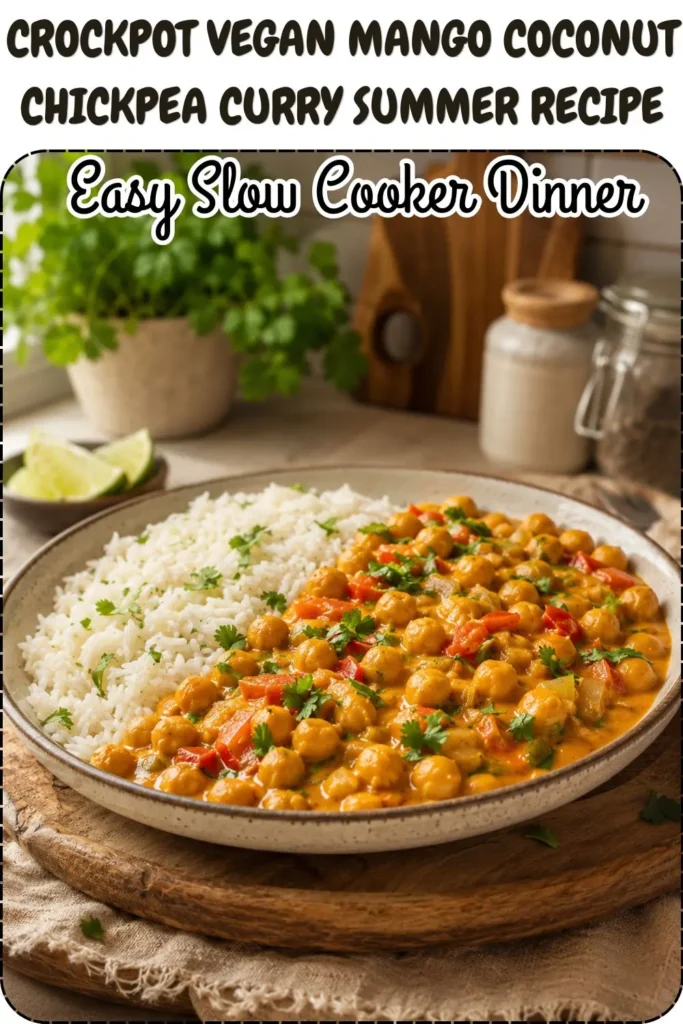
My Recipe Timing and Serving Details
Here’s your complete planning overview:
| Detail | Info |
| Prep Time | 5 minutes |
| Cook Time | 25 minutes |
| Total Time | 30 minutes |
| Servings | 4 servings |
| Serving Size | 1 of 4 portions |
| Calories Per Serving | 634 kcal |
| Course | Main Course |
| Cuisine | Thai-Inspired / Tropical |
| Diet | 100% Vegan, Gluten-Free |
30 minutes total for a rich, tropical, restaurant-quality curry that serves 4 people as a complete main course. At 634 calories per serving, this is one of the more calorie-substantial recipes in this summer series reflecting the full-fat coconut milk and chickpeas delivering genuine, sustained satiety. Served over rice, the complete meal lands at approximately 850–900 calories a satisfying, nutritionally complete dinner.
Why Mango Belongs in Curry
The idea of adding fruit to a savory curry feels counterintuitive until you understand what fruit actually does in a sauce context. Fresh mango brings natural sweetness, acidity, and a tropical fruitiness that contrasts beautifully against the spicy, aromatic heat of Thai red curry paste. That sweet-spicy contrast is genuinely one of the most satisfying flavor combinations in cooking.
In this recipe, the mango does three specific things. First, it adds sweetness that balances the heat of the Thai red paste without requiring added sugar. Second, its natural acidity brightens the coconut milk base and prevents it from tasting heavy or one-dimensional. Third, it softens slightly during the 10-minute simmer and releases its juices into the surrounding sauce, creating a concentrated tropical flavor that infuses every piece of chickpea and every spoonful of broth.
The result is a curry that tastes distinctly different from any standard chickpea or vegetable curry sweeter, brighter, more complex, and unmistakably summery. FYI the mango doesn’t make it taste like dessert. It makes it taste like a genuinely sophisticated, restaurant-quality dish.
Ingredients You’ll Need
A short, focused list that creates maximum flavor impact:
The Aromatic Base:
- 1 tablespoon coconut oil
- 1 large onion, diced
- 1 medium red pepper, sliced
- 2 large garlic cloves, minced
- 1 tablespoon fresh ginger, grated
The Sauce:
- 3 tablespoons Thai red curry paste
- 1 can (400ml / 13.5 fl oz) full-fat coconut milk
- 200ml (1 cup) vegetable stock
The Protein and Stars:
- 2 cans (400g / 14 oz each) chickpeas, rinsed and drained
- 1 large mango, cut into 1-inch cubes
The Greens:
- 100g (3.5 oz) baby spinach
For Serving:
- Cooked jasmine or basmati rice
- Vegan naan bread
The Thai red curry paste is the ingredient that defines the spice profile and heat level of this entire dish. Three tablespoons produces a moderate-to-bold heat that’s noticeable and warming without being overwhelming. Start with 2 tablespoons if you’re heat-sensitive and add more at the end after tasting. Different brands vary significantly in heat level — Maesri runs hotter, Mae Ploy runs medium, and most store-brand versions run milder. Know your paste before committing to the full 3 tablespoons.
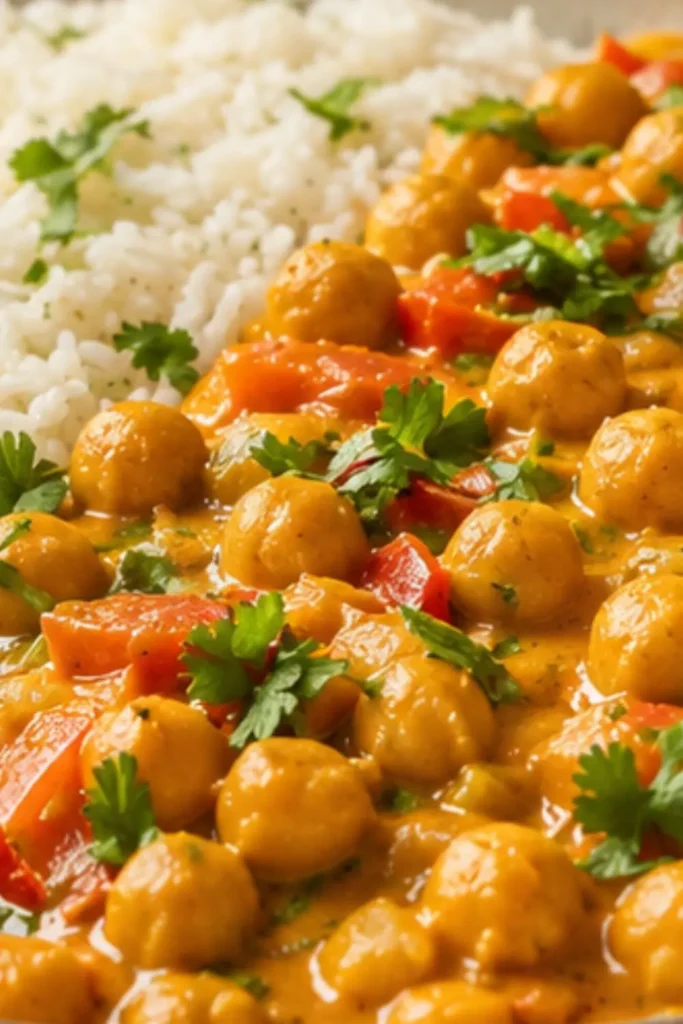
Equipment You’ll Need
This stovetop curry runs in a single pan from start to finish:
Primary Cooking Equipment
- Large deep-sided pan or shallow cast iron casserole — the recipe specifically recommends either of these, and the distinction matters. You need enough depth to accommodate two cans of chickpeas, one can of coconut milk, one cup of stock, one large mango cut into cubes, and all the spinach before it wilts. A 12-inch deep-sided skillet or a 5-quart Dutch oven both work perfectly.
Cast iron is IMO the ideal vessel for this curry specifically. It retains heat evenly, which keeps the simmer consistent and prevents hot spots that could scorch the coconut milk at the bottom. It also goes from stovetop to table beautifully if you want to serve directly from the pan at dinner.
Supporting Equipment
- Microplane or fine grater — for grating the fresh ginger finely. Fresh ginger grated fine integrates seamlessly into the sauce. If you only have a knife, mince it as finely as possible.
- Sharp knife and cutting board — for dicing the onion, slicing the red pepper, mincing the garlic, and cubing the mango
- Wooden spoon or silicone spatula — for stirring throughout all cooking stages
- Can opener — for the chickpeas and coconut milk
- Measuring spoons and cups
- Ladle — for serving
The mango prep deserves a specific note. To cube a mango efficiently, slice down each flat side of the pit, score the flesh in a grid pattern, then flip the skin side out and slice the cubes off. This takes about 2 minutes and gives you clean, uniform 1-inch cubes that hold together during the simmer rather than breaking apart into mush.
Step-by-Step Instructions
Step 1 — Sauté the Aromatics
Heat the 1 tablespoon of coconut oil in your large pan over medium heat. Add the diced onion and sliced red pepper. Sauté for 4–5 minutes, stirring occasionally, until the onion softens and becomes slightly translucent and the pepper strips soften and start to show some color.
The red pepper and onion together create a naturally sweet, slightly caramelized base that pairs beautifully with the tropical mango and coconut milk later. Don’t rush this step give both vegetables their full 4–5 minutes to properly soften.
Step 2 — Add Garlic, Ginger, and Curry Paste
Add the minced garlic and grated ginger to the pan and cook for 1 minute, stirring constantly, until intensely fragrant. Add the 3 tablespoons of Thai red curry paste and stir to coat the vegetables evenly. Cook for another minute, continuing to stir, until the paste becomes fragrant and slightly darkened.
This sequential addition garlic and ginger first, paste second matters for flavor development. Garlic and ginger hit the hot oil and release their aromatics immediately. The curry paste then blooms in the residual oil and the garlic-ginger mixture, intensifying its complex spice profile before any liquid dilutes it. The kitchen smells extraordinary after this step.
Step 3 — Add Coconut Milk, Chickpeas, Mango, and Stock
Pour in the full can of coconut milk and stir to incorporate with the curry paste base. Add the drained chickpeas, cubed mango, and vegetable stock. Stir everything together until the curry paste and coconut milk distribute evenly throughout.
Raise the heat and allow the sauce to come to a gentle bubble. Once bubbling, lower the heat to maintain a steady, gentle simmer small bubbles breaking the surface, not a rolling boil. Coconut milk at a rolling boil can separate into an oily, grainy texture that’s significantly less pleasant than creamy, smooth coconut sauce. Keep the heat genuinely low after the initial bubble.
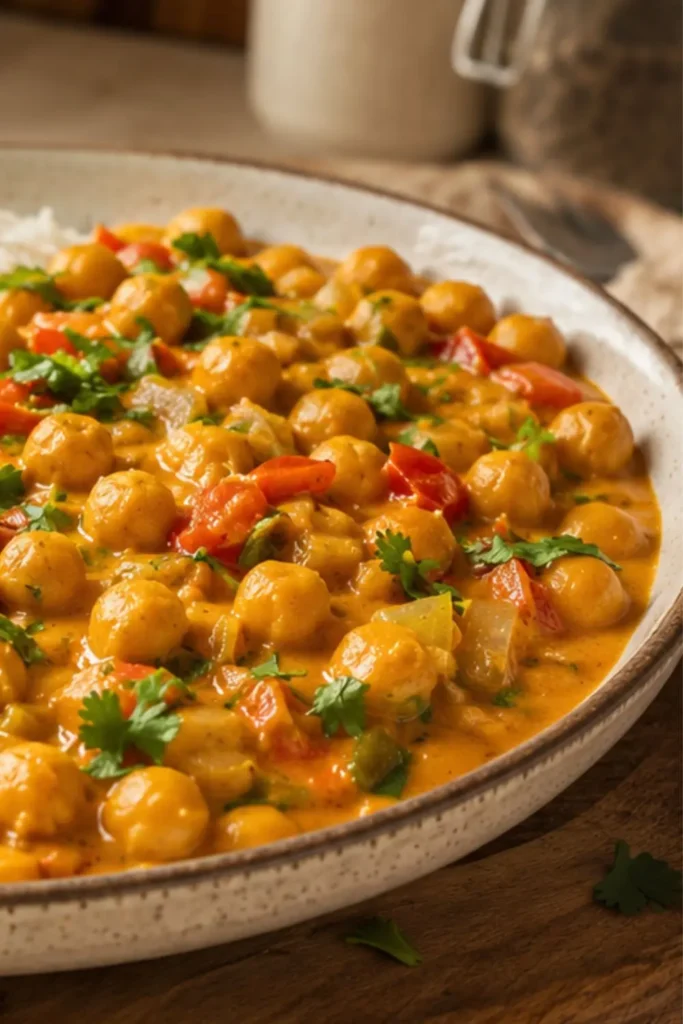
Step 4 — Simmer for Ten Minutes
Cover the pan and simmer for 10 minutes, stirring occasionally. During this time, the chickpeas absorb the surrounding coconut-curry-mango sauce, the mango softens slightly and releases its juices into the broth, and the sauce reduces and thickens into a beautiful, glossy, creamy curry.
Check and stir every few minutes not because the curry needs constant attention, but because watching the color deepen and the sauce develop is genuinely satisfying. After 10 minutes, taste the sauce and adjust the curry paste if you want more heat.
Step 5 — Wilt the Spinach
Add the 100g of baby spinach directly to the pan. Stir gently and cook for 1–2 minutes until the spinach wilts completely into the curry. Baby spinach wilts quickly in hot liquid it goes from fresh and bulky to dark green and silky in under 2 minutes.
Adding spinach at the very end rather than at the start preserves its color, nutritional content, and delicate texture. Spinach cooked for 10+ minutes loses its vibrant green color and many of its water-soluble vitamins. Added at the end, it stays bright, slightly textured, and nutritionally intact.
Step 6 — Season and Serve
Taste the curry and season with salt as needed. The Thai red curry paste is already salted, as is the vegetable stock, so you may not need much additional salt taste first.
Serve immediately over cooked jasmine or basmati rice and alongside warm vegan naan if using. The sauce is generous enough to pool beneath and around the rice, making every spoonful of both curry and rice deeply flavorful.
Choosing Your Thai Red Curry Paste
Thai red curry paste is the backbone of this entire recipe and the choice of brand significantly affects both heat level and flavor complexity:
Brand Comparison
Maesri Thai Red Curry Paste — the most authentic, most complex flavor. Contains lemongrass, galangal, kaffir lime leaves, and a full spice lineup. Also the hottest use 2 tablespoons if you’re heat-sensitive. Widely available in Asian grocery stores.
Mae Ploy Red Curry Paste — slightly milder than Maesri with a rounder, less sharp heat. Excellent balance of heat and aromatics. Available in most Asian grocery stores and some mainstream supermarkets.
Trader Joe’s Thai Red Curry Sauce — milder still, slightly sweeter, and more accessible for heat-sensitive eaters. Not as complex as the above options but works well.
Important label check: Most Thai red curry pastes are naturally vegan, but some contain shrimp paste. Always check the ingredients label Maesri and many store brands specifically offer vegan-certified versions.
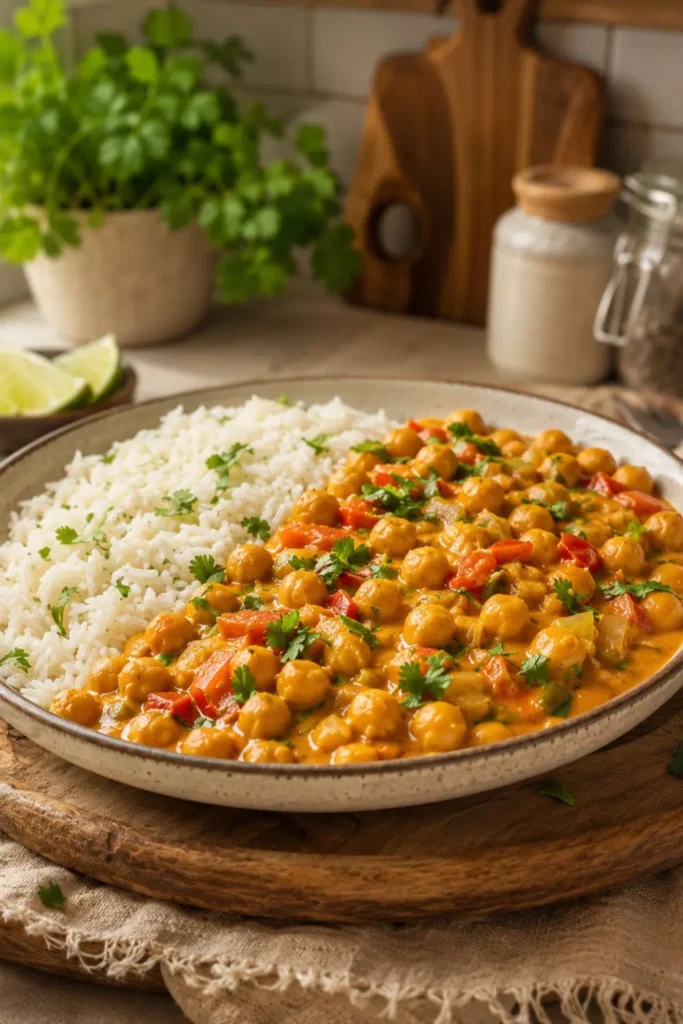
Mango — Fresh vs. Frozen
The recipe calls for a fresh large mango, which is ideal during summer when mangoes are at peak ripeness and flavor. Here’s how to choose the right one and when to use frozen:
Fresh Mango (Best Option)
Choose a mango that yields slightly to gentle pressure firm but not hard, with a sweet, tropical aroma at the stem end. Alphonso and Ataulfo mangoes are the sweetest, most tropical-flavored varieties for this curry. Honey mangoes (the small yellow ones) work beautifully. Large red-and-green Tommy Atkins mangoes are more available but less sweet they still work, just less wow factor.
Frozen Mango (Reliable Alternative)
Frozen mango cubes work well when fresh isn’t available or in peak season. They’re typically frozen at peak ripeness and maintain good flavor. Add them directly frozen to the pan they thaw and soften within the first few minutes of simmering. The sauce may be slightly more watery as the frozen mango releases more liquid simmer uncovered for an extra 2–3 minutes to compensate.
Adjusting Heat and Thickness
Heat Level Adjustments:
- Milder: Use 2 tablespoons of curry paste and reduce to 1½ if particularly heat-sensitive. Serve with extra coconut milk drizzled over each bowl as a cooling element.
- Medium: The recipe’s standard 3 tablespoons produces noticeable, building heat that’s balanced by the mango’s sweetness.
- Hotter: Use 4 tablespoons and add a sliced fresh red chili to the sauté stage.
Thickness Adjustments:
- Thicker sauce: Simmer uncovered for the full 10 minutes to reduce the liquid more aggressively.
- Thinner sauce: Add an additional ½ cup of vegetable stock.
- Extra creamy: Stir in an additional ¼ cup of coconut milk at the end of cooking.
Try It Next recipe
Slow Cooker Vegan Corn and Black Bean Casserole
Nutrition Information Per Serving
At 634 calories per serving, this curry is one of the more calorie-substantial recipes in this series and every calorie earns its place:
| Nutrient | Per Serving |
| Calories | 634 kcal |
| Carbohydrates | 77g |
| Protein | 22g |
| Fat | 30g |
| Saturated Fat | 22g |
| Fiber | 18g |
| Sugar | 24g |
| Sodium | 190mg |
| Cholesterol | 0mg |
22 grams of plant-based protein and 18 grams of fiber per serving the combination of chickpeas and spinach creates an impressive nutritional profile. The higher fat content reflects the full-fat coconut milk, which contains medium-chain triglycerides (MCTs) that metabolize differently from long-chain saturated fats found in animal products. The 190mg sodium per serving is remarkably low for a curry reflecting that most of the flavor comes from aromatics and paste rather than added salt.
Storage and Reheating
Crockpot Vegan Mango Coconut Chickpea Curry stores beautifully:
- Refrigerator: Store in an airtight container for up to 4 days. The flavors deepen significantly overnight this curry genuinely tastes better the next day.
- Freezer: Freeze in individual portions for up to 3 months. The coconut milk may separate slightly after freezing stir vigorously while reheating to recombine.
- Reheating: Warm on the stovetop over medium-low heat, stirring and adding a splash of coconut milk or vegetable stock as needed. Microwave in 90-second intervals at medium power, stirring between each. Always add fresh spinach after reheating rather than reheating with spinach already in it becomes overcooked and gray.
Final Thoughts — Make This Curry While Mangoes Are at Their Peak
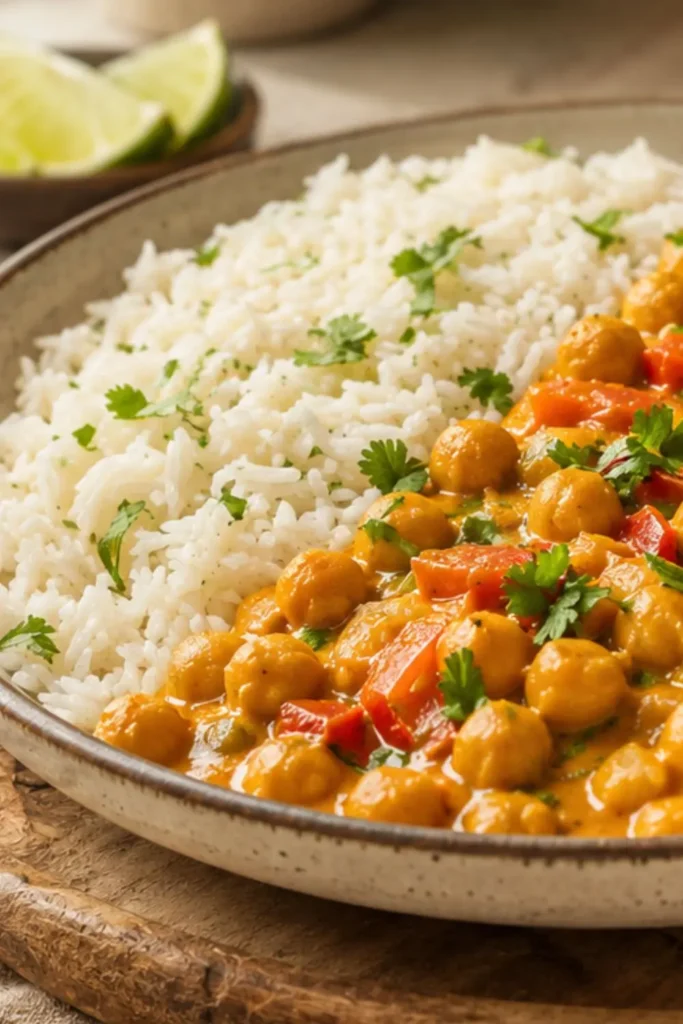
Crockpot Vegan Mango Coconut Chickpea Curry is one of those recipes that feels genuinely special despite requiring almost no effort. Fresh mango, Thai red paste, coconut milk, and chickpeas come together in 30 minutes to create something tropical, creamy, satisfying, and unlike any standard weeknight curry.
634 calories per serving, 22 grams of plant-based protein, 18 grams of fiber and it tastes like something you’d pay good money for at a Thai restaurant. The mango season doesn’t last forever, and this recipe is the best possible reason to use a perfectly ripe mango before it’s too late.
Make it tonight over rice. Make it again tomorrow because the leftovers are somehow even better. Summer and mangoes and coconut milk and chickpeas genuinely, is there a better combination?
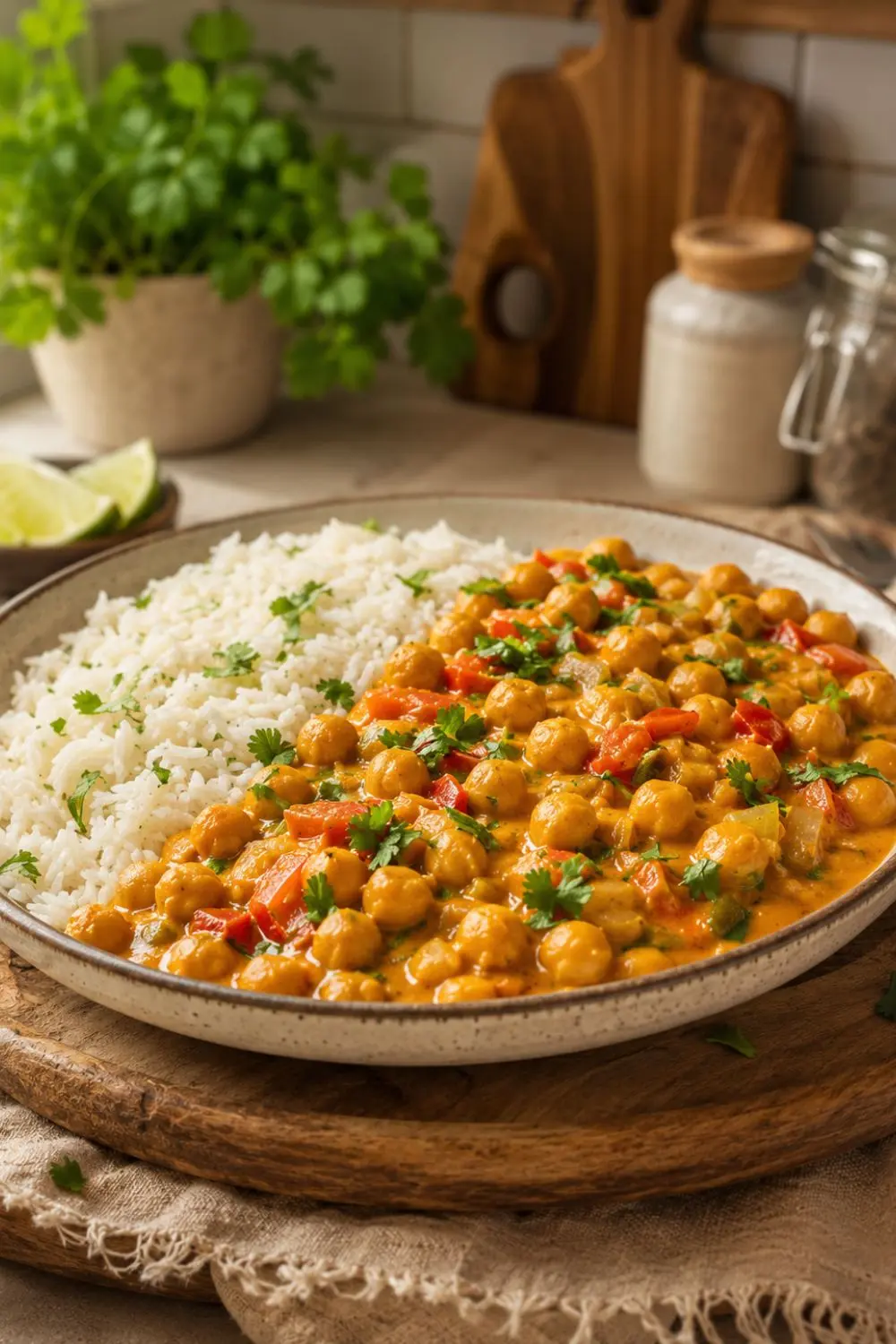
Crockpot Vegan Mango Coconut Chickpea Curry Summer recipe
Ingredients
Equipment
Method
- Step-by-Step Instructions
- Step 1 — Sauté the Aromatics
- Heat the 1 tablespoon of coconut oil in your large pan over medium heat. Add the diced onion and sliced red pepper. Sauté for 4–5 minutes, stirring occasionally, until the onion softens and becomes slightly translucent and the pepper strips soften and start to show some color.
- The red pepper and onion together create a naturally sweet, slightly caramelized base that pairs beautifully with the tropical mango and coconut milk later. Don’t rush this step give both vegetables their full 4–5 minutes to properly soften.
- Step 2 — Add Garlic, Ginger, and Curry Paste
- Add the minced garlic and grated ginger to the pan and cook for 1 minute, stirring constantly, until intensely fragrant. Add the 3 tablespoons of Thai red curry paste and stir to coat the vegetables evenly. Cook for another minute, continuing to stir, until the paste becomes fragrant and slightly darkened.
- This sequential addition garlic and ginger first, paste second matters for flavor development. Garlic and ginger hit the hot oil and release their aromatics immediately. The curry paste then blooms in the residual oil and the garlic-ginger mixture, intensifying its complex spice profile before any liquid dilutes it. The kitchen smells extraordinary after this step.
- Step 3 — Add Coconut Milk, Chickpeas, Mango, and Stock
- Pour in the full can of coconut milk and stir to incorporate with the curry paste base. Add the drained chickpeas, cubed mango, and vegetable stock. Stir everything together until the curry paste and coconut milk distribute evenly throughout.
- Raise the heat and allow the sauce to come to a gentle bubble. Once bubbling, lower the heat to maintain a steady, gentle simmer small bubbles breaking the surface, not a rolling boil. Coconut milk at a rolling boil can separate into an oily, grainy texture that’s significantly less pleasant than creamy, smooth coconut sauce. Keep the heat genuinely low after the initial bubble.
- Step 4 — Simmer for Ten Minutes
- Cover the pan and simmer for 10 minutes, stirring occasionally. During this time, the chickpeas absorb the surrounding coconut-curry-mango sauce, the mango softens slightly and releases its juices into the broth, and the sauce reduces and thickens into a beautiful, glossy, creamy curry.
- Check and stir every few minutes not because the curry needs constant attention, but because watching the color deepen and the sauce develop is genuinely satisfying. After 10 minutes, taste the sauce and adjust the curry paste if you want more heat.
- Step 5 — Wilt the Spinach
- Add the 100g of baby spinach directly to the pan. Stir gently and cook for 1–2 minutes until the spinach wilts completely into the curry. Baby spinach wilts quickly in hot liquid it goes from fresh and bulky to dark green and silky in under 2 minutes.
- Adding spinach at the very end rather than at the start preserves its color, nutritional content, and delicate texture. Spinach cooked for 10+ minutes loses its vibrant green color and many of its water-soluble vitamins. Added at the end, it stays bright, slightly textured, and nutritionally intact.
- Step 6 — Season and Serve
- Taste the curry and season with salt as needed. The Thai red curry paste is already salted, as is the vegetable stock, so you may not need much additional salt taste first.
- Serve immediately over cooked jasmine or basmati rice and alongside warm vegan naan if using. The sauce is generous enough to pool beneath and around the rice, making every spoonful of both curry and rice deeply flavorful.
Notes
Nutrition Information Per Serving
At 634 calories per serving, this curry is one of the more calorie-substantial recipes in this series and every calorie earns its place:| Nutrient | Per Serving |
| Calories | 634 kcal |
| Carbohydrates | 77g |
| Protein | 22g |
| Fat | 30g |
| Saturated Fat | 22g |
| Fiber | 18g |
| Sugar | 24g |
| Sodium | 190mg |
| Cholesterol | 0mg |

Hi — I’m Rachel. I’m a wife, a mom, and a home cook who believes that food should bring comfort, joy, and compassion to the table. I live with my family — two hungry little foodies who are my most honest recipe testers — and together we’ve built a kitchen culture that’s all about good food that happens to be 100% vegan. I started this blog because I wanted a place to share the recipes that keep our days moving, the dishes that make weeknights feel a little easier, and the meals that become our little family traditions.