
Picture this. It’s mid-July, it’s 95°F outside, and the absolute last thing you want to do is stand over a hot stove. But you also need to eat something real — something with actual vegetables and flavor — because a bowl of cereal at 7pm is a form of giving up.
“This post contains affiliate links. If you purchase through my links, I may earn a small commission at no extra cost to you.”
That’s exactly the moment this Easy Vegan Gazpacho Recipe was made for.
I made my first batch of gazpacho on a sweltering August afternoon when turning the stove on felt like a personal insult. Vine tomatoes, cucumber, red pepper, garlic, olive oil, a blender — done. Twenty minutes of hands-on work, two hours of the fridge doing the rest, and I had six generous servings of the most refreshing, bright, savory soup I’d ever eaten. Cold. Velvety. Deeply flavorful. Genuinely perfect for summer.
Gazpacho is Spain’s most brilliant culinary export, and this vegan version keeps it exactly as it should be — simple, vegetable-forward, and outrageously good at room temperature or ice cold. No cream, no butter, no animal products of any kind. Just the best summer produce blended into something you’ll want to make every week from June through September.
Let’s get into it.
What Is Gazpacho and Why Should You Care?
Gazpacho is a chilled raw vegetable soup originating from Andalusia, southern Spain. At its core, it’s ripe tomatoes, cucumber, pepper, garlic, olive oil, and acid — blended smooth and served cold. That’s it. No cooking required, which makes it one of the most genuinely easy recipes in existence.
Traditionally, gazpacho was peasant food — a practical way to use summer’s abundance of ripe tomatoes and cool down in scorching heat. It’s been refined over centuries, but the essence remains the same: peak-season produce, good olive oil, and patience while it chills.
The beauty of this recipe for vegans specifically is that gazpacho has always been naturally plant-based. No substitutions needed, no ingredient swaps, no compromise. Just pure vegetables doing exactly what they do best when they’re at their seasonal peak.
And at 122 calories per serving with 50mg of vitamin C and nearly 2,000 IU of vitamin A, this isn’t just summer comfort food — it’s legitimately nutritious comfort food. Which is honestly the best kind.
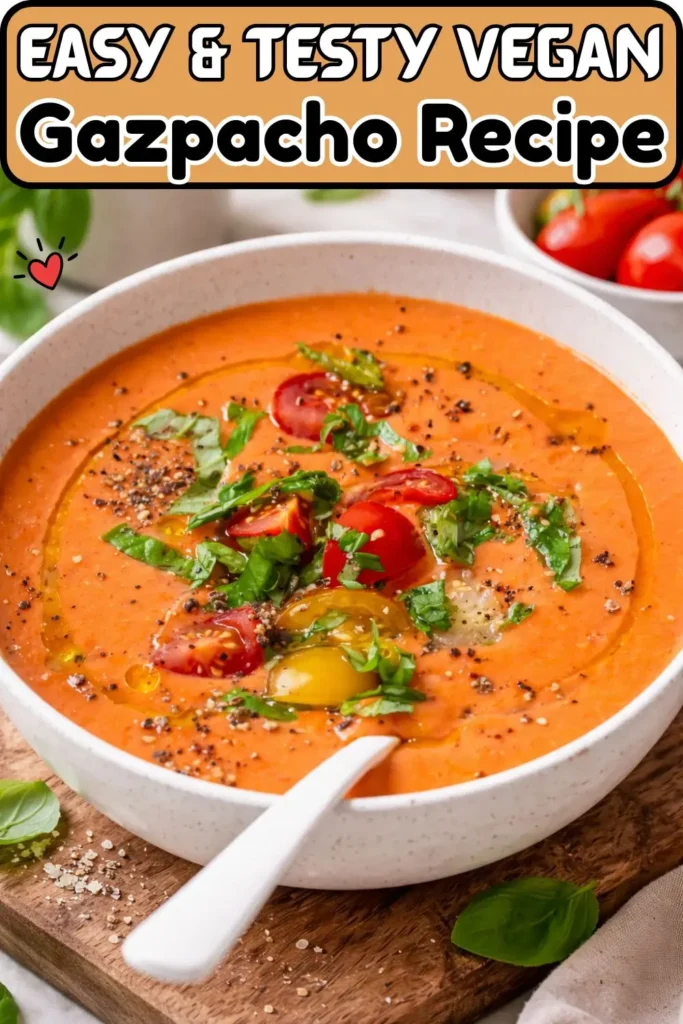
Equipment You Need — Genuinely Minimal
One of the most appealing things about this recipe is what it doesn’t require. Here’s your complete equipment list:
- Large pot — For blanching the tomatoes to remove the skins. A medium stockpot works perfectly.
- Large bowl with ice water — For the ice bath after blanching. Any large mixing bowl works.
- Slotted spoon — For transferring tomatoes from boiling water to ice bath cleanly.
- Sharp paring knife — For scoring the tomatoes and peeling back the skins.
- Large mixing bowl — For combining all the vegetables and letting them marinate together for at least 20 minutes before blending.
- High-powered blender — This is the most important piece of equipment in the recipe. A Vitamix or Blendtec produces the silkiest, most restaurant-quality result. A regular countertop blender works fine but may need two batches. An immersion blender works in a pinch but produces a slightly chunkier texture.
- Cutting board and sharp chef’s knife — For chopping all your vegetables. Good knife prep makes everything faster.
- Airtight storage container or pitcher — For chilling the gazpacho for those essential 2 hours (or overnight — more on that later).
- Fine-mesh strainer (optional) — If you want an ultra-silky, restaurant-smooth texture, strain the blended soup once before chilling. Totally optional but genuinely worth it for special occasions.
That’s the entire list. No special attachments, no exotic tools. A pot, a bowl, a blender, and a knife get you there.
Ingredients — Why Every Single One Matters
This recipe has nine ingredients plus fresh basil for garnish. Each one pulls significant weight in the final flavor. Here’s your full list and the reasoning behind each choice:
The Vegetable Base
- 2 lbs vine tomatoes (about 6 tomatoes), chopped — Vine tomatoes are non-negotiable for the best gazpacho. They’re riper, sweeter, and more intensely flavored than standard grocery store tomatoes. Roma tomatoes work as a backup. Watery, flavorless hothouse tomatoes will produce watery, flavorless gazpacho — the quality of your tomatoes is the single most important variable in this recipe.
- ½ cucumber, chopped — Adds freshness, water content, and a cool, mild flavor that balances the acidity of the tomatoes. English cucumber works best because it has fewer seeds and thinner skin. Regular cucumber is fine too — just peel it first.
- 1 red pepper, chopped — Red pepper brings sweetness, vitamin C, and a gorgeous deep flavor that green pepper can’t match. It also contributes to that beautiful, rich orange-red color. Don’t substitute green — the flavor is too sharp and bitter.
- 1 shallot, finely chopped — Milder and more nuanced than white or yellow onion, shallot adds savory depth without overwhelming the delicate tomato and pepper base. If you’re out of shallots, ¼ of a small red onion makes a reasonable substitute.
- 2 cloves garlic, finely chopped — Raw garlic in a blended cold soup carries significant punch. Two cloves is the right balance — enough to taste clearly without bulldozing everything else. If you’re sensitive to raw garlic, start with one clove.
The Dressing
- ¼ cup (60ml) extra virgin olive oil — Use the best olive oil you own. In a recipe this simple and raw, the quality of your olive oil shows directly in the finished flavor. Fruity, peppery extra virgin olive oil adds richness and complexity that makes gazpacho taste luxurious rather than just “blended vegetables.”
- 2 tbsp (30ml) lemon juice — The acid that brightens everything and makes the tomato flavor pop. Fresh lemon juice every time — bottled juice has a dull, flat quality that drags down a recipe this fresh-forward. Squeeze it yourself.
- 1 tsp sea salt — Season properly. Under-salted gazpacho tastes flat and lacks dimension. Start with a teaspoon and adjust after blending.
- ¼ tsp black pepper — Just enough background warmth. Freshly ground if you have it.
The Garnish
- ¼ cup fresh basil, chopped — Don’t use dried basil here. Fresh basil added at serving brings a fragrant, slightly sweet herbal note that makes every bowl feel finished and intentional. Sprinkle it on right before eating, not before — it wilts and darkens if added too early.
Full Nutrition Breakdown — Per Serving (1 of 6)
Gazpacho is one of those rare dishes where nutritious and deeply satisfying aren’t in competition. Here’s what every bowl delivers:
| Nutrient | Per Serving |
| Calories | 122 kcal |
| Carbohydrates | 9g |
| Protein | 2g |
| Total Fat | 9g |
| Saturated Fat | 1g |
| Dietary Fiber | 3g |
| Sugar | 6g (naturally occurring) |
| Sodium | 397mg |
| Potassium | 448mg |
| Vitamin A | 1,951 IU |
| Vitamin C | 50mg |
| Calcium | 22mg |
| Iron | 1mg |
A few things worth highlighting:
- 50mg of vitamin C per serving covers over 55% of the daily recommended intake in a single bowl. The combination of raw tomatoes, red pepper, and lemon juice makes this one of the highest vitamin C recipes you can eat in summer.
- 1,951 IU of vitamin A — almost entirely from the tomatoes and red pepper — supports eye health, immune function, and skin health. Raw vegetables preserve this vitamin better than cooked ones.
- At just 122 calories, this is one of the most nutritionally dense, low-calorie meals in existence. It fits comfortably as a light lunch or a first course before a heartier dinner.
- The 9g of healthy fat comes almost entirely from the olive oil — predominantly monounsaturated oleic acid, which helps your body absorb the fat-soluble vitamins in the vegetables. The fat in this recipe isn’t just for flavor; it makes the entire soup more nutritious.
This recipe serves 6 people generously as a first course, or 4 people as a satisfying light lunch with crusty bread on the side.
Step-by-Step Instructions Easy Vegan Gazpacho Recipe
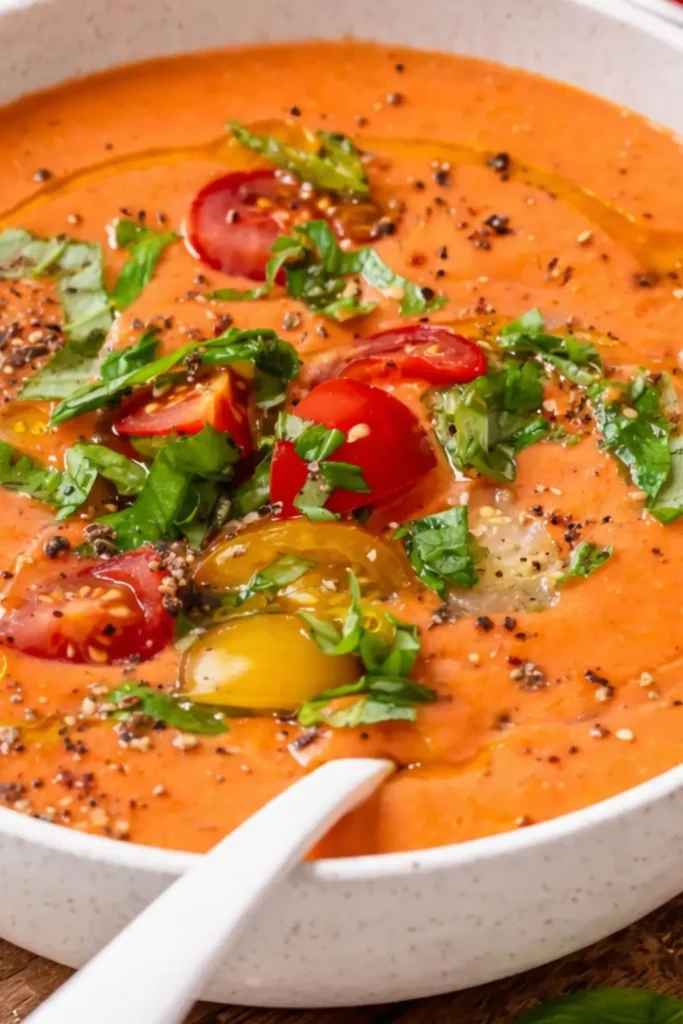
Making gazpacho is genuinely simple, but the details matter. Here’s exactly how to do it right.
Step 1: Blanch and Peel the Tomatoes
This step intimidates people who’ve never done it, but it takes less than 5 minutes and makes a real textural difference in the finished soup.
Fill a large bowl with ice water and set it near your stove. Bring a large pot of water to a rolling boil.
Score the tomatoes by slicing a small “X” into the bottom of each one with your paring knife — just through the skin, not deep into the flesh. This gives the skin a starting point to peel away easily after blanching.
Drop the tomatoes into the boiling water for exactly 30 seconds. Watch them. At 30 seconds, the scored skin starts to curl back slightly at the X. That’s your cue.
Remove with a slotted spoon and drop immediately into the ice water for 1–2 minutes. The shock stops the cooking instantly and makes the skins slide off almost effortlessly.
Peel back the skins starting at the scored X. They should come away in large, clean pieces. Discard the skins. Chop the peeled tomatoes into rough chunks — they don’t need to be perfect since they’re going into the blender.
Step 2: Combine and Marinate
In a large mixing bowl, combine your chopped tomatoes, cucumber, red pepper, shallot, garlic, olive oil, lemon juice, sea salt, and pepper.
Now here’s the step most people skip and then wonder why their gazpacho tastes a little flat: let everything sit together for at least 20 minutes before blending. Stir occasionally. During this marinating window, the salt draws moisture from the vegetables, the olive oil begins to infuse, and the garlic and shallot mellow slightly into the tomato base.
The longer you wait, the better it tastes. If you have time, let it sit for an hour. If you have even more time — refrigerate it overnight before blending. I’ve done this when prepping for a dinner party and the depth of flavor is noticeably better.
Step 3: Blend Until Smooth
Transfer the marinated vegetables and all their liquid to your blender. If you’re using a standard blender rather than a high-powered one, work in two batches to avoid overflow.
Blend on high for at least 60 seconds — longer than you think you need. You want a completely smooth, velvety consistency with no visible chunks. In a Vitamix, 60–90 seconds on high produces a silky, restaurant-quality texture. In a regular blender, run it for 2 full minutes and check the consistency.
Taste the blended soup and adjust seasoning. Add more salt if it tastes flat, more lemon if it needs brightness, more olive oil if it needs richness. This is your last easy opportunity to get the seasoning exactly right before it goes cold.
Step 4: Chill for at Least 2 Hours
Transfer the blended gazpacho to an airtight container or pitcher and refrigerate for a minimum of 2 hours. This step is not optional — warm gazpacho is not really gazpacho. The chill time allows all the flavors to meld and develop, and transforms the soup from “blended vegetables” to something that genuinely tastes complex and complete.
Overnight chilling is even better. I almost always make gazpacho the evening before I want to serve it, and it’s consistently the best version.
Step 5: Serve and Garnish
Give the gazpacho a good stir before serving — it separates slightly in the fridge, which is completely normal and expected. Ladle into bowls, sprinkle generously with fresh chopped basil, and serve immediately.
That’s it. That’s the whole recipe.
The Tomato Peeling Question — Is It Really Worth It?
I know what you’re thinking. “Can I skip the blanching and just blend the tomatoes with their skins on?” Technically yes. The result won’t kill you. But here’s the honest answer:
Tomato skins don’t blend smoothly, even in a high-powered blender. They break into small, slightly chewy fragments that affect the texture. In a recipe as simple as gazpacho — where smooth, velvety texture is a core part of the experience — those little skin fragments matter more than you’d expect.
Blanching takes 5 minutes total including filling the ice bath, boiling, and peeling. For a recipe you’re going to let chill for 2 hours anyway, 5 extra minutes is a completely reasonable investment.
That said — if you’re genuinely pressed for time and texture isn’t your priority, a fine-mesh strainer solves the skin problem without blanching. Blend everything together, skins and all, then pour through a strainer and press the solids through with a spoon. You get a smooth result without the blanching step. It takes about the same amount of time and produces good (if slightly less bright-flavored) results.
My genuine recommendation: blanch if you can, strain if you can’t, and don’t skip at least one of them.
Choosing the Right Tomatoes — The Most Important Decision You’ll Make
This is worth its own section because I’ve eaten genuinely disappointing gazpacho made from inferior tomatoes, and the difference is stark.
Gazpacho is a raw tomato recipe. Unlike sauces, stews, or roasted dishes where heat concentrates and develops tomato flavor, gazpacho relies entirely on the tomatoes tasting great before they hit the blender. There’s nowhere to hide.
Best Tomatoes for Gazpacho
- Vine tomatoes — The recipe’s specified choice and my top recommendation. Sold still attached to the vine, they’re consistently riper and more flavorful than loose supermarket tomatoes. The vine slows the ripening process and preserves more volatile flavor compounds.
- Heirloom tomatoes — If you’re at a farmers market in peak summer and heirlooms are available, buy them. They produce the most complex, richest gazpacho imaginable. Worth every penny for a summer batch.
- Roma tomatoes (plum tomatoes) — Meatier, less watery, and reliably flavorful. They produce a thicker gazpacho which some people prefer. A very solid backup choice.
- Beefsteak tomatoes — High water content but excellent flavor when truly ripe. Works well, produces a slightly thinner result.
Tomatoes to Avoid
- Standard supermarket tomatoes (pale, firm, picked unripe) — These produce thin, acidic, flavorless gazpacho. The kind that makes people think they don’t like gazpacho when they actually just had bad tomatoes. Avoid them if at all possible.
- Cherry tomatoes — Not ideal here due to the volume needed and slightly different flavor balance. Better for other recipes.
FYI — the smell test works. A ripe tomato smells like a tomato at the stem end. Pick up your tomatoes at the store and smell them. No smell = no flavor. Strong, sweet, tomato-y smell = perfect for gazpacho.
How to Get the Best Flavor — Pro Tips From Someone Who’s Made This Many Times
Let the Vegetables Marinate Longer Than the Recipe Requires
The recipe says 20 minutes minimum. The real answer is: as long as you can give it. An hour of marinating produces noticeably richer flavor. Overnight marinating before blending produces exceptional gazpacho. If you’re making this for a special occasion, start the day before.
Use Your Best Olive Oil
In a cooked recipe with many competing flavors, average olive oil is fine. In gazpacho — a raw, lightly seasoned soup — olive oil quality is immediately perceptible. Use the bottle you bought for salad dressing, not the one you use for sautéing. The peppery, fruity finish of a good extra virgin olive oil adds a dimension to this soup that cheaper oil can’t replicate.
Season Cold
Cold food needs more seasoning than warm food. Cold temperatures suppress your perception of salt and flavor. Always taste your gazpacho after it’s been chilled and adjust the seasoning at serving temperature, not at room temperature. You may need an extra pinch of salt after chilling that the warm-tasting version didn’t need.
Serve It Truly Cold
Gazpacho at refrigerator temperature is good. Gazpacho served in chilled bowls is exceptional. Place your serving bowls in the freezer for 10 minutes before ladling the soup into them. It keeps the gazpacho cold longer and gives the whole experience a noticeably more refreshing quality. If you’re serving guests, this small detail consistently impresses people.
Don’t Skip the Basil
Fresh basil isn’t just decoration. The volatile aromatic compounds in fresh basil lift the entire flavor of the soup the moment you tear or chop it. Add it right before eating — not before serving and definitely not before chilling. Basil wilts, browns, and loses its aromatic punch fast. Treat it as a last-second addition and it performs beautifully.
Customizations and Variations — Make It Your Own
The base recipe is excellent as written. But gazpacho is also one of the most flexible cold soups in existence. Here are the variations worth trying:
Make It Spicier
- Add ½ a jalapeño or serrano pepper to the vegetables before blending. Start with a small amount, taste, and add more if you want more heat. The cold temperature mellows spice slightly, so you can be a little more generous than you might expect.
- A pinch of cayenne works too for background warmth without the fresh pepper flavor.
Make It Smoother and Richer
- Add ½ slice of day-old white bread (crusts removed) to the blender with the vegetables. Traditional Spanish gazpacho often includes bread to thicken the soup and give it a creamier, more substantial body. It blends completely smooth and adds a quiet richness that’s genuinely lovely.
- Increase the olive oil to ⅓ cup for a richer, more luxurious mouthfeel.
Change the Flavor Profile
- Add 2 tablespoons of sherry vinegar instead of or alongside the lemon juice for a more traditional Spanish flavor profile. Sherry vinegar has more depth and complexity than lemon and gives the gazpacho an authentic Andalusian quality.
- Swap fresh basil for fresh mint — unusual but surprisingly refreshing on a very hot day.
- Add a yellow or orange pepper alongside the red for a sweeter, more complex pepper flavor.
Make It Chunkier (Gazpacho Variations)
Chunky gazpacho (sometimes called “salmorejo” style) is popular in southern Spain and involves either blending less or adding finely diced fresh vegetables as a topping. Reserve ¼ cup of finely diced cucumber, tomato, and pepper before blending and sprinkle them on top at serving for a mix of textures.
Toppings Beyond Basil
- A drizzle of really good olive oil right before serving — adds a gorgeous sheen and extra richness
- Toasted croutons — small cubes of good bread toasted in olive oil until golden and crispy. The crunch against the smooth, cold soup is genuinely excellent.
- Finely diced red onion — sharp, pungent, and traditional in some regional Spanish versions
- Sliced green olives — briny and savory, they complement the tomato base beautifully
- Diced avocado — cool, buttery chunks add richness and make the soup more filling
- Cucumber ribbons — shaved thin with a peeler, laid on top for a clean, elegant presentation
Storage and Make-Ahead — Gazpacho Is Your Meal Prep Friend
Here’s one of the most practical things about this recipe: gazpacho actively improves with time in the fridge.
Refrigerator Storage
Gazpacho keeps for up to 5 days in the fridge in an airtight container or sealed pitcher. Stir or shake it well before serving — it separates naturally as it sits, which is just physics doing its thing. Separation doesn’t affect flavor or quality at all.
Day 2 and Day 3 gazpacho often tastes better than Day 1 because the flavors continue to develop and meld in the fridge. I regularly make a batch on Friday evening and it tastes noticeably richer by Sunday. :/ (Meaning the only downside is waiting.)
Make-Ahead Strategy
This is one of the best dinner party recipes in existence precisely because it must be made ahead. Make a full batch 1–2 days before your event, keep it chilled, give it a good stir before serving, add fresh basil at the table — and you’ve got a stunning, flavorful first course that required zero day-of cooking. Guests always love it.
Freezing
Gazpacho freezes reasonably well for up to 2 months, though the texture changes slightly after freezing and thawing — it becomes a bit more watery. Blend it again briefly after thawing and season to taste — a little extra salt and lemon juice usually restores it nicely. Freeze in individual portions for easy summer lunches.
Still Hungry, Try It Next recipe :-

Common Mistakes — And How to Avoid Every One of Them
Mistake #1: Using Under-Ripe Tomatoes
I mentioned this already, but it’s worth repeating because it’s by far the most common reason gazpacho disappoints. Under-ripe tomatoes produce thin, acidic, flavorless soup. Smell your tomatoes before you buy them. Choose the ones that smell like tomatoes — ripe, sweet, a little earthy. If they have no scent, they have no flavor.
Mistake #2: Not Marinating Long Enough
The 20-minute minimum in the recipe is genuinely the minimum. Skipping the marinating step and blending immediately produces flat, less complex gazpacho. Twenty minutes is the floor, not the recommendation. Give the vegetables an hour if you can.
Mistake #3: Under-Seasoning
Cold dulls flavor perception. Season your gazpacho at room temperature, then taste again after chilling and adjust. The chilled version almost always needs a little more salt than the warm version did. Don’t skip the second seasoning check.
Mistake #4: Not Chilling Long Enough
Two hours is the minimum. Gazpacho needs adequate chill time for two reasons: temperature (it should be genuinely cold, not just slightly cool) and flavor development (the blended soup continues to taste better as the ingredients integrate in the cold). If you only chill for 30 minutes, you’ll taste a good blended vegetable soup. After 2 hours, you’ll taste actual gazpacho.
Mistake #5: Blending in One Batch in a Standard Blender
Standard blenders have a maximum fill line for a reason — and hot or frothy liquids can overflow dangerously. Even with cold soup, overfilling the blender produces uneven blending where the top stays chunky while the bottom over-processes. Work in two batches with a standard blender for a consistently smooth result.
Mistake #6: Serving It in Room-Temperature Bowls
This seems minor until you notice the difference. A chilled bowl keeps your gazpacho cold for the entire meal. A room-temperature bowl starts warming the soup the moment you ladle it in. Stick your bowls in the freezer for 10 minutes before serving. Simple, free, and genuinely impactful.
Serving Suggestions — Build a Meal Around Your Gazpacho
Gazpacho works beautifully as a standalone light lunch, but it also pairs perfectly with a range of summer dishes. Here are the combinations I love:
Light Pairings
- Crusty sourdough bread or baguette — For scooping and for satisfying the bread-lover in you. Tear it into chunks and dip directly. Incredible.
- Simple green salad with lemon dressing — Keeps the whole meal light, fresh, and summery.
- Sliced fresh fruit — A plate of watermelon, peaches, and berries alongside gazpacho is peak summer eating. 🙂
Heartier Additions
- Vegan bruschetta — Toasted baguette slices with diced tomatoes, garlic, fresh basil, and olive oil. Doubles down on the tomato theme in the best possible way.
- Stuffed portobello mushrooms — Pair a warm, hearty stuffed mushroom with a cold bowl of gazpacho for a dinner that covers all the temperature and texture bases beautifully.
- Vegan chickpea salad — The protein and substance make the overall meal more filling while keeping everything plant-based and fresh.
As Part of a Larger Spread
Gazpacho excels as a summer dinner party first course. Serve it in small glasses or shot glasses for an elegant amuse-bouche, or in proper bowls as a seated starter. Follow it with a grain bowl, stuffed vegetables, or a pasta dish for a complete, effortlessly impressive vegan summer menu.
Why This Recipe Is Naturally Vegan (And Why That Matters)
Here’s what I love about gazpacho specifically in the context of vegan cooking: nobody had to adapt it. Traditional Andalusian gazpacho has always been plant-based. No animal products were removed. No substitutions were made. This is what the dish has been for centuries.
It’s a useful reminder that plant-based eating isn’t about deprivation or clever substitutions — it’s about the enormous, delicious, often-overlooked landscape of food that was never animal-based to begin with. Gazpacho sits comfortably in that landscape with zero compromise.
The vegan label here is almost incidental. This recipe is excellent because vine tomatoes and good olive oil are excellent. It happens to contain no animal products, but that’s not what makes it worth making. What makes it worth making is that it’s one of the most refreshing, flavorful, effortless summer soups in the culinary canon, and it takes 20 minutes of actual work.
Gazpacho Around the World — Regional Variations Worth Knowing
Classic tomato gazpacho is the version most people know, but the broader gazpacho family includes some genuinely fascinating variations:
Salmorejo (Córdoba, Spain)
Salmorejo is gazpacho’s thicker, richer cousin. It uses only tomatoes, bread, olive oil, garlic, and vinegar — no cucumber or pepper — and includes significantly more bread, producing a soup with the consistency of a thick sauce rather than a drinkable soup. Traditionally topped with diced jamón and hard-boiled egg (easily made vegan with capers and diced olives instead), salmorejo is one of the most intensely flavored cold soups in existence.
Ajo Blanco (Málaga, Spain)
White gazpacho made from almonds, bread, garlic, olive oil, and sherry vinegar. No tomatoes at all. It’s pale, incredibly rich, and startlingly good — often served with grapes or melon on top. A completely different experience from tomato gazpacho but equally Spanish and equally worth making.
Watermelon Gazpacho
A summer favorite that replaces a portion of the tomatoes with fresh watermelon. The result is lighter, sweeter, and more refreshing than classic gazpacho — beautiful served in small glasses at a summer party. Add a tiny pinch of cayenne for contrast.
Green Gazpacho
Uses green tomatoes or tomatillos as the tomato base, combined with cucumber, green pepper, fresh herbs, and lime juice. Bright, tangy, and visually striking served in white bowls with a drizzle of olive oil.
Still Hungry, Try It Next recipe :-
Vegan Gluten-Free Banana Oat Pancakes

The Blender Matters More Than You Think
Let’s talk equipment honestly for a second, because the blender you use genuinely affects the final result.
High-Powered Blenders (Vitamix, Blendtec, Ninja Professional)
These produce the silkiest, most restaurant-quality gazpacho possible. They run at high enough RPM to break down cell walls completely, creating a texture that’s almost creamy despite containing no cream. One 60–90 second blend on high and you’re done. No straining needed unless you want a completely pristine result.
Standard Countertop Blenders
Work well with some extra attention. Blend in two batches, run it for 2 full minutes per batch, and strain the result through a fine-mesh strainer if texture matters to you. The flavor will be identical — just the texture may be slightly less smooth.
Immersion Blender (Stick Blender)
The most convenient option but the least effective for gazpacho. It works, but it can’t fully break down the tomato and pepper skins (another reason the blanching step helps), and it struggles to produce the truly smooth texture that makes great gazpacho. Use it when nothing else is available, but plan to strain the result.
IMO, if you make blended soups, sauces, or smoothies regularly, investing in a high-powered blender is one of the best kitchen upgrades you can make. Gazpacho is just one example of where it makes a noticeable difference.
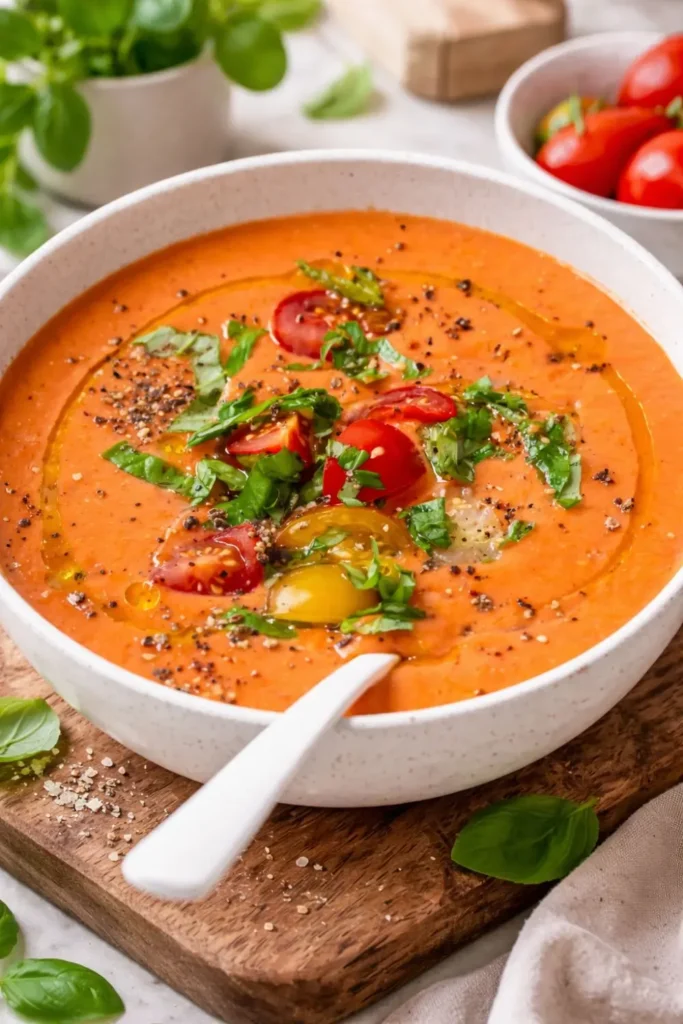
Frequently Asked Questions
Can I make this without peeling the tomatoes?
Yes, but strain the blended soup through a fine-mesh strainer afterward to remove the skin fragments. The flavor is essentially the same; the texture will be slightly less smooth than a blanched version but perfectly acceptable.
Can I use canned tomatoes?
You can in a pinch, but the flavor difference is significant. Canned tomatoes are cooked during the canning process, which changes their flavor profile and makes the gazpacho taste less bright and fresh. If fresh vine tomatoes aren’t available, try to find good-quality whole peeled canned San Marzanos and accept that the result will be a slightly different soup — still good, just not quite the same.
My gazpacho tastes too acidic. How do I fix it?
A pinch of sugar balances acidity without making the soup sweet. Add ½ teaspoon, stir, and taste. Alternatively, a small piece of stale bread blended in adds body that perceived-sweetness and mellows sharpness. More olive oil also rounds out sharp acidity effectively.
Can I add more garlic?
You can, but be careful with raw garlic in a cold soup. Raw garlic intensifies as it sits — a gazpacho that tasted perfectly garlicky immediately after blending may taste aggressively garlicky after 4 hours of chilling. If you love garlic, add 3 cloves and taste again after chilling before adding more.
Is this recipe nut-free?
Yes — completely nut-free as written. Every ingredient is naturally nut-free.
Can I serve this warm?
Technically you can warm it, but you’d essentially be making a fresh tomato soup at that point — a completely different dish with different texture and flavor characteristics. Gazpacho is specifically and fundamentally a cold soup. Serve it cold. That’s the whole point.
Final Thoughts — Make a Batch This Weekend
Here’s the simplest possible summary: this Easy Vegan Gazpacho is one of the best things you can make in summer, and it asks almost nothing of you in return. Twenty minutes of active work. Two hours of fridge time. Six servings of something genuinely excellent.
Get the ripest vine tomatoes you can find. Use good olive oil. Let the vegetables marinate properly. Blend until completely smooth. Chill until truly cold. Serve in chilled bowls with fresh basil torn on top.
The result is a bowl of soup that tastes like summer at its absolute peak — bright, refreshing, complex, and satisfying. Naturally vegan. Naturally gluten-free. Naturally perfect for the hottest months of the year.
Make it this weekend while summer tomatoes are still at their best. Make a big batch. Share it with someone. And when they ask what’s in it — enjoy the look on their face when you tell them it took 20 minutes and no cooking whatsoever.
That moment never gets old.
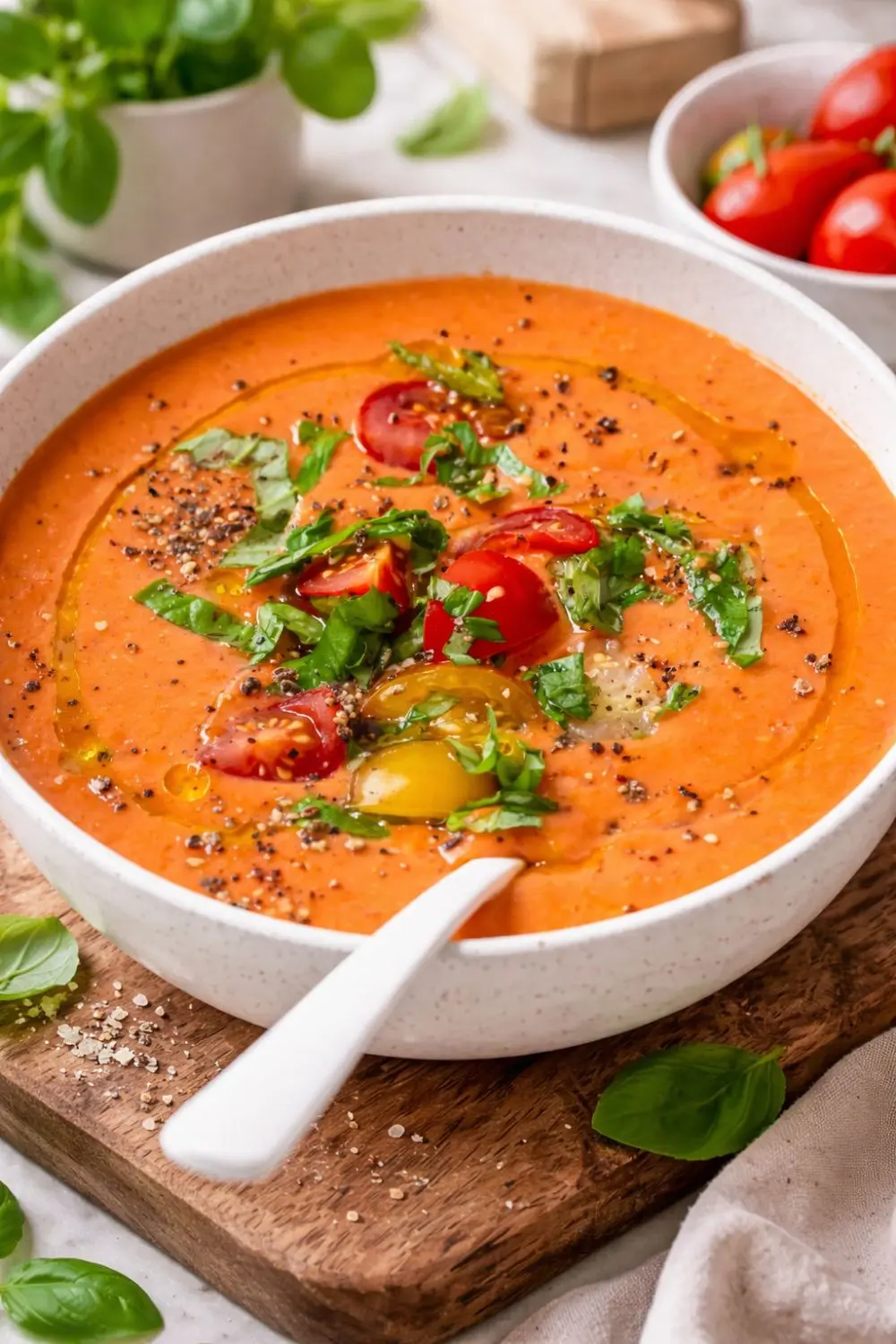
Easy Vegan Gazpacho Recipe
Ingredients
Equipment
Method
- Making gazpacho is genuinely simple, but the details matter. Here’s exactly how to do it right.
- Step 1: Blanch and Peel the Tomatoes
- This step intimidates people who’ve never done it, but it takes less than 5 minutes and makes a real textural difference in the finished soup.
- Fill a large bowl with ice water and set it near your stove. Bring a large pot of water to a rolling boil.
- Score the tomatoes by slicing a small “X” into the bottom of each one with your paring knife — just through the skin, not deep into the flesh. This gives the skin a starting point to peel away easily after blanching.
- Drop the tomatoes into the boiling water for exactly 30 seconds. Watch them. At 30 seconds, the scored skin starts to curl back slightly at the X. That’s your cue.
- Remove with a slotted spoon and drop immediately into the ice water for 1–2 minutes. The shock stops the cooking instantly and makes the skins slide off almost effortlessly.
- Peel back the skins starting at the scored X. They should come away in large, clean pieces. Discard the skins. Chop the peeled tomatoes into rough chunks — they don’t need to be perfect since they’re going into the blender.
- Step 2: Combine and Marinate
- In a large mixing bowl, combine your chopped tomatoes, cucumber, red pepper, shallot, garlic, olive oil, lemon juice, sea salt, and pepper.
- Now here’s the step most people skip and then wonder why their gazpacho tastes a little flat: let everything sit together for at least 20 minutes before blending. Stir occasionally. During this marinating window, the salt draws moisture from the vegetables, the olive oil begins to infuse, and the garlic and shallot mellow slightly into the tomato base.
- The longer you wait, the better it tastes. If you have time, let it sit for an hour. If you have even more time — refrigerate it overnight before blending. I’ve done this when prepping for a dinner party and the depth of flavor is noticeably better.
- Step 3: Blend Until Smooth
- Transfer the marinated vegetables and all their liquid to your blender. If you’re using a standard blender rather than a high-powered one, work in two batches to avoid overflow.
- Blend on high for at least 60 seconds — longer than you think you need. You want a completely smooth, velvety consistency with no visible chunks. In a Vitamix, 60–90 seconds on high produces a silky, restaurant-quality texture. In a regular blender, run it for 2 full minutes and check the consistency.
- Taste the blended soup and adjust seasoning. Add more salt if it tastes flat, more lemon if it needs brightness, more olive oil if it needs richness. This is your last easy opportunity to get the seasoning exactly right before it goes cold.
- Step 4: Chill for at Least 2 Hours
- Transfer the blended gazpacho to an airtight container or pitcher and refrigerate for a minimum of 2 hours. This step is not optional — warm gazpacho is not really gazpacho. The chill time allows all the flavors to meld and develop, and transforms the soup from “blended vegetables” to something that genuinely tastes complex and complete.
- Overnight chilling is even better. I almost always make gazpacho the evening before I want to serve it, and it’s consistently the best version.
- Step 5: Serve and Garnish
- Give the gazpacho a good stir before serving — it separates slightly in the fridge, which is completely normal and expected. Ladle into bowls, sprinkle generously with fresh chopped basil, and serve immediately.
- That’s it. That’s the whole recipe.
Notes
Full Nutrition Breakdown — Per Serving (1 of 6)
Gazpacho is one of those rare dishes where nutritious and deeply satisfying aren’t in competition. Here’s what every bowl delivers:| Nutrient | Per Serving |
| Calories | 122 kcal |
| Carbohydrates | 9g |
| Protein | 2g |
| Total Fat | 9g |
| Saturated Fat | 1g |
| Dietary Fiber | 3g |
| Sugar | 6g (naturally occurring) |
| Sodium | 397mg |
| Potassium | 448mg |
| Vitamin A | 1,951 IU |
| Vitamin C | 50mg |
| Calcium | 22mg |
| Iron | 1mg |
- 50mg of vitamin C per serving covers over 55% of the daily recommended intake in a single bowl. The combination of raw tomatoes, red pepper, and lemon juice makes this one of the highest vitamin C recipes you can eat in summer.
- 1,951 IU of vitamin A — almost entirely from the tomatoes and red pepper — supports eye health, immune function, and skin health. Raw vegetables preserve this vitamin better than cooked ones.
- At just 122 calories, this is one of the most nutritionally dense, low-calorie meals in existence. It fits comfortably as a light lunch or a first course before a heartier dinner.
- The 9g of healthy fat comes almost entirely from the olive oil — predominantly monounsaturated oleic acid, which helps your body absorb the fat-soluble vitamins in the vegetables. The fat in this recipe isn’t just for flavor; it makes the entire soup more nutritious.

Hi — I’m Rachel. I’m a wife, a mom, and a home cook who believes that food should bring comfort, joy, and compassion to the table. I live with my family — two hungry little foodies who are my most honest recipe testers — and together we’ve built a kitchen culture that’s all about good food that happens to be 100% vegan. I started this blog because I wanted a place to share the recipes that keep our days moving, the dishes that make weeknights feel a little easier, and the meals that become our little family traditions.