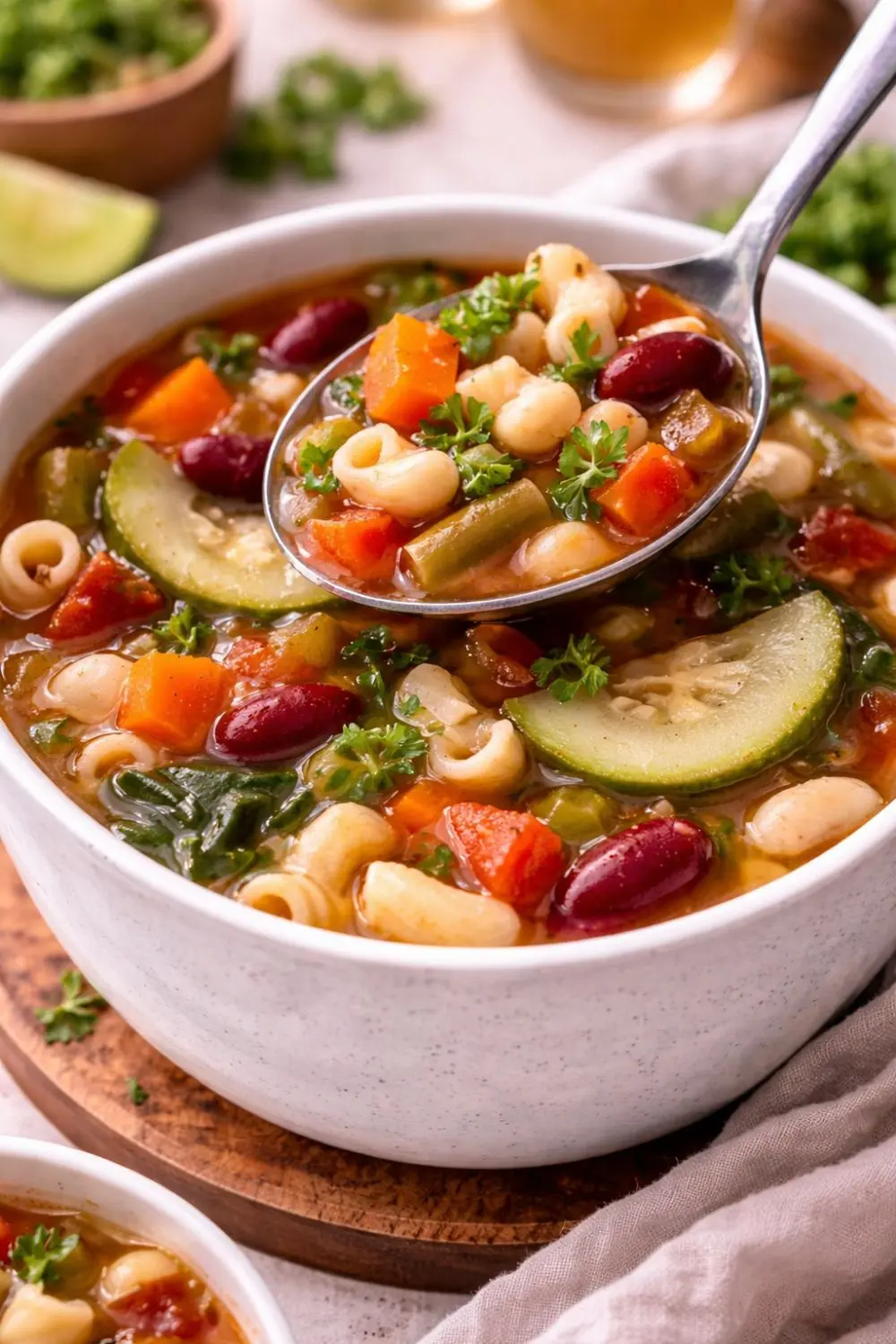
Step 1 - Prep and Load the Slow Cooker
Dice the onion, carrots, and celery. Cut the zucchini into half-moon pieces slice the zucchini in half lengthwise, then slice each half into ¼-inch pieces. Cut the green beans into 1-inch pieces. Mince the garlic. Drain and rinse both cans of beans.
Add all the vegetables, beans, diced tomatoes with juices, garlic, dried basil, dried oregano, bay leaves, and red pepper flakes to the slow cooker. Pour in the vegetable broth last the recipe uses 4–5 cups, and you choose based on your preferred final consistency. Start with 4 cups for a thicker, heartier soup; use 5 cups for a more brothy result.
Stir everything well to distribute the herbs and garlic evenly throughout. The broth goes in last specifically so it settles through all the vegetables and beans as it pours.
Do not add salt yet. The sodium content of different vegetable broth brands varies significantly taste and season at the end with full information about the soup's saltiness.
Step 2 -Slow Cook
Cover and cook on HIGH for 4–5 hours or LOW for 7–8 hours.
At the HIGH setting, check the soup at the 4-hour mark. The carrots should be completely tender, the tomatoes should have broken down fully into the broth, and the soup should have a rich, deep red-orange color throughout. The zucchini and green beans will be soft and flavorful.
Step 3 - Add Spinach During the Final 30 Minutes
When the slow cooker has 30 minutes remaining, add a big handful of fresh spinach directly to the pot. Stir it gently into the hot soup. The heat wilts the spinach beautifully within the remaining cook time it becomes soft, deeply green, and fully integrated without overcooking into gray, mushy leaves.
This timing matters. Spinach added at the start of a 5-hour slow cook loses its color, nutrients, and texture completely. Added 30 minutes from the end, it wilts into the soup perfectly and retains far more of its nutritional value.
Step 4 - Cook the Pasta Separately
While the final 30 minutes tick down on the slow cooker, cook the 1 cup of small pasta in a separate pot according to package directions until al dente. Drain it and set aside.
Why cook pasta separately? Pasta cooked directly in the slow cooker for any extended time absorbs enormous quantities of liquid, becomes bloated and mushy, and turns the broth starchy and thick in an unpleasant way. Cooking it separately and adding it at the end gives you pasta that's perfectly textured and doesn't compromise the soup's broth consistency.
If you're making this for meal prep and plan to store the soup for several days, consider keeping the pasta completely separate and adding it to individual bowls at serving. Pasta in stored soup continues absorbing broth and becomes unpleasantly soft by day two.
Step 5 - Finish, Season, and Serve
Remove and discard all bay leaves. Add the cooked, drained pasta to the slow cooker and stir gently to combine. Taste the soup and season with mineral salt and pepper start with ½ teaspoon of salt and build from there.