
Servings: 12 slices | Prep Time: 15 minutes | Cook Time: 45 minutes | Total Time: 1 hour | Calories: 333 kcal per slice (without frosting)
Let’s settle this once and for all: carrot cake is arguably the most underrated celebration cake in existence. And a homemade carrot cake recipe that happens to be fully vegan, warmly spiced, and made with three cups of freshly shredded carrots? That’s not a compromise. That’s the best version of the recipe.
This Vegan Gluten-Free Carrot Cake delivers twelve moist, deeply spiced slices with a tender crumb that holds together beautifully under a generous layer of vegan cream cheese frosting and nobody at the table will know or care that there’s no egg or dairy in sight.
I made this for a birthday gathering last spring, and the conversation at the cake table was exclusively about seconds. That’s the kind of outcome this recipe produces. Let me walk you through every component.
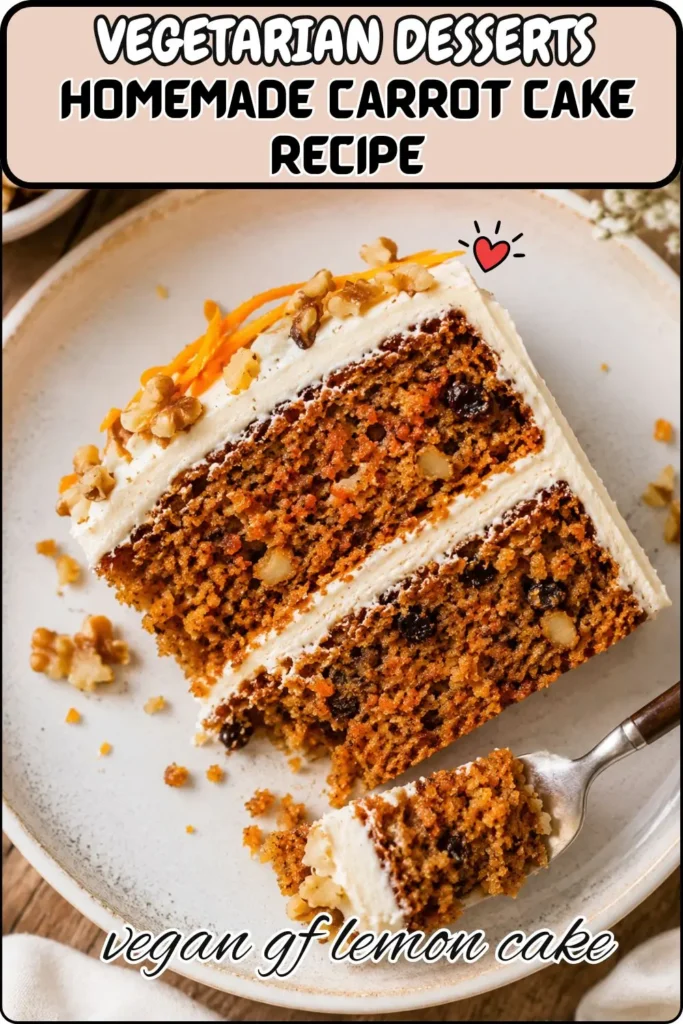
Why This Homemade Carrot Cake Recipe Works Without Eggs or Dairy
The two things eggs contribute to cake moisture and binding both get covered through different plant-based mechanisms in this recipe. Dairy-free yogurt (thick, unsweetened, and full-fat if possible) replaces eggs as the moisture and binding agent. Yogurt’s protein structure sets during baking similarly to egg protein, contributing the same tender, moist crumb that egg-based carrot cakes are known for.
Soy milk adds additional moisture and a subtle creaminess. Canola oil provides the fat that keeps every slice soft for days after baking oil-based cakes stay moist significantly longer than butter-based ones because oil doesn’t solidify when cold the way butter does. Refrigerated oil-based cake tastes exactly the same as a fresh slice. Refrigerated butter-based cake turns dense and dry. That’s a practical advantage worth noting if you’re making this ahead for a birthday or event.
The warm spice blend of cinnamon, ginger, and clove is what gives carrot cake its distinctive, complex flavor. This recipe uses all three, not just cinnamon, and the combination creates a depth that one-spice versions never achieve.
Ingredients You’ll Need For
Wet Ingredients
- ½ cup (114g) canola or vegetable oil – neutral flavor; keeps the cake moist for days
- ⅔ cup (150g) packed light brown sugar – the molasses notes in brown sugar add depth and a slight caramel quality
- 1 cup (200g) granulated sugar– for balanced sweetness
- ¾ cup (170g) unsweetened dairy-free yogurt – thick varieties work best; Forager Unsweetened Vanilla Bean Yogurt is the tested recommendation; any thick, unsweetened plant-based yogurt works
- ½ cup (120g) soy milk – or any dairy-free milk; soy milk provides the highest protein content which supports the cake’s structure
- 2 tsp pure vanilla extract – essential; don’t use imitation vanilla in a recipe this straightforward
Dry Ingredients
- 3 cups (360g) all-purpose flour – spoon into the measuring cup and level off; scooping directly from the bag packs in too much flour and produces a dry, dense cake
- 2 tsp baking powder
- 1 tsp baking soda
- 1 tsp salt
- 2 tsp ground cinnamon
- 1 tsp ground ginger
- ¼ tsp ground clove – the finishing warm note that elevates the spice blend from “cinnamon cake” to “proper carrot cake”
The Carrots and Mix-Ins
- 3 cups (280g) loosely packed finely shredded carrots -about 6–7 large carrots; finely shredded is essential; coarsely grated carrots create an uneven texture and pockets of undercooked vegetable
- ¾ cup (92g) walnuts or pecans, finely chopped -adds crunch and nuttiness throughout every slice
- ½ cup (83g) golden or dark raisins – adds natural sweetness and a chewy contrast; optional but traditional
- ½ cup (27g) shredded coconut – fully optional; adds a subtle tropical note and slight chew
For Frosting
- 1 recipe vegan cream cheese frosting – made from vegan cream cheese (Violife or Kite Hill work well), powdered sugar, vanilla, and a touch of lemon juice; the tangy frosting against the warm spice cake is the combination that defines carrot cake
FYI the carrot shredding step is the most time-intensive part of the prep. A food processor with a shredding disc cuts this from 10 minutes to 2 minutes and produces consistently fine shreds. If using a box grater, use the fine holes not the medium or coarse for the best final texture.
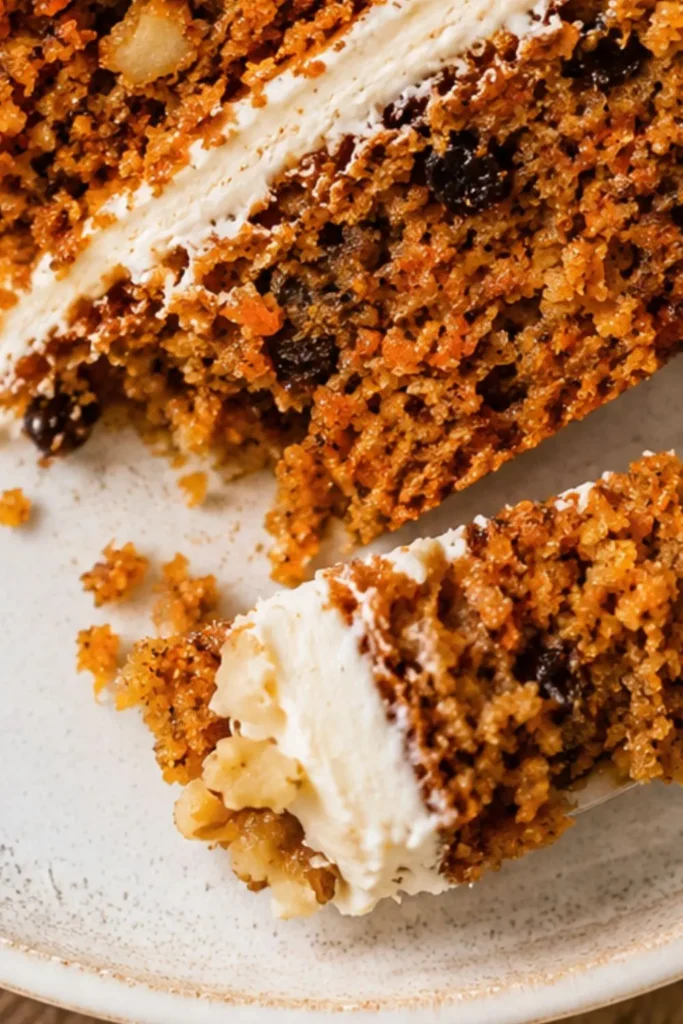
Equipment You’ll Need For
Standard baking equipment covers everything:
- Two 8″ or 9″ round cake pans -both sizes work; 8″ pans produce slightly taller layers; 9″ pans produce slightly thinner layers with a broader surface area; both bake beautifully
- Parchment paper – for lining the pan bottoms; essential for clean, crack-free removal
- Large mixing bowl -for the full batter
- Whisk -for combining sugars and oil and mixing wet ingredients
- Spatula or wooden spoon – for folding in the dry ingredients and carrots without overmixing
- Box grater or food processor with shredding disc – for the carrots; food processor is significantly faster
- Wire cooling rack – for cooling the layers completely before frosting; rushing this step leads to frosting that slides off warm cake
- Electric hand mixer or stand mixer – for making the vegan cream cheese frosting; a whisk by hand technically works but the mixer produces a smoother, fluffier result
- Offset spatula or butter knife – for spreading frosting evenly between and on top of the layers
- Toothpick – for testing doneness
Servings & Who This Recipe Is For
This recipe makes one two-layer round cake that slices into 12 generous pieces. It works for:
- Birthday celebrations -this is genuinely one of the best healthy birthday cake ideas in plant-based baking; it slices cleanly, presents beautifully, and feeds 12 people comfortably
- Holiday gatherings – the warm spice profile makes this equally at home at Easter, Thanksgiving, and Christmas tables
- Weekend baking projects – for anyone who wants a proper baking experience that produces a spectacular result
- Cupcakes – the batter converts to cupcakes perfectly; bake at 350°F for 30–33 minutes; makes approximately 24 standard cupcakes from the full recipe
For smaller gatherings, a 6″ three-layer version uses the same batter split into three 6″ pans (bake for 33–35 minutes each) for a taller, more impressive cake that serves 6–8 people more elegantly.
Caloric & Nutritional Info (Per Slice, Without Frosting)
| Nutrient | Amount |
| Calories | 333 kcal |
| Carbohydrates | 54g |
| Protein | 5g |
| Fat | 10g |
| Sugar | 30g |
These figures cover the cake itself without frosting. A generous layer of vegan cream cheese frosting adds approximately 120–150 kcal per slice depending on application thickness. A fully frosted slice lands in the 450–480 kcal range in line with most celebration cakes and completely reasonable for the occasion.
The protein at 5g per slice from flour, nuts, and yogurt is solid for a dessert cake. The fat at 10g primarily from canola oil and walnuts is predominantly unsaturated. This is the nutritional profile of a celebration cake made from whole-food plant ingredients, which compares favorably against most conventional carrot cake recipes that rely on multiple eggs and ½ cup of butter.
Step-by-Step Instructions For Homemade Carrot Cake Recipe Gluten-Free
Step 1- Prep and Preheat (5 Minutes)
Preheat the oven to 350°F (175°C). Grease both cake pans thoroughly sides and bottom with oil or vegan butter. Line the bottoms with parchment paper circles cut to fit. Greasing on top of the parchment is optional but prevents even the slightest sticking.
Shred the carrots now using a food processor or box grater. Measure out 3 loosely packed cups and set aside. Loose packing matters tightly packed carrot cups add more moisture and density than the recipe accounts for.
Step 2- Mix the Wet Ingredients (5 Minutes)
In your large mixing bowl, whisk together the canola oil, brown sugar, and granulated sugar until well combined. Add the dairy-free yogurt, soy milk, and vanilla extract and whisk until the mixture is smooth and uniform. The combined sugars should fully dissolve into the wet mixture at this stage a few minutes of whisking ensures no sugar granules remain.
Step 3- Add the Dry Ingredients (3 Minutes)
Add the flour, baking powder, baking soda, salt, cinnamon, ginger, and clove directly to the wet ingredient bowl. Stir with a spatula until just combined to stop the moment the dry flour streaks disappear. Overmixing develops gluten and produces a tough, chewy cake rather than a tender one. A few lumps are completely acceptable; they bake out.
Step 4- Fold In Carrots and Mix-Ins
Add the shredded carrots, chopped walnuts or pecans, raisins, and optional coconut to the batter. Fold in gently with the spatula two or three passes around the bowl are enough to distribute everything without overworking the batter. The carrots add significant volume to the batter; it will look very thick and dense at this stage. That’s correct this is a substantial batter.
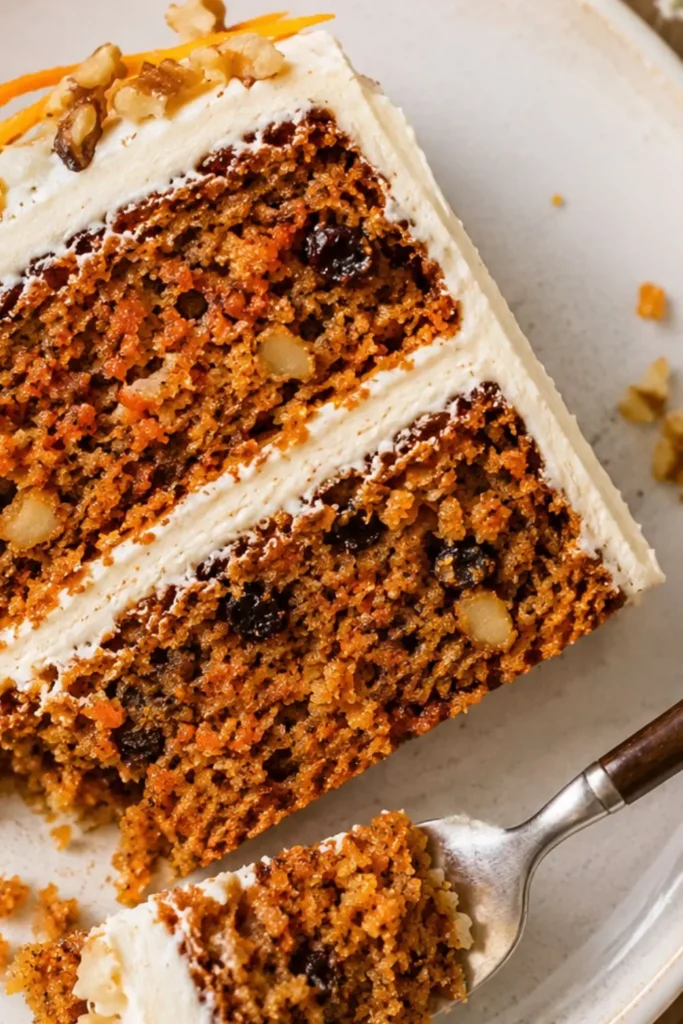
Step 5- Divide and Bake
Divide the batter as evenly as possible between the two prepared pans. Use a spatula to smooth the tops into an even layer. Bake at 350°F:
- 8″ pans- 43–48 minutes
- 9″ pans- 40–45 minutes
Check doneness by inserting a toothpick into the center it should come out clean or with just a few dry crumbs. The tops should feel springy when gently pressed rather than soft or sunken. If the toothpick comes out wet, add 3–5 more minutes and test again.
Step 6- Cool Completely Before Frosting
Let the cakes cool in the pans for 1 minute only, then run a knife around the edge of each pan and flip onto a wire rack. Peel off the parchment. Allow the layers to cool completely a minimum of 1 hour, ideally 2 hours before any frosting touches them. Warm cake causes frosting to melt and slide, which produces a beautiful mess rather than a beautiful cake. Patience here is directly proportional to the quality of the final presentation.
Step 7- Frost and Assemble
Place one cooled cake layer on your serving plate or cake board. Spread a generous layer of vegan cream cheese frosting over the top surface about ¼ to ⅓ of the total frosting. Place the second layer on top. Apply frosting to the top and sides of the assembled cake, using an offset spatula to smooth it evenly.
For a naked cake look, frost only the top and leave the sides partially bare the layers of cake and carrot color visible through the sides look genuinely beautiful. For a fully frosted finish, apply a thin crumb coat first, refrigerate for 20 minutes, then apply the final layer.
You may also like Next recipe
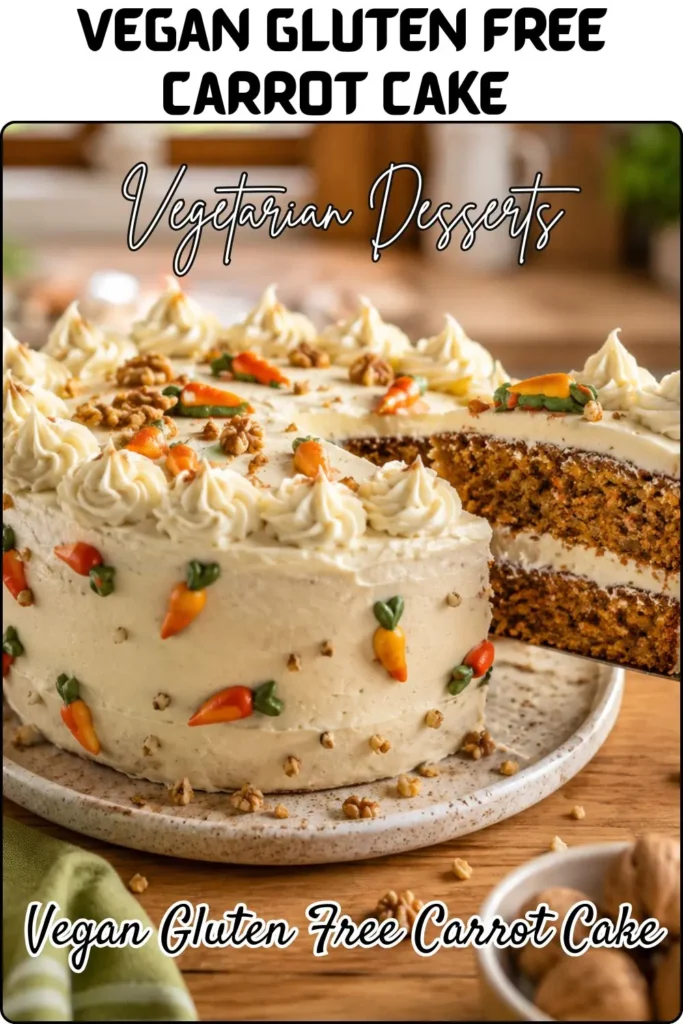
Tips for the Perfect Vegan Carrot Cake
Spoon and Level the Flour Every Time
The spoon-and-level method (spooning flour from the bag into the measuring cup, then leveling with a straight edge) is the single most important technique tip for consistent baking results. Scooping the measuring cup directly from the flour bag compresses the flour and adds 20–30% more than the recipe intends. More flour = drier, denser cake. Spoon, level, every time.
Fine Shredding vs. Coarse Grating
Fine shredding produces a better carrot cake than coarse grating in every measurable way: the carrot integrates into the batter more evenly, the texture is more uniform, and there are no visible chunks of barely-cooked carrot in the finished slice. Use the fine holes on your box grater or a food processor shredding disc not the large holes used for cheese.
Dairy-Free Yogurt Selection Matters
The yogurt is the primary moisture and binding agent in this recipe. The ideal yogurt is:
- Thick – Greek-style plant yogurt holds together better than thin, drinkable varieties
- Unsweetened – added sugar in the yogurt throws off the sweetness balance
- Unflavored or vanilla – vanilla adds complementary flavor; other flavors (coconut, fruit) may work but introduce competing tastes
Forager, Kite Hill, and Silk unsweetened Greek-style plant yogurts all perform well in this recipe. Avoid Skyr-style yogurts which can be too thick and produce a denser crumb.
Make It Ahead The Cake Improves Overnight
This cake follows the rule that many spiced baked goods follow: it tastes better on day two. The spices deepen, the moisture distributes more evenly through the crumb, and the sweetness mellows slightly. Bake the layers the day before your event, wrap tightly in plastic wrap, and refrigerate. Frost on the day. The resulting cake will be the best version of this recipe you can produce.
Make-Ahead & Storage Guide
- Unfrosted cake layers- Wrap tightly in plastic wrap; room temperature for 1 day or refrigerator for up to 3 days
- Frosted cake- Refrigerate in an airtight container or under a cake dome for up to 4 days; bring to room temperature 30–45 minutes before serving for the best texture
- Freezer- Freeze unfrosted layers wrapped tightly in plastic and then foil for up to 1 month; thaw overnight in the refrigerator before frosting
- Individual slices- Wrap in plastic wrap; refrigerate for up to 4 days; freeze for up to 1 month
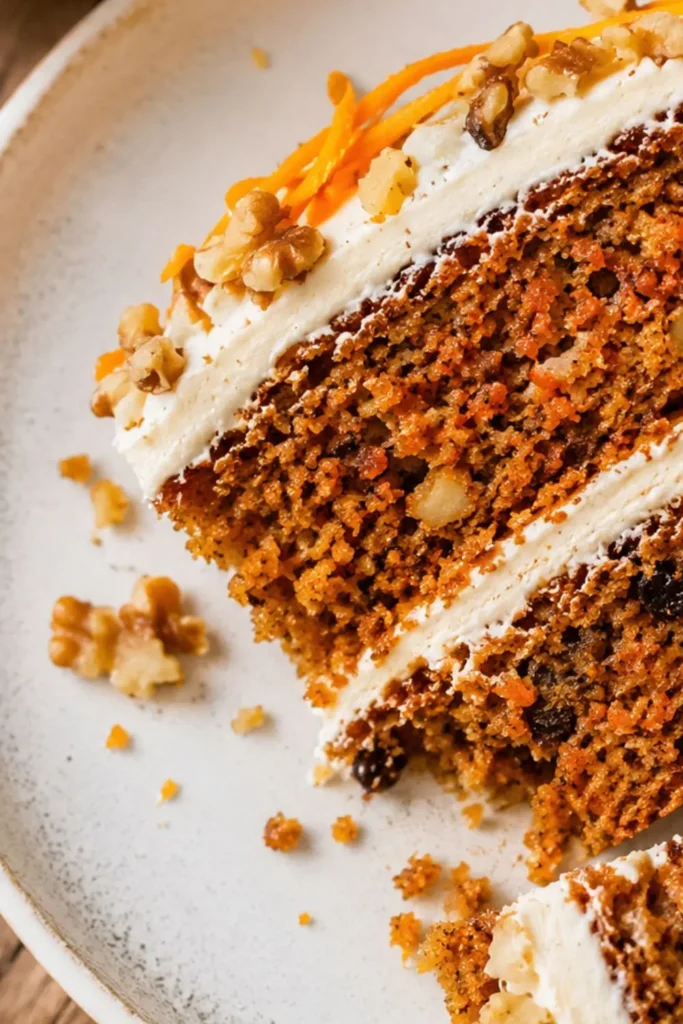
Variations Worth Trying
Carrot Cake Cupcakes (Perfect for Healthy Birthday Cake Ideas)
Use the full batter to make approximately 24 standard cupcakes. Fill each liner ¾ full, bake at 350°F for 30–33 minutes, and frost individually with vegan cream cheese frosting. These make one of the best healthy birthday cake ideas for adults and children who want individual portions without the slicing and they travel significantly more easily than a layered cake.
Three-Layer 6″ Celebration Cake
Split the batter into three 6″ pans (bake at 350°F for 33–35 minutes each). The taller, three-layer format produces a more dramatic presentation for small gatherings of 6–8 people and photographs beautifully.
Spiced Walnut-Heavy Version
Double the walnuts to 1½ cups and reduce the raisins to ¼ cup. This shifts the texture toward crunchy throughout and creates a more savory-leaning cake that pairs particularly well with a lemon-forward vegan cream cheese frosting.
Frequently Asked Questions
Can I make this gluten-free? Yes, use a 1:1 gluten-free flour blend with xanthan gum (Bob’s Red Mill or King Arthur both work well). The texture will be slightly denser than the all-purpose version, and the crumb may be slightly more fragile. Increase the baking time by 5 minutes and check with a toothpick. The result is a genuinely good gluten-free carrot cake without the gummy texture that many GF cakes suffer from.
Can I use a different oil? Yes, light olive oil, avocado oil, or melted refined coconut oil all work as substitutes. Avoid extra virgin olive oil (too strong a flavor) and unrefined coconut oil (adds a distinct coconut taste). Canola remains the most neutral and affordable option.
Why did my cake sink in the center? Three likely causes: the oven wasn’t fully preheated, the pans were opened during baking before the structure set, or the batter was overmixed. Make sure your oven reaches the full 350°F before the pans go in, keep the door closed for at least 35 minutes, and mix the batter only until the flour disappears.
Does this cake work without the mix-ins? Yes, the walnuts, raisins, and coconut are all optional additions. The base cake stands completely on its own without them. Leaving them out produces a cleaner-textured, more uniform crumb that some people prefer for layered cakes where the visual cross-section matters.
My Final Thoughts
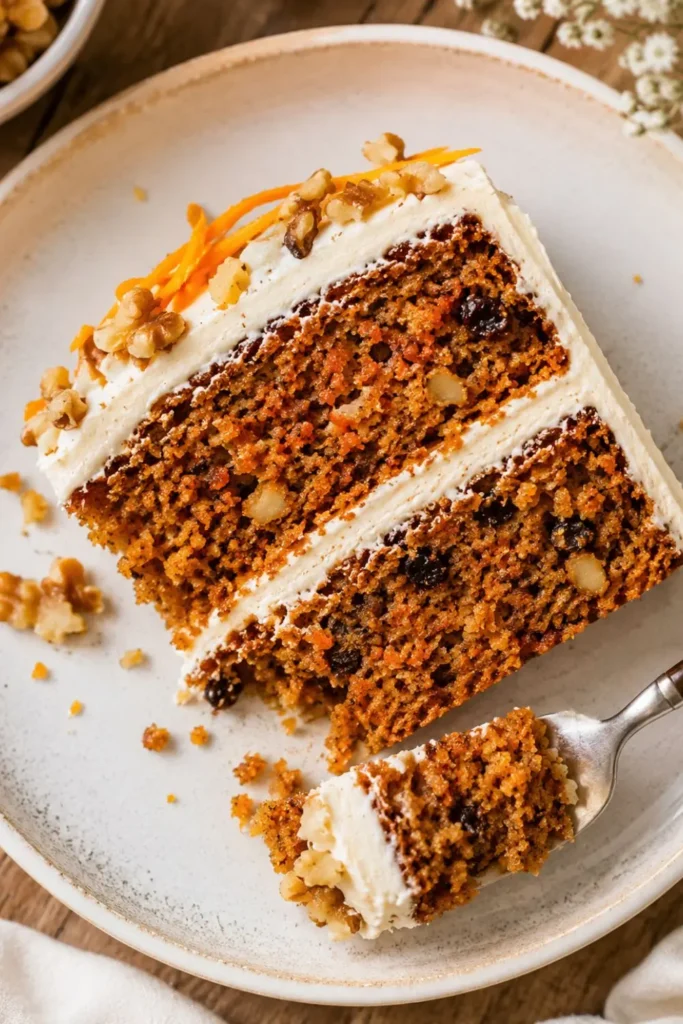
This homemade carrot cake recipe is genuinely the perfect vegan carrot cake moist from the yogurt and oil, deeply spiced from the cinnamon-ginger-clove blend, textured from the walnuts and raisins, and finished with a tangy cream cheese frosting that makes every slice complete. Twelve servings, one hour of active effort, and a result that works for birthdays, holidays, or any occasion that deserves a celebration cake.
It’s the cake that proves vegan baking isn’t about what you remove from a recipe it’s about understanding what each ingredient does and choosing plant-based alternatives that do the same job equally well or better.
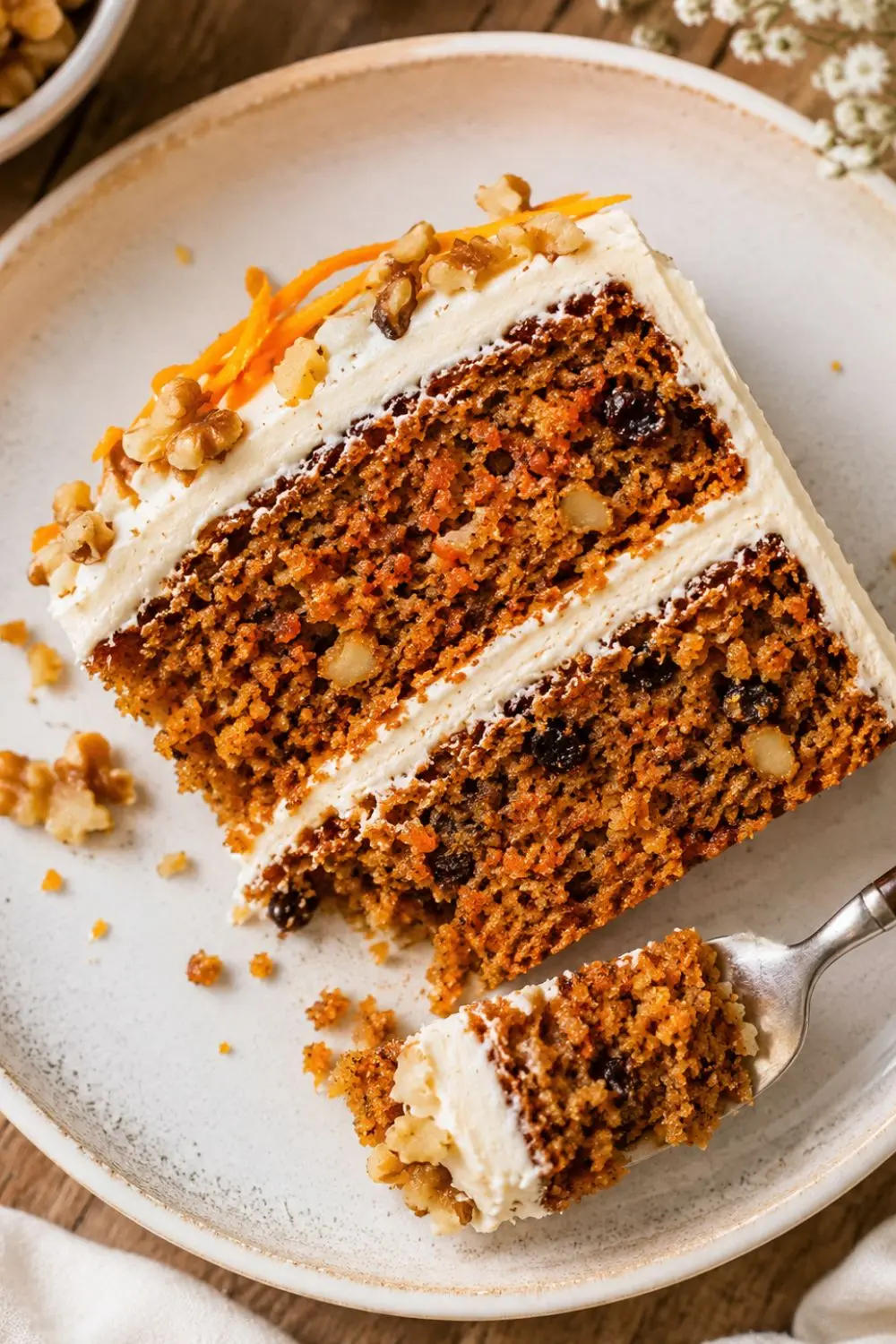
Homemade Carrot Cake Recipe Gluten-Free Vegan Carrot Cake
Ingredients
Equipment
Method
- Step 1- Prep and Preheat (5 Minutes)
- Preheat the oven to 350°F (175°C). Grease both cake pans thoroughly sides and bottom with oil or vegan butter. Line the bottoms with parchment paper circles cut to fit. Greasing on top of the parchment is optional but prevents even the slightest sticking.
- Shred the carrots now using a food processor or box grater. Measure out 3 loosely packed cups and set aside. Loose packing matters tightly packed carrot cups add more moisture and density than the recipe accounts for.
- Step 2- Mix the Wet Ingredients (5 Minutes)
- In your large mixing bowl, whisk together the canola oil, brown sugar, and granulated sugar until well combined. Add the dairy-free yogurt, soy milk, and vanilla extract and whisk until the mixture is smooth and uniform. The combined sugars should fully dissolve into the wet mixture at this stage a few minutes of whisking ensures no sugar granules remain.
- Step 3- Add the Dry Ingredients (3 Minutes)
- Add the flour, baking powder, baking soda, salt, cinnamon, ginger, and clove directly to the wet ingredient bowl. Stir with a spatula until just combined to stop the moment the dry flour streaks disappear. Overmixing develops gluten and produces a tough, chewy cake rather than a tender one. A few lumps are completely acceptable; they bake out.
- Step 4- Fold In Carrots and Mix-Ins
- Add the shredded carrots, chopped walnuts or pecans, raisins, and optional coconut to the batter. Fold in gently with the spatula two or three passes around the bowl are enough to distribute everything without overworking the batter. The carrots add significant volume to the batter; it will look very thick and dense at this stage. That’s correct this is a substantial batter.
- Step 5- Divide and Bake
- Divide the batter as evenly as possible between the two prepared pans. Use a spatula to smooth the tops into an even layer. Bake at 350°F:
- 8″ pans- 43–48 minutes
- 9″ pans- 40–45 minutes
- Check doneness by inserting a toothpick into the center it should come out clean or with just a few dry crumbs. The tops should feel springy when gently pressed rather than soft or sunken. If the toothpick comes out wet, add 3–5 more minutes and test again.
- Step 6- Cool Completely Before Frosting
- Let the cakes cool in the pans for 1 minute only, then run a knife around the edge of each pan and flip onto a wire rack. Peel off the parchment. Allow the layers to cool completely a minimum of 1 hour, ideally 2 hours before any frosting touches them. Warm cake causes frosting to melt and slide, which produces a beautiful mess rather than a beautiful cake. Patience here is directly proportional to the quality of the final presentation.
- Step 7- Frost and Assemble
- Place one cooled cake layer on your serving plate or cake board. Spread a generous layer of vegan cream cheese frosting over the top surface about ¼ to ⅓ of the total frosting. Place the second layer on top. Apply frosting to the top and sides of the assembled cake, using an offset spatula to smooth it evenly.
- For a naked cake look, frost only the top and leave the sides partially bare the layers of cake and carrot color visible through the sides look genuinely beautiful. For a fully frosted finish, apply a thin crumb coat first, refrigerate for 20 minutes, then apply the final layer.
Notes
Caloric & Nutritional Info (Per Slice, Without Frosting)
| Nutrient | Amount |
| Calories | 333 kcal |
| Carbohydrates | 54g |
| Protein | 5g |
| Fat | 10g |
| Sugar | 30g |

Hi — I’m Rachel. I’m a wife, a mom, and a home cook who believes that food should bring comfort, joy, and compassion to the table. I live with my family — two hungry little foodies who are my most honest recipe testers — and together we’ve built a kitchen culture that’s all about good food that happens to be 100% vegan. I started this blog because I wanted a place to share the recipes that keep our days moving, the dishes that make weeknights feel a little easier, and the meals that become our little family traditions.