
Turning on the oven in July is genuinely one of the most optimistic decisions a person can make and Loaded Mediterranean Chickpea & Avocado Salad Bowl makes that decision unnecessary. This is a complete, genuinely filling no-cook summer meal built from two cans of chickpeas, a pint of cherry tomatoes, cucumber, bell pepper, kalamata olives, fresh herbs, and a lemon vinaigrette that pulls everything together into a bowl with 13 grams of protein, 12 grams of fiber, and 83mg of Vitamin C per serving. It takes 15 minutes, serves 4 people at 389 calories each, and gets better the longer it sits in the refrigerator which means making it ahead actively improves the result.
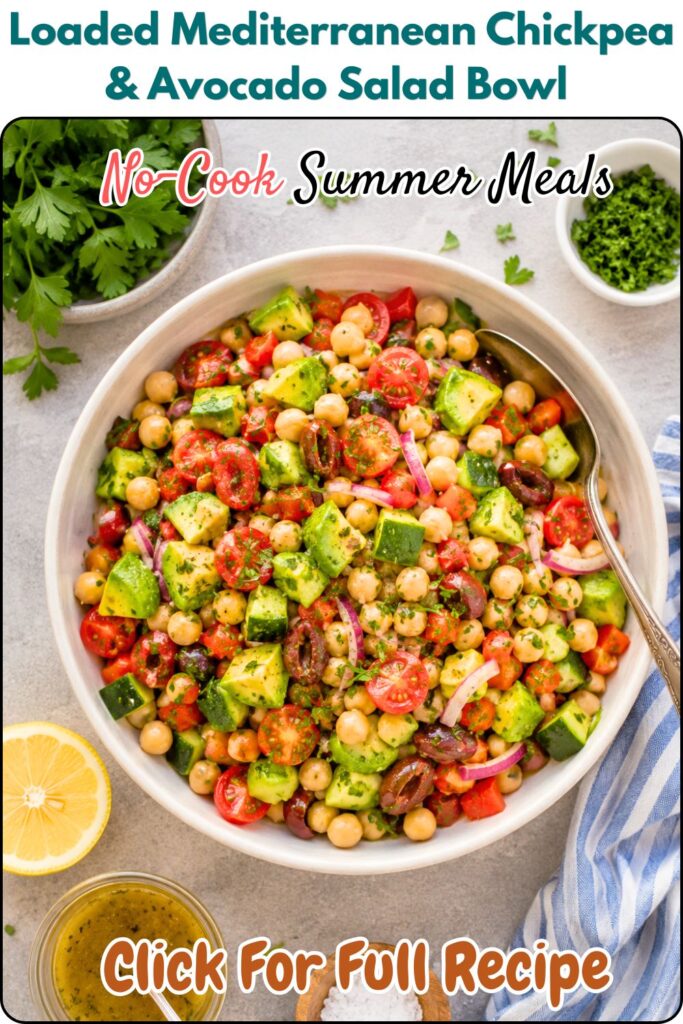
I make this bowl specifically for the stretch of summer when the kitchen feels too hot to cook anything properly and I still need a meal that actually satisfies. The chickpeas are what make this work as a meal rather than a side salad two cans provide substantial protein and fiber that keeps this genuinely filling. The lemon vinaigrette made directly in the serving bowl (one fewer dish to wash, which is always a good idea) coats everything evenly and develops into something genuinely complex after 30 minutes of marinating.
My Recipe Timing and Serving Details
| Detail | Info |
| Prep Time | 15 minutes |
| Cook Time | 0 minutes |
| Marinating Time | 30 minutes (optional but recommended) |
| Total Time | 15-45 minutes |
| Servings | 4 |
| Calories Per Serving | 389 kcal |
| Course | Main / Side Dish |
| Diet | 100% Vegan |
This Loaded Mediterranean Chickpea & Avocado Salad Bowl serves 4 people as a complete main course or 6-8 people as a side salad. At 389 calories per serving with genuinely impressive nutritional numbers across the board, this is a complete meal that requires zero heat, zero cooking equipment, and genuinely gets better with time.
Why This Is a No-Cook Summer Meal Worth Making Not Just a “Health Food” Salad
The term “salad” has a complicated reputation often implying something unsatisfying that leaves you hungry 45 minutes later while you stare at your phone looking for real food. This bowl doesn’t have that problem, and understanding why explains what makes it genuinely different from a typical salad:
Two cans of chickpeas provide approximately 3 cups of cooked legumes across 4 servings. Chickpeas contain protein and fiber in significant quantities the combination specifically is what creates satiety, because protein triggers satiety hormones while fiber slows gastric emptying. Together, they keep you full in a way that vegetable-only salads don’t.
Olive oil in the dressing adds fat-based satiety. Fat triggers cholecystokinin release a satiety hormone that signals fullness to the brain. The ¼ cup of olive oil distributed across 4 servings adds healthy monounsaturated fat that makes the meal genuinely satisfying.
The vegetable variety creates textural interest that prevents the monotony that makes eating salad feel like a chore. You get juicy cherry tomatoes that burst, crisp cucumber that crunches, slightly firm bell pepper, soft chickpeas, and briny olives five different textures in every forkful.
The lemon vinaigrette creates true flavor, not just “dressed” the zest plus juice plus red wine vinegar creates a genuinely bright, complex dressing that makes every component taste more vibrant than it would on its own.
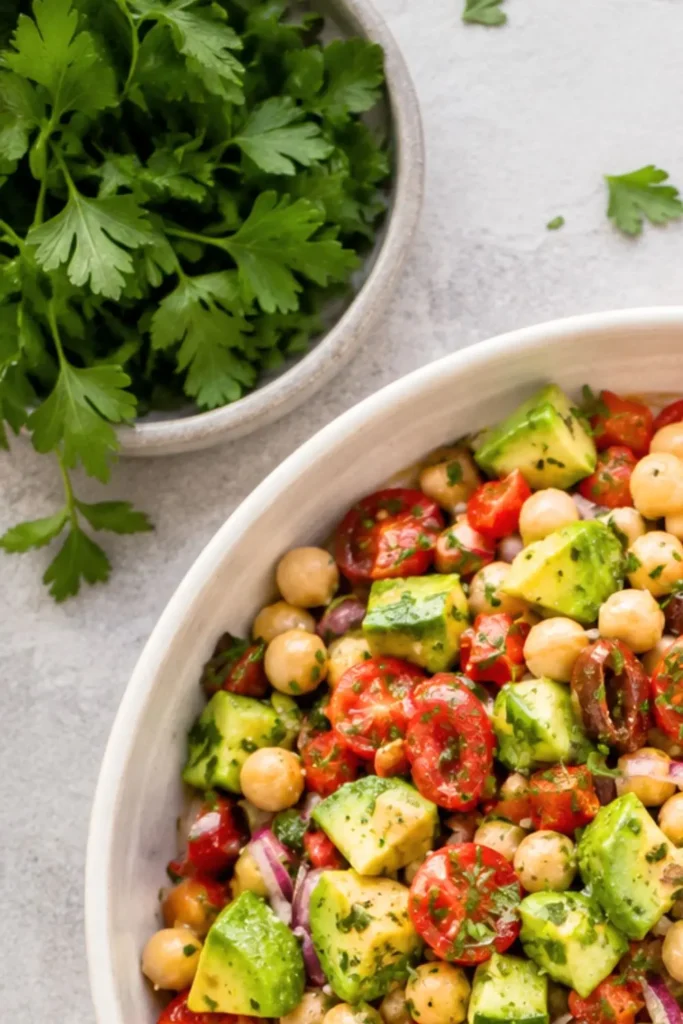
Full Ingredient List
For the Lemon Vinaigrette:
- ¼ cup olive oil
- Zest of ½ lemon
- 2 tablespoons fresh lemon juice (about 1 lemon)
- 1 tablespoon red wine vinegar
- ¾ teaspoon kosher salt
- Black pepper to taste
For the Chickpea Salad:
- 2 cans (15 oz each) chickpeas – drained and rinsed (about 3 cups cooked)
- 1 pint cherry tomatoes – halved
- 1 hothouse or English cucumber – quartered lengthwise and thinly sliced
- 1 red bell pepper – ¼ inch dice
- ¼ red onion – ¼ inch dice or thinly sliced
- ½ cup kalamata olives – halved (optional)
- ½ bunch fresh parsley – finely chopped
- 2 tablespoons fresh mint – finely chopped
The Lemon Vinaigrette Why Zest Plus Juice Is Specifically Better
The dressing uses both lemon zest and lemon juice, and this combination is specifically more flavorful than juice alone. Understanding why helps you apply this technique to other dressings:
Lemon juice provides acidity, the tartness that cuts through olive oil’s richness and brightens vegetable flavors. The acidity also acts as a flavor enhancer, making every other ingredient taste more vibrant.
Lemon zest provides aromatic compounds and the essential oils in lemon’s outer peel that create its distinctive fragrance. These oils are specifically fat-soluble, which means they bind to the olive oil in the dressing and distribute throughout every component when tossed. The zest’s aromatic intensity is why this dressing smells so specifically, vibrantly lemon rather than just tasting acidic.
Together, the juice provides the sharp citrus bite while the zest provides the lingering lemon fragrance and depth. Using juice alone produces a dressing that tastes acidic but not necessarily “lemon-forward.” Using both produces something that tastes specifically and intensely of fresh lemon throughout.
Red wine vinegar adds a second acid that’s different in character from lemon juice slightly more astringent, slightly more complex. The combination of lemon juice and red wine vinegar produces a more layered dressing than either alone.
FYI the recipe makes the dressing directly in the serving bowl before adding the vegetables. This technique distributes the dressing evenly and means one fewer container to wash.
Equipment You’ll Need For Loaded Mediterranean Chickpea & Avocado Salad Bowl
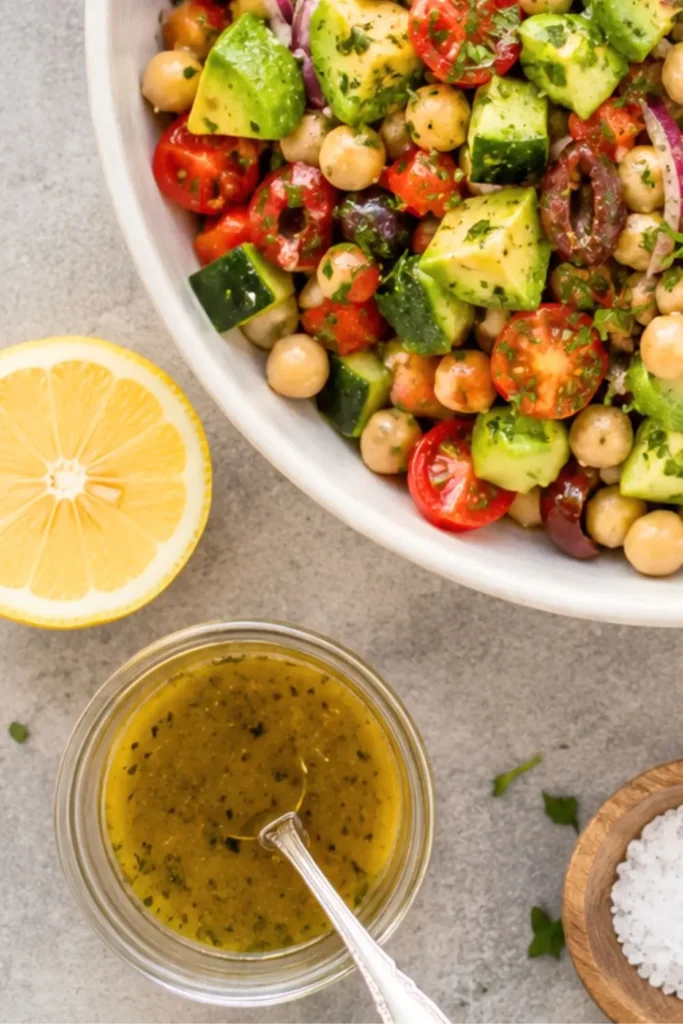
This is genuinely one of the lowest-equipment recipes in any no-cook summer meal collection:
Primary Equipment
- Very large mixing bowl – large enough to hold all the vegetables and chickpeas with significant room to toss. The dressing is made in this same bowl, then everything is added and tossed. Minimum 6-quart capacity for comfortable tossing.
- Sharp knife and cutting board – for halving the cherry tomatoes, quartering and slicing the cucumber, dicing the bell pepper, dicing the red onion, and halving the olives. Most of the 15-minute prep time goes into this cutting.
- Whisk or fork – for combining the vinaigrette ingredients before adding the vegetables.
- Colander – for draining and rinsing the canned chickpeas.
Optional Equipment
- Citrus zester or microplane – for efficiently zesting the lemon. The flat side of a box grater works as a substitute.
- Citrus juicer – for extracting the maximum juice from the lemons.
- Airtight storage container – for the recommended 30-minute refrigerator rest and for storing leftovers.
Step-by-Step Instructions For
Step 1 – Make the Dressing Directly in the Bowl
Add the olive oil, lemon zest, lemon juice, red wine vinegar, kosher salt, and black pepper to the base of your large serving bowl.
Whisk well until the oil and acid are combined they won’t fully emulsify without an emulsifier like mustard, but whisking creates a temporary uniform mixture that distributes better than unstirred oil and vinegar.
Season generously- The dressing needs to coat a large quantity of vegetables and chickpeas. The ¾ teaspoon of salt specifically is calibrated for this don’t reduce it preemptively. Taste after all ingredients are combined and adjust then.
Step 2 – Prep and Add the Vegetables and Chickpeas
Drain and rinse the chickpeas thoroughly canned chickpeas come packed in a viscous starchy liquid that can make the dressing slightly muddy if not properly rinsed. Rinse under cold running water until the water runs clear.
Add all the prepared components to the bowl: drained chickpeas, halved cherry tomatoes, sliced cucumber, diced bell pepper, diced or sliced red onion, halved olives, chopped parsley, and mint.
Toss until everything is evenly coated in the dressing use two large spoons or salad servers to lift and fold rather than stirring in circles, which can bruise the herbs and break the tomatoes.
Step 3 – Taste and Adjust
Taste the dressed salad before the final decision about serving. Common adjustments:
- Needs more brightness- Add an additional squeeze of lemon juice
- Needs more depth- Add a small additional drizzle of olive oil
- Needs more seasoning- Add salt in small pinches, tasting between additions
- Too acidic- A very small pinch of sugar balances excess acidity
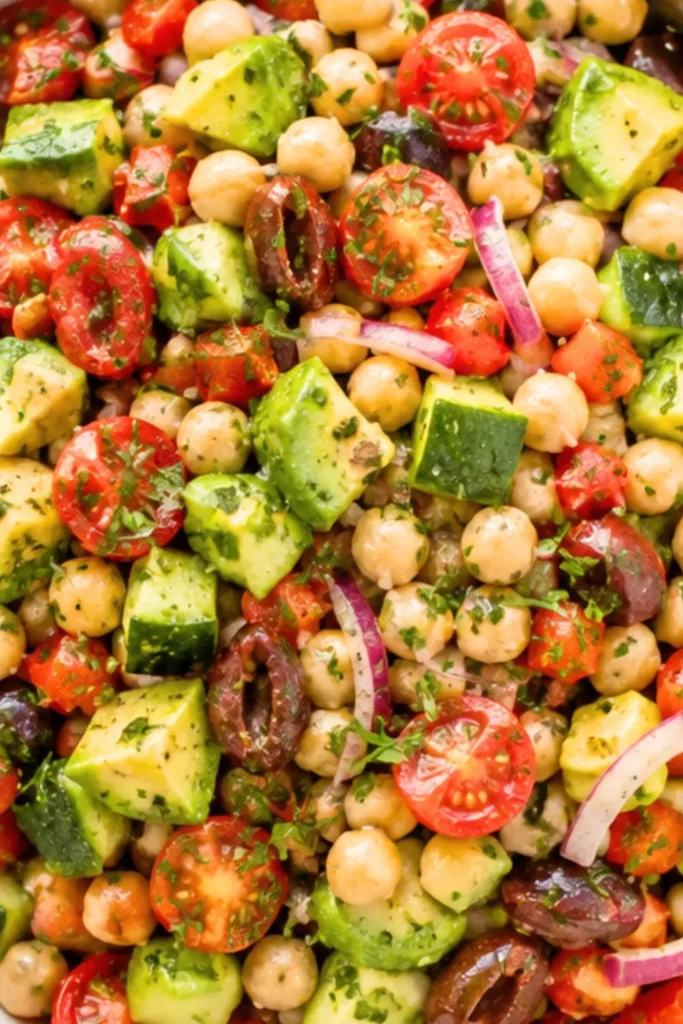
Step 4 – Rest Before Serving (Recommended)
The recipe specifically states: this salad can be served immediately, but is best if you let it sit for at least 30 minutes (preferably in the fridge) to allow all of the flavors to combine.
This recommendation is genuine and worth following. During the 30-minute rest:
The chickpeas absorb dressing from the surface, becoming more flavorful throughout rather than just coated on the outside. The red onion’s sharpness mellows as the vinegar begins a light pickling action. The cherry tomatoes release a small amount of juice that mixes with the dressing, creating a more developed, complex sauce. The herbs release their aromatic oils into the surrounding oil.
Day-after this salad is genuinely excellent – one of the rare salads that holds up and improves over multiple days due to the absence of delicate greens that would wilt.
The Cucumber Choice Hothouse vs. Regular
The recipe specifically calls for hothouse or English cucumber rather than standard American cucumber. This distinction matters:
Hothouse/English cucumbers – long, thin-skinned, sold individually wrapped in plastic. Their thin skin doesn’t require peeling. Fewer seeds produce less water release during marinating, which keeps the dressing’s consistency better over time. The flavor is milder and more delicate.
Standard American cucumbers – shorter, thicker skin, more seeds, higher water content. They should be peeled (the skin is bitter and tough) and ideally seeded if you plan to store the salad, as they release significant water during marinating that can dilute the dressing over time.
For this recipe- Hothouse cucumber is genuinely the better choice. You get more usable cucumber per vegetable (no peeling waste), better texture retention over the 6-day storage window, and a more refined finished appearance.
The Herb Combination Why Both Parsley and Mint
Using both parsley and mint rather than either alone creates a more complex herbal dimension:
Fresh parsley adds a clean, grassy, slightly peppery freshness that grounds the Mediterranean character of the dish. It’s the dominant herb quantity (half a bunch) because its flavor is relatively mild you need volume to create impact.
Fresh mint adds a cooling, slightly sweet, distinctly aromatic quality in a supporting role (2 tablespoons). Mint in savory Mediterranean dishes is traditional it appears in tabbouleh, fattoush, and various Mediterranean grain salads. Its cooling character specifically brightens the acidity of the lemon vinaigrette.
The combination creates what chefs call “brightness” the fresh herbal note that makes the whole bowl taste alive rather than flat. Skip one and the dish is pleasant; use both and the dish is vibrant.
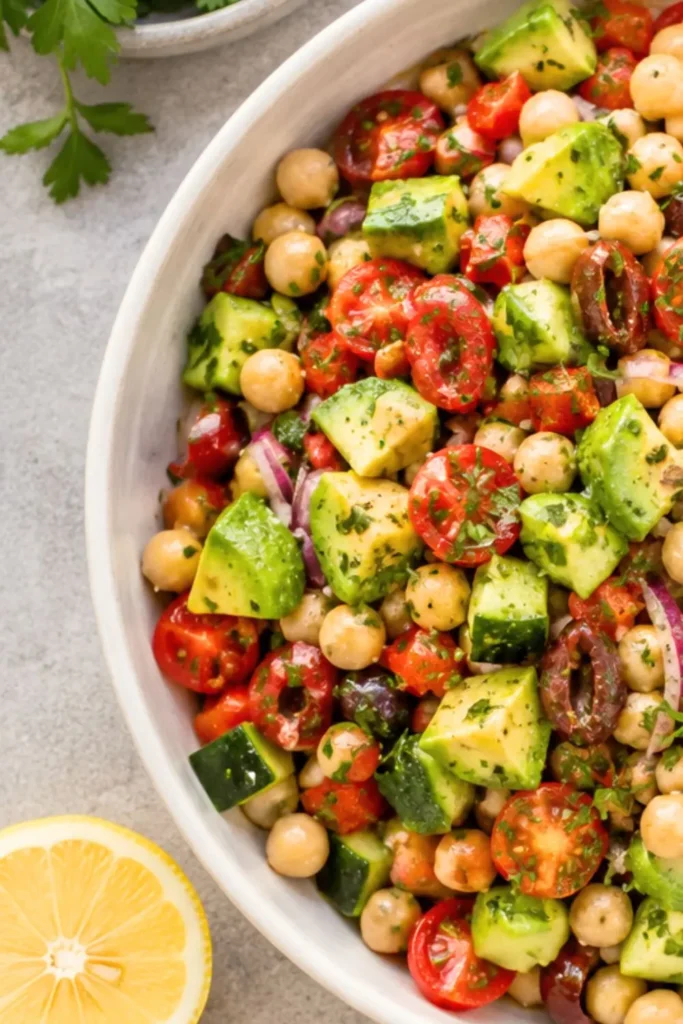
Why Kalamata Olives Specifically
The recipe lists kalamata olives as optional, but IMO they’re worth including for several reasons:
Kalamata olives add a briny, slightly fruity, rich flavor that balances the lemon’s acidity. They’re higher in fat than most vegetables, which adds richness that supports the olive oil dressing. Their dark purple-black color also creates visual contrast against the chickpeas, red tomatoes, green cucumbers, and orange bell pepper.
Standard black olives (the canned California variety) have a much more bland, neutral flavor that doesn’t contribute meaningfully. If using olives, use kalamata specifically.
Castelvetrano olives as an alternative buttery, bright green, and mild. They look beautiful in the bowl and taste genuinely excellent, though their character is quite different from kalamata’s brininess.
Building a More Substantial Bowl Optional Additions
This salad works perfectly as written, but several additions make it even more substantial:
Cubed avocado – the title suggests avocado (though it’s not listed in the recipe ingredients). Add 1-2 diced avocados just before serving for creaminess and additional healthy fat. The avocado should be added at serving time rather than during the full marinating period to prevent browning and texture degradation.
Vegan feta – Violife or Follow Your Heart make excellent vegan feta crumbles that add a salty, tangy counterpoint to the lemon vinaigrette.
Whole grain addition – stir in 1 cup of cooked quinoa or farro for additional protein and a more substantial grain bowl experience.
Toasted pita chips – serve alongside rather than mixed in, as they’ll absorb moisture and soften quickly.
Still Hungry, Try It Next recipe
Nutrition Information Per Serving
At 389 calories per serving for 4 servings:
| Nutrient | Per Serving |
| Calories | 389 kcal |
| Carbohydrates | 44g |
| Protein | 13g |
| Fat | 20g |
| Fiber | 12g |
| Sugar | 12g |
| Sodium | 729mg |
| Vitamin C | 83mg |
| Vitamin A | 2370 IU |
| Calcium | 112mg |
| Iron | 5mg |
| Potassium | 854mg |
12 grams of fiber per serving approximately 43% of the daily recommended intake in one bowl. 13 grams of protein from the chickpeas. 83mg of Vitamin C approximately 92% of the daily recommended intake from the bell pepper and cherry tomatoes combined. 5mg of iron from the chickpeas, making this one of the better iron sources in any no-cook summer meal.
The 6-Day Storage Promise Why This Salad Holds Up So Well
The recipe promises refrigerator storage for up to 6 days, which is genuinely unusual for a fresh vegetable salad. The reason this works:
No delicate greens that wilt and go slimy. The vegetables in this bowl chickpeas, cucumber, cherry tomatoes, bell pepper, red onion all hold their texture for several days in an acidic dressing environment.
The acid acts as a mild preservative. Lemon juice and red wine vinegar create an acidic environment that slows bacterial growth and maintains vegetable color and firmness.
The chickpeas improve over time. Each day, they absorb more dressing and develop more complex flavor. Day 3 chickpeas taste significantly more seasoned and interesting than Day 1.
Storage tip- Keep the salad in an airtight container and stir gently before each serving the dressing settles to the bottom and needs redistribution.
My Final Thoughts
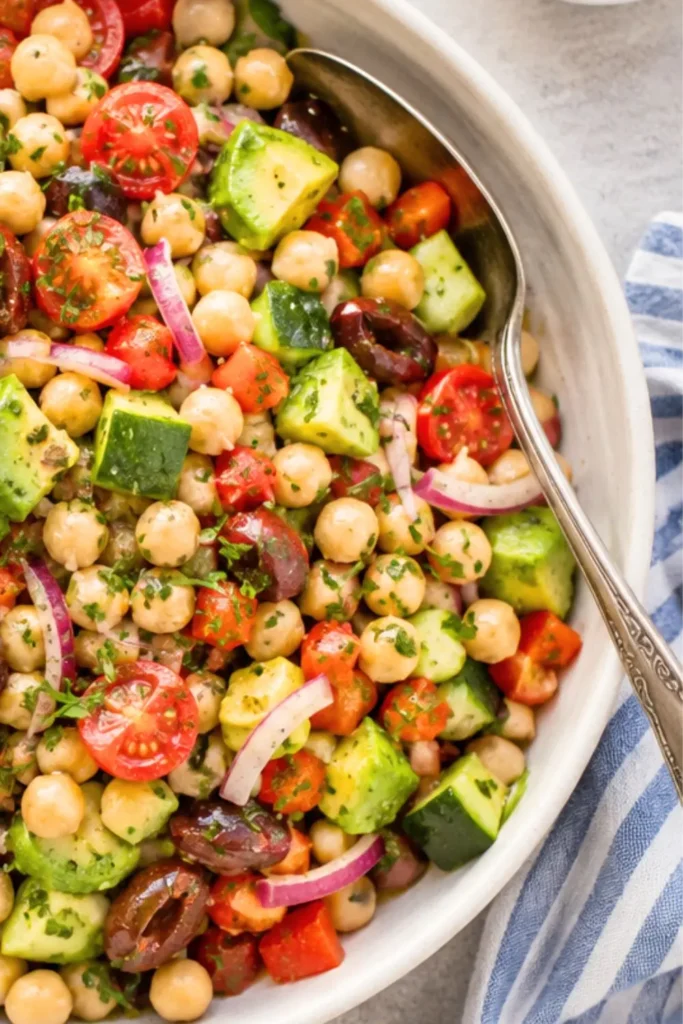
Loaded Mediterranean Chickpea & Avocado Salad Bowl is the no-cook summer meal that genuinely earns the description “satisfying” 389 calories, 13 grams of protein, 12 grams of fiber, 15 minutes of cutting, and a lemon vinaigrette that improves over 6 days of refrigerator storage.
Use hothouse cucumber. Include the olives. Use both parsley and mint. Give it 30 minutes in the fridge before serving.
Then eat a bowl that tastes like the Mediterranean, keeps you full until dinner, and never once required turning the oven on.
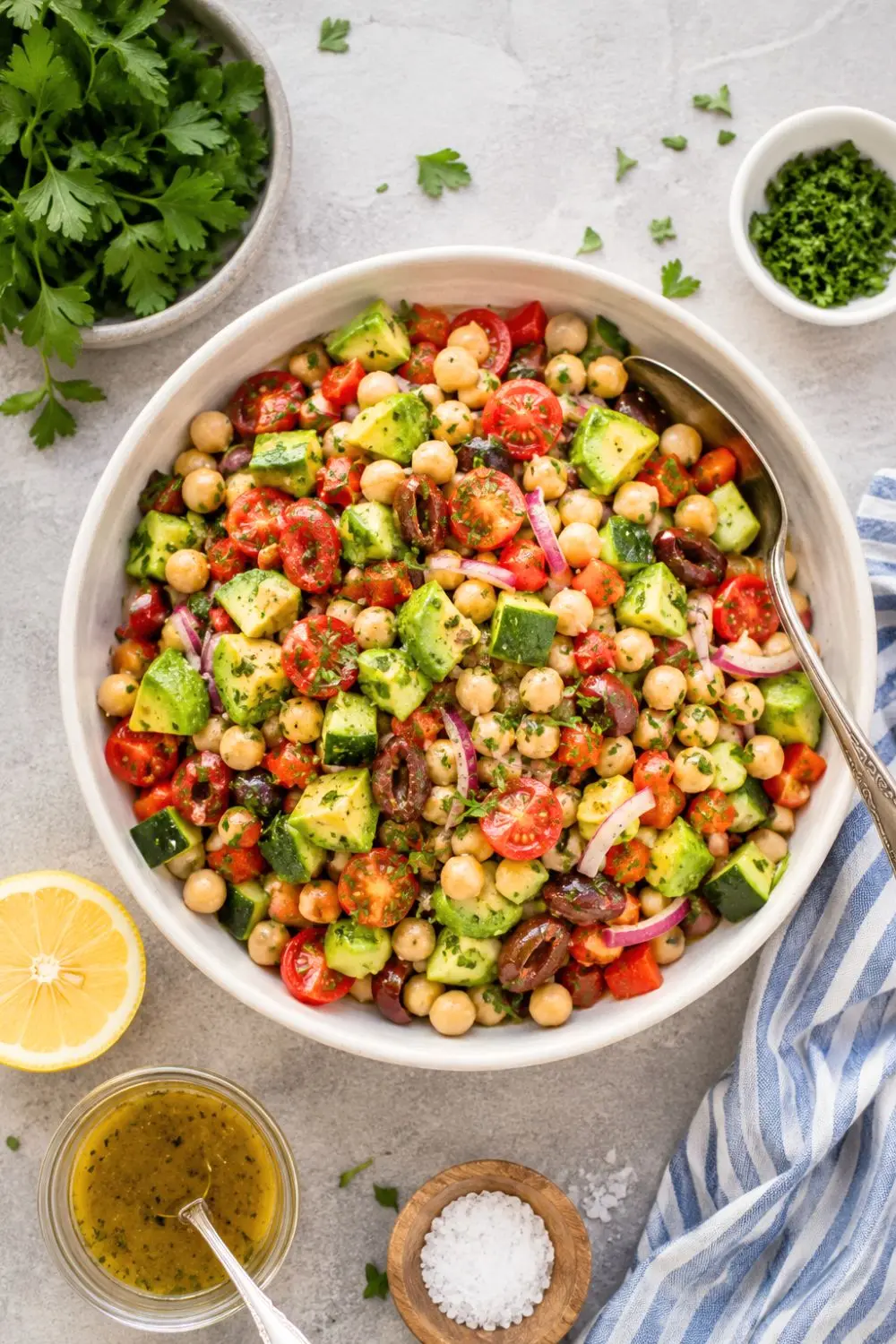
Loaded Mediterranean Chickpea & Avocado Salad Bowl
Ingredients
Equipment
Method
- Step 1 – Make the Dressing Directly in the Bowl
- Add the olive oil, lemon zest, lemon juice, red wine vinegar, kosher salt, and black pepper to the base of your large serving bowl.
- Whisk well until the oil and acid are combined they won’t fully emulsify without an emulsifier like mustard, but whisking creates a temporary uniform mixture that distributes better than unstirred oil and vinegar.
- Season generously- The dressing needs to coat a large quantity of vegetables and chickpeas. The ¾ teaspoon of salt specifically is calibrated for this don’t reduce it preemptively. Taste after all ingredients are combined and adjust then.
- Step 2 – Prep and Add the Vegetables and Chickpeas
- Drain and rinse the chickpeas thoroughly canned chickpeas come packed in a viscous starchy liquid that can make the dressing slightly muddy if not properly rinsed. Rinse under cold running water until the water runs clear.
- Add all the prepared components to the bowl: drained chickpeas, halved cherry tomatoes, sliced cucumber, diced bell pepper, diced or sliced red onion, halved olives, chopped parsley, and mint.
- Toss until everything is evenly coated in the dressing use two large spoons or salad servers to lift and fold rather than stirring in circles, which can bruise the herbs and break the tomatoes.
- Step 3 – Taste and Adjust
- Taste the dressed salad before the final decision about serving. Common adjustments:
- Needs more brightness- Add an additional squeeze of lemon juice
- Needs more depth- Add a small additional drizzle of olive oil
- Needs more seasoning- Add salt in small pinches, tasting between additions
- Too acidic- A very small pinch of sugar balances excess acidity
- Step 4 – Rest Before Serving (Recommended)
- The recipe specifically states: this salad can be served immediately, but is best if you let it sit for at least 30 minutes (preferably in the fridge) to allow all of the flavors to combine.
- This recommendation is genuine and worth following. During the 30-minute rest:
- The chickpeas absorb dressing from the surface, becoming more flavorful throughout rather than just coated on the outside. The red onion’s sharpness mellows as the vinegar begins a light pickling action. The cherry tomatoes release a small amount of juice that mixes with the dressing, creating a more developed, complex sauce. The herbs release their aromatic oils into the surrounding oil.
Notes
Nutrition Information Per Serving
At 389 calories per serving for 4 servings:| Nutrient | Per Serving |
| Calories | 389 kcal |
| Carbohydrates | 44g |
| Protein | 13g |
| Fat | 20g |
| Fiber | 12g |
| Sugar | 12g |
| Sodium | 729mg |
| Vitamin C | 83mg |
| Vitamin A | 2370 IU |
| Calcium | 112mg |
| Iron | 5mg |
| Potassium | 854mg |

Hi — I’m Rachel. I’m a wife, a mom, and a home cook who believes that food should bring comfort, joy, and compassion to the table. I live with my family — two hungry little foodies who are my most honest recipe testers — and together we’ve built a kitchen culture that’s all about good food that happens to be 100% vegan. I started this blog because I wanted a place to share the recipes that keep our days moving, the dishes that make weeknights feel a little easier, and the meals that become our little family traditions.