
Here’s the thing nobody tells you about charcuterie boards: the visual magic has almost nothing to do with the meat and dairy and everything to do with the arrangement, the color contrast, and the variety of textures. Which means a vegan cheese and fruit platter can look just as stunning arguably more stunning, because fresh fruit and colorful vegetables bring a vibrancy that cured meats simply can’t match.
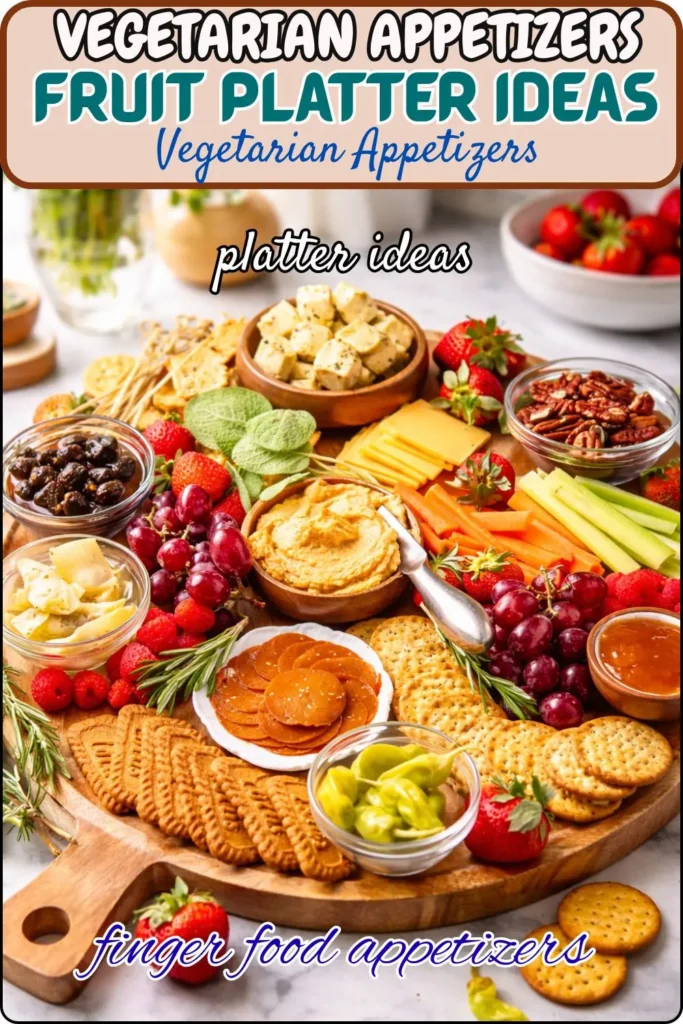
I built my first vegan platter for a dinner party where I was nervous about impressing non-vegan guests, and it ended up being the most photographed and most complimented thing on the table. Since then, I’ve refined my approach through a lot of trial and error, and I’m sharing everything I’ve learned about building vegan platter ideas for parties that genuinely look insanely good.
My Recipe Details at a Glance
Before we get into the building strategy:
- Course- Appetizer, Grazing Board, Party Spread
- Prep Time- 20 minutes
- Cook Time- 0 minutes
- Total Time- 20 minutes
- Servings- 5 people (scales up easily see notes below)
- Calories per Serving- 610 kcal
- Diet- 100% Vegan, Gluten-Free adaptable
At 610 calories per serving, this platter functions as a genuinely satisfying appetizer spread rather than a light snack the combination of nuts, vegan cheese, crackers, hummus, and guacamole provides real substance alongside the fresh fruit and vegetables.
Equipment You’ll Need For
The board itself is the most important decision:
- A large wooden board, marble slab, or slate board – Size matters enormously for the visual impact. For 5 servings, use at least a 14″ x 20″ board. Go bigger if you want a more abundant, generous look. Wooden boards photograph beautifully and have a warm, natural quality that makes everything on them look more intentional. Slate and marble add drama and contrast, especially with bright fruits.
- Small ceramic bowls or ramekins (3–4) – For the hummus, guacamole, and olives. These are structural anchors that you build everything else around. FYI, placing your bowls before any other ingredient is the single most important step in getting the arrangement right they determine the flow of everything else on the board.
- A sharp knife and cutting board – For slicing the vegan cheese, chopping vegetables into sticks, and halving strawberries. Invest 5 extra minutes in clean, even cuts the visual difference between neatly sliced cheese and roughly hacked pieces is dramatic.
- A cheese knife or spreader – Place one or two on the board with the cheese for serving convenience and visual appeal.
- Parchment paper or wax paper – For lining the board before building if you want easy cleanup.
- Small tongs and serving spoons – One per dip and one for olives, so guests can serve themselves without the platter becoming chaotic.
The Vegan Cheese Where to Start and What Works Best
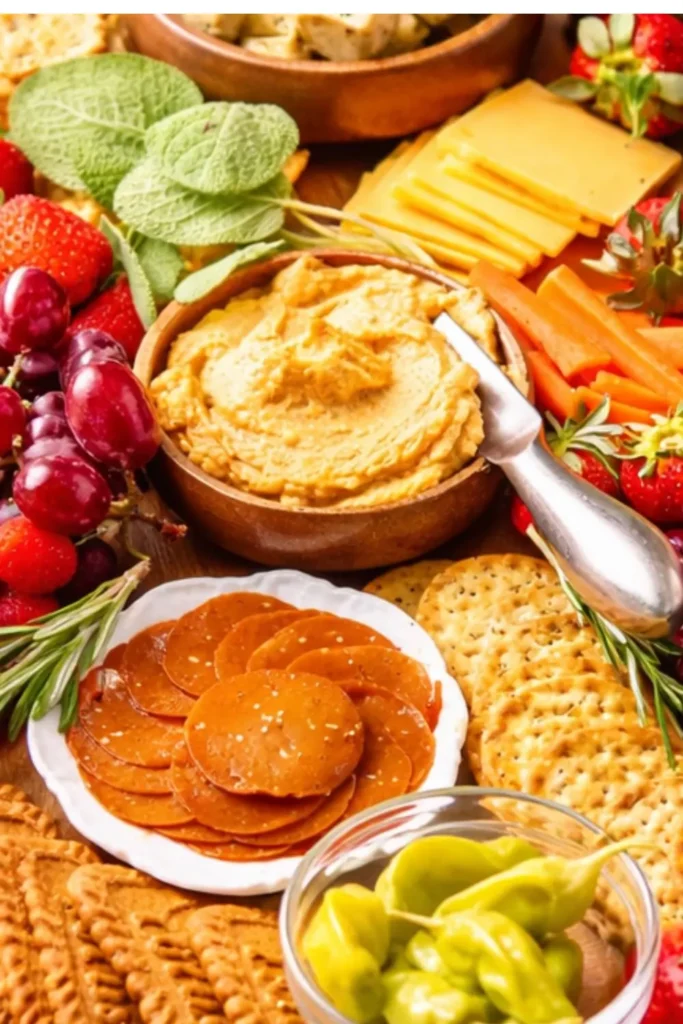
The cheese is the centerpiece of this platter, and choosing wisely makes an enormous difference. Here’s a practical guide to the vegan cheese options that perform best on a grazing board:
Hard and Semi-Hard Cheeses (Best for Slicing and Fanning)
- Vegan Cheddar – Violife Cheddar Block and Miyoko’s Cheddar both slice cleanly and fan out beautifully. The orange color provides excellent contrast on the board.
- Vegan Gouda – Slightly softer than cheddar, with a mild, slightly smoky flavor. Violife Gouda is widely available and slices well. The pale yellow color works beautifully alongside fruit.
- Vegan Parmesan Block – Firmer, more intense flavor, excellent for breaking into irregular pieces that add textural visual interest.
Soft and Spreadable Cheeses (Best for Bowls or Logs)
- Vegan Cream Cheese – Serve in a small bowl with a spreading knife alongside crackers.
- Vegan Brie-Style– Miyoko’s Organic Cashew Milk Cheese and Treeline Aged Nut Cheeses create a beautiful centerpiece with a natural rind that looks genuinely elegant.
- Vegan Cheese Ball – A homemade cashew-based cheese ball rolled in herbs or cranberries creates a stunning focal point. IMO, this is the single highest-impact element you can add to a vegan platter.
How much cheese to use- For 5 people as an appetizer, 12 ounces total (6 oz cheddar + 6 oz gouda, as in the original recipe) works well. Scale to approximately 2–3 oz of cheese per person for a proper gathering.
The Fruit Selection Color, Freshness, and Placement Strategy
Fresh fruit is what makes a vegan cheese and fruit platter look genuinely vibrant and alive. Here’s the full lineup and why each piece earns its place:
The Core Fruit Selections
- ½ cup strawberries – The most visually striking fruit on any board. Slice some and leave others whole for textural variety. The deep red against pale cheese and green vegetables creates the color contrast that photographs so well.
- ½ cup blueberries -These fill gaps between larger items beautifully. Scatter them in clusters rather than spreading them evenly small clusters look more intentional and professional.
- ½ cup cherries – Deep red-purple, jewel-like, and gorgeous. Leave the stems on for visual drama. They pair particularly well alongside vegan gouda.
- ½ cup Medjool dates – These are the secret ingredient on any great cheese board. Dates provide an intense, caramel sweetness that pairs magnificently with vegan cheddar and salty crackers. They also add a dark, rich visual element that grounds the lighter colors.
Seasonal Upgrade Options
The beauty of a grazing board is how easily you adapt it to the season:
- Summer- Sliced peaches, fresh figs, blackberries, halved grapes, watermelon cubes
- Fall- Sliced pears, pomegranate seeds, dried apricots, apple slices
- Winter- Mandarin orange segments, persimmon, dried cranberries, kiwi rounds
- Spring- Raspberries, green grapes, mango cubes, fresh pineapple
The Vegetable Component Fresh, Crisp, and Colorful
Fresh vegetables give the platter structural variety and make it feel more like a complete spread than just a cheese board. They also make every person at the table feel like there’s something specifically for them, which matters at mixed gatherings.
The Best Choices for Visual Impact and Taste
- 1 medium carrot, cut into sticks – Vibrant orange that pops against the greens. Cut them on a diagonal for a more sophisticated look than straight cuts.
- 1 cucumber, cut into rounds or sticks – Cool, refreshing, and pairs beautifully with hummus. Rounds work better on boards than sticks because they lay flat and hold toppings.
- 1 bell pepper, sliced – Use red, yellow, or orange for the most vivid color contribution. Green works but adds a more bitter, less sweet flavor that doesn’t pair as naturally with fruit.
- 1 cup cherry tomatoes -Leave whole. They add bursts of red throughout the board and look naturally abundant when clustered together.
Additional Vegetable Options Worth Considering
- Celery sticks- great for hummus dipping
- Radishes – beautiful pink-and-white contrast, slightly peppery
- Broccoli florets – adds height variation and deep green
- Snap peas – bright green and refreshing
The Dips Two Bowls That Do Most of the Work
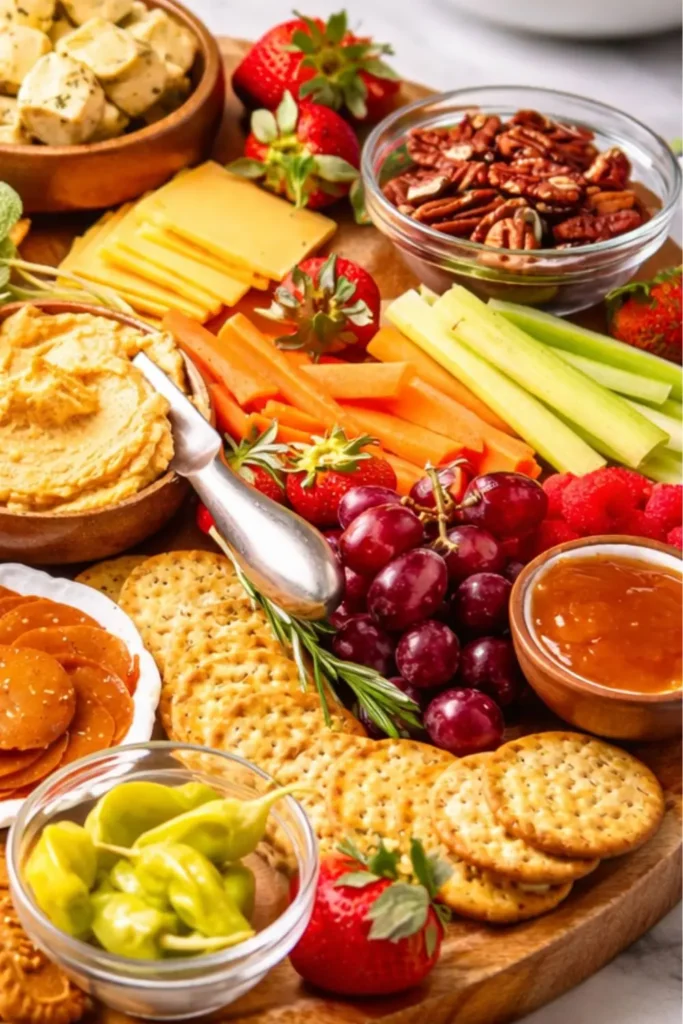
Place your dip bowls before anything else on the board. They become anchor points that everything else flows around.
- ½ cup hummus – The most versatile dip on the board. Pairs with vegetables, crackers, and even cheese. Choose a full-fat, thick hummus for the best presentation thin hummus pools in the bowl and looks less appetizing. Roasted garlic, lemon herb, or roasted red pepper varieties add visual interest with their color variations.
- ½ cup guacamole – Rich, creamy, and a vibrant green that adds an essential color to the board. Make it fresh on the day of your gathering day-old guacamole browns and loses its visual appeal even if it still tastes good.
Additional Dip Ideas for a More Elaborate Board
- Vegan pesto – brilliant green, intensely flavored
- Jam or fruit preserves – raspberry or fig jam alongside vegan cheese is a classic pairing
- Balsamic glaze – in a small bowl for drizzling over cheese and fruit
- Vegan tzatziki – cucumber-dill yogurt dip that pairs beautifully with vegetables
The Crackers and Extras Completing the Spread
- 5 oz whole grain crackers– Whole grain crackers add texture, visual interest, and a nutty, slightly earthy flavor that complements both cheese and dips well. Fan them in overlapping rows rather than piling them the fanned arrangement looks more intentional and makes them easier to pick up without disturbing the whole stack.
- ½ cup mixed nuts -Almonds and cashews are the best choices. Toast them lightly before adding to the board toasted nuts have significantly more flavor than raw ones and add a warmth that raw nuts lack.
Still Hungry, Try It Next recipe
The Savory Extras That Elevate Everything
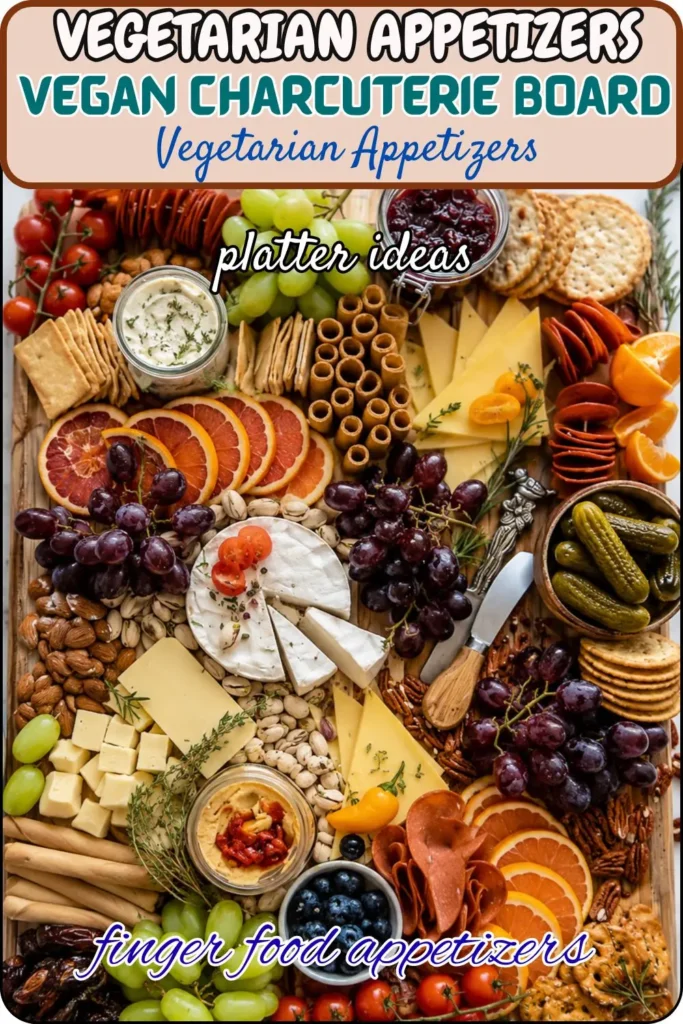
- 4 oz olives – Kalamata and Castelvetrano olives together in one small bowl give you two different sizes, colors, and flavor profiles. The dark kalamata against the bright green castelvetrano looks beautiful.
- Sun-dried tomatoes – Intensely flavored and a deep, jewel-red color that adds richness.
- Grilled artichokes – These make the board feel distinctly elevated and Mediterranean.
- Pickles – A brine-forward element that cuts through the richness of the cheese and provides a palate-cleansing contrast.
How to Build the Perfect Vegan Platter Step by Step
Step 1 – Place the Bowls First
Set your hummus, guacamole, and olive bowls at different points across the board one near the top left, one center-right, one near the bottom. These become the anchor points that everything radiates from. Spacing them apart forces you to build interesting pathways of food across the whole board rather than clustering everything in one area.
Step 2 -Add the Cheese
Place your cheese blocks and slices near the bowls. Fan sliced cheese in overlapping arcs rather than stacking it vertically. If you have a cheese ball, place it near the center as the visual focal point.
Step 3 – Fill in with Crackers and Vegetables
Lay your cracker fans along the edges of the board and near the cheese. Arrange vegetable sticks in small bundles pointing in the same direction bundles look more intentional than scattered individual sticks.
Step 4 -Add Fruit in Clusters
Place strawberries, cherries, and dates in clusters near the cheese sweet fruit near savory cheese is the fundamental cheese board pairing logic. Scatter blueberries and other small fruits into the gaps that remain.
Step 5 – Scatter Nuts and Fill Every Gap
Scatter nuts into any remaining spaces. Every visible board surface should have something on it the density of a well-built board is what makes it look abundant and impressive rather than sparse and half-finished. Blueberries and nuts are perfect gap-fillers.
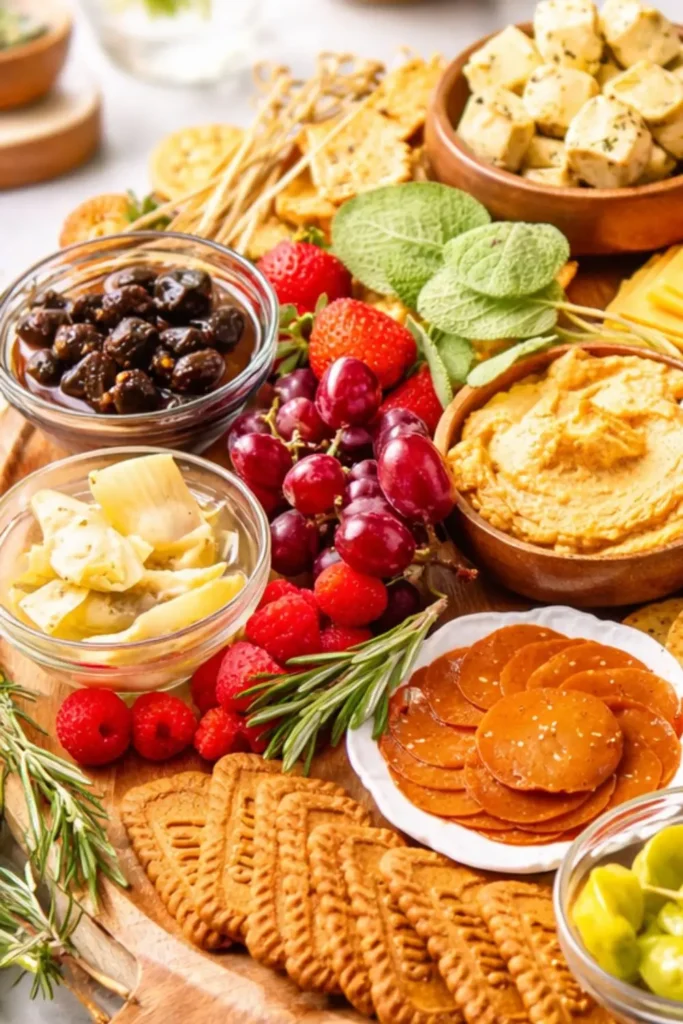
Full Nutritional Breakdown (Per Serving 1 of 5)
| Nutrient | Amount |
| Calories | 610 kcal |
| Carbohydrates | 68g |
| Protein | 12g |
| Fat | 34g |
| Saturated Fat | 8g |
| Fiber | 13g |
| Sugar | 17g |
| Sodium | 1,344mg |
| Potassium | 718mg |
| Vitamin C | 52mg |
| Vitamin A | 3,113 IU |
The 13g of fiber per serving is exceptional for an appetizer coming from the whole grain crackers, vegetables, fruit, nuts, and hummus. The Vitamin A at 3,113 IU comes almost entirely from the carrots and bell pepper. And at 12g of plant-based protein per serving from the nuts, cheese, and hummus, this platter actually sustains people through a party rather than just filling them up temporarily.
Make-Ahead Tips Build It the Night Before
One of the best things about this vegan cheese and fruit platter is how well it holds overnight. Assemble the entire board, cover tightly with plastic wrap, and refrigerate. The next day, remove it 15–20 minutes before serving so the cheese softens slightly to spreadable temperature. Add any freshly cut fruit (avocado, apples) at the last minute to prevent browning. This make-ahead approach is genuinely one of the most stress-reducing party strategies available.
Scaling Up for Larger Gatherings
The base recipe serves 5 as an appetizer spread. Here’s how to scale:
- 10 people- Double all quantities and use a larger board or two boards side by side
- 15–20 people- Triple the recipe; arrange on a large wooden kitchen counter section lined with parchment
- Budget tip- Scale up the crackers, vegetables, fruit, and nuts before scaling the vegan cheese these elements are the most affordable and do the most visual work per dollar
My Final Bottom Line
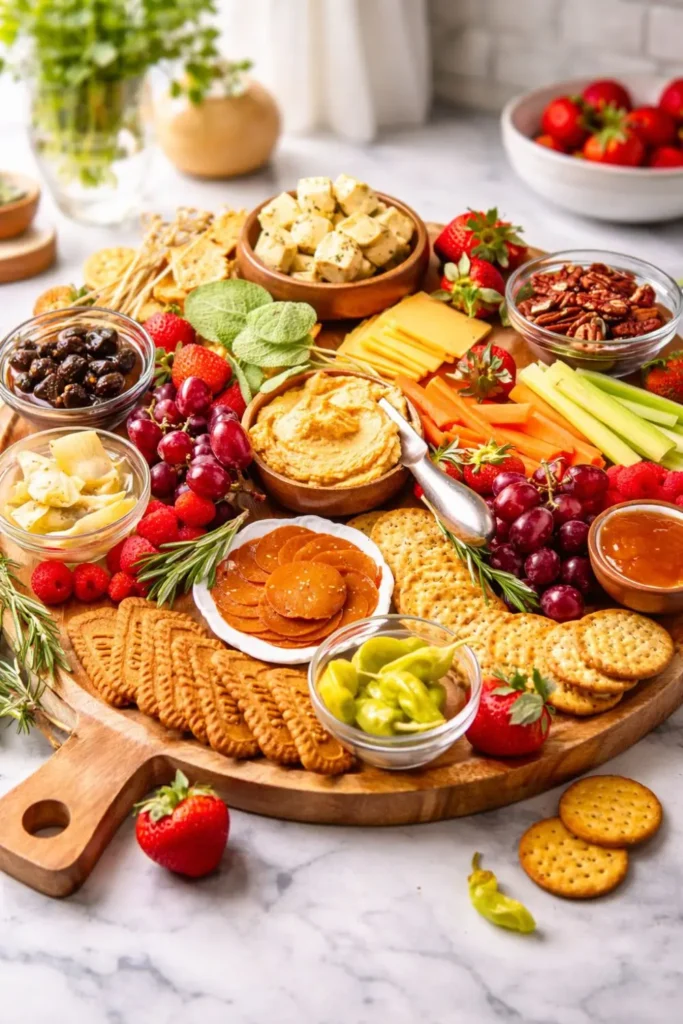
A vegan cheese and fruit platter doesn’t require specialty store visits, a background in food styling, or an hour of preparation. It requires a good board, quality vegan cheeses, seasonal fruit, fresh vegetables, and the confidence to fill every single inch of space until it looks abundantly gorgeous.
Place your bowls first. Anchor everything around them. Fill every gap with blueberries and nuts. Stand back and take the photo before anyone touches it. Then watch it disappear in twenty minutes and feel genuinely proud of what you built. These vegan platter ideas for parties genuinely work and they look insanely good doing it.
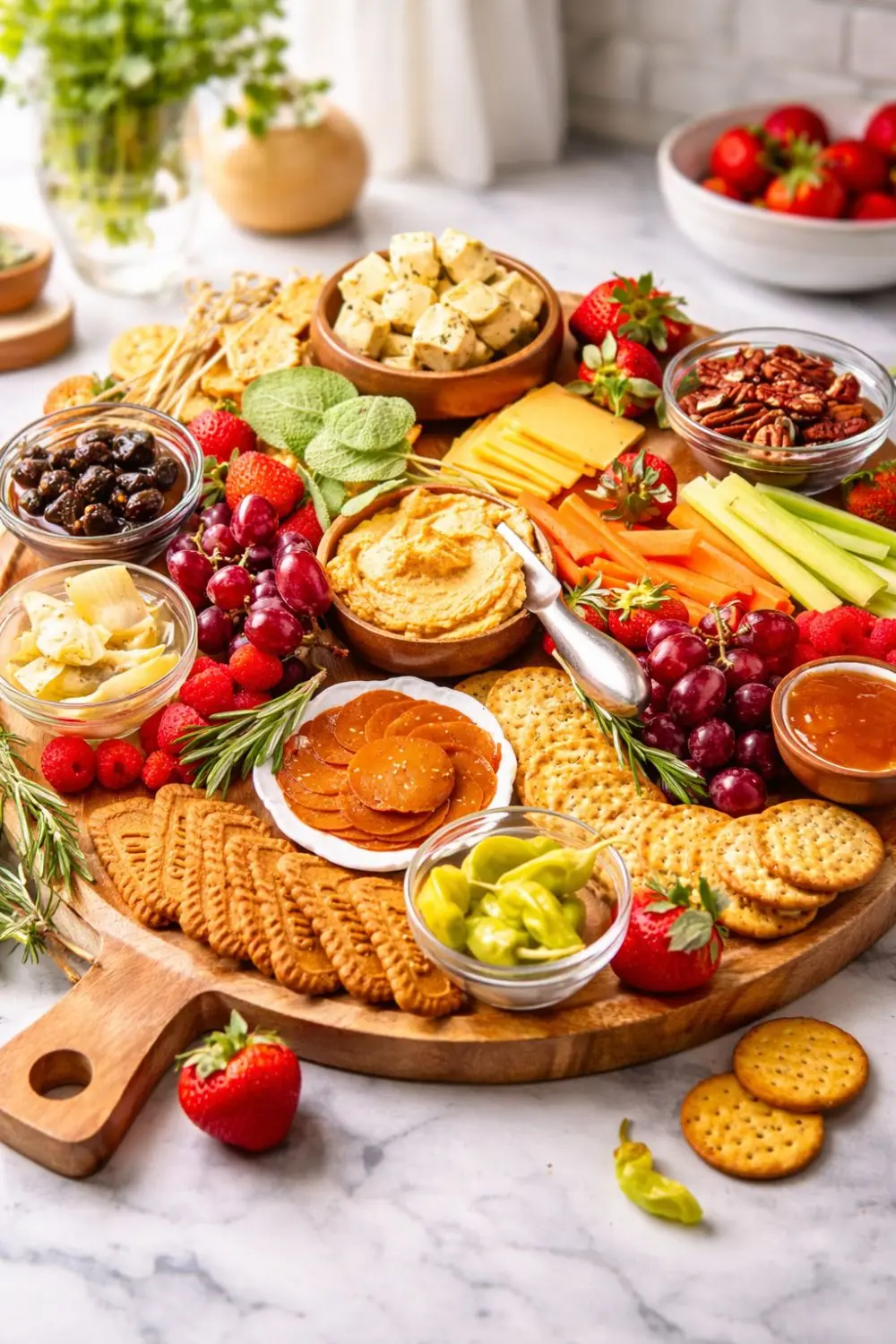
Vegan Cheese and Fruit Platter Ideas That Look Insanely Good
Ingredients
Equipment
Method
- Step 1 – Place the Bowls First
- Set your hummus, guacamole, and olive bowls at different points across the board one near the top left, one center-right, one near the bottom. These become the anchor points that everything radiates from. Spacing them apart forces you to build interesting pathways of food across the whole board rather than clustering everything in one area.
- Step 2 -Add the Cheese
- Place your cheese blocks and slices near the bowls. Fan sliced cheese in overlapping arcs rather than stacking it vertically. If you have a cheese ball, place it near the center as the visual focal point.
- Step 3 – Fill in with Crackers and Vegetables
- Lay your cracker fans along the edges of the board and near the cheese. Arrange vegetable sticks in small bundles pointing in the same direction bundles look more intentional than scattered individual sticks.
- Step 4 -Add Fruit in Clusters
- Place strawberries, cherries, and dates in clusters near the cheese sweet fruit near savory cheese is the fundamental cheese board pairing logic. Scatter blueberries and other small fruits into the gaps that remain.
- Step 5 – Scatter Nuts and Fill Every Gap
- Scatter nuts into any remaining spaces. Every visible board surface should have something on it the density of a well-built board is what makes it look abundant and impressive rather than sparse and half-finished. Blueberries and nuts are perfect gap-fillers.
Notes
Full Nutritional Breakdown (Per Serving 1 of 5)
| Nutrient | Amount |
| Calories | 610 kcal |
| Carbohydrates | 68g |
| Protein | 12g |
| Fat | 34g |
| Saturated Fat | 8g |
| Fiber | 13g |
| Sugar | 17g |
| Sodium | 1,344mg |
| Potassium | 718mg |
| Vitamin C | 52mg |
| Vitamin A | 3,113 IU |

Hi — I’m Rachel. I’m a wife, a mom, and a home cook who believes that food should bring comfort, joy, and compassion to the table. I live with my family — two hungry little foodies who are my most honest recipe testers — and together we’ve built a kitchen culture that’s all about good food that happens to be 100% vegan. I started this blog because I wanted a place to share the recipes that keep our days moving, the dishes that make weeknights feel a little easier, and the meals that become our little family traditions.