
Most people look at a well-built antipasto platter and assume it came from someone with either a professional culinary background or an extraordinary amount of free time. Neither is true.
Vegan Antipasto Platter: How to Build the Ultimate Italian-Inspired Board requires patience the marinated vegetables need their time, the tempeh needs its marinade, the caramelized onions need their 30 minutes of patient heat but the actual skill level required is genuinely accessible to anyone who can slice vegetables and operate a grill pan. What you get for that patience is a platter that looks stunning, tastes deeply Italian, and serves 3-4 people in a format that makes dinner feel like a genuine occasion.
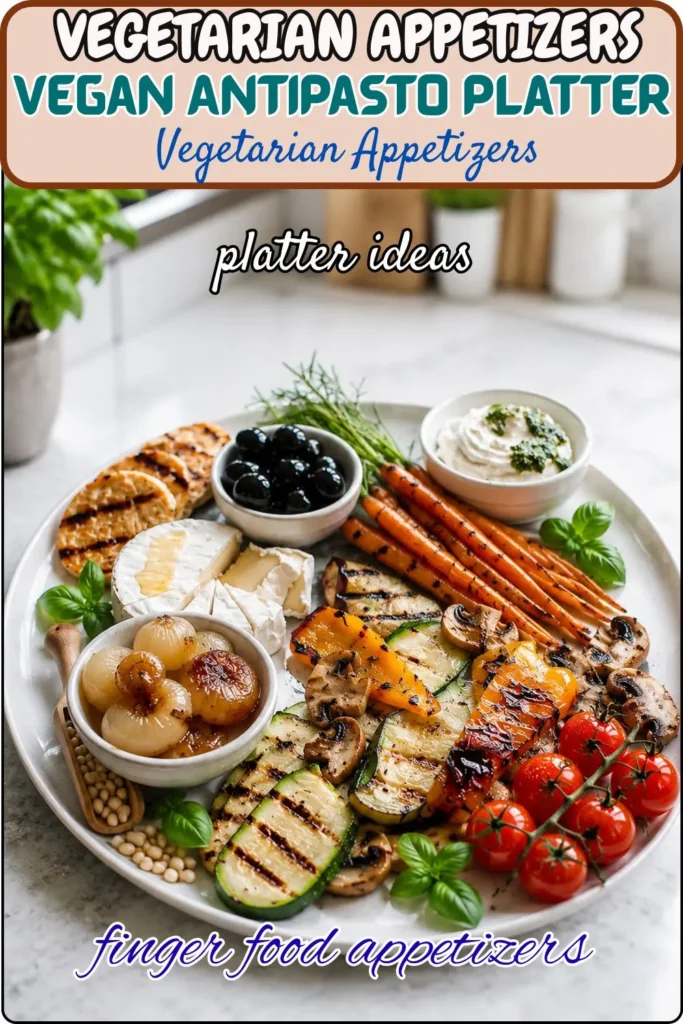
The Italian tradition of antipasto literally “before the meal” exists to do exactly one thing: create anticipation and pleasure before the main food arrives. A good vegan antipasto platter serves that purpose completely, and this recipe builds it from scratch with two genuinely homemade components that set it entirely apart from assembly-only boards.
My Recipe Timing and Serving Details
| Detail | Info |
| Active Prep Time | 45 minutes |
| Pre-Grill Marinade Time | 1 hour minimum |
| Post-Grill Rest Time | 2 hours minimum |
| Total Time | 3 hours 45 minutes |
| Servings | 3–4 as appetizer / 2 as full meal |
| Caloric Note | Variable — grazing format makes precise calculation impractical |
| Course | Appetizer / Light Meal |
| Diet | 100% Vegan |
This platter serves 3-4 people as a shared appetizer spread or 2 people as a complete light meal. The caloric content varies significantly based on individual consumption from the shared platter the recipe acknowledges this honestly and doesn’t provide specific nutrition figures. The 3 hours 45 minutes total time consists primarily of passive marination and resting your active kitchen time is approximately 45 minutes spread across two cooking sessions.
The Make-Ahead Timeline Plan This Correctly and It’s Effortless
Before anything else, understand the timeline because this is genuinely the most important information for building this platter successfully. The 3-hour passive time isn’t a problem it’s a feature. Every hour of marinating and resting makes the food taste better.
The optimal make-ahead schedule:
- Day before- Marinate and grill the vegetables. Post-grill, pour remaining marinade and basil over them and refrigerate overnight. The overnight rest produces the most deeply flavored marinated vegetables possible significantly better than the minimum 2-hour rest.
- Day before- Marinate the tempeh in its soy-maple-liquid smoke mixture overnight for maximum flavor penetration.
- Day of (morning)- Grill the marinated tempeh. Prepare caramelized baby onions.
- 1-2 hours before serving- Assemble the platter. Cover with plastic film and refrigerate until 20 minutes before serving.
- At serving time-Remove from refrigerator, allow 20 minutes to take the cold edge off, add final garnishes.
FYI attempting to make this platter in a single 4-hour session on the day of the event is technically possible but genuinely stressful. The two-day approach spreads the effort effortlessly and produces a better result. Plan ahead and enjoy the process.
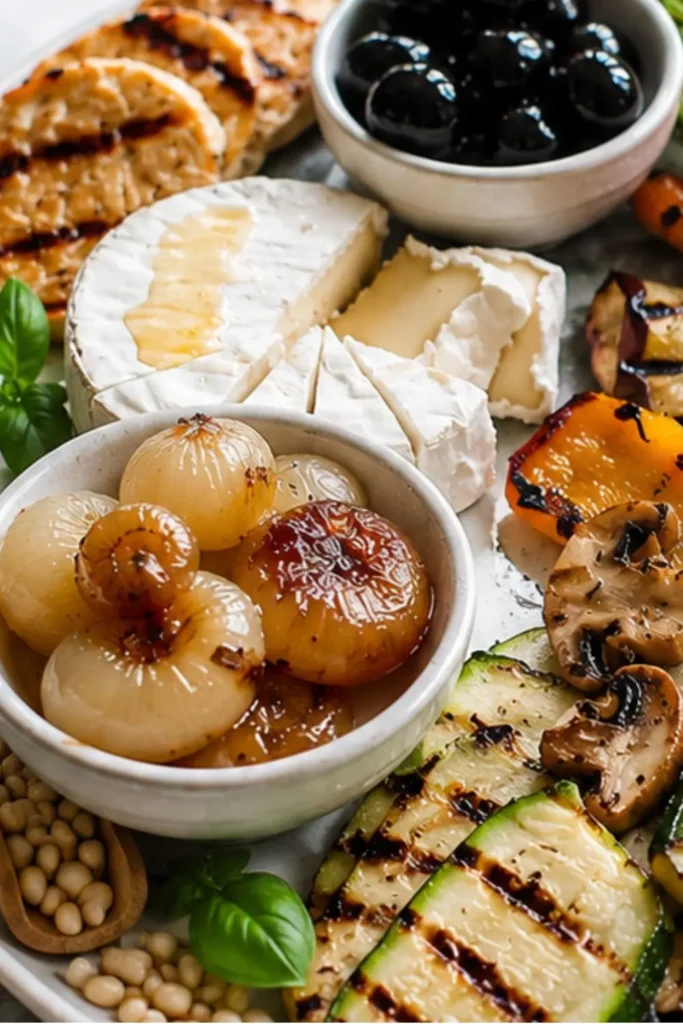
The Two Homemade Stars What Makes This Platter Genuinely Special
Star 1 – Marinated Grilled Vegetables
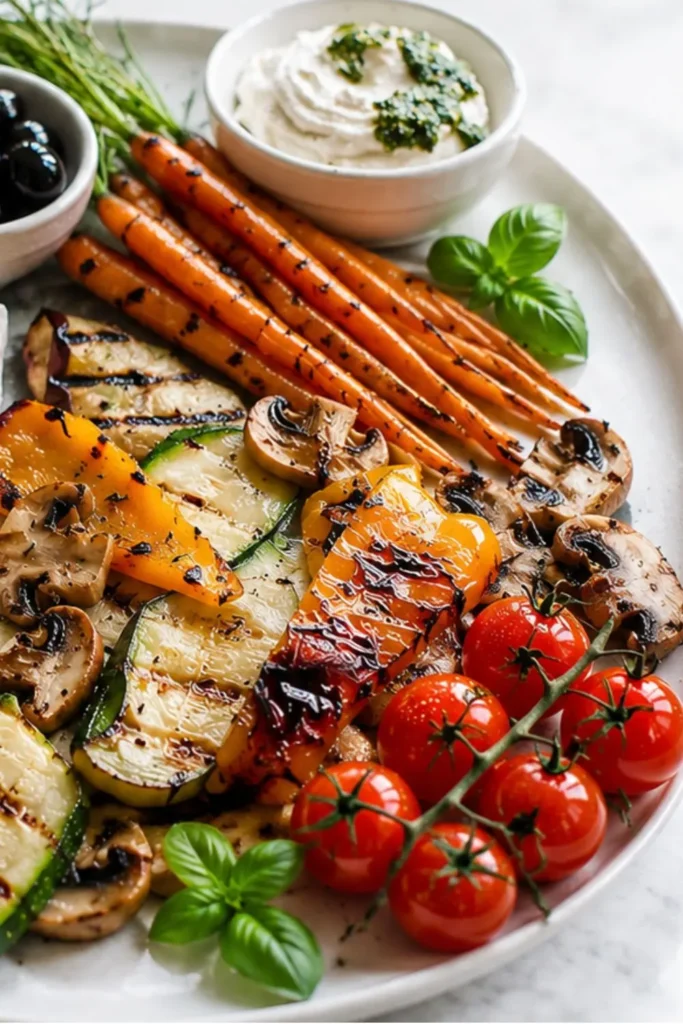
These aren’t roasted vegetables or steamed vegetables or raw vegetables. They’re marinated before grilling and marinated again after grilling a two-stage process that creates a depth of flavor that single-treatment vegetables simply don’t achieve.
The pre-grill marinade seasons the vegetables from the outside and begins tenderizing their cellular structure, which allows the grill’s heat to penetrate more evenly and the char to develop more quickly.
The post-grill marinade rest is where the real transformation happens. The warm, grilled vegetables their structure slightly opened by the heat absorb the surrounding olive oil, vinegar, garlic, and thyme significantly more readily than raw vegetables would. Fresh basil added at this stage infuses its fragrance throughout without losing the delicacy it would lose if cooked. After 2 hours (or overnight), you have vegetables that taste specifically and unmistakably like authentic Italian antipasto.
The five vegetables and their specific roles:
Zucchini (100g, thinly sliced) – the mildest flavor, the most tender texture, and the best at absorbing the marinade completely. Zucchini becomes almost silky after the post-grill rest and carries the garlic and herb flavors more thoroughly than any other vegetable on the platter.
Eggplant (130g, thinly sliced) -the most absorbent vegetable on this list, which means it produces the most intensely flavored slices after marination. Eggplant also develops the best char marks of any vegetable in this recipe the slightly spongy interior creates a clear contrast with the charred exterior.
Orange Bell Pepper (200g, cut into strips) – the visual anchor of the vegetable section. Orange specifically rather than red or yellow because the color reads distinctly against the darker eggplant and zucchini on the platter. Always grill bell pepper first it requires longer cooking time than the other vegetables and falls behind if added simultaneously.
Baby Carrots (6-7, optional) – the one vegetable that retains some crunch after grilling, providing textural contrast against the softer grilled vegetables. Their natural sweetness works beautifully against the vinegar in the marinade.
Mushrooms (5-6, thinly sliced) – the umami vehicle. Mushrooms develop the deepest savory character after the post-grill marinade rest because their porous structure absorbs oil and vinegar more completely than any other vegetable.
Star 2 – Smoky Grilled Tempeh
Here’s the honest truth about meat replacements on an antipasto board: most don’t work. They taste like a compromise rather than a genuine contribution to the platter’s flavor story. Smoky grilled tempeh works not because it pretends to be prosciutto, but because it brings its own genuinely excellent combination of textures and flavors that the platter specifically needs.
The marinade’s five ingredients each serve a specific purpose:
Soy sauce (1 tablespoon) -the primary umami and salt source. Creates the savory depth that makes the tempeh taste complex rather than flat.
Maple syrup (1 teaspoon) – the sweetness that caramelizes on the grill surface. The caramelization creates a slightly sticky, slightly charred exterior that gives the tempeh slices their visual appeal and their addictive quality.
White vinegar (1 teaspoon) – the acid that brightens the overall flavor and prevents the soy sauce and maple syrup from reading as too sweet-savory without edge.
Liquid smoke (⅛ teaspoon) – the ingredient most home cooks don’t keep in their pantry and most definitely should. A tiny quantity creates a genuine smokiness that transforms tempeh from interesting to specifically cured-meat adjacent in the best way. Find it at most supermarkets in the BBQ sauce aisle.
Chili powder (pinch) – background warmth that adds the final dimension preventing the marinade from being one-dimensional.
The marination minimum is 1 hour; overnight is better- Tempeh’s dense structure requires time for the marinade to penetrate beyond the surface. At 1 hour, the exterior is well-seasoned. Overnight, the flavors permeate throughout every slice.
Grill 2-3 minutes per side- on the preheated cast-iron until char marks appear and the maple glaze caramelizes. The slices should hold their shape completely tempeh doesn’t collapse during grilling the way softer proteins might.
The Supporting Cast Everything Else That Completes the Board
Vegan Cheese – Two Styles, Two Purposes
Vegan Cream Cheese (in a small bowl) – the spreading component. Kite Hill’s almond cream cheese is genuinely the best option here neutral enough to let the other flavors on the board lead while still providing creamy richness that guests appreciate as a dipping and spreading element.
Elevate it in 2 minutes- Stir in fresh chives, a pinch of lemon zest, and cracked black pepper before placing on the board. The difference between plain cream cheese and herb-seasoned cream cheese on an antipasto board is significant and takes essentially no additional effort.
Vegan Aged Camembert – the statement cheese. A soft-ripened, white-rind cashew cheese like Miyoko’s Double Cream or Treeline Aged Herb creates the sophisticated cheese presence that makes this feel like a properly built platter rather than a snack assembly. Cut into thin slices or wedges and press toothpicks in for easy serving.
IMO, the two-cheese approach is specifically correct for this platter the cream cheese handles the spreading function while the aged cheese handles the elegant, sophisticated visual and flavor function. One cheese trying to do both jobs doesn’t accomplish either as well.
Caramelized Baby Onions
These require the most time of any supporting component 25-30 minutes of slow cooking but they’re genuinely worth every minute. Pearl onions or baby onions cooked in vegan butter with a pinch of sugar and a splash of balsamic vinegar until deep amber and jammy produce a sweet, complex, slightly tangy component that no other antipasto element replicates.
The technique- Start over medium heat, reduce to low after 10 minutes, stir regularly and don’t rush. The caramelization happens in its own time and genuinely cannot be accelerated without burning rather than caramelizing.
Serve in a small bowl on the board with a small spoon. Their deep brown color against the vibrant vegetables and bright cherry tomatoes creates visual contrast that strengthens the board’s overall appearance.
Olives (¼ cup / 35g)
Use the best quality olives you can access this is not where to economize. An Italian antipasto deserves Italian olives:
Castelvetrano – bright green, buttery, mild. The olive that converts olive skeptics.
Gaeta – small, dark purple, slightly herbal. Authentically Italian.
Cerignola – large, meaty, available in green or black. Visually impressive due to size.
A mixture of two or three creates more visual interest and flavor range than a single variety. Place in a small bowl with a cocktail fork or appetizer picks.
Pine Nuts (2 tablespoons / 16g)
Toast in a dry pan over medium heat for 3-4 minutes, stirring frequently, until golden. The transformation from raw to toasted pine nuts is remarkable toasted pine nuts have a warm, buttery, slightly resinous nuttiness that raw pine nuts simply don’t possess.
Scatter toasted pine nuts directly on the board rather than placing in a bowl they fill visual gaps and add textural interest throughout the arrangement.
Cherry Tomatoes (6-8)
Use the most flavorful cherry tomatoes available peak summer Campari tomatoes or mixed heirloom varieties when in season. Halve them to expose the interior, place cut-side up, add a single basil leaf and a pinch of flaky sea salt to each half.
This simple preparation transforms cherry tomatoes from a gap-filler to a genuine bruschetta-style component that guests notice and specifically enjoy.
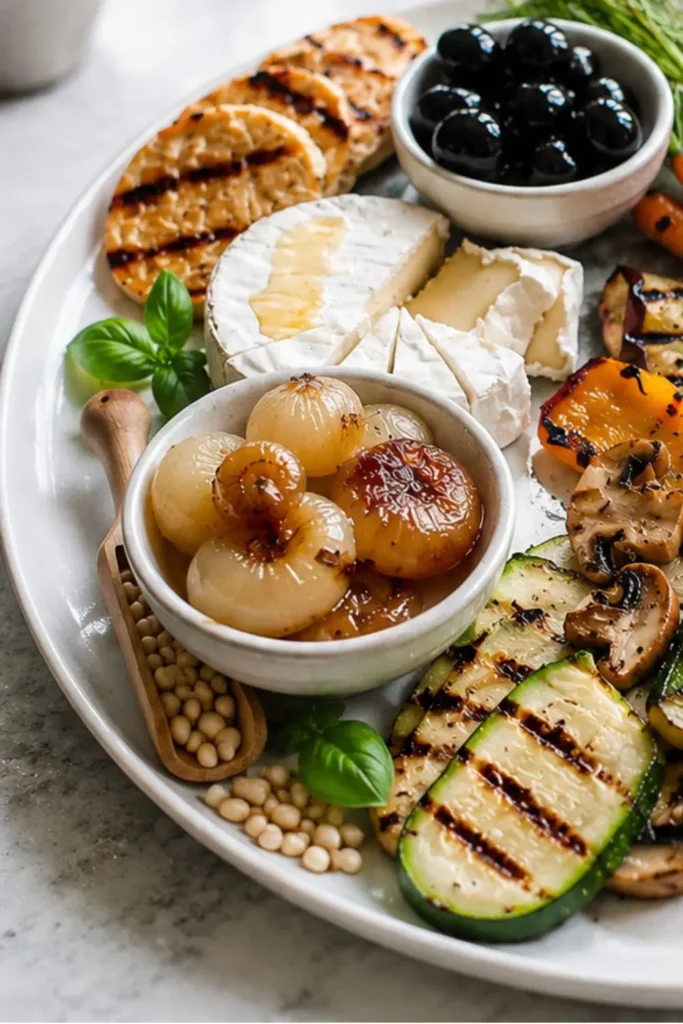
Equipment Guide What You Actually Need For
The Cast-Iron Skillet Grill – the specific tool that produces the authentic char marks that make the vegetables and tempeh look properly grilled rather than pan-fried. A flat skillet produces the same cooked result without the char marks. The char marks aren’t just visual the high-contact heat creates flavor compounds that change the vegetables’ taste profile in a way that flat pan cooking doesn’t.
A large platter or board – a long Italian-style serving plate, a large round wooden board, or a slate serving board all work beautifully. Minimum dimensions of 14×18 inches for a 3-4 person serving.
3-4 small bowls – for cream cheese, caramelized onions, and olives. Small ramekins work perfectly; mismatched antique bowls look even better.
Toothpicks and cocktail picks – pressed into cheese slices, tempeh, and small components for easy picking without utensils.
Plastic film – for covering both marinating components and the assembled platter during refrigerator storage.
Large mixing bowl – for the pre-grill vegetable marinade.
Baking dish – for the tempeh marinade.
The Assembly Process Sequence Matters
Step 1- Drain the marinated vegetables slightly enough that they’re glistening and moist but not sitting in a pool of marinade that runs across the platter surface. Arrange in a section, grouping similar vegetables together in slightly overlapping rows.
Step 2- Position the tempeh slices in their own section adjacent to the vegetables. Fan them slightly or arrange in overlapping rows to show the char marks clearly.
Step 3- Place the small bowls (cream cheese, caramelized onions, olives) distributed across the remaining platter space not clustered, but spread out to anchor different sections of the board.
Step 4-Arrange the cheese slices near the cream cheese bowl with toothpicks inserted.
Step 5- Fill remaining spaces with halved cherry tomatoes, scattered pine nuts, and fresh basil leaves. Press cocktail picks into any components that benefit from easy picking access.
Step 6- Final drizzle a thin stream of your best extra virgin olive oil across the vegetables and a scattering of flaky sea salt across the tomatoes and cheese creates the finished Italian appearance.
You may also like Next recipe
Seasonal Vegan Antipasto Platter Ideas
Summer- Add grilled corn off the cob, fresh heirloom tomato slices, vegan burrata with basil oil, grilled peach halves
Autumn- Add roasted butternut squash, pomegranate seeds, dried figs, toasted walnuts, aged cashew cheese
Winter- Add roasted beets, caramelized fennel, blood orange slices, truffle-infused vegan cheese
Spring- Add grilled asparagus, fresh pea shoots, lemon-marinated artichokes, vegan ricotta with herbs
My Final Thoughts
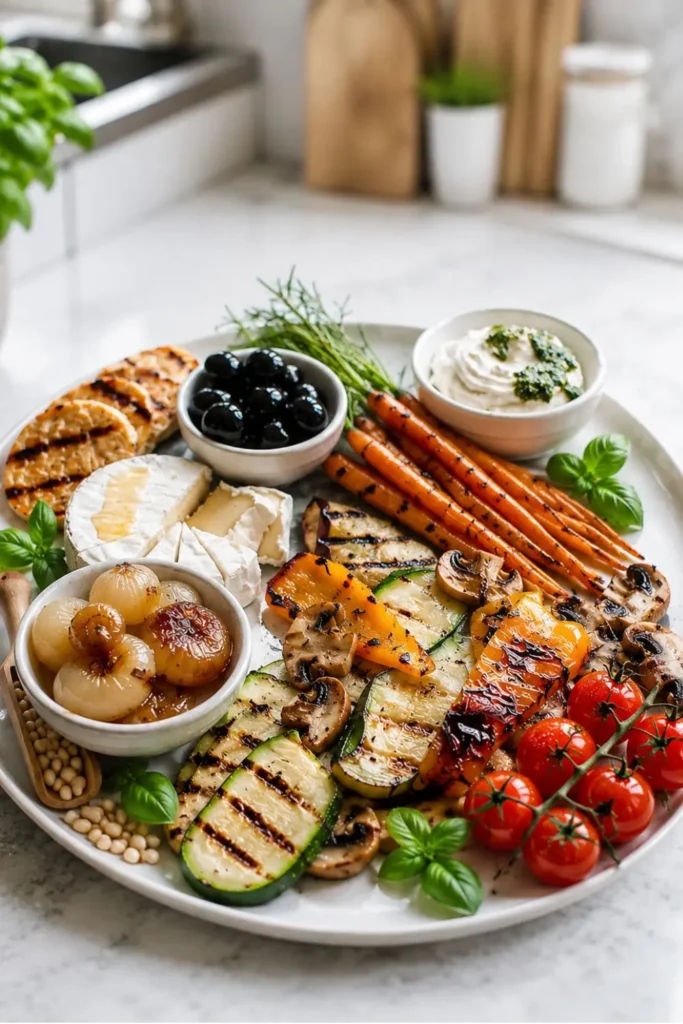
Vegan Antipasto Platter: How to Build the Ultimate Italian-Inspired Board delivers what that title promises a genuinely Italian, genuinely beautiful, completely plant-based board that serves 3-4 people with authentic antipasto character in every component.
The marinated grilled vegetables need their time. The smoky tempeh needs its overnight marinade. The caramelized onions need their 30 patient minutes. Every one of these time investments returns something genuinely extraordinary on the finished platter.
Start the vegetables tonight. Grill the tempeh tomorrow. Assemble an hour before your guests arrive. Then pour the wine and let everyone graze at the pace that Italian food specifically encourages.
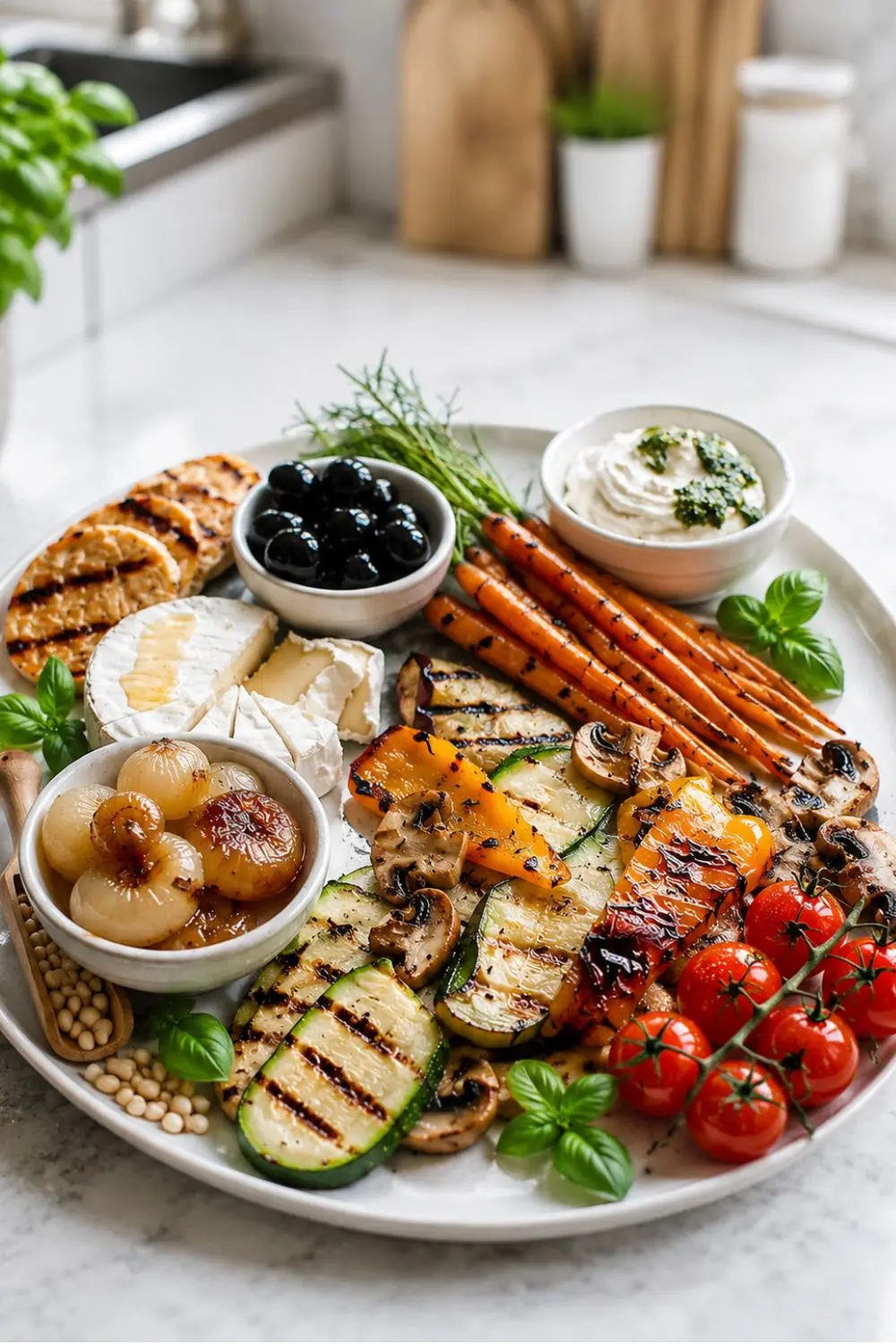
Vegan Antipasto Platter
Ingredients
Equipment
Method
- Star 1 – Marinated Grilled Vegetables
- These aren’t roasted vegetables or steamed vegetables or raw vegetables. They’re marinated before grilling and marinated again after grilling a two-stage process that creates a depth of flavor that single-treatment vegetables simply don’t achieve.
- The pre-grill marinade seasons the vegetables from the outside and begins tenderizing their cellular structure, which allows the grill’s heat to penetrate more evenly and the char to develop more quickly.
- The post-grill marinade rest is where the real transformation happens. The warm, grilled vegetables their structure slightly opened by the heat absorb the surrounding olive oil, vinegar, garlic, and thyme significantly more readily than raw vegetables would. Fresh basil added at this stage infuses its fragrance throughout without losing the delicacy it would lose if cooked. After 2 hours (or overnight), you have vegetables that taste specifically and unmistakably like authentic Italian antipasto.
- The five vegetables and their specific roles:
- Zucchini (100g, thinly sliced) – the mildest flavor, the most tender texture, and the best at absorbing the marinade completely. Zucchini becomes almost silky after the post-grill rest and carries the garlic and herb flavors more thoroughly than any other vegetable on the platter.
- Eggplant (130g, thinly sliced) -the most absorbent vegetable on this list, which means it produces the most intensely flavored slices after marination. Eggplant also develops the best char marks of any vegetable in this recipe the slightly spongy interior creates a clear contrast with the charred exterior.
- Orange Bell Pepper (200g, cut into strips) – the visual anchor of the vegetable section. Orange specifically rather than red or yellow because the color reads distinctly against the darker eggplant and zucchini on the platter. Always grill bell pepper first it requires longer cooking time than the other vegetables and falls behind if added simultaneously.
- Baby Carrots (6-7, optional) – the one vegetable that retains some crunch after grilling, providing textural contrast against the softer grilled vegetables. Their natural sweetness works beautifully against the vinegar in the marinade.
- Mushrooms (5-6, thinly sliced) – the umami vehicle. Mushrooms develop the deepest savory character after the post-grill marinade rest because their porous structure absorbs oil and vinegar more completely than any other vegetable.
- Star 2 – Smoky Grilled Tempeh
- Here’s the honest truth about meat replacements on an antipasto board: most don’t work. They taste like a compromise rather than a genuine contribution to the platter’s flavor story. Smoky grilled tempeh works not because it pretends to be prosciutto, but because it brings its own genuinely excellent combination of textures and flavors that the platter specifically needs.
Notes

Hi — I’m Rachel. I’m a wife, a mom, and a home cook who believes that food should bring comfort, joy, and compassion to the table. I live with my family — two hungry little foodies who are my most honest recipe testers — and together we’ve built a kitchen culture that’s all about good food that happens to be 100% vegan. I started this blog because I wanted a place to share the recipes that keep our days moving, the dishes that make weeknights feel a little easier, and the meals that become our little family traditions.