
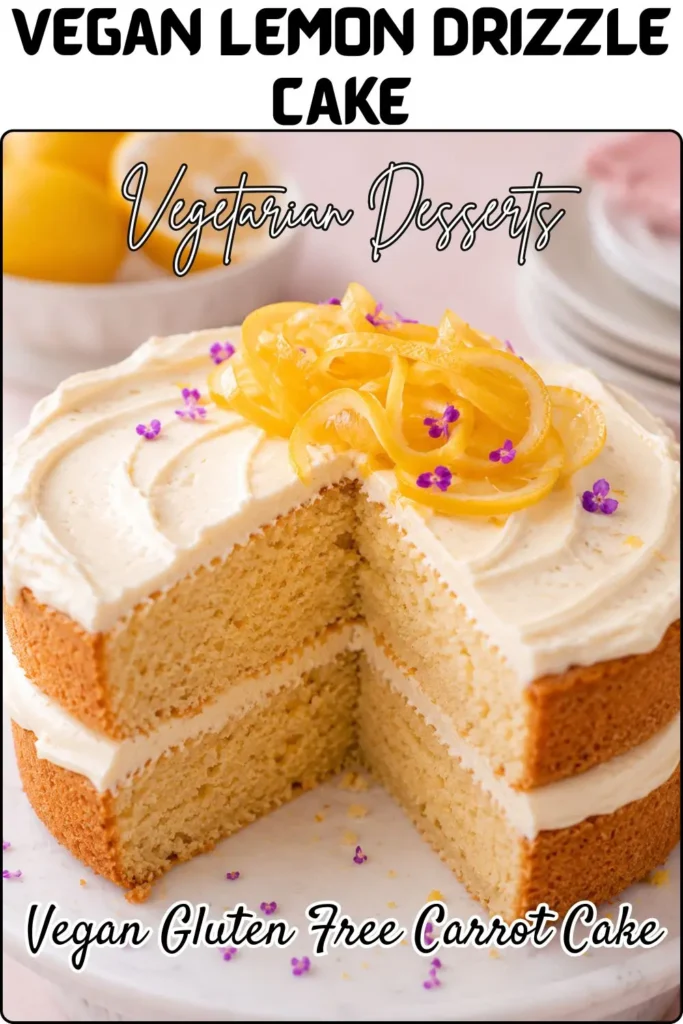
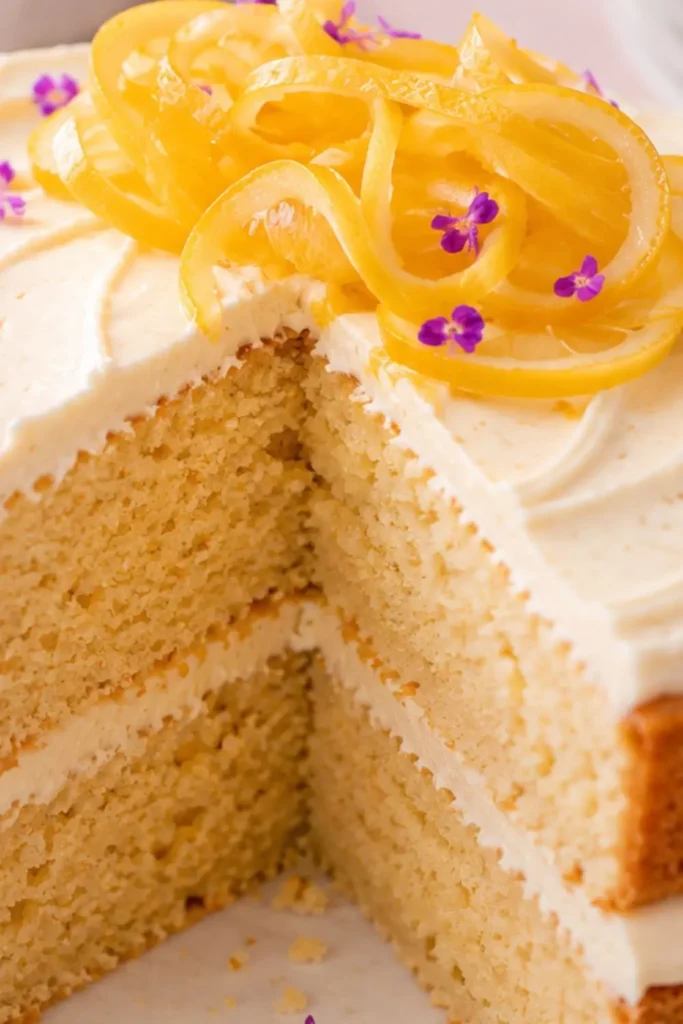
This isn’t just a lemon cake vegan lemon drizzle cake in its most ambitious, layered, cream-cheese-frosted form is a genuine celebration of what three whole lemons can contribute to a dessert when you use not just the juice, but the zest and the actual lemon flesh. That’s the technique that makes this recipe exceptional: mincing the peeled lemon segments directly into the batter creates pockets of intense, juicy lemon flavor throughout every slice that juice and zest alone never achieve. Topped with a lemon cream cheese frosting that’s tangy, creamy, and genuinely good enough to eat with a spoon, this two-layer 8-inch round serves 16 people at 368 calories each.
The first time I made this recipe, the minced lemon segment technique was the detail I was most skeptical about and it was the detail that immediately impressed me most. The small pieces of lemon flesh distribute through the batter and create bright, intensely citrusy moments throughout every slice. It’s the difference between a cake that tastes lemon-flavored and a cake that tastes like someone genuinely loves lemon. This is the latter.
My Recipe Timing and Serving Details
Here’s your complete planning overview:
| Detail | Info |
| Ingredient Warm-Up Time | 30–45 minutes |
| Prep Time | 55 minutes |
| Bake Time | 33–35 minutes |
| Cooling Time | 30 minutes in pan + complete cooling |
| Total Time | ~1 hour 25 minutes + cooling |
| Servings | 16 slices |
| Serving Size | 1 slice |
| Calories Per Slice | 368 kcal |
| Course | Dessert / Celebration Cake |
| Diet | 100% Vegan |
This vegan lemon drizzle cake serves 16 people as generous two-layer round cake slices. At 368 calories per slice (including the lemon cream cheese frosting), this is a properly calibrated celebration dessert with 12mg of Vitamin C per slice and 4 grams of protein. The recipe uses a digital scale throughout for accuracy gram measurements ensure the most consistent results.
The Three-Lemon Technique What Makes This Recipe Genuinely Different
Most lemon cakes use lemon juice and lemon zest. This vegan lemon drizzle cake recipe uses lemon zest, lemon juice, AND minced lemon flesh and that third element is what makes this recipe significantly more interesting than standard lemon cake recipes.
Why the minced lemon flesh? The flesh of a lemon contains the juice plus the fibrous cell structure that holds it when minced and added to batter, it releases its juice gradually during baking rather than all at once. The result is distributed pockets of intensely lemony, slightly jammy lemon presence throughout the cake that juice added to the batter can’t replicate.
The technique requires patience- You need to peel the lemons carefully (removing peel AND white pith, which is bitter), separate the segments, remove the fibrous outer membrane from each segment, mince the flesh finely, drain the accumulated juice separately, and measure both the flesh and juice independently. It takes about 10 minutes and is completely worth every minute.
The juice quantity is specifically 3 tablespoons (45ml) – not the full juice yield of three lemons. Any additional juice should be saved for other uses, not added to the cake. This quantity is calibrated to add flavor without affecting the batter’s moisture balance.
FYI this technique produces a vegan lemon drizzle cake with lemon flavor so vibrant and genuine that it genuinely surprises people who are used to lemon-extract or lemon-juice-only cakes. It tastes like real lemon.
Full Ingredient List
An ambitious but purposeful ingredient list:
The Cake:
- 1 stick (112g) vegan butter – softened at room temperature
- ½ cup (112g) vegan sour cream – at room temperature
- ¾ cup (180ml) oat milk – at room temperature
- 3½ cups (440g) all-purpose flour -spooned and leveled
- ¾ teaspoon baking soda
- 2 teaspoons baking powder
- ½ teaspoon fine sea salt
- 3 large lemons – for 3 tablespoons zest, 70g minced flesh, and 45ml juice
- 1⅓ cups (280g) organic cane sugar
- ½ cup (120ml) aquafaba – from a can of chickpeas
- ½ cup (112g) neutral-flavored oil – sunflower recommended
- 1 tablespoon pure vanilla extract
The Lemon Cream Cheese Frosting:
- 1 stick (112g) vegan butter – softened
- 8 oz (227g) vegan cream cheese – softened
- 2¼ cups (270g) organic powdered sugar, sifted
- 1 teaspoon pure vanilla extract
- ⅛ teaspoon fine sea salt
- 2 tablespoons lemon zest
Optional Decoration:
- Fresh berries or candied lemons
The vegan sour cream is the ingredient that most significantly elevates this recipe above standard vegan cake recipes. It provides fat and tang that vegan butter alone doesn’t deliver the creamy acidity of sour cream creates a more tender, slightly denser crumb than plant milk alone. Kite Hill, Tofutti, and Follow Your Heart all produce reliable vegan sour cream for this application.
The aquafaba serves as the egg replacer here and uniquely, it’s whipped briefly before addition to incorporate some air. This small aeration step contributes to the cake’s “fluffy but airy” batter description. Shake the chickpea can before opening to disperse the starches the starches in aquafaba contribute significantly to its binding and foam-holding properties.
Equipment You’ll Need — Specific Tools Matter Here
The recipe lists equipment specifically:
Primary Equipment
- Two 8-inch (20x20cm) round cake pans – with 5cm depth to accommodate the rise. Each pan receives approximately 750g of batter the recipe recommends weighing for equal division.
- Digital kitchen scale – specifically recommended and genuinely important for this recipe. The flour, sugar, lemon flesh, juice, and sour cream measurements all benefit from weight accuracy. A digital scale eliminates the cup-measurement inconsistencies that affect this recipe’s precisely calibrated wet-to-dry ratio.
- Electric handheld mixer or stand mixer – used for two separate purposes: creaming the butter-sugar-oil base, and separately whipping the aquafaba. The recipe specifically has you rinse the beaters between these steps fat residue on the beaters from the butter stage prevents aquafaba from foaming properly.
- Oven at 350°F/175°C with a rack in the middle position
- Wire cooling racks – the recipe specifically says to cool pans on a rack, not on the counter. Cooling on a surface traps heat underneath and creates condensation that can make the bottom of the cake soggy.
Supporting Equipment
- Fine-mesh strainer – for draining accumulated juice from the minced lemon flesh before adding to batter
- Parchment paper – for lining pan bottoms (cut to circles)
- Nonstick spray – for greasing pans and the parchment paper on top
- Offset spatula – for spreading frosting between layers and across the exterior
- Bench scraper – for smoothing frosted sides if doing a full exterior frost
- Medium bowl– for dry ingredients
- Large bowl – for the main batter assembly
- Small bowl – for the aquafaba before whipping
Step-by-Step Instructions For Vegan Lemon Drizzle Cake
Advance Step Room Temperature Everything
Take the vegan butter, sour cream, and oat milk out of the refrigerator at least 30–45 minutes before starting. Cut the butter into small cubes immediately smaller pieces come to room temperature significantly faster than a whole stick.
Measure the sour cream and milk into separate small bowls rather than leaving them in their containers this also speeds their temperature equalization. Room temperature ingredients create a smooth, properly emulsified batter; cold ingredients cause the fat to seize and the batter to curdle.
Step 1 – Preheat and Prepare Pans
Preheat the oven to 350°F/175°C with the rack in the middle position. Line each 8-inch pan: spray the bottom with nonstick spray, add a parchment circle, spray the parchment, then spray the sides as well.
Step 2 – Combine Dry Ingredients
In a medium bowl, whisk together the flour, baking soda, baking powder, and salt very well. “Very well” here means the leaveners are completely uniform throughout the flour baking powder or baking soda clumping in one area creates uneven rise and dense patches.
Step 3 – Prepare the Three-Lemon Components
Working over a large bowl to catch all zest:
Zest all three lemons first -zesting before cutting or juicing is always easier. You need 3 tablespoons of packed zest.
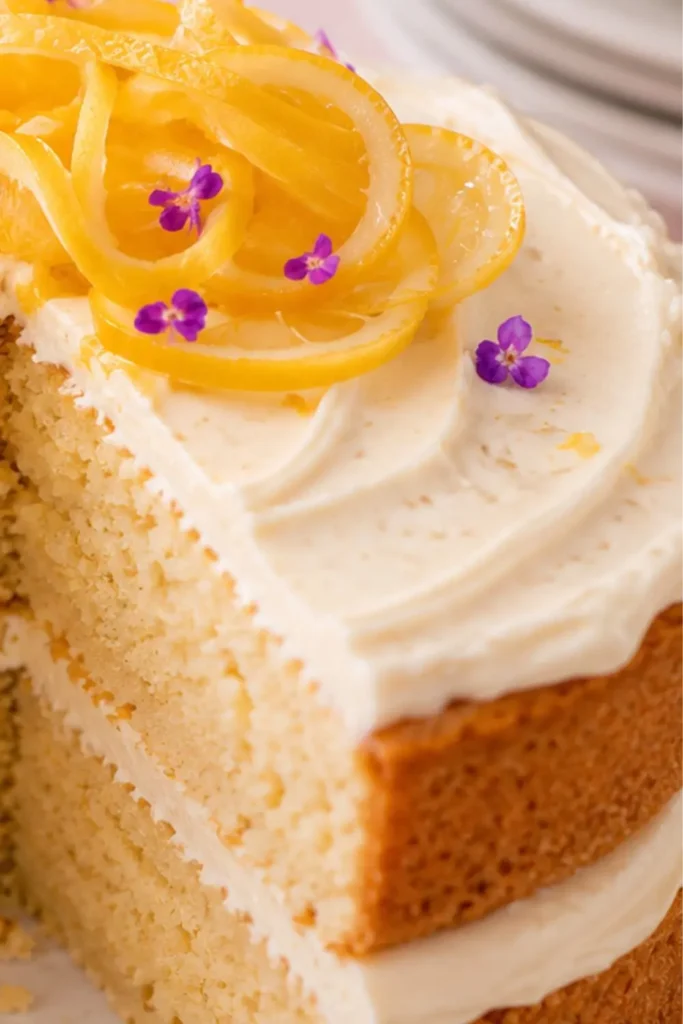
Prepare the lemon flesh- Stand each lemon upright on a cutting board. Cut the ends off. Use a sharp knife to slice away the entire peel and white pith from top to bottom, following the curve of the lemon. Remove the fibrous outer membrane from each segment this is the thin white skin around each section. Pull the flesh free and mince it finely into tiny pieces.
Strain and measure- Place a strainer over a small bowl and pour the minced lemon with accumulated juices through it. Don’t press let gravity do the work. Measure 70g (5 tablespoons) of lemon pieces and 45ml (3 tablespoons) of the juice separately. Save any extra juice for drinks.
Step 4 – The Lemon Sugar Creaming Stage
Add the sugar to the lemon zest in the large bowl. Rub together with your hands for 60 seconds until the mixture is fragrant and slightly damp from the released essential oils.
Add the softened vegan butter and neutral oil to the lemon-sugar. Beat on low with the electric mixer until the butter breaks into small pieces, then increase to medium and beat for about 1 minute until the mixture starts to look fluffy and shiny. Rinse the beaters thoroughly and dry them.
Step 5 – Whip the Aquafaba
Pour ½ cup of aquafaba into a small bowl. Using the clean, dry beaters, beat on medium speed for 1 to 1½ minutes until the entire mixture is foamy including at the bottom of the bowl. This light foam provides the aeration that eggs would normally contribute.
Step 6 – Combine Wet Ingredients
Add the whipped aquafaba, room temperature oat milk, room temperature vegan sour cream, and vanilla extract to the lemon-sugar-butter mixture. Mix on low for 15–20 seconds until just combined.
Add the drained minced lemon pieces and 3 tablespoons lemon juice and mix until well combined.
Important- Before the next step, confirm your oven is preheated and pans are ready. The baking soda activates the moment it contacts the wet ingredients you want minimal time between combining and baking.
Step 7 – Add Flour in Two Stages
Add half the flour mixture to the wet ingredients and beat on low until just combined. Add the remaining flour and mix until you have a mostly smooth batter stop mixing before it’s perfectly smooth. Over-mixing after the flour addition develops gluten and produces a tough cake.
Fold the bottom and sides with a spatula to incorporate any settled liquid. The finished batter should be “thick and fluffy but airy.”
Step 8 – Divide and Bake
Weigh and divide the batter evenly between both pans approximately 750g per pan. Smooth the surfaces with an offset spatula.
Bake for 33–35 minutes until the centers are set, the tops are slightly puffed, and the cakes have just started to pull away from the pan edges. A toothpick should come out clean or with a few moist crumbs.
Cool on wire racks (not countertops) for 30 minutes in the pans. Add parchment to the rack, then carefully invert the cakes onto the rack. Cool completely before assembling refrigerating for a bit helps firm the layers for easier frosting.
Step 9 – Make the Lemon Cream Cheese Frosting
Sift the powdered sugar first. Beat the softened vegan butter until smooth, then add the softened vegan cream cheese and beat until well incorporated.
Add the powdered sugar in two additions, beating on low after each. Add the vanilla, salt, and lemon zest and beat until smooth. If the frosting seems loose, refrigerate until firm enough to spread.
The frosting can be made 1–3 days ahead and refrigerated a useful make-ahead option for party planning.
Step 10 – Assemble
Place the first cake layer bottom-side up on your serving plate. Spread a generous layer of frosting across the top. Place the second layer top-side up. Add frosting to the top and optionally the sides. Decorate with fresh berries or candied lemons.
The Vegan Sour Cream Why It’s Worth Finding
Vegan sour cream is one of the specialty ingredients in this recipe that produces a noticeably different result than substituting plain plant yogurt:
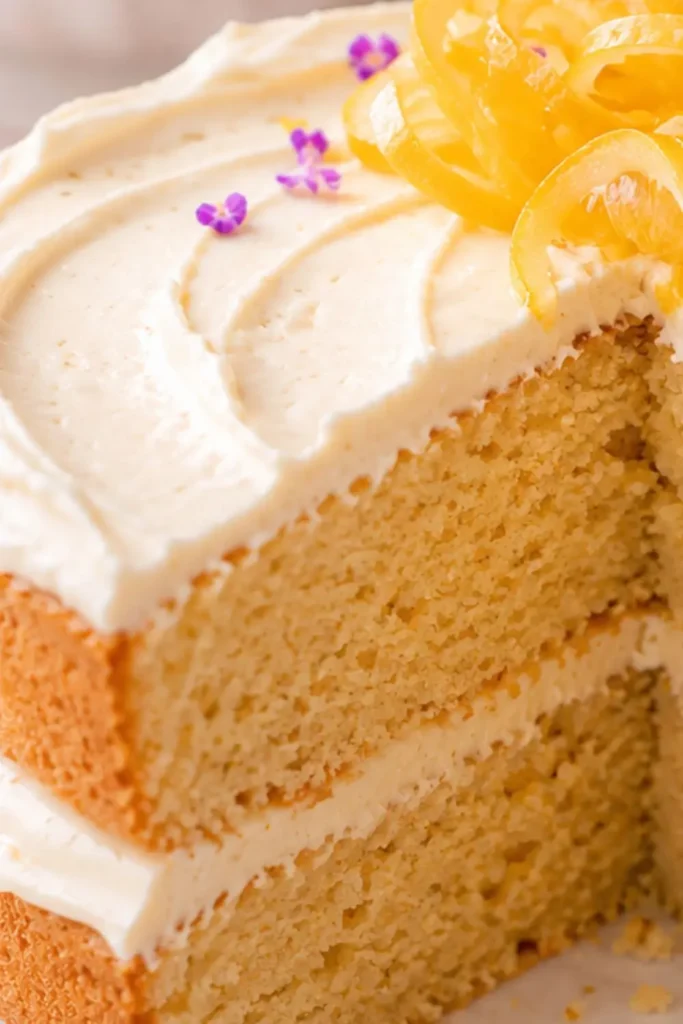
Sour cream’s specific texture- Vegan sour cream is thicker and higher fat than most plant yogurts. This fat content lubricates the gluten structure during baking, producing a finer, more tender crumb.
The tang contribution- The fermented, slightly sour quality of vegan sour cream mirrors the tang that dairy sour cream provides it makes the cake taste slightly more complex and less one-dimensionally sweet.
Best substitutes if unavailable- Kite Hill’s plain almond milk Greek yogurt works reasonably well. Full-fat vegan Greek yogurt from any brand provides similar fat content and tang.
IMO, finding Tofutti Sour Cream or Kite Hill Sour Cream specifically is worth the extra grocery trip for this recipe. The textural difference in the finished cake is noticeable.
The Lemon Cream Cheese Frosting Detail That Matters
Vegan Cream Cheese Brand Selection
The frosting uses 8 ounces of vegan cream cheese the brand choice significantly affects the frosting’s texture and stability:
Kite Hill Almond Milk Cream Cheese – produces the smoothest, most stable frosting. Its neutral, slightly nutty flavor works well with the lemon zest. Doesn’t weep or separate.
Violife Cream Cheese – slightly tangier than Kite Hill, produces excellent frosting with good stability.
Miyoko’s Vegan Cream Cheese – the most “cream cheese” flavored option, slightly softer consistency that may need refrigeration to firm before spreading.
Sifting the Powdered Sugar
The recipe specifically calls for sifting the powdered sugar before use. Unsifted powdered sugar contains lumps that don’t fully incorporate into the frosting creating a slightly gritty texture. Sifted sugar produces completely smooth frosting. This 2-minute step makes a genuine quality difference.
Try It Next recipe
Nutrition Information Per Slice
At 368 calories per slice for 16 slices:
| Nutrient | Per Slice |
| Calories | 368 kcal |
| Carbohydrates | 61g |
| Protein | 4g |
| Fat | 13g |
| Fiber | 2g |
| Sugar | 36g |
| Sodium | 293mg |
| Vitamin C | 12mg |
| Calcium | 66mg |
12mg of Vitamin C per slice from three lemons’ worth of zest, juice, and flesh distributed across 16 portions. 2 grams of fiber per slice. At 368 calories per slice including the cream cheese frosting, this is a properly substantial celebration dessert that earns its caloric investment.
Storage
- Assembled cake- Refrigerate for up to 4–5 days in an airtight container. The lemon cream cheese frosting requires refrigeration bring the cake to room temperature 30–45 minutes before serving.
- Unfrosted layers- Refrigerate wrapped for up to 3 days or freeze for up to 1 month.
- Frosting- Make up to 3 days ahead and refrigerate.
My Final Thoughts
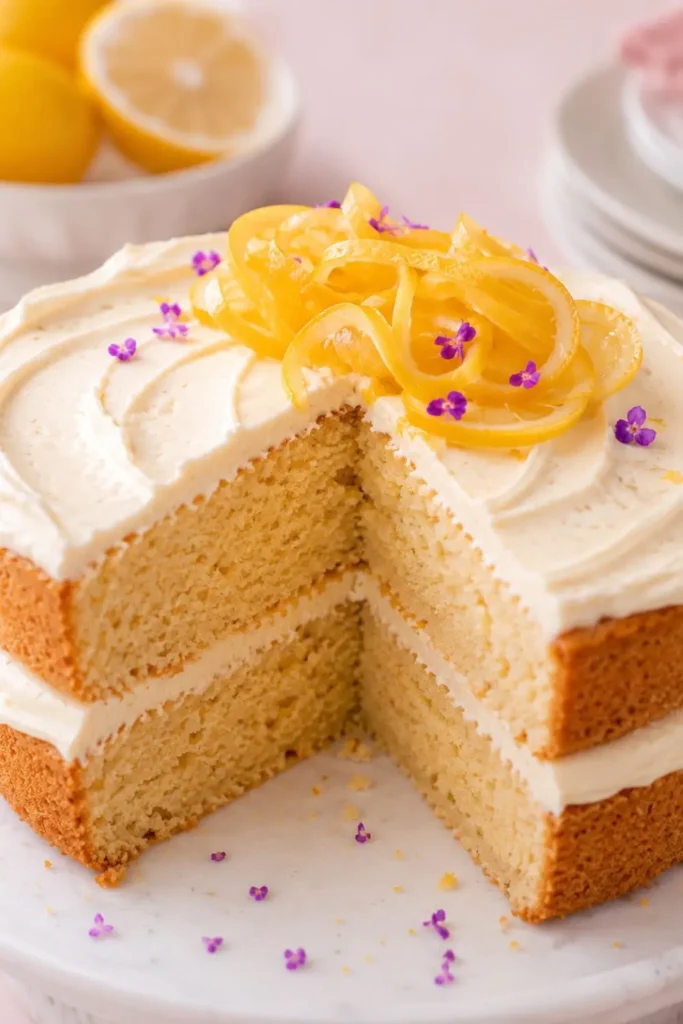
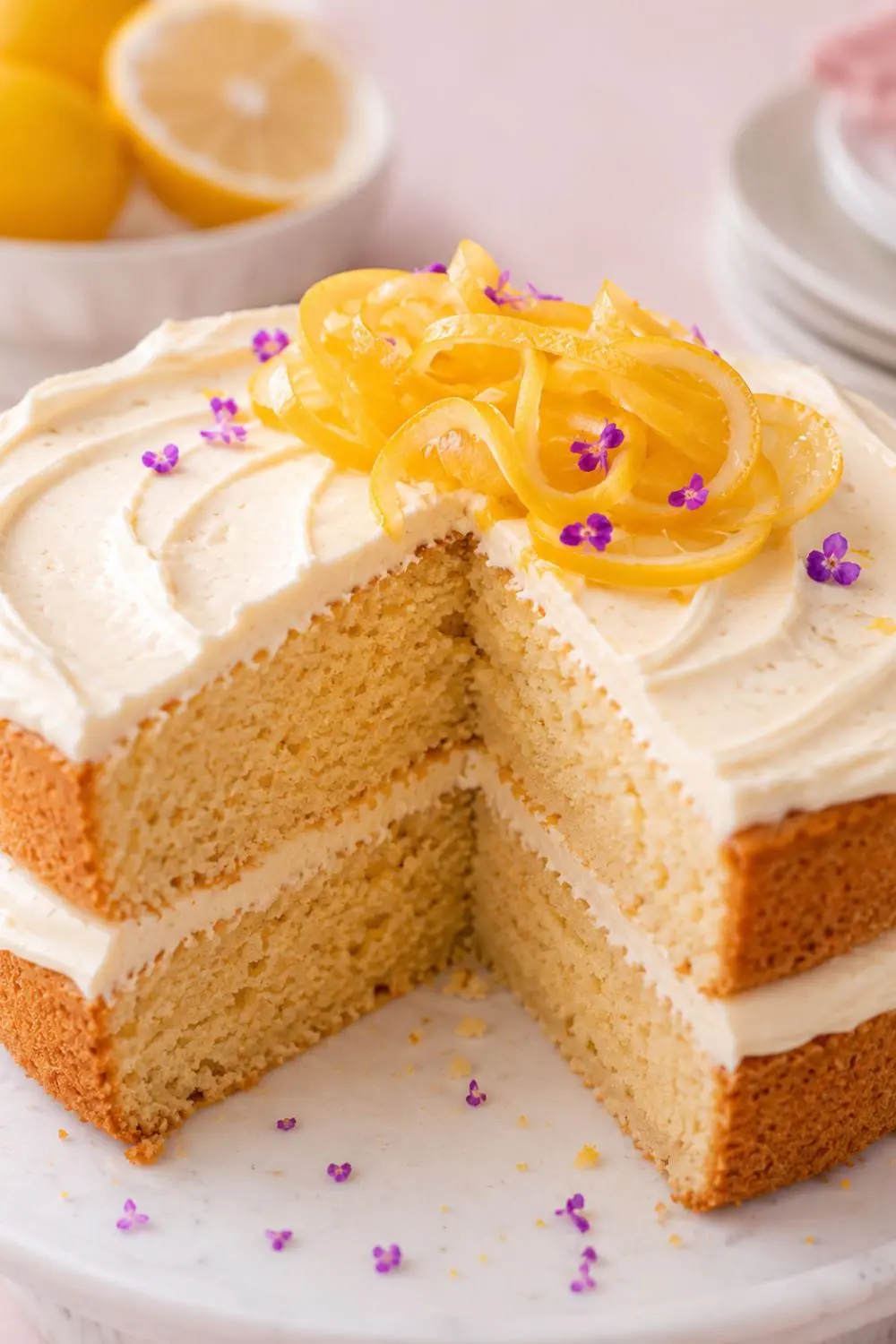
Vegan lemon drizzle cake in this two-layer, cream-cheese-frosted form is genuinely one of the most lemon-forward cakes possible zest rubbed into sugar, minced lemon flesh throughout the batter, fresh lemon juice in both cake and frosting, and lemon zest throughout the cream cheese frosting. 368 calories per slice, 16 people served, completely plant-based.
The minced lemon flesh technique takes 10 minutes and produces a result that immediately distinguishes this cake from every other lemon cake you’ve made.
Take the time. Mince the lemons. Whip the aquafaba. Sift the powdered sugar. Assemble the layers.
Vegan Lemon Drizzle Cake
Ingredients
Equipment
Method
- Step 1 – Preheat and Prepare Pans
- Preheat the oven to 350°F/175°C with the rack in the middle position. Line each 8-inch pan: spray the bottom with nonstick spray, add a parchment circle, spray the parchment, then spray the sides as well.
- Step 2 – Combine Dry Ingredients
- In a medium bowl, whisk together the flour, baking soda, baking powder, and salt very well. “Very well” here means the leaveners are completely uniform throughout the flour baking powder or baking soda clumping in one area creates uneven rise and dense patches.
- Step 3 – Prepare the Three-Lemon Components
- Working over a large bowl to catch all zest:
- Zest all three lemons first -zesting before cutting or juicing is always easier. You need 3 tablespoons of packed zest.
- Prepare the lemon flesh- Stand each lemon upright on a cutting board. Cut the ends off. Use a sharp knife to slice away the entire peel and white pith from top to bottom, following the curve of the lemon. Remove the fibrous outer membrane from each segment this is the thin white skin around each section. Pull the flesh free and mince it finely into tiny pieces.
- Strain and measure- Place a strainer over a small bowl and pour the minced lemon with accumulated juices through it. Don’t press let gravity do the work. Measure 70g (5 tablespoons) of lemon pieces and 45ml (3 tablespoons) of the juice separately. Save any extra juice for drinks.
- Step 4 – The Lemon Sugar Creaming Stage
- Add the sugar to the lemon zest in the large bowl. Rub together with your hands for 60 seconds until the mixture is fragrant and slightly damp from the released essential oils.
- Add the softened vegan butter and neutral oil to the lemon-sugar. Beat on low with the electric mixer until the butter breaks into small pieces, then increase to medium and beat for about 1 minute until the mixture starts to look fluffy and shiny. Rinse the beaters thoroughly and dry them.
- Step 5 – Whip the Aquafaba
- Pour ½ cup of aquafaba into a small bowl. Using the clean, dry beaters, beat on medium speed for 1 to 1½ minutes until the entire mixture is foamy including at the bottom of the bowl. This light foam provides the aeration that eggs would normally contribute.
- Step 6 – Combine Wet Ingredients
- Add the whipped aquafaba, room temperature oat milk, room temperature vegan sour cream, and vanilla extract to the lemon-sugar-butter mixture. Mix on low for 15–20 seconds until just combined.
- Add the drained minced lemon pieces and 3 tablespoons lemon juice and mix until well combined.
- Important- Before the next step, confirm your oven is preheated and pans are ready. The baking soda activates the moment it contacts the wet ingredients you want minimal time between combining and baking.
- Step 7 – Add Flour in Two Stages
- Add half the flour mixture to the wet ingredients and beat on low until just combined. Add the remaining flour and mix until you have a mostly smooth batter stop mixing before it’s perfectly smooth. Over-mixing after the flour addition develops gluten and produces a tough cake.
- Fold the bottom and sides with a spatula to incorporate any settled liquid. The finished batter should be “thick and fluffy but airy.”
- Step 8 – Divide and Bake
- Weigh and divide the batter evenly between both pans approximately 750g per pan. Smooth the surfaces with an offset spatula.
- Bake for 33–35 minutes until the centers are set, the tops are slightly puffed, and the cakes have just started to pull away from the pan edges. A toothpick should come out clean or with a few moist crumbs.
- Cool on wire racks (not countertops) for 30 minutes in the pans. Add parchment to the rack, then carefully invert the cakes onto the rack. Cool completely before assembling refrigerating for a bit helps firm the layers for easier frosting.
- Step 9 – Make the Lemon Cream Cheese Frosting
- Sift the powdered sugar first. Beat the softened vegan butter until smooth, then add the softened vegan cream cheese and beat until well incorporated.
- Add the powdered sugar in two additions, beating on low after each. Add the vanilla, salt, and lemon zest and beat until smooth. If the frosting seems loose, refrigerate until firm enough to spread.
- The frosting can be made 1–3 days ahead and refrigerated a useful make-ahead option for party planning.
- Step 10 – Assemble
- Place the first cake layer bottom-side up on your serving plate. Spread a generous layer of frosting across the top. Place the second layer top-side up. Add frosting to the top and optionally the sides. Decorate with fresh berries or candied lemons.
Notes
Nutrition Information Per Slice
At 368 calories per slice for 16 slices:| Nutrient | Per Slice |
| Calories | 368 kcal |
| Carbohydrates | 61g |
| Protein | 4g |
| Fat | 13g |
| Fiber | 2g |
| Sugar | 36g |
| Sodium | 293mg |
| Vitamin C | 12mg |
| Calcium | 66mg |

Hi — I’m Rachel. I’m a wife, a mom, and a home cook who believes that food should bring comfort, joy, and compassion to the table. I live with my family — two hungry little foodies who are my most honest recipe testers — and together we’ve built a kitchen culture that’s all about good food that happens to be 100% vegan. I started this blog because I wanted a place to share the recipes that keep our days moving, the dishes that make weeknights feel a little easier, and the meals that become our little family traditions.