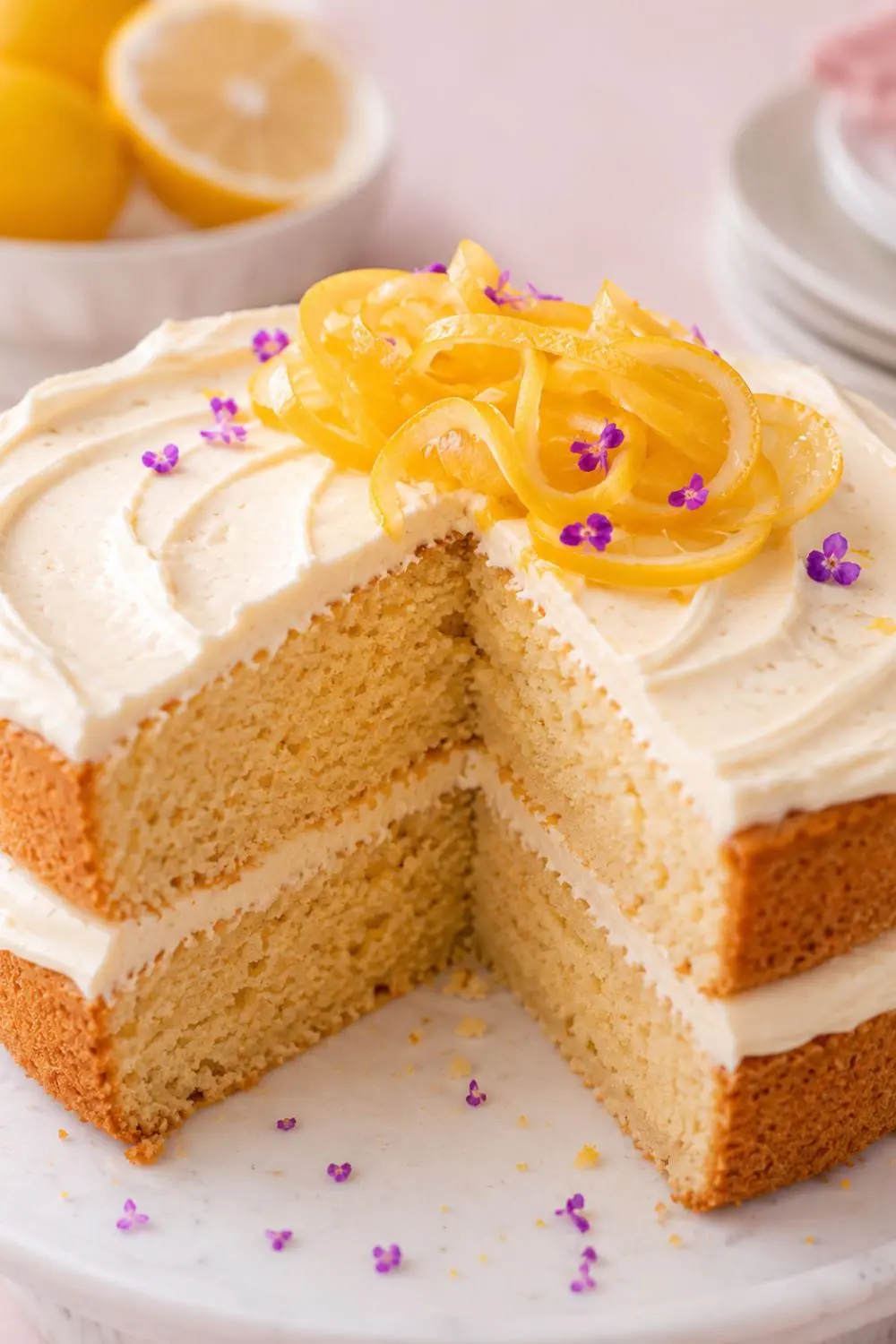
Step 1 - Preheat and Prepare Pans
Preheat the oven to 350°F/175°C with the rack in the middle position. Line each 8-inch pan: spray the bottom with nonstick spray, add a parchment circle, spray the parchment, then spray the sides as well.
Step 2 - Combine Dry Ingredients
In a medium bowl, whisk together the flour, baking soda, baking powder, and salt very well. "Very well" here means the leaveners are completely uniform throughout the flour baking powder or baking soda clumping in one area creates uneven rise and dense patches.
Step 3 - Prepare the Three-Lemon Components
Working over a large bowl to catch all zest:
Zest all three lemons first -zesting before cutting or juicing is always easier. You need 3 tablespoons of packed zest.
Prepare the lemon flesh- Stand each lemon upright on a cutting board. Cut the ends off. Use a sharp knife to slice away the entire peel and white pith from top to bottom, following the curve of the lemon. Remove the fibrous outer membrane from each segment this is the thin white skin around each section. Pull the flesh free and mince it finely into tiny pieces.
Strain and measure- Place a strainer over a small bowl and pour the minced lemon with accumulated juices through it. Don't press let gravity do the work. Measure 70g (5 tablespoons) of lemon pieces and 45ml (3 tablespoons) of the juice separately. Save any extra juice for drinks.
Step 4 - The Lemon Sugar Creaming Stage
Add the sugar to the lemon zest in the large bowl. Rub together with your hands for 60 seconds until the mixture is fragrant and slightly damp from the released essential oils.
Add the softened vegan butter and neutral oil to the lemon-sugar. Beat on low with the electric mixer until the butter breaks into small pieces, then increase to medium and beat for about 1 minute until the mixture starts to look fluffy and shiny. Rinse the beaters thoroughly and dry them.
Step 5 - Whip the Aquafaba
Pour ½ cup of aquafaba into a small bowl. Using the clean, dry beaters, beat on medium speed for 1 to 1½ minutes until the entire mixture is foamy including at the bottom of the bowl. This light foam provides the aeration that eggs would normally contribute.
Step 6 - Combine Wet Ingredients
Add the whipped aquafaba, room temperature oat milk, room temperature vegan sour cream, and vanilla extract to the lemon-sugar-butter mixture. Mix on low for 15–20 seconds until just combined.
Add the drained minced lemon pieces and 3 tablespoons lemon juice and mix until well combined.
Important- Before the next step, confirm your oven is preheated and pans are ready. The baking soda activates the moment it contacts the wet ingredients you want minimal time between combining and baking.
Step 7 - Add Flour in Two Stages
Add half the flour mixture to the wet ingredients and beat on low until just combined. Add the remaining flour and mix until you have a mostly smooth batter stop mixing before it's perfectly smooth. Over-mixing after the flour addition develops gluten and produces a tough cake.
Fold the bottom and sides with a spatula to incorporate any settled liquid. The finished batter should be "thick and fluffy but airy."
Step 8 - Divide and Bake
Weigh and divide the batter evenly between both pans approximately 750g per pan. Smooth the surfaces with an offset spatula.
Bake for 33–35 minutes until the centers are set, the tops are slightly puffed, and the cakes have just started to pull away from the pan edges. A toothpick should come out clean or with a few moist crumbs.
Cool on wire racks (not countertops) for 30 minutes in the pans. Add parchment to the rack, then carefully invert the cakes onto the rack. Cool completely before assembling refrigerating for a bit helps firm the layers for easier frosting.
Step 9 - Make the Lemon Cream Cheese Frosting
Sift the powdered sugar first. Beat the softened vegan butter until smooth, then add the softened vegan cream cheese and beat until well incorporated.
Add the powdered sugar in two additions, beating on low after each. Add the vanilla, salt, and lemon zest and beat until smooth. If the frosting seems loose, refrigerate until firm enough to spread.
The frosting can be made 1–3 days ahead and refrigerated a useful make-ahead option for party planning.
Step 10 - Assemble
Place the first cake layer bottom-side up on your serving plate. Spread a generous layer of frosting across the top. Place the second layer top-side up. Add frosting to the top and optionally the sides. Decorate with fresh berries or candied lemons.