Step-by-Step Instructions
Step 1 — Sauté the Aromatics
Heat the 1 tablespoon of coconut oil in your large pan over medium heat. Add the diced onion and sliced red pepper. Sauté for 4–5 minutes, stirring occasionally, until the onion softens and becomes slightly translucent and the pepper strips soften and start to show some color.
The red pepper and onion together create a naturally sweet, slightly caramelized base that pairs beautifully with the tropical mango and coconut milk later. Don't rush this step give both vegetables their full 4–5 minutes to properly soften.
Step 2 — Add Garlic, Ginger, and Curry Paste
Add the minced garlic and grated ginger to the pan and cook for 1 minute, stirring constantly, until intensely fragrant. Add the 3 tablespoons of Thai red curry paste and stir to coat the vegetables evenly. Cook for another minute, continuing to stir, until the paste becomes fragrant and slightly darkened.
This sequential addition garlic and ginger first, paste second matters for flavor development. Garlic and ginger hit the hot oil and release their aromatics immediately. The curry paste then blooms in the residual oil and the garlic-ginger mixture, intensifying its complex spice profile before any liquid dilutes it. The kitchen smells extraordinary after this step.
Step 3 — Add Coconut Milk, Chickpeas, Mango, and Stock
Pour in the full can of coconut milk and stir to incorporate with the curry paste base. Add the drained chickpeas, cubed mango, and vegetable stock. Stir everything together until the curry paste and coconut milk distribute evenly throughout.
Raise the heat and allow the sauce to come to a gentle bubble. Once bubbling, lower the heat to maintain a steady, gentle simmer small bubbles breaking the surface, not a rolling boil. Coconut milk at a rolling boil can separate into an oily, grainy texture that's significantly less pleasant than creamy, smooth coconut sauce. Keep the heat genuinely low after the initial bubble.
Step 4 — Simmer for Ten Minutes
Cover the pan and simmer for 10 minutes, stirring occasionally. During this time, the chickpeas absorb the surrounding coconut-curry-mango sauce, the mango softens slightly and releases its juices into the broth, and the sauce reduces and thickens into a beautiful, glossy, creamy curry.
Check and stir every few minutes not because the curry needs constant attention, but because watching the color deepen and the sauce develop is genuinely satisfying. After 10 minutes, taste the sauce and adjust the curry paste if you want more heat.
Step 5 — Wilt the Spinach
Add the 100g of baby spinach directly to the pan. Stir gently and cook for 1–2 minutes until the spinach wilts completely into the curry. Baby spinach wilts quickly in hot liquid it goes from fresh and bulky to dark green and silky in under 2 minutes.
Adding spinach at the very end rather than at the start preserves its color, nutritional content, and delicate texture. Spinach cooked for 10+ minutes loses its vibrant green color and many of its water-soluble vitamins. Added at the end, it stays bright, slightly textured, and nutritionally intact.
Step 6 — Season and Serve
Taste the curry and season with salt as needed. The Thai red curry paste is already salted, as is the vegetable stock, so you may not need much additional salt taste first.
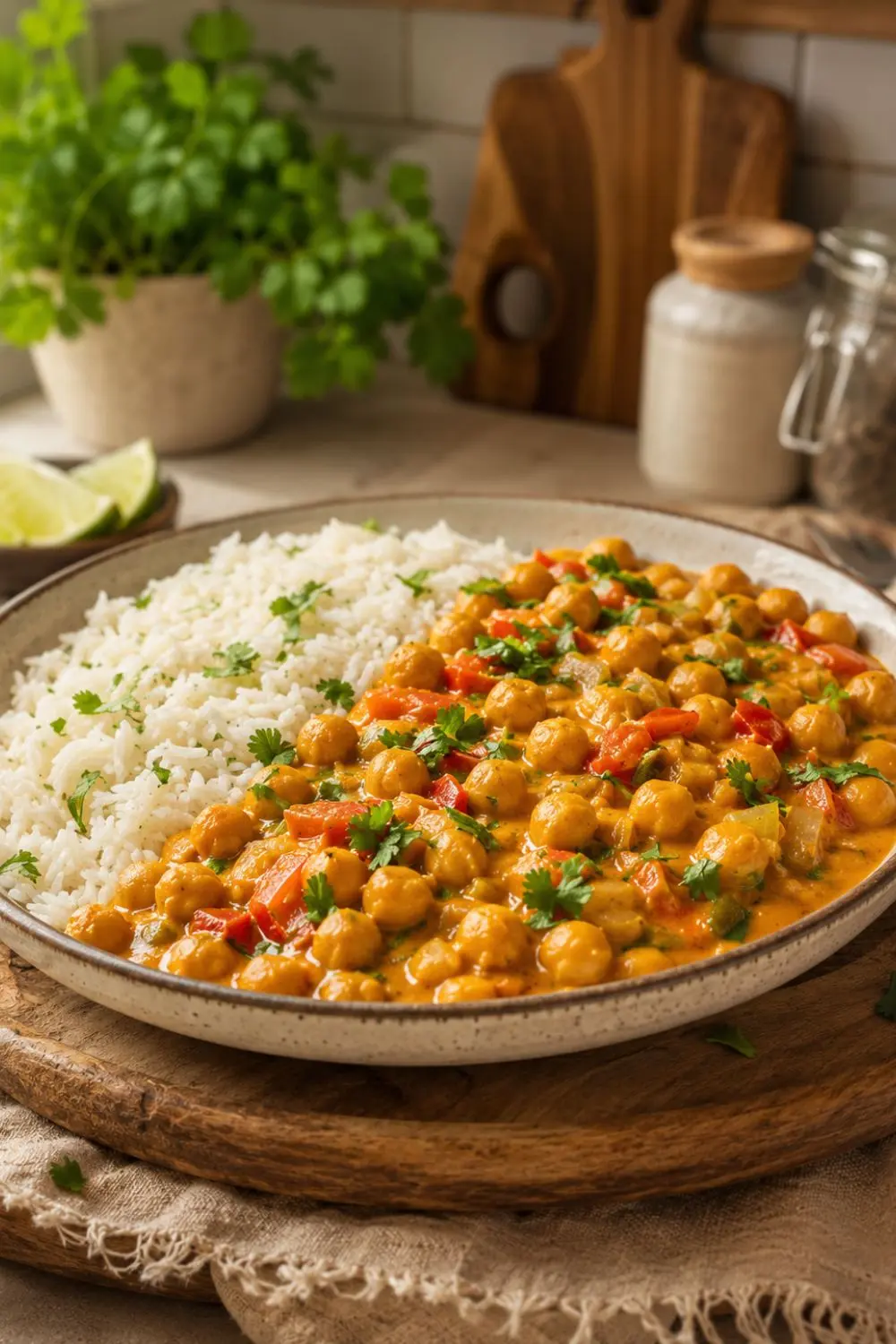
Serve immediately over cooked jasmine or basmati rice and alongside warm vegan naan if using. The sauce is generous enough to pool beneath and around the rice, making every spoonful of both curry and rice deeply flavorful.