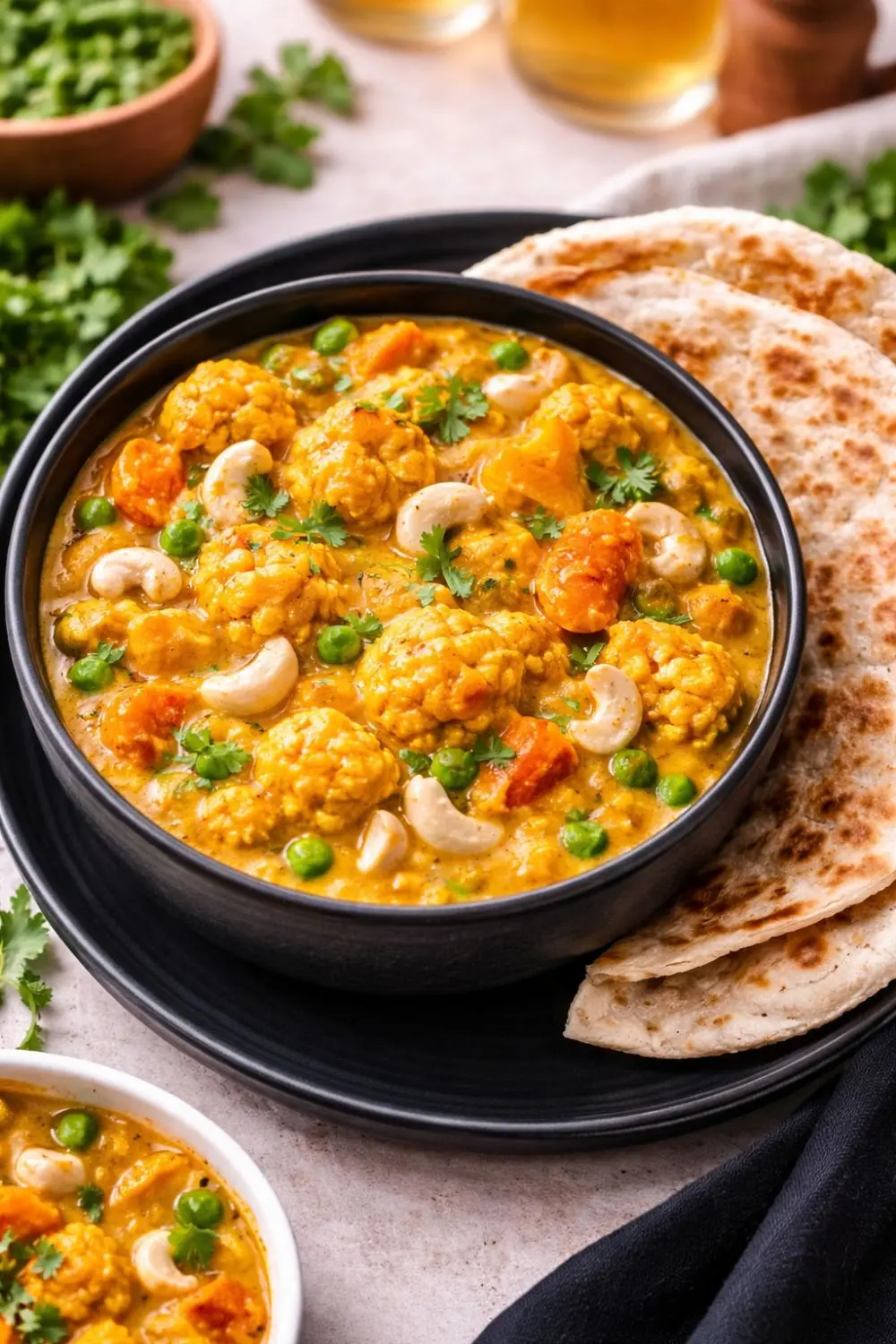
Step 1 - Load the Slow Cooker
Add the full-fat coconut milk, curry paste, chopped ginger, deseeded chili, and minced garlic to the slow cooker. Stir these together first to dissolve the curry paste evenly into the coconut milk undissolved paste can create concentrated spice pockets in the finished korma.
Add the chopped cauliflower florets, sliced bell pepper, and chopped potatoes. Stir everything together thoroughly until all the vegetables are coated in the coconut curry sauce.
That's the entire active prep stage. Five minutes, one pot, everything combined. The slow cooker takes it from here.
Step 2 - Cook on Low for Six Hours
Cover the slow cooker and cook on LOW for 6 hours until all the vegetables are completely tender. The cauliflower should be soft throughout, the potatoes should pierce easily with a fork, and the bell pepper should have softened into the sauce.
During the long cook, the curry paste and coconut milk merge completely the separate elements transform into a unified, deeply fragrant sauce. The vegetables release their natural juices into the surrounding coconut sauce, which concentrates and intensifies the korma's flavor gradually over the six hours.
Resist opening the lid unnecessarily. Each lid lift drops the internal temperature by 15–20°F and adds approximately 20 minutes to the effective cook time. Set it and genuinely leave it.
Step 3 - Add Peas and Coriander for the Final 5 Minutes
When the 6 hours end, remove the lid and stir in the 2 cups of frozen peas and 1 tablespoon of fresh coriander. Replace the lid and allow to cook for an additional 5 minutes the residual heat thaws and heats the peas through while the coriander wilts slightly into the sauce.
The peas go in at the end rather than the start because 6 hours of slow cooking would turn them gray, mushy, and nutritionally depleted. Added at the end, they stay bright green, slightly sweet, and texturally distinct a beautiful contrast to the soft, slow-cooked main vegetables.
Step 4 - Serve Immediately
Give the korma a final stir to redistribute the sauce evenly. Serve immediately over steamed basmati rice, alongside vegan naan, or over cauliflower rice for a lower-carb option.