Step 1- Boil the Potatoes
Add the potatoes (unpeeled easier to peel after cooking) to a pot of salted water. Bring to a boil, then reduce to a gentle simmer and cook until completely fork-tender a fork should slide into the center with zero resistance. This takes approximately 15-20 minutes depending on potato size.
Salt the water generously - as with pasta, the boiling water is the potato's only opportunity to absorb salt from the inside. Properly salted boiling water produces flatbreads that taste seasoned rather than flat, even with the added salt later.
Why cook unpeeled? Cooking potatoes in their skin prevents waterlogging peeled potatoes absorb significantly more water during boiling, which makes the dough wetter and requires more flour to compensate.
Step 2 - Cool, Peel, and Weigh
Drain the cooked potatoes and allow them to cool enough to handle comfortably. Peel them and weigh the peeled, cooked potato you need 400g. Adjust accordingly: if you have more, reserve the extra for another use; if you have slightly less, add another partial potato.
Let the peeled potatoes steam-dry briefly 2-3 minutes of air exposure after peeling allows some surface moisture to escape. This helps produce a drier dough.
Step 3 - Mash Thoroughly
Mash the cooled potatoes in the large bowl until completely smooth with no visible lumps. Use a potato ricer for the most uniform result, or a masher with thorough, patient mashing.
Lumps in the mash create weak spots in the flatbread areas where the dough is thinner or doesn't hold together as well. Take the extra minute to get the mash genuinely smooth.
Step 4 - Add Remaining Ingredients and Knead
Add the flour, baking powder, salt, nutmeg, oil, and chopped scallions to the mashed potato bowl.
Mix with a spoon first until the mixture starts coming together, then switch to your hands and knead until a smooth, non-sticky dough forms. Add additional flour 2-3 tablespoons at a time until the dough no longer sticks to your hands this is the variable step because potato moisture content varies between varieties and cooking batches.
The nutmeg- Don't be tempted to skip this or increase it significantly. A pinch of nutmeg in potato dishes creates a warmth that most people can't identify specifically but notice as making the potato taste more interesting. It's a traditional addition to potato gnocchi for the same reason.
The scallion distribution- Knead the scallions in during this stage to distribute them evenly throughout the dough rather than adding them at the end.
Step 5 - Divide and Roll
Divide the dough into 6-8 equal portions depending on preferred size. Roll each portion into a smooth ball.
For rolling: Place one dough ball on a sheet of lightly oiled parchment or wax paper. Place a second oiled sheet on top. Use a rolling pin to roll the dough into a disc approximately ⅛ to ¼ inch thick, with a diameter of about 5½ to 6 inches.
The oiled paper technique is specifically more effective than flouring the work surface because flour dusted onto the outside of the flatbread changes the surface texture and can create unpleasant floury spots on the cooked flatbread. The oiled paper releases the dough cleanly without adding material to the surface.
Step 6 - Cook One by One
Heat a large non-stick skillet over medium heat. Add a small amount of oil just enough to lightly coat the surface.
Remove the top sheet of parchment/wax paper from the first flatbread. Flip the flatbread onto your hand, then peel away the second sheet, then place the flatbread into the pan. Alternatively, flip the paper-covered flatbread directly onto the pan and peel away the top layer.
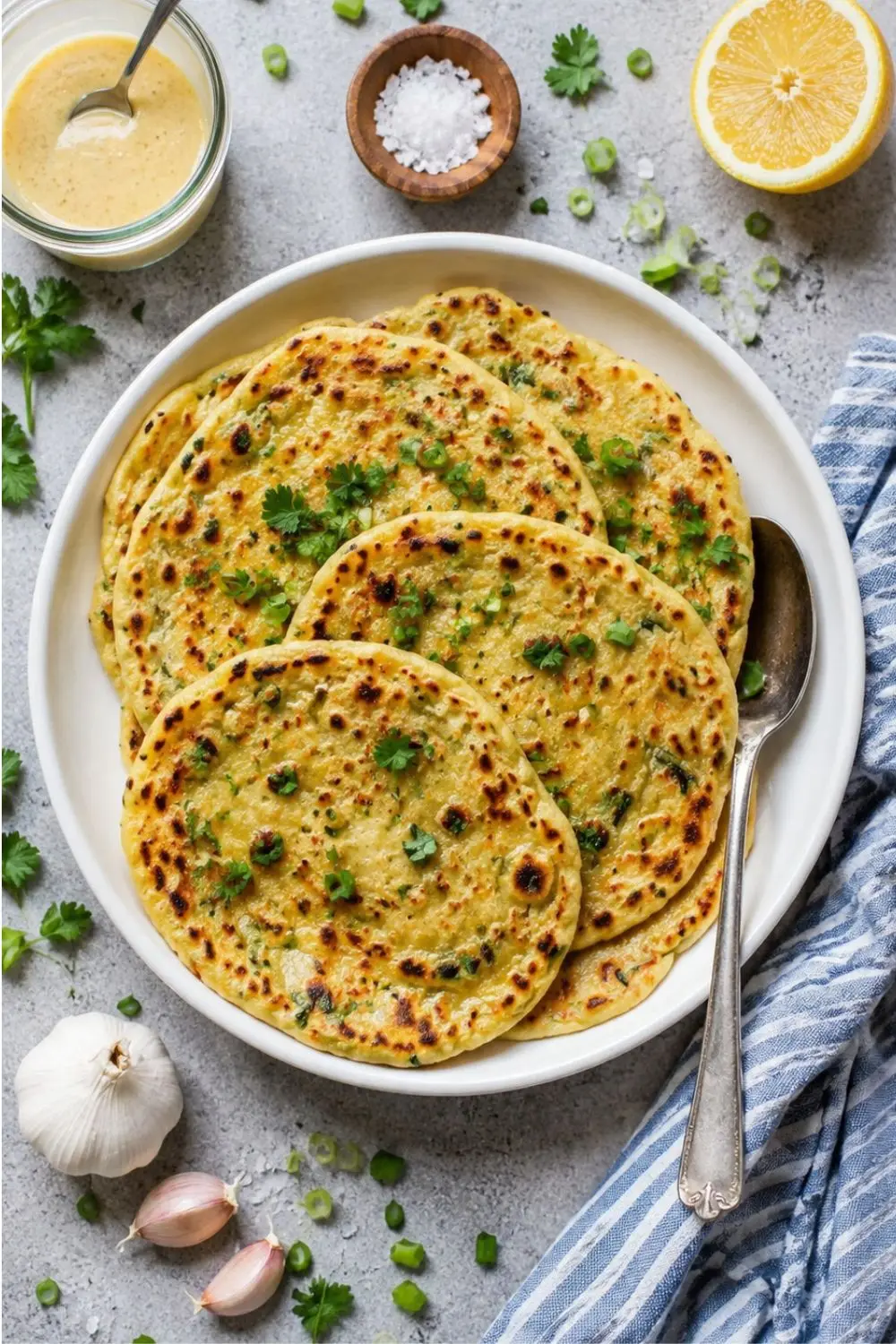
Cook for 2-4 minutes until the bottom is golden brown with visible spots. The flatbread will look slightly puffed in places as steam develops.
Flip carefully using a wide spatula. Cook for another 1-2 minutes on the second side.
Transfer to a plate and cover immediately with a kitchen towel. The towel traps steam and keeps the flatbread soft and pliable uncovered flatbreads dry out and become brittle at the edges within a few minutes.
While one flatbread cooks- Roll out the next dough ball. The rolling and cooking times align almost perfectly by the time a flatbread finishes cooking, the next one is ready to go in.