For Vegetable Prep
Mandoline slicer - specifically mentioned in the recipe for the beet. Achieves the fine, uniform grating that a box grater doesn't easily replicate for beet. A box grater works as a substitute use the fine grater side.
Sharp chef's knife and cutting board - for the bell peppers, mango, and carrot matchsticks. Consistent sizing matters: pieces that are roughly similar in size and length roll more evenly and create more uniform spring rolls.
For Rice Paper Soaking
Large shallow dish - the recipe recommends a skillet, which is genuinely the best choice. A skillet's wide, flat bottom accommodates a full rice paper sheet without folding. A standard mixing bowl forces the rice paper to curl against the sides, which creates uneven softening and more difficult handling.
Water temperature- Heat water to just below boiling (about 175-185°F) and let it cool slightly before using. Water that's too hot softens the rice paper too quickly, making it fragile and prone to tearing before you finish filling. Water that's too cool doesn't soften it adequately.
For Rolling
Wooden cutting board or slightly damp clean surface - the recipe specifically recommends a wooden cutting board because its texture provides light grip that helps the rice paper stay in place during rolling without sticking aggressively.
Damp kitchen towel or paper towels - for covering finished rolls while you continue rolling. Exposed rice paper rolls dry out and crack quickly at room temperature the damp towel maintains moisture and flexibility.
For the Bento Box
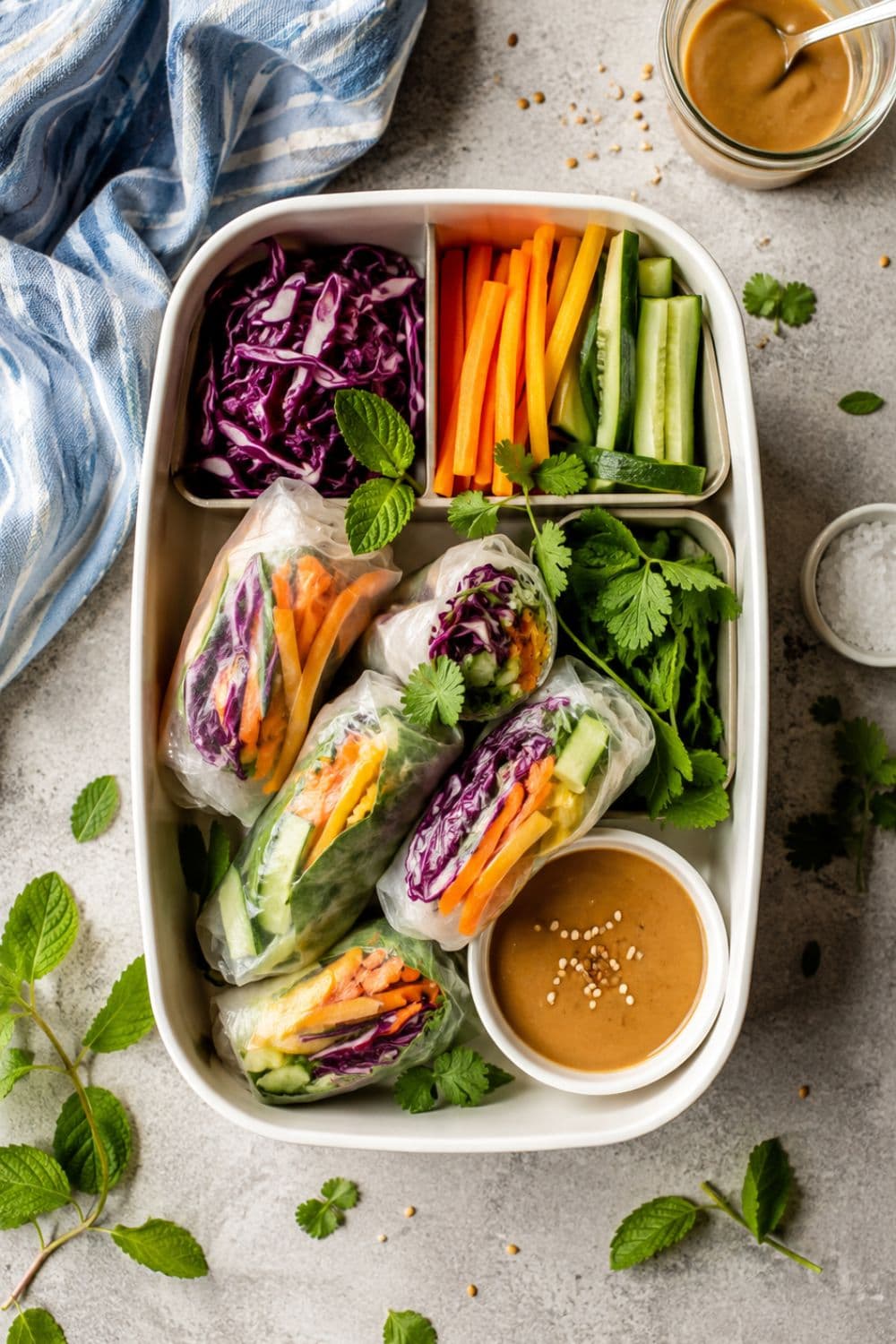
Bento boxes with sauce containers - for transporting the rolls and keeping the peanut sauce separate until serving. Small sauce containers (leak-proof is essential with peanut sauce) keep the sauce from soaking into the rolls during transport.
Parchment paper - cut and placed between rolls in the bento box prevents sticking. Rice paper rolls are notoriously sticky when in contact with each other a small piece of parchment between each roll maintains their structure.