
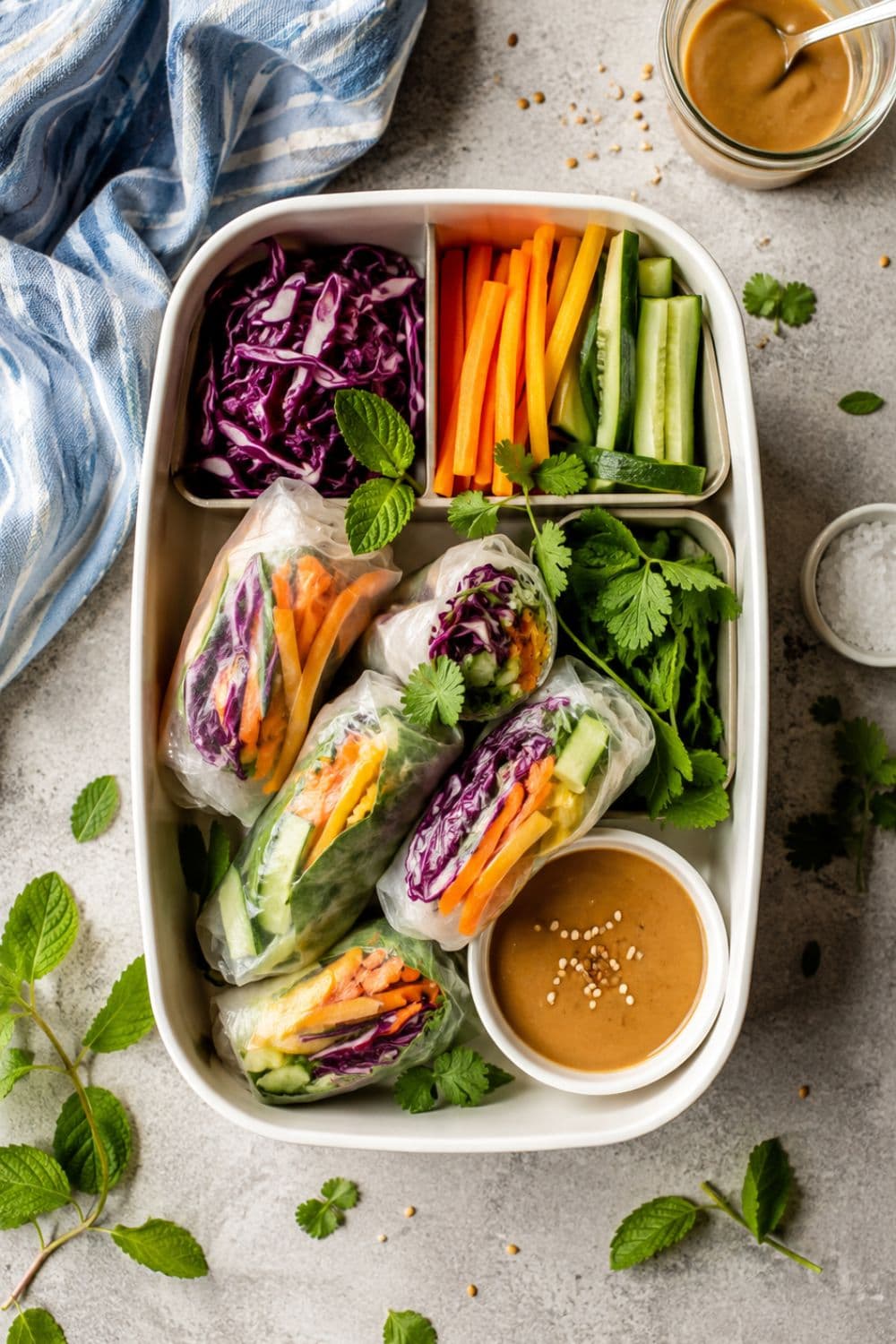
Spring rolls packed into a bento box with peanut dipping sauce on the side are genuinely one of the most satisfying lunch formats possible visually beautiful, completely fresh, and interesting enough that you actually look forward to opening the container at midday rather than approaching it with the resigned energy of someone eating leftovers for the third time. Rainbow Veggie Spring Roll Bento Box with Peanut Sauce creates 7-8 rice paper rolls packed with beet, carrot, mango, bell pepper, mint, and cilantro, alongside a ginger peanut sauce that’s specifically the kind of thing you want to eat straight from the bowl. At 226 calories per spring roll with sauce and 30 minutes total prep, this is the bento box meal that makes other people in the office genuinely jealous.
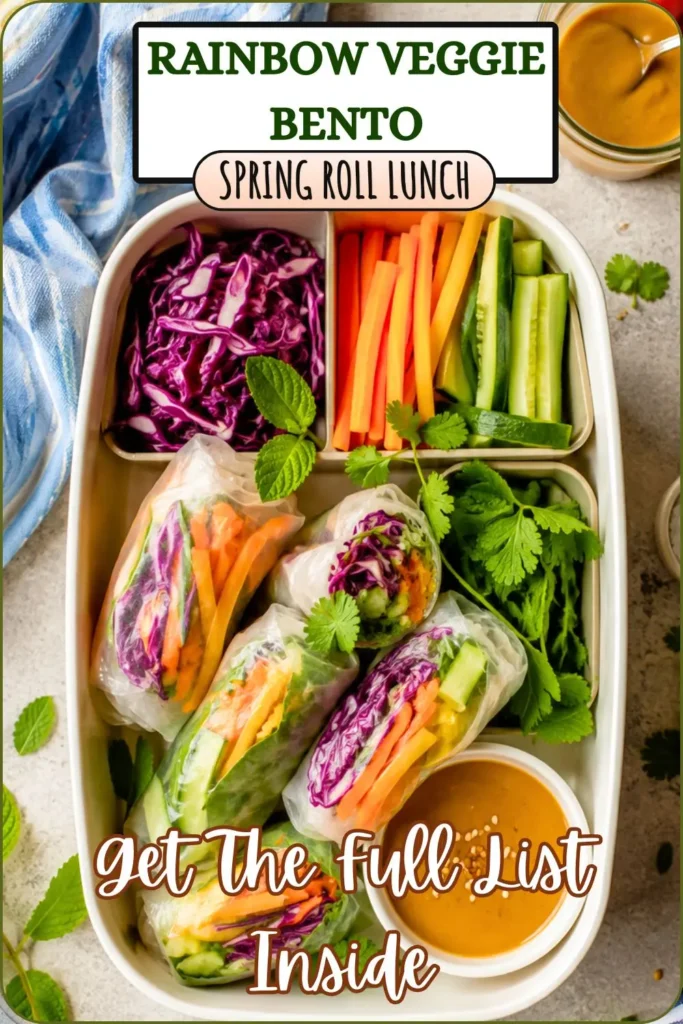
I started making these rolls specifically for bento boxes when I wanted something that traveled well without losing any quality between making and eating. Rice paper rolls hold their structure beautifully for 2-3 days, which makes them one of the better make-ahead options in the fresh lunch category. The rainbow element isn’t just aesthetic different colored vegetables provide genuinely different nutritional profiles, and the variety makes every bite slightly different from the last.
Your Recipe Timing and Serving Details
| Detail | Info |
| Prep Time | 30 minutes |
| Cook Time | 0 minutes |
| Total Time | 30 minutes |
| Yield | 7-8 spring rolls |
| Servings | 8 (1 roll + sauce per serving) |
| Calories Per Serving | 226 kcal |
| Storage | 2-3 days refrigerated |
| Diet | 100% Vegan, Gluten-Free option available |
These Rainbow Veggie Spring Roll Bento Boxes yield 7-8 spring rolls serving 8 people as a single-roll serving or 4 people as a two-roll lunch portion. At 226 calories per spring roll with sauce, the two-roll lunch serving comes in at approximately 452 calories a complete, genuinely satisfying midday meal.
The Rainbow Component – Why Each Color Is Specifically Included
The “rainbow” in this recipe’s name isn’t just marketing each colored vegetable contributes different phytonutrients, flavors, and textural qualities:
Red – Beet (finely grated)
Beet is the most visually dramatic ingredient in this roll. Finely grated, it bleeds a vibrant magenta-pink through the surrounding filling that you can see through the translucent rice paper. Beet’s earthy sweetness pairs specifically well with the mango’s tropical sweetness and the herbs’ freshness.
Important handling note: Beet color transfers aggressively. Use a mandoline or fine grater and wash your hands and board immediately after handling. The color stains surfaces, which is genuinely inconvenient and genuinely worth mentioning.
Yellow – Yellow Bell Pepper
Sweet, slightly crisp, naturally juicy. Yellow bell pepper provides a refreshing crunch that contrasts with the softer beet and mango. Its mild sweetness fits naturally with the tropical filling direction.
Red – Red Bell Pepper
Slightly more complex flavor than yellow a touch more savory, slightly more fragrant. Together, the yellow and red peppers create more color range than either alone.
Orange – Carrot
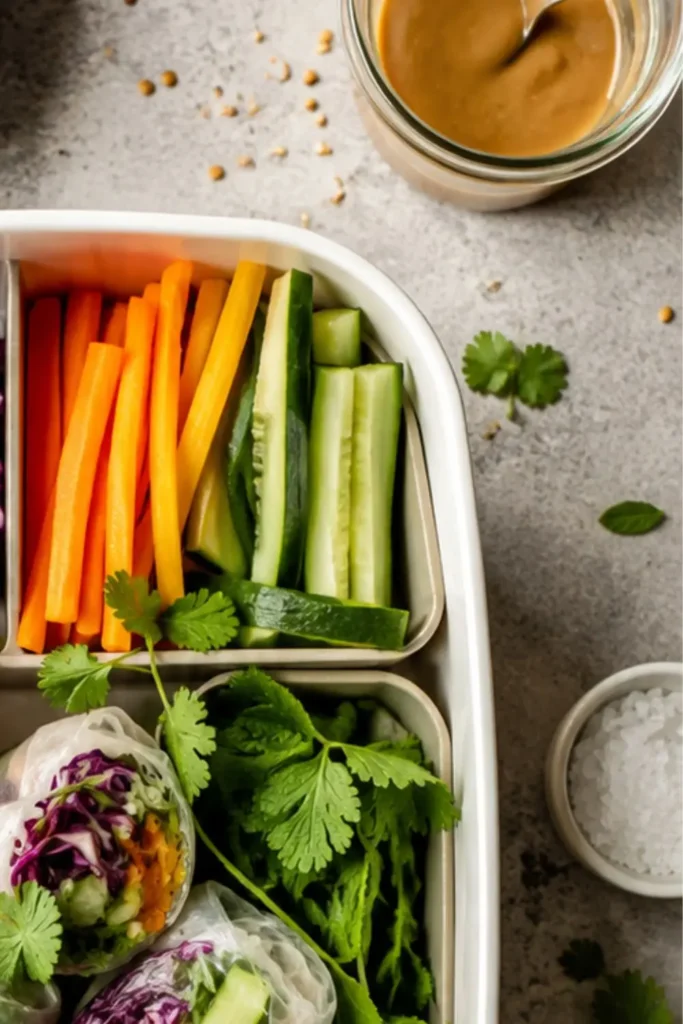
Thinly sliced carrots add crunch, beta-carotene, and a natural sweetness. Cutting them into thin matchsticks rather than rounds creates pieces that nestle naturally with the other fillings rather than rolling around awkwardly during the wrapping process.
Yellow-Orange – Mango
The tropical element that makes this roll taste genuinely exciting rather than just “fresh vegetables.” Ripe mango adds sweetness, juiciness, and a tropical character that contrasts beautifully with the earthy beet and the herbal mint and cilantro.
Green – Fresh Mint and Cilantro
Both used in generous quantities the recipe specifically calls for “a large bunch” of each. The herbs aren’t garnish here; they’re a primary filling component. Mint adds cooling freshness; cilantro adds complex herbal character. Together they make the roll taste alive.
The Full Ingredient List
For the Spring Rolls:
- 7-8 rice spring roll papers
- 1 medium beet – skin removed, finely grated
- ½ yellow and ½ red bell pepper – seeded, thinly sliced
- 1 cup carrots – thinly sliced into matchsticks
- 1 ripe mango – cubed
- 1 large bunch fresh mint leaves
- 1 large bunch cilantro – cut from stems
Optional Protein Additions (choose one):
- 8 oz extra-firm tofu – pressed and sliced or crumbled
- Cooked vermicelli noodles – for a more substantial roll
- 1 cup cooked quinoa – highest protein option
For the Ginger Peanut Sauce:
- ½ cup salted natural peanut or almond butter
- 1½ tablespoons soy sauce (tamari for GF)
- 2-3 tablespoons brown sugar or maple syrup
- ½ medium lime, juiced
- ½ teaspoon chili garlic sauce
- ½ teaspoon fresh grated ginger (optional)
- Hot water to thin to desired consistency
Equipment You’ll Need For Rainbow Veggie Spring Roll Bento Box with Peanut Sauce
For Vegetable Prep
Mandoline slicer – specifically mentioned in the recipe for the beet. Achieves the fine, uniform grating that a box grater doesn’t easily replicate for beet. A box grater works as a substitute use the fine grater side.
Sharp chef’s knife and cutting board – for the bell peppers, mango, and carrot matchsticks. Consistent sizing matters: pieces that are roughly similar in size and length roll more evenly and create more uniform spring rolls.
For Rice Paper Soaking
Large shallow dish – the recipe recommends a skillet, which is genuinely the best choice. A skillet’s wide, flat bottom accommodates a full rice paper sheet without folding. A standard mixing bowl forces the rice paper to curl against the sides, which creates uneven softening and more difficult handling.
Water temperature- Heat water to just below boiling (about 175-185°F) and let it cool slightly before using. Water that’s too hot softens the rice paper too quickly, making it fragile and prone to tearing before you finish filling. Water that’s too cool doesn’t soften it adequately.
For Rolling
Wooden cutting board or slightly damp clean surface – the recipe specifically recommends a wooden cutting board because its texture provides light grip that helps the rice paper stay in place during rolling without sticking aggressively.
Damp kitchen towel or paper towels – for covering finished rolls while you continue rolling. Exposed rice paper rolls dry out and crack quickly at room temperature the damp towel maintains moisture and flexibility.
For the Bento Box
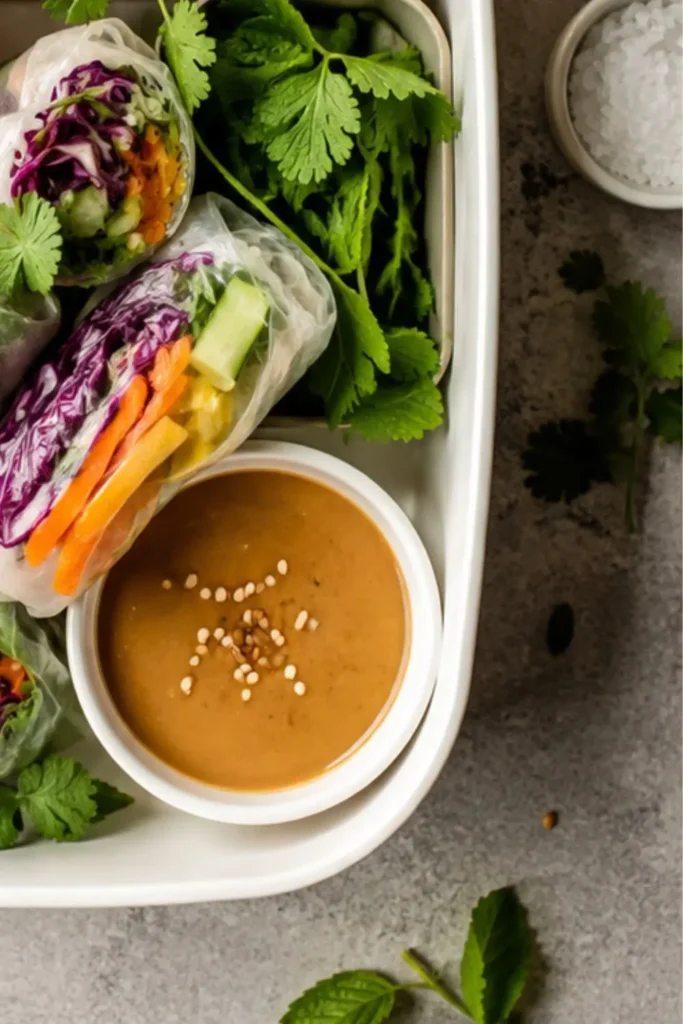
Bento boxes with sauce containers – for transporting the rolls and keeping the peanut sauce separate until serving. Small sauce containers (leak-proof is essential with peanut sauce) keep the sauce from soaking into the rolls during transport.
Parchment paper – cut and placed between rolls in the bento box prevents sticking. Rice paper rolls are notoriously sticky when in contact with each other a small piece of parchment between each roll maintains their structure.
The Rice Paper Technique The Most Important Skill to Get Right
Rice paper rolling has a learning curve that most guides underemphasize. The difference between a successful roll and a torn, filling-spilling mess is timing specifically, knowing exactly when to remove the rice paper from the water.
The Soaking Timing Count to 10-20 Seconds
The recipe says 10-20 seconds, and this range is genuinely variable based on your water temperature:
- Hotter water (175°F)- Closer to 10 seconds
- Cooler water (150°F)- Closer to 20 seconds
The test for right texture- Lift the rice paper from the water. It should feel pliable and slightly tacky but not floppy or completely soft. It should hold its circular shape when lifted rather than drooping completely. It will continue softening during the 10-15 seconds of filling and rolling time.
The most common mistake- Waiting until the rice paper is completely soft before removing from water. By the time you fill and roll it, the rice paper will be over-softened, fragile, and prone to tearing. Remove it while it still has some firmness and allow the carry-over absorption to do the final softening during rolling.
FYI – your first 2-3 rolls will be practice. The technique becomes intuitive quickly, and by roll 5 you’ll be moving confidently.
The Filling Arrangement How to Build the Roll
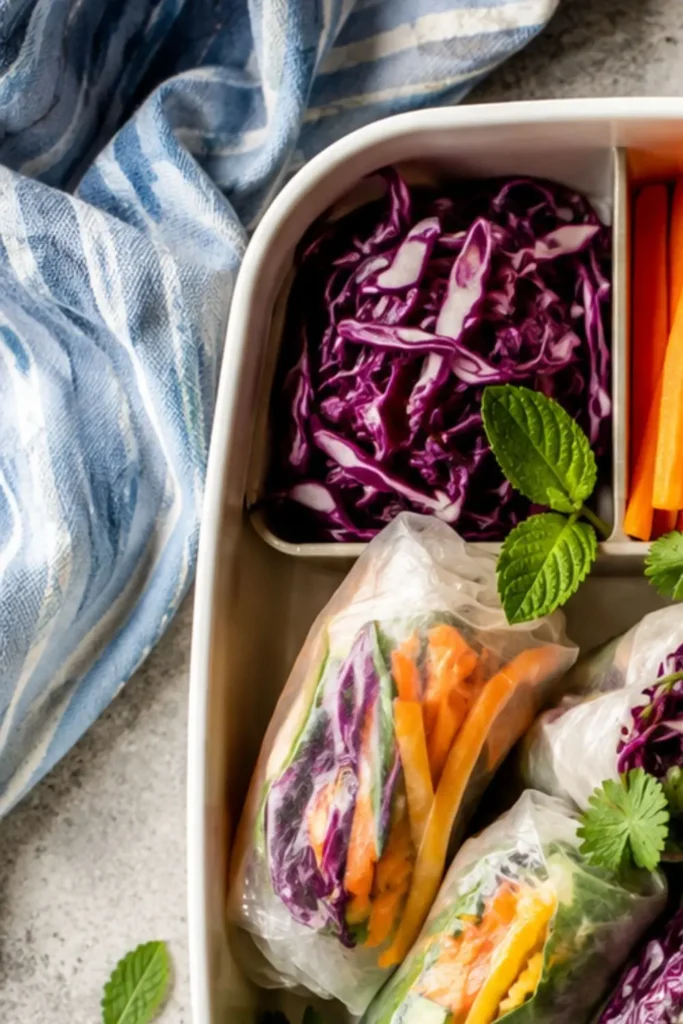
Placement- Layer fillings on the lower third of the rice paper (the edge closest to you), leaving 1-2 inches of clear rice paper at the sides and bottom edge.
The filling order from bottom to top:
- Carrot matchsticks (structural base that holds the other ingredients)
- Bell pepper strips
- Mango cubes
- Beet (grated, distributed evenly don’t pile in one spot)
- Mint leaves (flat, spread across the filling)
- Cilantro (distributed throughout)
- Optional protein (tofu, noodles, or quinoa) on top
Volume guidance- The filling should form a pile approximately 1 inch high and 3-4 inches long enough to create a substantial roll without overwhelming the rice paper’s ability to wrap around it.
The Rolling Technique Step by Step
Step 1 – Initial Fold
Lift the bottom edge of the rice paper (the edge closest to you) and fold it snugly over the filling. Pull toward you slightly to create tension a tight initial fold is what creates the compact, well-structured roll.
Step 2 – Roll Once
Roll forward over the filling once the filling should now be fully enclosed in the first wrap of rice paper.
Step 3 – Fold the Sides
Fold the left side of the rice paper in toward the center, then the right side similar to folding a burrito. The sides should overlap the roll slightly and stay in place due to the rice paper’s natural stickiness.
Step 4 – Continue Rolling
Roll forward continuously until you reach the top edge of the rice paper. The rice paper seals to itself through natural stickiness no water or adhesive needed.
The snug roll is everything. A loose roll shifts and becomes disorganized during transport. A tight roll maintains its shape and looks beautiful when cut.
Still Hungry, Try It Next recipe
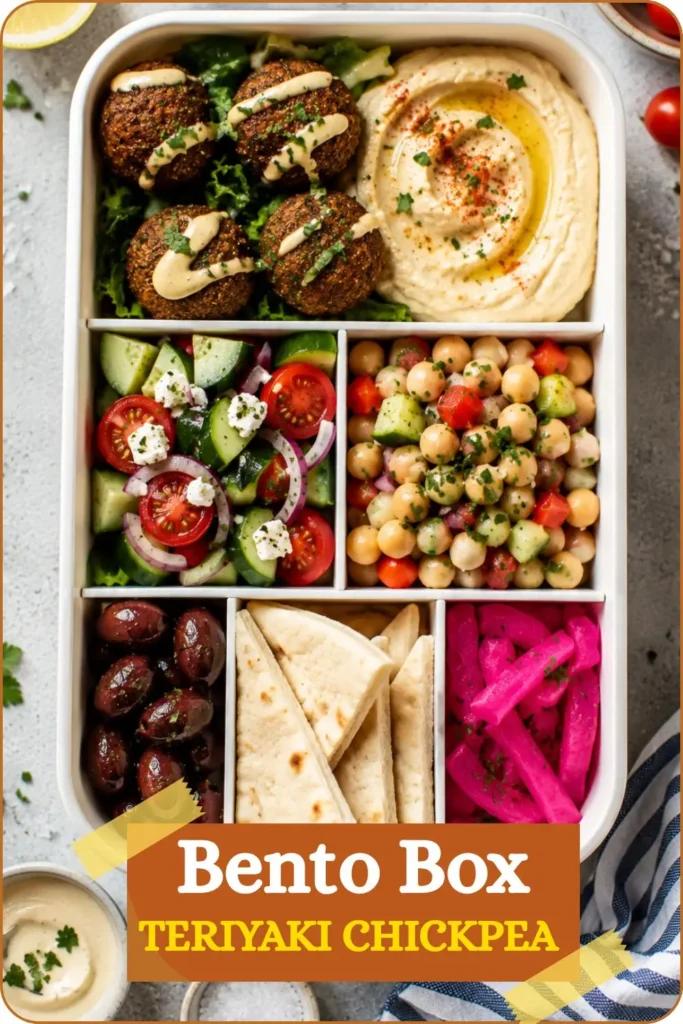
Mediterranean Falafel & Hummus Bento Box
The Ginger Peanut Sauce Making It Right Every Time
The sauce is straightforward but has specific technique for getting the right consistency:
Combine- peanut or almond butter, soy sauce/tamari, brown sugar or maple syrup, lime juice, chili garlic sauce, and optional ginger in a mixing bowl. Whisk together the mixture will initially look thick and clumpy.
Add hot water 1 tablespoon at a time– whisking after each addition. The mixture goes through a stage of looking grainy and separated before it comes together this is normal. Continue adding water and whisking until the sauce becomes smooth, pourable, and uniformly creamy.
Target consistency- The sauce should pour in a steady stream from a spoon but hold its shape briefly when pooled thicker than salad dressing, thinner than nut butter straight from the jar.
The acidity and sweetness balance- Taste before finalizing. The lime juice should provide a detectable brightness. The sweetener should prevent the soy sauce from dominating. If it tastes flat, add more lime. If it tastes too sharp, add more sweetener.
Peanut vs. Almond Butter Which Works Better?
Peanut butter – more assertive, slightly sweeter, most familiar in Asian-inspired sauces. Produces the most recognizable “peanut sauce” flavor.
Almond butter – more delicate, slightly less sweet, slightly more complex. Produces a more subtle sauce that lets the ginger and garlic lead rather than the nut character.
IMO- Peanut butter for traditional peanut sauce character; almond butter if you want something more refined and less expected.
Bento Box Assembly Strategy
Transport considerations for spring rolls require more thought than most bento box meals because of the rice paper’s stickiness and fragility:
Individual Roll Wrapping
Cut small rectangles of parchment paper and wrap each roll loosely this prevents rolls from sticking to each other or to the bento box container. Unwrap to eat.
Preventing Drying
The bento box’s sealed environment actually helps prevent rice paper from drying out during transport moisture stays contained. Don’t pack rolls too tightly against each other; some air circulation is better than full compression.
Sauce Container Placement
Pack the peanut sauce in a separate leak-proof sauce container within the bento box. Rice paper rolls that have been sitting in sauce become soggy and structurally compromised. Keep sauce separate until the moment of eating.
The Cutting Option
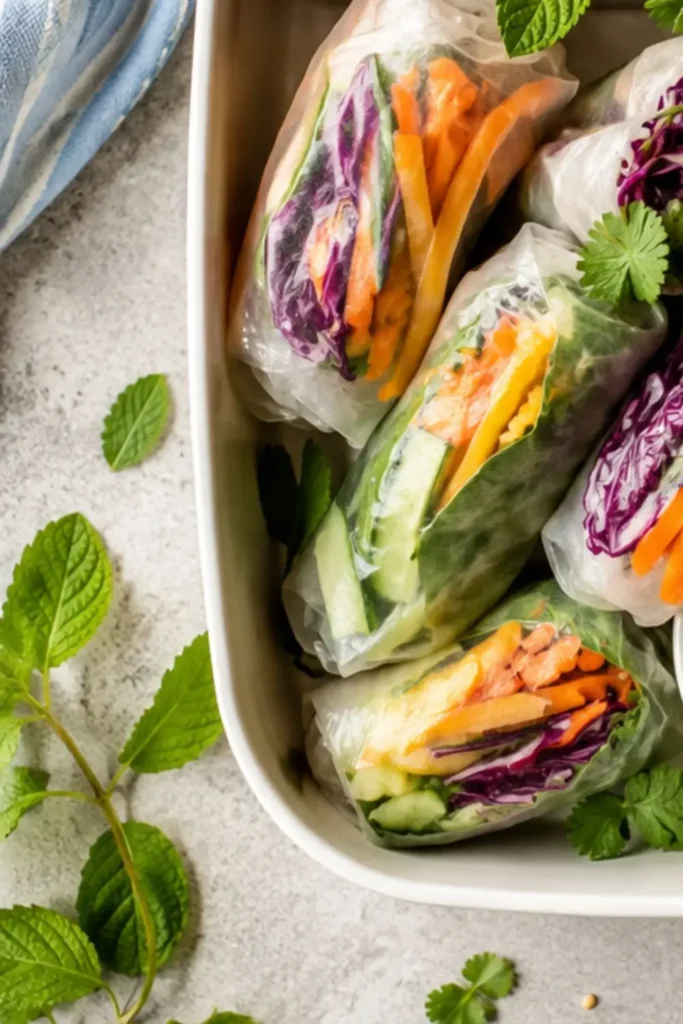
Cut rolls in half crosswise before packing this creates cross-sections that show the colorful filling through the rice paper and makes eating easier. Use a very sharp knife and a decisive single cut rather than a sawing motion, which drags the filling.
The Optional Protein Component Adding Substance
The recipe offers three protein options, each creating a different roll character:
Extra-firm tofu – provides the most substantial, recognizable protein addition. Press thoroughly and slice into thin strips. The tofu’s mild flavor pairs well with every other filling component. Adding 2-3 strips of tofu per roll increases each roll’s protein content significantly.
Cooked vermicelli noodles – the most traditional spring roll protein component. Produces a more substantial, fuller roll with a different textural dynamic the noodles create a soft, slightly chewy background against the crunchy vegetables.
Cooked quinoa – the highest protein option. Quinoa’s slightly earthy flavor and small size distribute through the filling evenly without dominating. Best tossed with a small amount of lime juice and salt before adding to the rolls.
Nutrition Information Per Spring Roll (with sauce)
At 226 calories per spring roll for 8 spring rolls:
| Nutrient | Per Spring Roll |
| Calories | 226 kcal |
| Carbohydrates | 23g |
| Protein | 6g |
| Fat | 8.9g |
| Saturated Fat | 0.8g |
| Fiber | 4g |
| Sugar | 6g |
| Cholesterol | 0mg |
At 226 calories per roll with sauce, a two-roll lunch serving provides 452 calories, 12 grams of protein, and 8 grams of fiber a genuinely complete, satisfying midday meal.
Storage
- Assembled rolls- Refrigerate wrapped in parchment paper inside an airtight container for 2-3 days best eaten day-of, good through day 2, acceptable on day 3
- The peanut sauce- Refrigerate in a sealed container for up to 1 week improves slightly after the first day as flavors meld
- Does not freeze – rice paper becomes brittle and vegetable texture deteriorates significantly after freezing
My Final Thoughts
Rainbow Veggie Spring Roll Bento Box with Peanut Sauce is the bento box meal that turns lunch from an obligation into something you genuinely look forward to colorful, fresh, completely plant-based, and accompanied by a peanut sauce that makes every bite specifically worth taking.
Remove the rice paper at 10-20 seconds, not when it’s fully soft. Fold snugly. Cover finished rolls with a damp towel. Pack sauce separately.
Then open your bento box at noon and recognize that lunch can be genuinely the best meal of the day.
Rainbow Veggie Spring Roll Bento Box with Peanut Sauce
Ingredients
Equipment
Method
- Step 1 – Initial Fold
- Lift the bottom edge of the rice paper (the edge closest to you) and fold it snugly over the filling. Pull toward you slightly to create tension a tight initial fold is what creates the compact, well-structured roll.
- Step 2 – Roll Once
- Roll forward over the filling once the filling should now be fully enclosed in the first wrap of rice paper.
- Step 3 – Fold the Sides
- Fold the left side of the rice paper in toward the center, then the right side similar to folding a burrito. The sides should overlap the roll slightly and stay in place due to the rice paper’s natural stickiness.
- Step 4 – Continue Rolling
- Roll forward continuously until you reach the top edge of the rice paper. The rice paper seals to itself through natural stickiness no water or adhesive needed.
- The snug roll is everything. A loose roll shifts and becomes disorganized during transport. A tight roll maintains its shape and looks beautiful when cut.
Notes
Nutrition Information Per Spring Roll (with sauce)
At 226 calories per spring roll for 8 spring rolls:| Nutrient | Per Spring Roll |
| Calories | 226 kcal |
| Carbohydrates | 23g |
| Protein | 6g |
| Fat | 8.9g |
| Saturated Fat | 0.8g |
| Fiber | 4g |
| Sugar | 6g |
| Cholesterol | 0mg |

Hi — I’m Rachel. I’m a wife, a mom, and a home cook who believes that food should bring comfort, joy, and compassion to the table. I live with my family — two hungry little foodies who are my most honest recipe testers — and together we’ve built a kitchen culture that’s all about good food that happens to be 100% vegan. I started this blog because I wanted a place to share the recipes that keep our days moving, the dishes that make weeknights feel a little easier, and the meals that become our little family traditions.