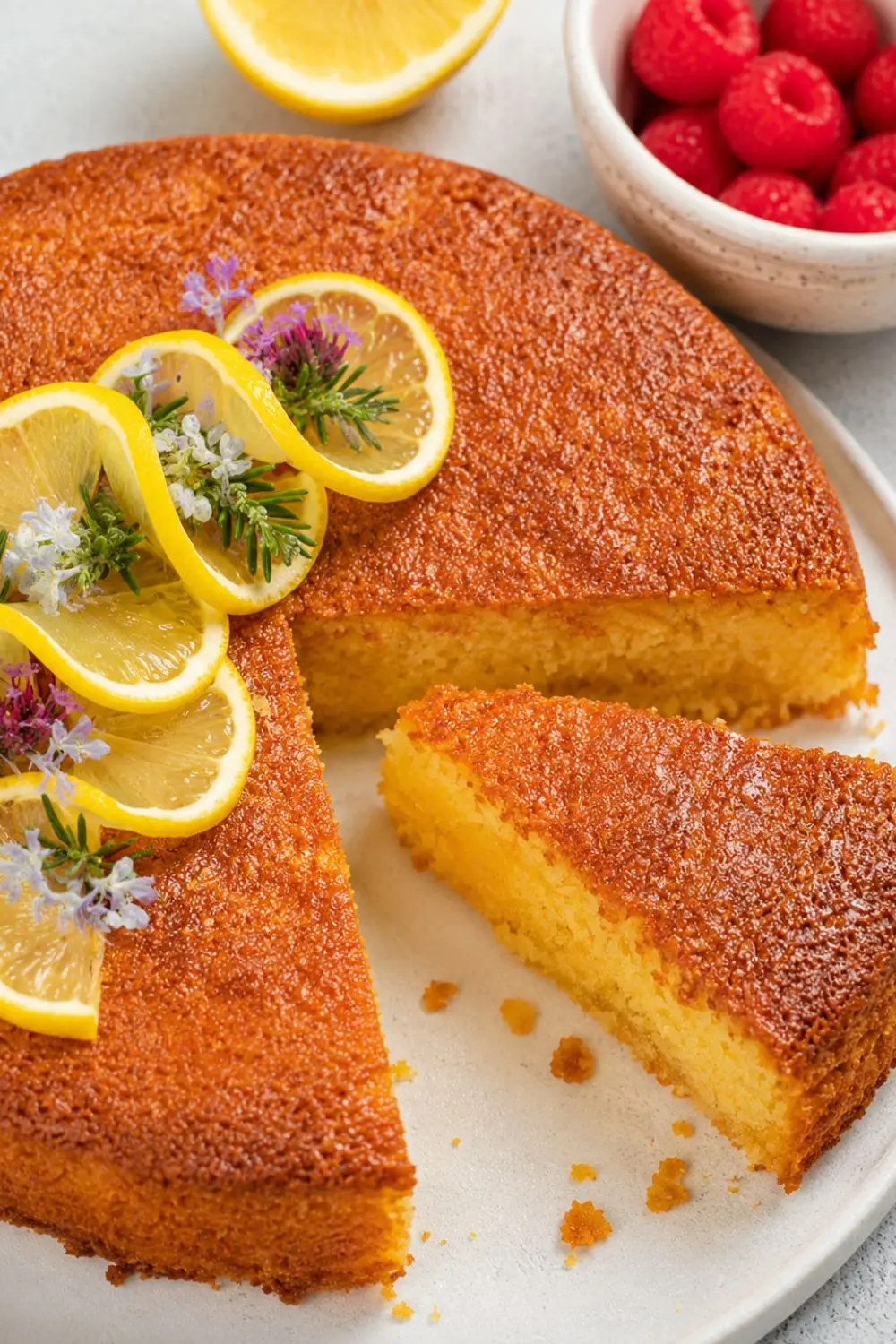
Step 1 - Prepare Everything Before Mixing
The recipe includes a specific instruction that appears before mixing begins: "Make sure everything is ready before you mix." This means:
Oven preheated to 350°F (175°C) with the middle rack in position
Cake pan greased with olive oil and lined with parchment (bottom and ideally sides)
Parchment lightly oiled
Both bowls and all tools ready
The reason for this preparation requirement: once wet and dry ingredients combine, the baking soda-acid reaction begins. You want to minimize the time between batter creation and oven entry.
Step 2 - Combine Dry Ingredients
Add the blanched almond flour, cornstarch, baking powder, baking soda, and fine sea salt to your large mixing bowl. Whisk together thoroughly until evenly combined.
Step 3 - Combine Wet Ingredients
In a medium bowl or large jug, combine the dairy-free milk, extra virgin olive oil, lemon juice (and zest if using), sugar, apple cider vinegar, and almond extract. Stir together really well until the sugar begins to dissolve and everything is evenly combined.
Step 4 - Combine and Move Quickly
Pour the liquid mixture into the dry ingredients. Fold together with your spatula until no dry flour is visible make sure to scrape right into the bottom of the bowl where dry flour tends to accumulate. The batter will be quite liquid compared to typical cake batters this is correct.
Now move with purpose. Spoon the batter into the prepared pan, give the pan a light shake to level the top, and get it into the preheated oven on the middle shelf immediately.
Step 5 - Bake Without Opening
Bake for approximately 50 minutes. The recipe has a specific instruction: do not open the oven door until at least 40 minutes into the bake. Opening early causes the cake to sink in the center as the fragile almond flour structure collapses from the temperature change.
The finished cake should be:
Deeply golden across the entire surface
Slightly pulling away from the pan edges
A toothpick or thin knife inserted into the center should come out clean
Do not overbake. The recipe specifically notes this cake is supposed to be pudding-like and moist inside. An overbaked almond flour cake becomes dry and crumbly opposite of what you want. If the toothpick comes out clean at 50 minutes, it's done.
Step 6 - Cool Completely in the Pan
Place the pan (with cake still inside) on a wire rack. Allow to cool completely this takes several hours. Do not attempt to remove the cake while it's warm. Hot almond flour cake is fragile and will break apart during removal.
If making the day before: allow to cool at room temperature, cover the pan with a cloth or loose plastic wrap, and leave overnight.
Step 7 - Remove from Pan
Once completely cooled, loosen the sides with a thin spatula or knife if you didn't line the sides with parchment. Place a large plate upside down over the pan. In one confident motion, invert the pan onto the plate the cake should release onto the plate bottom-side up.
To get the cake right-side up: place another large plate on the bottom of the cake and flip again. The cake now sits right-side up on the second plate.
Step 8 - Dust and Serve
Dust the cooled cake with powdered sugar through a fine-mesh sieve immediately before serving. The dusting is both decorative and adds a slight sweetness to the slightly crispy crust. Don't dust too far in advance powdered sugar absorbs into the surface over time.