
Some cakes are impressive when they come out of the oven. Vegan almond cake made entirely with almond flour is impressive when it comes out of the oven AND two days later AND five days after that because this is the rare cake that genuinely improves with time rather than drying out. Dense with almond flour, perfumed with almond extract and lemon, bound by olive oil and apple cider vinegar, and finished with a dusting of powdered sugar this flourless almond cake is naturally gluten-free, completely plant-based, and one of the most distinctively textured, deeply flavorful cakes you can make with minimal technique.
I discovered this style of almond flour cake vegan baking when I was looking for something that could be made days ahead for a gathering without any quality loss. The discovery that olive oil-based almond flour cakes not only last but improve over several days at room temperature changed how I think about baking for entertaining. You make it the day before, cover it, and it waits patiently. That’s the kind of recipe worth having in permanent rotation.

My Recipe Timing and Serving Details
Here’s your complete planning overview:
| Detail | Info |
| Prep Time | 20 minutes |
| Bake Time | 50 minutes |
| Cooling Time | Complete cooling in pan (several hours) |
| Total Active Time | 1 hour 10 minutes |
| Best Made | Day before serving |
| Servings | 12 slices |
| Serving Size | 1 of 12 slices |
| Calories Per Slice | 395 kcal |
| Course | Dessert |
| Diet | Vegan, Gluten-Free, Grain-Free |
This vegan almond cake serves 12 people as generous dessert slices. At 395 calories per slice with 8 grams of protein and 4 grams of fiber both from the almond flour this is a nutritionally substantial dessert that satisfies meaningfully. The recipe’s single most important instruction: make this the day before you need it. The cake must cool completely in the pan before removal, and it genuinely tastes better after overnight rest.
Why This Cake Works Without Eggs And Why the Chemistry Is Brilliant
This vegan almond cake recipe uses no eggs, no flax eggs, no chia eggs, and no aquafaba. It works through a completely different set of binding mechanisms:
Almond flour’s natural fat content acts as a binder. Blanched almond flour contains approximately 50% fat this fat provides structure and moisture retention that wheat flour cakes rely on eggs for. The fat binds the batter into a cohesive mixture that sets during baking without requiring egg proteins to solidify.
Olive oil contributes additional fat and emulsification. The combination of almond flour fat and olive oil creates a batter with enough lipid content to produce a moist, cohesive cake that holds together after baking.
Apple cider vinegar and baking soda react to create carbon dioxide lift the same leavening chemistry as in any vegan cake. The acid-base reaction produces the rise that prevents the cake from being dense and heavy.
Cornstarch provides light binding and slightly improves the set it gelatinizes during baking and creates a subtle structural integrity throughout the crumb.
The result is a cake that’s genuinely pudding-like in the center, dense, moist, and rich rather than the light, airy texture of a wheat-flour layer cake. This is a European-style flourless almond cake that belongs in the same category as French financiers or Italian torta di mandorle. It doesn’t pretend to be a layer cake, it’s something categorically different and specifically better for what it is. FYI – once you understand what this cake is supposed to be (dense, moist, not fluffy), every bite makes complete sense.
Full Ingredient List Every Specification Matters
The Cake:
- 3¾ packed cups (420g) almond flour – blanched almond flour specifically, not almond meal (see below)
- 3 tablespoons cornstarch (cornflour in UK)
- 2 teaspoons baking powder
- ½ teaspoon baking soda
- 1 teaspoon fine sea salt – not table salt
- ¾ cup (180ml) dairy-free milk – unsweetened, unflavored
- ¾ cup (180ml) extra virgin olive oil – see the critical oil note below
- 6 tablespoons (90ml) freshly squeezed lemon juice – plus zest of 1 lemon for stronger lemon flavor
- ¾ cup (150g) white or cane sugar
- 1 tablespoon apple cider vinegar
- 1 teaspoon almond extract (or vanilla extract)
Optional Finishing:
- 2 tablespoons powdered sugar -for dusting before serving
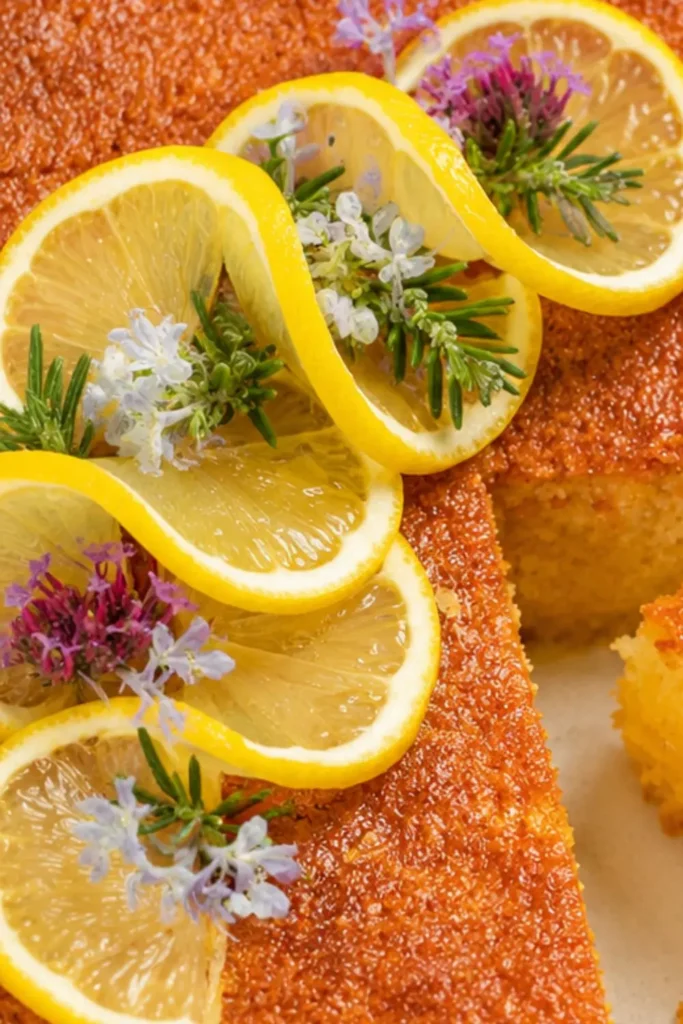
The Almond Flour Specification Not Negotiable
Blanched almond flour is ground from blanched almonds almonds with the brown skin removed. It’s finely milled to a pale, almost white, fine flour-like consistency.
Almond meal is ground from unblanched almonds skin intact producing a coarser, darker product with visible brown flecks.
These two products behave differently in baking. Almond meal produces a denser, more rustic result with a slightly bitter edge from the skin. For this vegan almond cake, the recipe specifically requires blanched almond flour for texture and flavor reasons. Using almond meal produces a noticeably inferior cake.
Bob’s Red Mill Super-Fine Almond Flour, Anthony’s Premium Almond Flour, and King Arthur Blanched Almond Flour are all reliable options.
The Olive Oil Rule The Recipe’s Most Specific Requirement
The recipe states: “DO NOT USE ANY OTHER TYPE OF OIL” and this instruction deserves specific attention.
Extra virgin olive oil in a cake sounds counterintuitive, but it’s specifically right for this recipe. Here’s why:
Almond flour has a rich, slightly sweet, nutty flavor that pairs beautifully with olive oil’s slightly grassy, fruity character. The two fats complement each other and create a complex, adult flavor that neutral oils like sunflower or canola completely fail to produce. The resulting cake tastes sophisticated and genuinely interesting the olive oil’s flavor reads as richness and depth rather than as “oil taste.”
If you strongly dislike extra virgin olive oil’s flavor, the recipe allows regular (light) olive oil as a substitute. But using completely neutral oil (sunflower, canola, vegetable) produces a flatter, less interesting cake that misses the recipe’s central flavor pairing. IMO, try it with extra virgin at least once before deciding you prefer neutral oil. :/
The fine sea salt versus table salt specification is about flavor density table salt has additives and a slightly metallic edge that affects baked goods. Fine sea salt is clean, pure, and integrates smoothly into the batter.
Equipment You’ll Need For Vegan Almond Cake
Primary Equipment
- 9-inch round cake pan – the specific size for this recipe. A smaller pan makes a taller cake that underbakes in the center; a larger pan makes a thinner cake that overbakes.
- Parchment paper – both for lining the bottom and, ideally, the sides. This cake is described as sticky and delicate the recipe specifically recommends lining the sides too and lightly oiling the parchment. This is genuinely important prep that determines whether the cake releases cleanly or tears.
- Oven with a middle shelf – the middle rack position is specifically recommended for even heat distribution. The recipe also warns against opening the oven until at least 40 minutes into the bake.
- Wire cooling rack – for the in-pan cooling process
Mixing Equipment
- Large mixing bowl – for dry ingredients
- Medium bowl or large jug – for wet ingredients
- Whisk -for combining dry ingredients and separately stirring wet ingredients
- Silicone spatula – for folding wet into dry and scraping the bowl
The recipe specifically uses a fold-and-spoon technique rather than electric mixing this is intentional. Almond flour batter doesn’t need or benefit from the air incorporation that beating creates. Simple folding until no dry flour is visible is the correct technique.
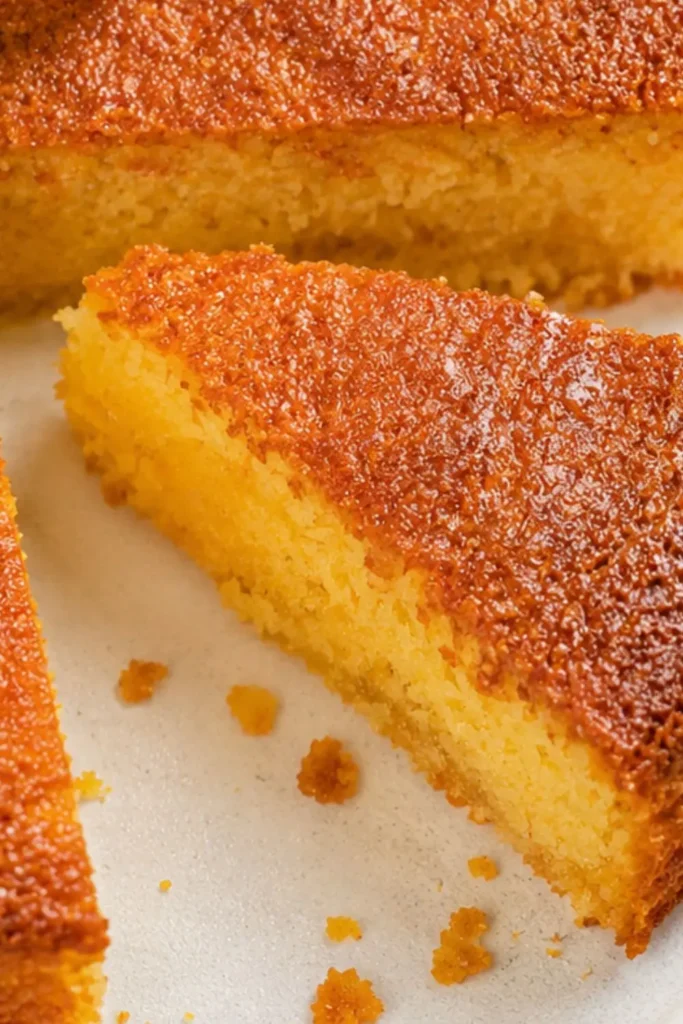
Serving Equipment
- Two large plates – for the inversion process when removing the cooled cake from the pan
- Fine-mesh sieve -for dusting powdered sugar evenly over the finished cake
Step-by-Step Instructions Organized for Success For Vegan Almond Cake
The Night Before (Recommended) or Day Of
Make this cake the day before you need to serve it. This isn’t just about scheduling convenience – the cake genuinely tastes better after overnight rest at room temperature. The flavors meld, the texture settles into its intended dense-moist state, and it becomes easier to slice cleanly.
Step 1 – Prepare Everything Before Mixing
The recipe includes a specific instruction that appears before mixing begins: “Make sure everything is ready before you mix.” This means:
- Oven preheated to 350°F (175°C) with the middle rack in position
- Cake pan greased with olive oil and lined with parchment (bottom and ideally sides)
- Parchment lightly oiled
- Both bowls and all tools ready
The reason for this preparation requirement: once wet and dry ingredients combine, the baking soda-acid reaction begins. You want to minimize the time between batter creation and oven entry.
Step 2 – Combine Dry Ingredients
Add the blanched almond flour, cornstarch, baking powder, baking soda, and fine sea salt to your large mixing bowl. Whisk together thoroughly until evenly combined.
Step 3 – Combine Wet Ingredients
In a medium bowl or large jug, combine the dairy-free milk, extra virgin olive oil, lemon juice (and zest if using), sugar, apple cider vinegar, and almond extract. Stir together really well until the sugar begins to dissolve and everything is evenly combined.
Step 4 – Combine and Move Quickly
Pour the liquid mixture into the dry ingredients. Fold together with your spatula until no dry flour is visible make sure to scrape right into the bottom of the bowl where dry flour tends to accumulate. The batter will be quite liquid compared to typical cake batters this is correct.
Now move with purpose. Spoon the batter into the prepared pan, give the pan a light shake to level the top, and get it into the preheated oven on the middle shelf immediately.
Step 5 – Bake Without Opening
Bake for approximately 50 minutes. The recipe has a specific instruction: do not open the oven door until at least 40 minutes into the bake. Opening early causes the cake to sink in the center as the fragile almond flour structure collapses from the temperature change.
The finished cake should be:
- Deeply golden across the entire surface
- Slightly pulling away from the pan edges
- A toothpick or thin knife inserted into the center should come out clean
Do not overbake. The recipe specifically notes this cake is supposed to be pudding-like and moist inside. An overbaked almond flour cake becomes dry and crumbly opposite of what you want. If the toothpick comes out clean at 50 minutes, it’s done.
Step 6 – Cool Completely in the Pan
Place the pan (with cake still inside) on a wire rack. Allow to cool completely this takes several hours. Do not attempt to remove the cake while it’s warm. Hot almond flour cake is fragile and will break apart during removal.
If making the day before: allow to cool at room temperature, cover the pan with a cloth or loose plastic wrap, and leave overnight.
Step 7 – Remove from Pan
Once completely cooled, loosen the sides with a thin spatula or knife if you didn’t line the sides with parchment. Place a large plate upside down over the pan. In one confident motion, invert the pan onto the plate the cake should release onto the plate bottom-side up.
To get the cake right-side up: place another large plate on the bottom of the cake and flip again. The cake now sits right-side up on the second plate.
Step 8 – Dust and Serve
Dust the cooled cake with powdered sugar through a fine-mesh sieve immediately before serving. The dusting is both decorative and adds a slight sweetness to the slightly crispy crust. Don’t dust too far in advance powdered sugar absorbs into the surface over time.
Understanding the Texture What This Cake Is Supposed to Be
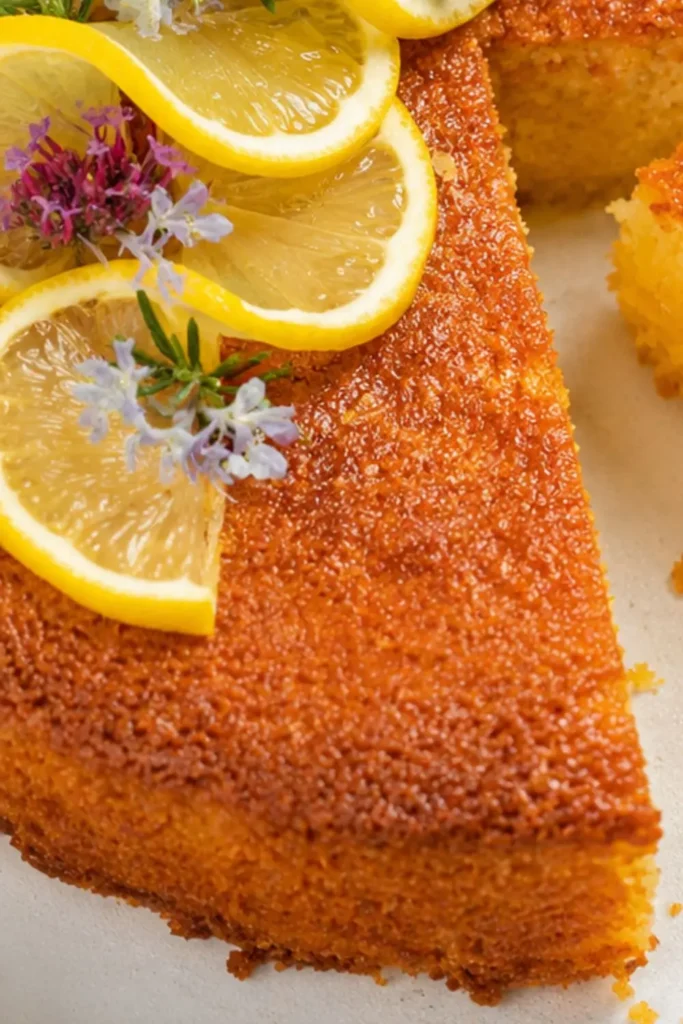
Have you ever cut into an almond cake and thought “something seems wrong, this is too moist” only to discover it’s actually exactly right? Vegan almond cake made with almond flour is intentionally dense, moist, and slightly pudding-like in the center.
This is not a texture problem. This is the cake’s defining quality, the thing that makes it different from every other cake you’ve eaten and the reason people who try it come back for more.
What the texture should feel like:
- The crust is slightly crispy and golden
- The interior is dense and moist ,not wet, not underbaked, but genuinely substantial
- Each slice holds together when cut but has a yielding, rich quality when eaten
- The almond flavor is present throughout, amplified by the almond extract
What indicates actual problems:
- Completely liquid center that doesn’t hold shape (underbaked , needs more time)
- Completely dry, crumbly texture throughout (overbaked)
- Sticky exterior that tears on removal (insufficient parchment preparation)
How to Make Vegan Almond Cake Lemon Flavor Variations
The recipe uses lemon juice as the liquid acid component and offers lemon zest as an optional addition for more pronounced lemon flavor. Here’s how to adjust the lemon presence:
Subtle lemon version (recipe standard)- 6 tablespoons lemon juice, no additional zest. The lemon contributes primarily to the leavening chemistry its flavor is present but background.
Moderate lemon version- 6 tablespoons lemon juice plus zest of 1 lemon. The zest adds the aromatic, essential oil component of lemon flavor without changing the batter’s chemistry.
Strong lemon version- 6 tablespoons lemon juice plus zest of 2 lemons. Noticeably citrusy throughout pairs particularly well with the almond flavor.
Orange variation- Replace lemon juice with orange juice (same quantity) and add orange zest. The orange-almond combination produces a Spanish-influenced cake that’s genuinely exceptional alongside espresso or afternoon tea.
Try It Next recipe
Nutrition Information Per Slice
At 395 calories per slice for 12 slices:
| Nutrient | Per Slice |
| Calories | 395 kcal |
| Carbohydrates | 23g |
| Protein | 8g |
| Fat | 33g |
| Fiber | 4g |
| Sugar | 14g |
| Sodium | 246mg |
| Calcium | 122mg |
| Iron | 2mg |
8 grams of protein per slice from the blanched almond flour genuinely impressive for a cake. 4 grams of fiber also from the almond flour. The 33 grams of fat per slice reflects the almond flour’s inherent fat content plus the olive oil predominantly monounsaturated fat, the same healthy fat profile as olive oil and avocados. The relatively low 23 grams of carbohydrates per slice makes this one of the lower-carb dessert options in any collection.
Storage The Cake That Ages Beautifully
This is genuinely one of the best-storing cakes you can make:
- Room temperature- Cover and store for up to 5 days. The cake maintains its moisture and flavor throughout the storage period it does not dry out like wheat-flour cakes typically do.
- Refrigerator- Store covered for up to 10 days the ideal option if your kitchen is warm or if you want to keep it beyond 5 days.
- Day 1 vs. Day 3-Day 3 is better. The flavors deepen, the texture settles, and the almond and olive oil character becomes more integrated and nuanced. Make it at least the night before for the best result.
My Final Thoughts
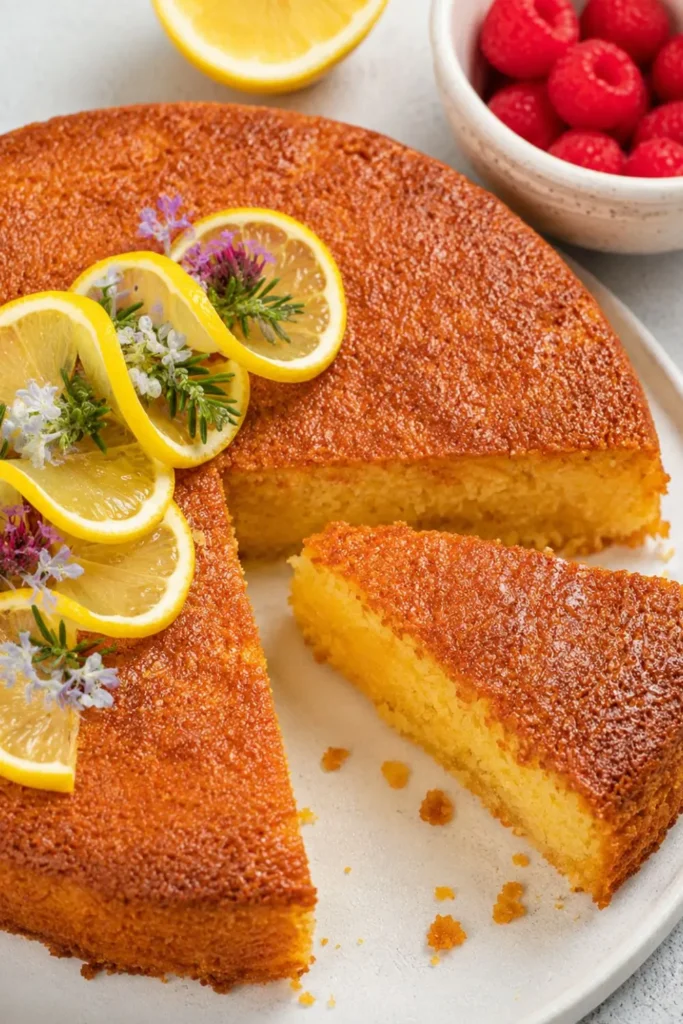
Vegan almond cake made entirely from blanched almond flour with olive oil and lemon is the cake that changes your understanding of what dessert made without wheat flour can be. Not a compromise, not a workaround, not a “pretty good for vegan/GF.” A genuinely excellent cake that keeps for 10 days, serves 12 people at 8 grams of protein per slice, and tastes better the day after baking.
Make it tonight. Dust it with powdered sugar tomorrow. Discover that the most interesting thing on the dessert table was the one with the fewest conventional ingredients.
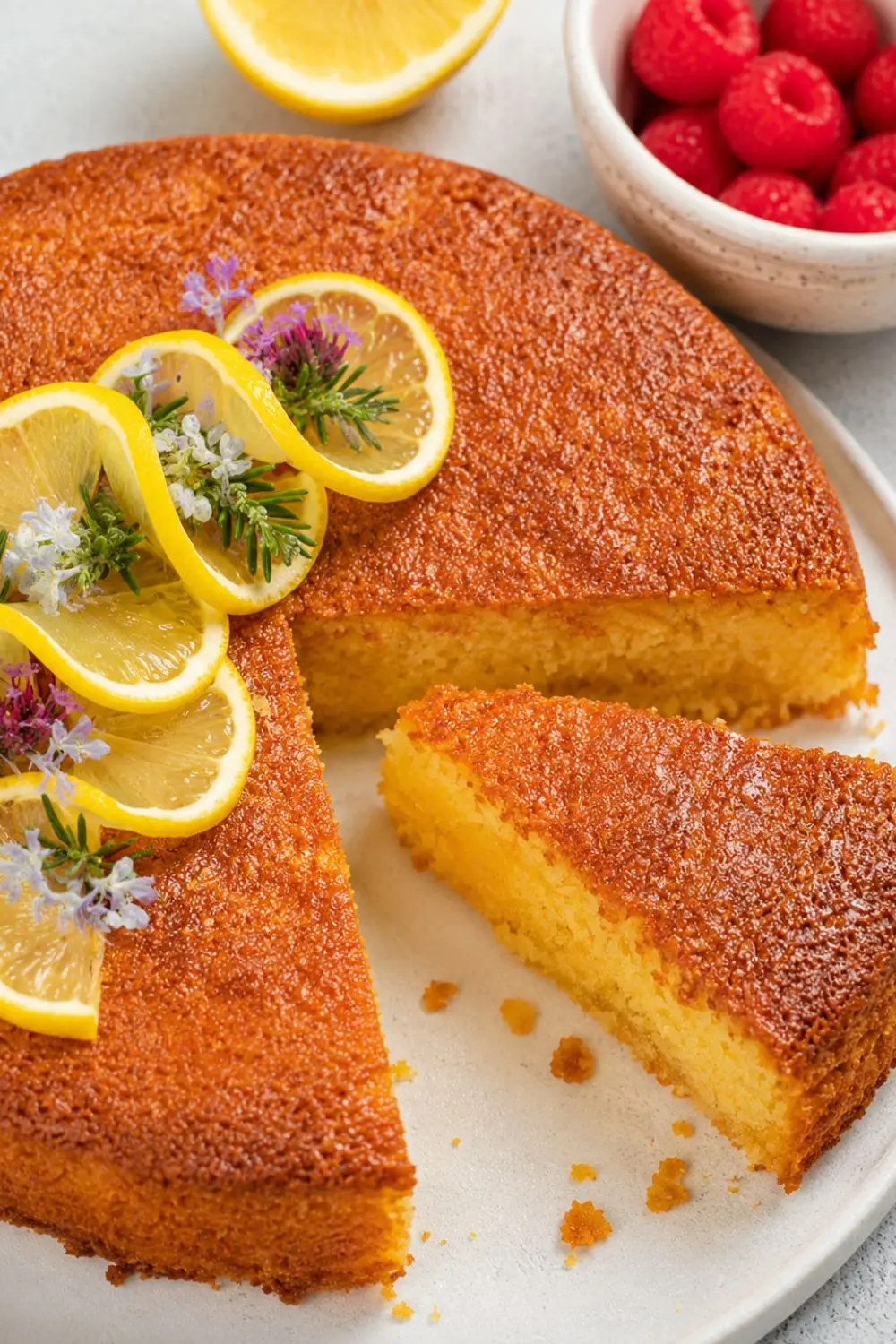
Vegan Almond Cake
Ingredients
Equipment
Method
- Step 1 – Prepare Everything Before Mixing
- The recipe includes a specific instruction that appears before mixing begins: “Make sure everything is ready before you mix.” This means:
- Oven preheated to 350°F (175°C) with the middle rack in position
- Cake pan greased with olive oil and lined with parchment (bottom and ideally sides)
- Parchment lightly oiled
- Both bowls and all tools ready
- The reason for this preparation requirement: once wet and dry ingredients combine, the baking soda-acid reaction begins. You want to minimize the time between batter creation and oven entry.
- Step 2 – Combine Dry Ingredients
- Add the blanched almond flour, cornstarch, baking powder, baking soda, and fine sea salt to your large mixing bowl. Whisk together thoroughly until evenly combined.
- Step 3 – Combine Wet Ingredients
- In a medium bowl or large jug, combine the dairy-free milk, extra virgin olive oil, lemon juice (and zest if using), sugar, apple cider vinegar, and almond extract. Stir together really well until the sugar begins to dissolve and everything is evenly combined.
- Step 4 – Combine and Move Quickly
- Pour the liquid mixture into the dry ingredients. Fold together with your spatula until no dry flour is visible make sure to scrape right into the bottom of the bowl where dry flour tends to accumulate. The batter will be quite liquid compared to typical cake batters this is correct.
- Now move with purpose. Spoon the batter into the prepared pan, give the pan a light shake to level the top, and get it into the preheated oven on the middle shelf immediately.
- Step 5 – Bake Without Opening
- Bake for approximately 50 minutes. The recipe has a specific instruction: do not open the oven door until at least 40 minutes into the bake. Opening early causes the cake to sink in the center as the fragile almond flour structure collapses from the temperature change.
- The finished cake should be:
- Deeply golden across the entire surface
- Slightly pulling away from the pan edges
- A toothpick or thin knife inserted into the center should come out clean
- Do not overbake. The recipe specifically notes this cake is supposed to be pudding-like and moist inside. An overbaked almond flour cake becomes dry and crumbly opposite of what you want. If the toothpick comes out clean at 50 minutes, it’s done.
- Step 6 – Cool Completely in the Pan
- Place the pan (with cake still inside) on a wire rack. Allow to cool completely this takes several hours. Do not attempt to remove the cake while it’s warm. Hot almond flour cake is fragile and will break apart during removal.
- If making the day before: allow to cool at room temperature, cover the pan with a cloth or loose plastic wrap, and leave overnight.
- Step 7 – Remove from Pan
- Once completely cooled, loosen the sides with a thin spatula or knife if you didn’t line the sides with parchment. Place a large plate upside down over the pan. In one confident motion, invert the pan onto the plate the cake should release onto the plate bottom-side up.
- To get the cake right-side up: place another large plate on the bottom of the cake and flip again. The cake now sits right-side up on the second plate.
- Step 8 – Dust and Serve
- Dust the cooled cake with powdered sugar through a fine-mesh sieve immediately before serving. The dusting is both decorative and adds a slight sweetness to the slightly crispy crust. Don’t dust too far in advance powdered sugar absorbs into the surface over time.
Notes
Nutrition Information Per Slice
At 395 calories per slice for 12 slices:| Nutrient | Per Slice |
| Calories | 395 kcal |
| Carbohydrates | 23g |
| Protein | 8g |
| Fat | 33g |
| Fiber | 4g |
| Sugar | 14g |
| Sodium | 246mg |
| Calcium | 122mg |
| Iron | 2mg |

Hi — I’m Rachel. I’m a wife, a mom, and a home cook who believes that food should bring comfort, joy, and compassion to the table. I live with my family — two hungry little foodies who are my most honest recipe testers — and together we’ve built a kitchen culture that’s all about good food that happens to be 100% vegan. I started this blog because I wanted a place to share the recipes that keep our days moving, the dishes that make weeknights feel a little easier, and the meals that become our little family traditions.