Ingredients
Equipment
Method
- Star 1 - Marinated Grilled Vegetables
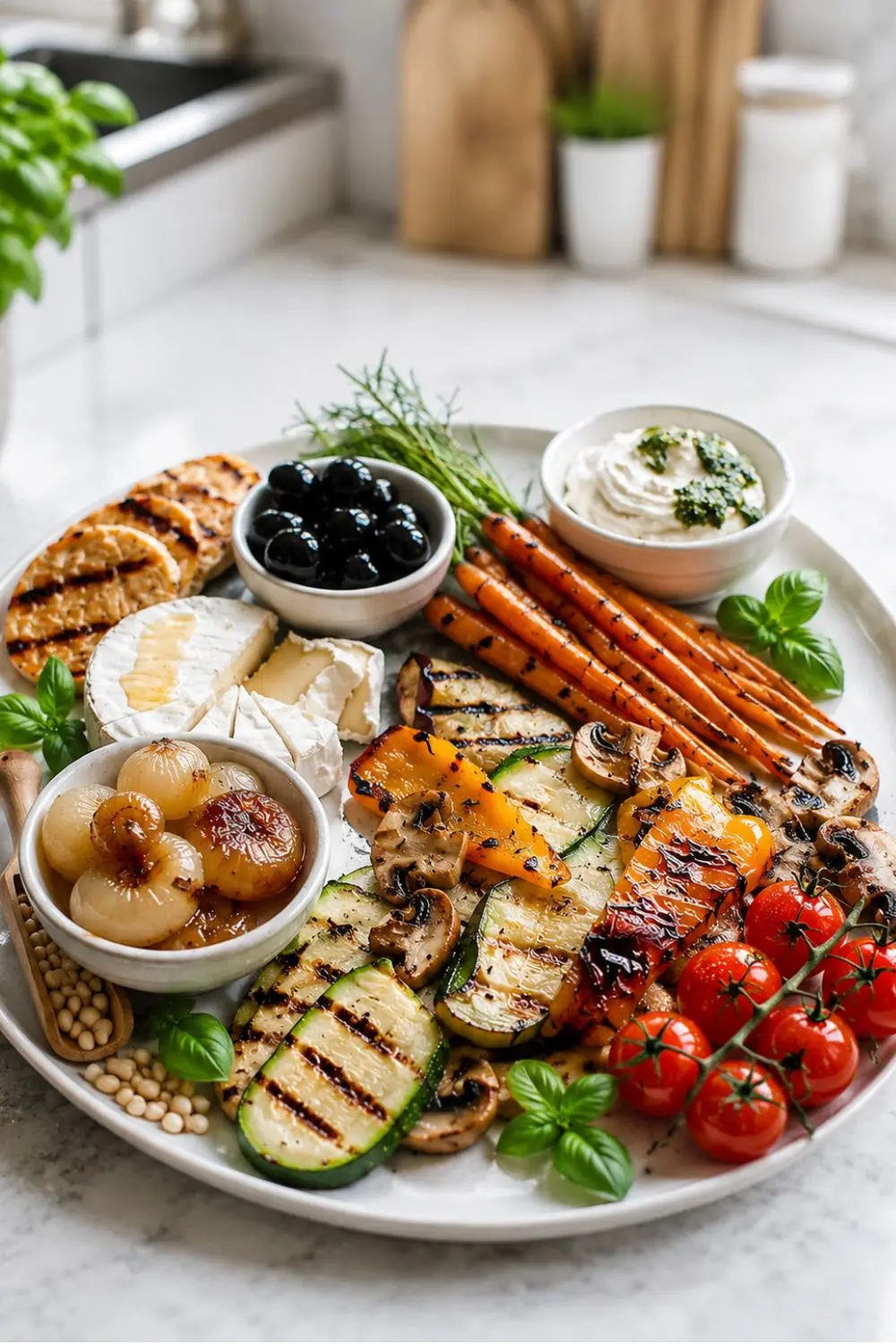
- These aren't roasted vegetables or steamed vegetables or raw vegetables. They're marinated before grilling and marinated again after grilling a two-stage process that creates a depth of flavor that single-treatment vegetables simply don't achieve.
- The pre-grill marinade seasons the vegetables from the outside and begins tenderizing their cellular structure, which allows the grill's heat to penetrate more evenly and the char to develop more quickly.
- The post-grill marinade rest is where the real transformation happens. The warm, grilled vegetables their structure slightly opened by the heat absorb the surrounding olive oil, vinegar, garlic, and thyme significantly more readily than raw vegetables would. Fresh basil added at this stage infuses its fragrance throughout without losing the delicacy it would lose if cooked. After 2 hours (or overnight), you have vegetables that taste specifically and unmistakably like authentic Italian antipasto.
- The five vegetables and their specific roles:
- Zucchini (100g, thinly sliced) - the mildest flavor, the most tender texture, and the best at absorbing the marinade completely. Zucchini becomes almost silky after the post-grill rest and carries the garlic and herb flavors more thoroughly than any other vegetable on the platter.
- Eggplant (130g, thinly sliced) -the most absorbent vegetable on this list, which means it produces the most intensely flavored slices after marination. Eggplant also develops the best char marks of any vegetable in this recipe the slightly spongy interior creates a clear contrast with the charred exterior.
- Orange Bell Pepper (200g, cut into strips) - the visual anchor of the vegetable section. Orange specifically rather than red or yellow because the color reads distinctly against the darker eggplant and zucchini on the platter. Always grill bell pepper first it requires longer cooking time than the other vegetables and falls behind if added simultaneously.
- Baby Carrots (6-7, optional) - the one vegetable that retains some crunch after grilling, providing textural contrast against the softer grilled vegetables. Their natural sweetness works beautifully against the vinegar in the marinade.
- Mushrooms (5-6, thinly sliced) - the umami vehicle. Mushrooms develop the deepest savory character after the post-grill marinade rest because their porous structure absorbs oil and vinegar more completely than any other vegetable.
- Star 2 - Smoky Grilled Tempeh
- Here's the honest truth about meat replacements on an antipasto board: most don't work. They taste like a compromise rather than a genuine contribution to the platter's flavor story. Smoky grilled tempeh works not because it pretends to be prosciutto, but because it brings its own genuinely excellent combination of textures and flavors that the platter specifically needs.
Notes
Start the vegetables tonight. Grill the tempeh tomorrow. Assemble an hour before your guests arrive. Then pour the wine and let everyone graze at the pace that Italian food specifically encourages.