
Risotto has a reputation for being high-maintenance. And honestly? That reputation is partly earned — traditional risotto demands constant attention, ladle-by-ladle broth additions, and about 30 minutes of dedicated stirring while you hover over a hot stove. Not exactly the summer evening vibe most of us are going for.
Slow Cooker Vegan Mushroom Risotto keeps everything that makes risotto genuinely great — the creaminess, the depth, the satisfying richness — while dramatically reducing the stress and effort involved.
I made traditional risotto exactly twice before deciding there had to be a better way. The second time, I burned the bottom while answering a single phone call. That was the day I started experimenting with stovetop techniques that allowed for occasional stepping away. The version here strikes that perfect balance — you’re still involved, but the process is manageable, the results are consistently excellent, and nobody has to sacrifice their entire evening to make it happen.
Recipe Timing and Serving Details
Here’s your complete planning overview:
| Detail | Info |
| Prep Time | 10 minutes |
| Cook Time | 35 minutes |
| Total Time | 45 minutes |
| Servings | 4 servings |
| Serving Size | 1.5 cups (¼ of recipe) |
| Calories Per Serving | 563 kcal |
| Course | Entrée / Main Course |
| Cuisine | American / Italian-Inspired |
| Diet | 100% Vegan |
45 minutes total for a deeply impressive, restaurant-quality vegan mushroom risotto that serves 4 people as a main course. At 563 calories per serving, this is a genuinely satisfying, calorie-substantial meal — the kind of dish that leaves everyone at the table completely content rather than reaching for more food an hour later.
What Makes This Vegan Risotto So Rich and Creamy
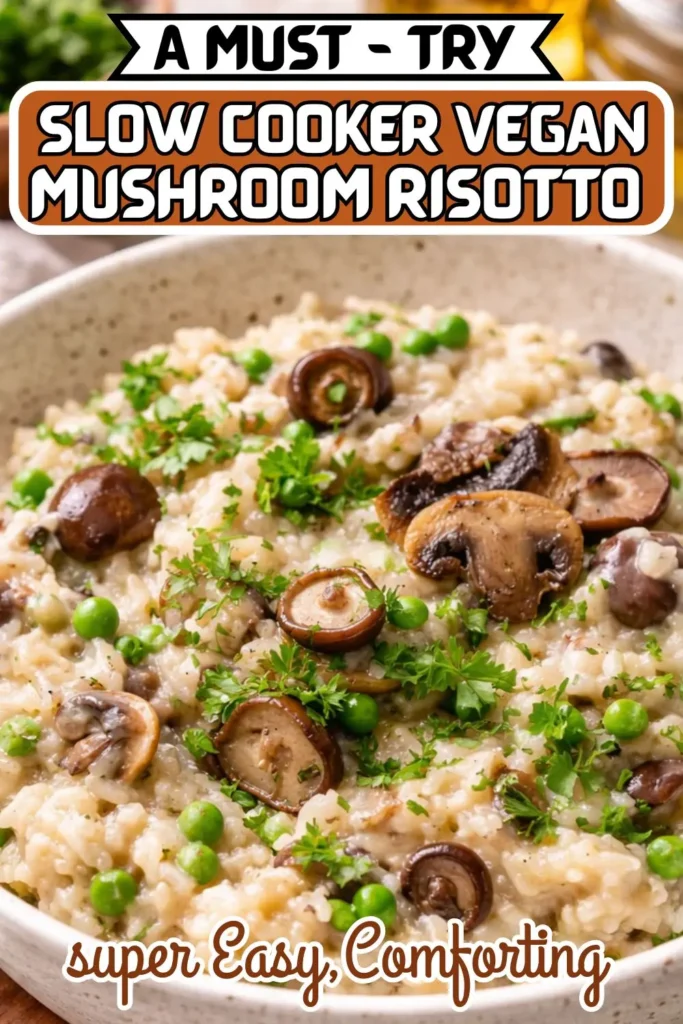
Traditional risotto gets its signature creaminess from butter and Parmesan cheese. This version replaces both without losing any of that luxurious texture or depth — and the substitutes it uses are genuinely clever.
Full-fat coconut milk provides the richness and creaminess that butter would normally deliver. It adds body and a very subtle sweetness that works beautifully alongside the earthy mushrooms. You don’t taste coconut — the herbs, miso, and mushrooms dominate the flavor profile completely.
White miso paste replaces the savory, umami punch of Parmesan cheese. Miso is fermented, intensely savory, and brings that same depth that makes you keep eating long after you’re technically full. It dissolves completely into the rice and broth, contributing flavor rather than texture.
White truffle oil finishes the whole dish with that unmistakable, luxurious aroma that makes risotto feel genuinely special. A teaspoon goes a long way. FYI — truffle oil is one of those ingredients where a little genuinely transforms an entire dish. Don’t skip it if you can find it.
Ingredients You’ll Need
This recipe uses straightforward ingredients with a few elevated additions that make all the difference:
The Mushrooms:
- ¾ pound assorted fresh mushrooms, cleaned and roughly chopped — use a mix for maximum flavor complexity
- ¼ cup olive oil, divided — used across multiple cooking stages
The Risotto Base:
- ½ cup chopped shallots (about 2 shallots)
- 3 cloves garlic, minced
- 1½ cups arborio rice — non-negotiable, more on this below
- ½ cup dry white wine
- 1 teaspoon dried thyme
- 1 teaspoon dried rosemary
- ½ teaspoon rubbed sage
The Creamy, Savory Finish:
- 3–4 cups low-sodium vegetable broth, warmed
- ½ cup full-fat coconut milk
- 2 tablespoons white miso paste
- 1 tablespoon lemon juice
- 1 teaspoon white truffle oil
- ½ cup frozen peas, thawed
- Salt and pepper to taste
The assorted mushroom mix deserves a specific mention. Using a single type of mushroom gives you one flavor note. Using a combination — cremini, shiitake, oyster, portobello — creates a layered, complex earthiness that makes the finished risotto taste genuinely sophisticated.
Equipment You’ll Need
Risotto requires a little more equipment than a basic one-pot dish, but nothing unusual or expensive:
Primary Cooking Equipment
- Large nonstick pot or deep skillet — the main cooking vessel for the risotto. A wide, heavy-bottomed pot distributes heat evenly and gives you the surface area needed to cook the rice properly. A 4–6 quart pot works perfectly.
- Separate skillet (optional but time-saving) — you can cook the mushrooms and the risotto simultaneously in two separate pans to cut your active cooking time. Alternatively, cook the mushrooms first in the same pot you’ll use for the rice, remove them, then proceed with the risotto in the same pot. Your choice comes down to whether you’d rather save time or save dishes.
Supporting Equipment
- Small saucepan — for warming the vegetable broth before adding it to the rice. Adding cold broth to hot risotto drops the temperature and disrupts the cooking process. Warm broth keeps everything at a consistent simmer throughout.
- Ladle — for adding broth to the risotto in controlled, consistent portions
- Wooden spoon or silicone spatula — for stirring the risotto throughout cooking
- Sharp knife and cutting board — for chopping mushrooms, shallots, and mincing garlic
- Measuring cups and spoons
- Small bowl — for dissolving the miso paste in a small amount of warm liquid before adding it to the pot (this prevents clumping)
The most important single piece of equipment is the heavy-bottomed pot. Thin-bottomed pots create hot spots that cause the rice to cook unevenly and the bottom layer to scorch during the frequent stirring stages.
Why Arborio Rice Is Non-Negotiable
Ever wonder why risotto has that distinctive creamy, almost sauce-like consistency? The answer is arborio rice, and it’s not interchangeable with regular long-grain rice.
Arborio rice is a short-grain Italian variety with a high starch content. As it cooks and you stir it, it releases that starch gradually into the surrounding liquid, creating the characteristic creaminess that defines risotto. Long-grain rice doesn’t have the same starch composition and produces a completely different — far less creamy — result.
Don’t substitute arborio. Carnaroli or Vialone Nano rice also work if you can find them — these are the other traditional risotto varieties. But regular white rice, brown rice, or jasmine rice won’t give you authentic risotto texture regardless of how long you cook them. This is one of those non-negotiable ingredient choices.
Step-by-Step Instructions for Slow Cooker Vegan Mushroom Risotto
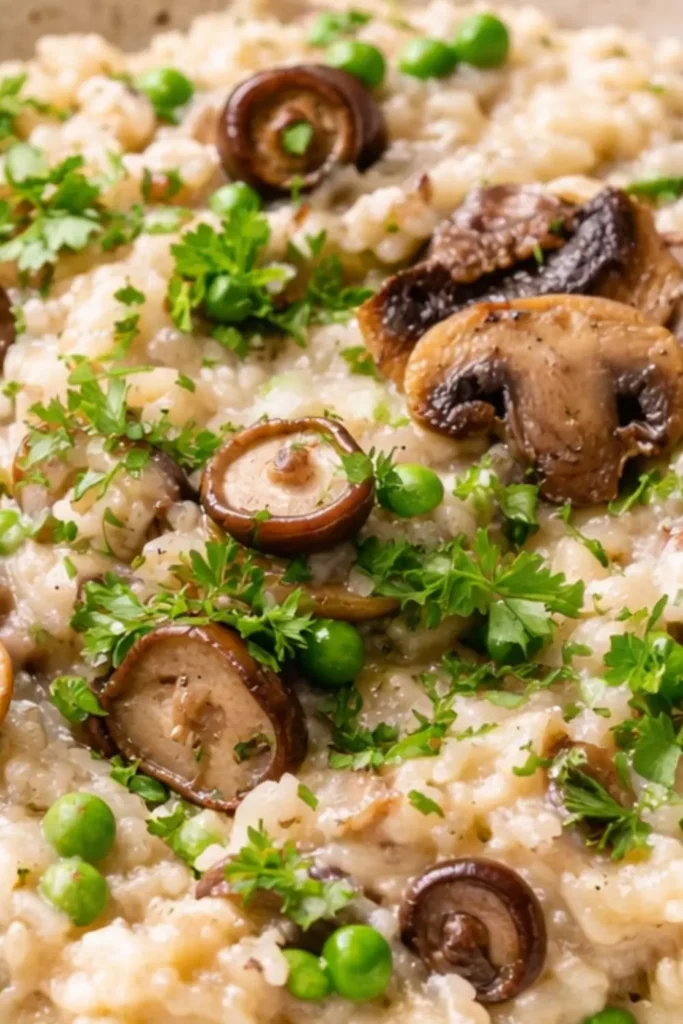
Step 1 — Cook the Mushrooms
Coat the bottom of your large nonstick pot or a separate skillet with 1–2 tablespoons of olive oil and place it over medium heat. When the oil is hot, add the mushrooms in as even a single layer as possible. Don’t crowd the pan — overcrowding causes the mushrooms to steam rather than brown, which produces a completely different flavor and a waterlogged texture.
Cook the mushrooms for about 5 minutes per side without moving them excessively, until they develop deep golden-brown coloring. Work in batches if needed, adding oil between batches. Transfer the cooked mushrooms to a plate and set aside. They’ll rejoin the dish at the very end.
Step 2 — Build the Aromatic Base
Coat the bottom of your large pot with 1 tablespoon of olive oil and place it over medium heat. Add the chopped shallots and cook for about 5 minutes, stirring occasionally, until soft and translucent. Shallots bring a more delicate, slightly sweet onion flavor compared to regular onions — they’re the right choice for risotto where the aromatics need to support rather than dominate.
Add the minced garlic and cook for about 1 minute with the shallots, stirring, until the mixture becomes intensely fragrant. Your kitchen should smell incredible at this point.
Step 3 — Toast the Rice
Add the arborio rice to the pot and cook for 1–2 minutes, stirring constantly, until the grains turn shiny and slightly translucent around the edges. This toasting step coats each grain in oil and creates a barrier that helps the rice cook evenly and maintain some texture as the starch releases slowly into the broth.
Stir in the white wine, thyme, rosemary, and sage. Bring the wine to a simmer and cook, stirring frequently, until the rice fully absorbs the liquid. The wine adds acidity, depth, and a subtle complexity that the finished risotto would noticeably miss without it.
Step 4 — Add the Broth Gradually
Begin adding the warm vegetable broth to the pot approximately ½ cup at a time. After each addition, bring the liquid to a simmer and stir frequently until the rice absorbs it almost completely before adding the next ½ cup. This process takes patience — about 20 minutes across 3 to 3½ cups of broth.
The gradual broth addition is the technique that creates risotto’s signature creaminess. Each addition of liquid activates the starch release from the rice. Frequent stirring keeps the starch suspended in the liquid rather than settling on the bottom of the pot. Skip this method and the results will be noticeably less creamy. It’s genuinely worth doing properly.
Step 5 — Add Coconut Milk and Miso
After about 3 to 3½ cups of broth, the rice should be very creamy with just a slight firmness remaining at the center of each grain — this is the texture you’re targeting. Stir in the coconut milk and miso paste, making sure to fully incorporate the miso until no visible lumps remain.
The easiest way to incorporate miso without lumps is to dissolve it first in a small amount of the warm broth before adding it to the pot. This takes an extra 30 seconds and prevents unincorporated chunks of miso from sitting in the finished risotto.
Allow the rice to continue cooking until the coconut milk absorbs. Test a grain — the center should be tender with just a tiny bit of resistance, not chalky or hard. Add a bit more broth and cook a few minutes longer if needed.
Step 6 — Finish and Serve
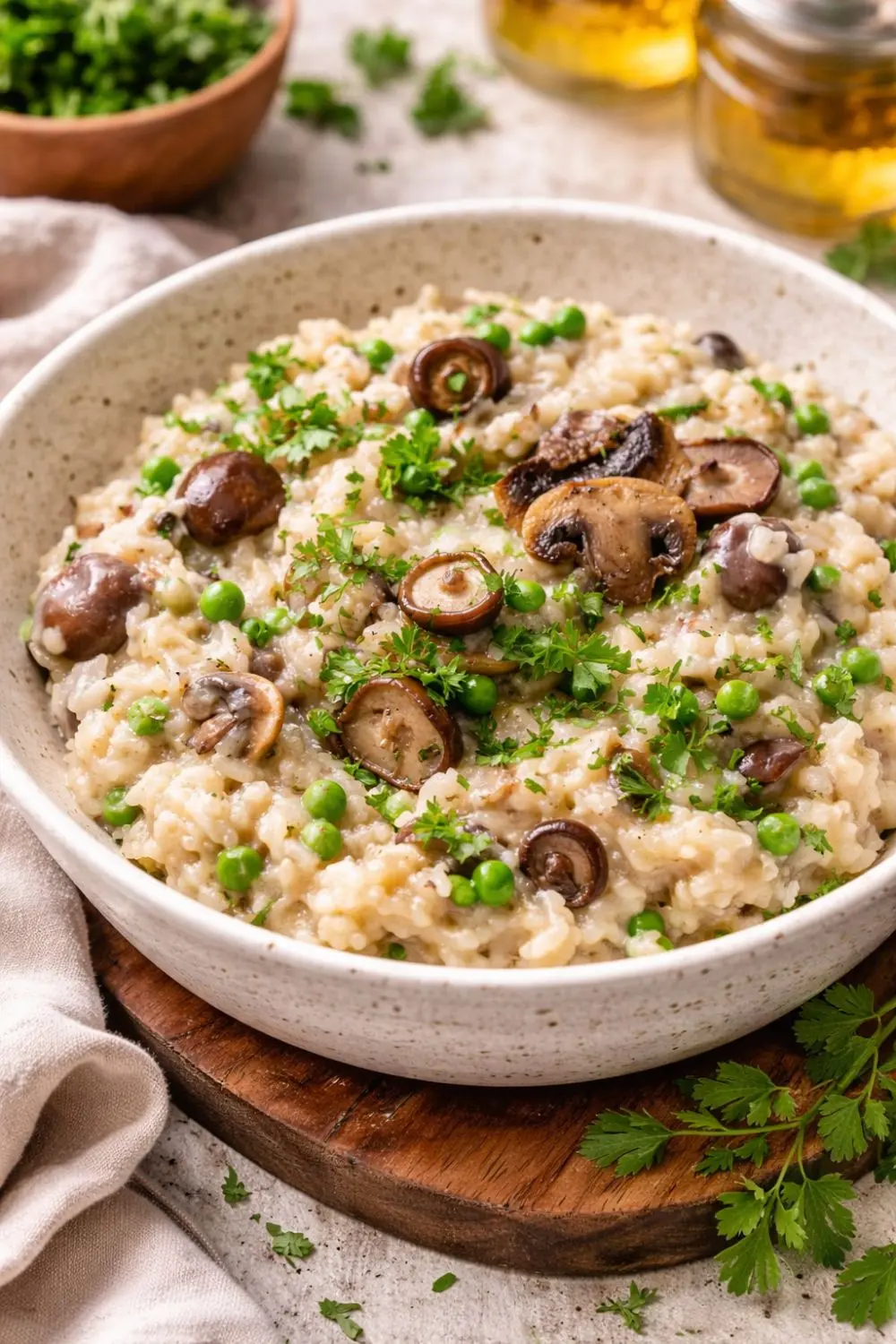
Remove the pot from heat. Stir in the cooked mushrooms, lemon juice, truffle oil, and thawed peas. The residual heat warms everything through without further cooking. Taste and season generously with salt and pepper.
Serve immediately — risotto waits for nobody. It thickens as it cools and loses that perfect, flowing creaminess within minutes of leaving the heat.
Mushroom Variety Guide — Which Combination Works Best
The choice of mushrooms significantly impacts the final flavor. Here’s a quick guide:
Best Mushroom Combinations for This Risotto
- Cremini + Shiitake — the classic pairing. Cremini brings earthy depth, shiitake adds a savory, almost meaty quality. This combination covers all the bases.
- Cremini + Oyster + Shiitake — the most complex option. Three different textures and flavor profiles create a layered, restaurant-quality result.
- Portobello + Cremini — bold, intensely earthy, deeply satisfying. The portobello brings a substantial meatiness that makes the risotto feel particularly hearty.
What to Avoid
- Canned mushrooms — the texture is soft and waterlogged before they even hit the pan. Fresh mushrooms brown properly and bring genuine depth. Canned cannot replicate this.
- Button mushrooms alone — too mild to carry the flavor of a full risotto. They work as part of a mix but not as the sole mushroom.
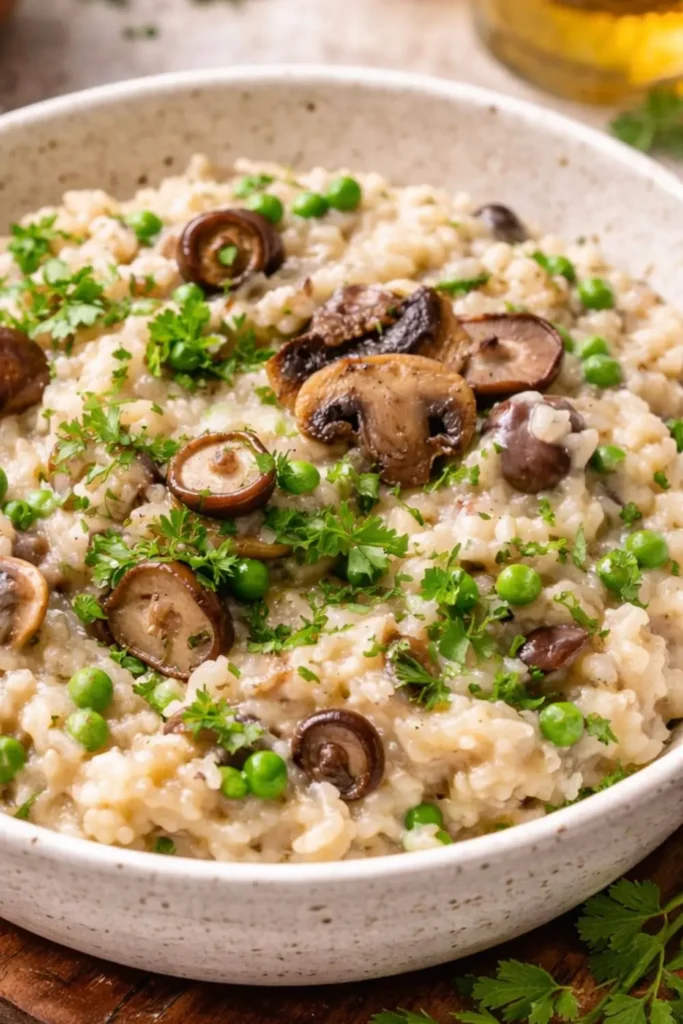
Nutrition Information Per Serving
At 563 calories per 1.5-cup serving, this is a genuinely rich, satisfying main course:
| Nutrient | Per Serving (1.5 cups) |
| Calories | 563 kcal |
| Carbohydrates | 74.7g |
| Protein | 10.8g |
| Fat | 23.6g |
| Saturated Fat | 8.8g |
| Fiber | 5.1g |
| Sugar | 5.1g |
| Sodium | 695mg |
| Potassium | 553mg |
| Iron | 4.9mg |
The higher fat content reflects the olive oil, coconut milk, and truffle oil — all plant-based fats that contribute to the dish’s signature richness. The 10.8 grams of protein comes primarily from the arborio rice, mushrooms, miso, and peas working together. For a higher protein version, stir in a can of drained white beans during the final step — they blend seamlessly into the risotto and add significant protein without changing the overall character of the dish.
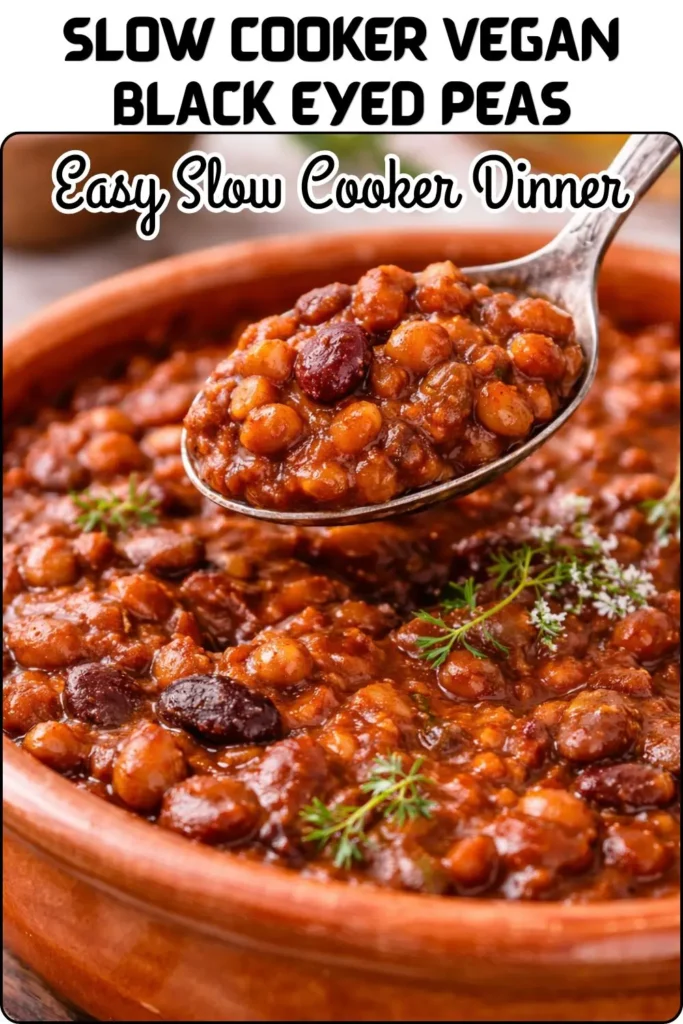
Still Hungry, Try It Next recipe :-
Slow Cooker Vegan Black Eyed Peas
Storage and Reheating Tips
Slow Cooker Vegan Mushroom Risotto stores reasonably well, though it’s always best eaten fresh:
- Refrigerator: Store in an airtight container for up to 3 days. The risotto thickens significantly as it cools — it will look almost solid when you remove it from the fridge.
- Reheating: Add 2–3 tablespoons of warm vegetable broth or water per serving before reheating. Warm on the stovetop over medium-low heat, stirring constantly, until the risotto loosens and returns to its creamy consistency. Microwave reheating works but produces less consistent results — if you use the microwave, add liquid and stir every 60 seconds.
- Freezer: IMO, risotto doesn’t freeze particularly well — the texture of arborio rice changes noticeably after freezing. Better to refrigerate and consume within 3 days.
Final Thoughts Make This Risotto and Impress Everyone at the Table
Slow Cooker Vegan Mushroom Risotto is the recipe you make when you want to genuinely impress people — including yourself. It’s creamy, deeply savory, beautifully aromatic, and completely plant-based. The coconut milk, miso, and truffle oil combination replaces dairy with something arguably more interesting and complex.
Yes, it requires some active attention during the broth-addition stage. But that 20 minutes of stirring produces something that tastes legitimately restaurant-quality. The effort-to-reward ratio here is exceptional.
Make it for a dinner party, a date night, or a Tuesday when you decide you deserve something genuinely great for dinner. Because honestly? You always do.
Slow Cooker Vegan Mushroom Risotto
Ingredients
Equipment
Method
- Step 1 — Cook the Mushrooms
- Coat the bottom of your large nonstick pot or a separate skillet with 1–2 tablespoons of olive oil and place it over medium heat. When the oil is hot, add the mushrooms in as even a single layer as possible. Don’t crowd the pan — overcrowding causes the mushrooms to steam rather than brown, which produces a completely different flavor and a waterlogged texture.
- Cook the mushrooms for about 5 minutes per side without moving them excessively, until they develop deep golden-brown coloring. Work in batches if needed, adding oil between batches. Transfer the cooked mushrooms to a plate and set aside. They’ll rejoin the dish at the very end.
- Step 2 — Build the Aromatic Base
- Coat the bottom of your large pot with 1 tablespoon of olive oil and place it over medium heat. Add the chopped shallots and cook for about 5 minutes, stirring occasionally, until soft and translucent. Shallots bring a more delicate, slightly sweet onion flavor compared to regular onions — they’re the right choice for risotto where the aromatics need to support rather than dominate.
- Add the minced garlic and cook for about 1 minute with the shallots, stirring, until the mixture becomes intensely fragrant. Your kitchen should smell incredible at this point.
- Step 3 — Toast the Rice
- Add the arborio rice to the pot and cook for 1–2 minutes, stirring constantly, until the grains turn shiny and slightly translucent around the edges. This toasting step coats each grain in oil and creates a barrier that helps the rice cook evenly and maintain some texture as the starch releases slowly into the broth.
- Stir in the white wine, thyme, rosemary, and sage. Bring the wine to a simmer and cook, stirring frequently, until the rice fully absorbs the liquid. The wine adds acidity, depth, and a subtle complexity that the finished risotto would noticeably miss without it.
- Step 4 — Add the Broth Gradually
- Begin adding the warm vegetable broth to the pot approximately ½ cup at a time. After each addition, bring the liquid to a simmer and stir frequently until the rice absorbs it almost completely before adding the next ½ cup. This process takes patience — about 20 minutes across 3 to 3½ cups of broth.
- The gradual broth addition is the technique that creates risotto’s signature creaminess. Each addition of liquid activates the starch release from the rice. Frequent stirring keeps the starch suspended in the liquid rather than settling on the bottom of the pot. Skip this method and the results will be noticeably less creamy. It’s genuinely worth doing properly.
- Step 5 — Add Coconut Milk and Miso
- After about 3 to 3½ cups of broth, the rice should be very creamy with just a slight firmness remaining at the center of each grain — this is the texture you’re targeting. Stir in the coconut milk and miso paste, making sure to fully incorporate the miso until no visible lumps remain.
- The easiest way to incorporate miso without lumps is to dissolve it first in a small amount of the warm broth before adding it to the pot. This takes an extra 30 seconds and prevents unincorporated chunks of miso from sitting in the finished risotto.
- Allow the rice to continue cooking until the coconut milk absorbs. Test a grain — the center should be tender with just a tiny bit of resistance, not chalky or hard. Add a bit more broth and cook a few minutes longer if needed.
- Step 6 — Finish and Serve
- Remove the pot from heat. Stir in the cooked mushrooms, lemon juice, truffle oil, and thawed peas. The residual heat warms everything through without further cooking. Taste and season generously with salt and pepper.
- Serve immediately — risotto waits for nobody. It thickens as it cools and loses that perfect, flowing creaminess within minutes of leaving the heat.
Notes
Nutrition Information Per Serving
At 563 calories per 1.5-cup serving, this is a genuinely rich, satisfying main course:| Nutrient | Per Serving (1.5 cups) |
| Calories | 563 kcal |
| Carbohydrates | 74.7g |
| Protein | 10.8g |
| Fat | 23.6g |
| Saturated Fat | 8.8g |
| Fiber | 5.1g |
| Sugar | 5.1g |
| Sodium | 695mg |
| Potassium | 553mg |
| Iron | 4.9mg |

Hi — I’m Rachel. I’m a wife, a mom, and a home cook who believes that food should bring comfort, joy, and compassion to the table. I live with my family — two hungry little foodies who are my most honest recipe testers — and together we’ve built a kitchen culture that’s all about good food that happens to be 100% vegan. I started this blog because I wanted a place to share the recipes that keep our days moving, the dishes that make weeknights feel a little easier, and the meals that become our little family traditions.