
A great mezze platter at a restaurant costs $28, arrives with three tiny dips, a handful of pita triangles, and a few lonely olives that you consume in approximately four minutes. Vegan Mezze Platter Ideas That Are Better Than Any Restaurant costs a fraction of that, produces four times the abundance, and creates a table centerpiece that genuinely earns the word “stunning.” The Mediterranean tradition of mezze a spread of small dishes meant for sharing and grazing is one of the most naturally vegan-friendly food cultures in the world, and building it at home gives you the freedom to do it properly rather than restaurant-portions properly.
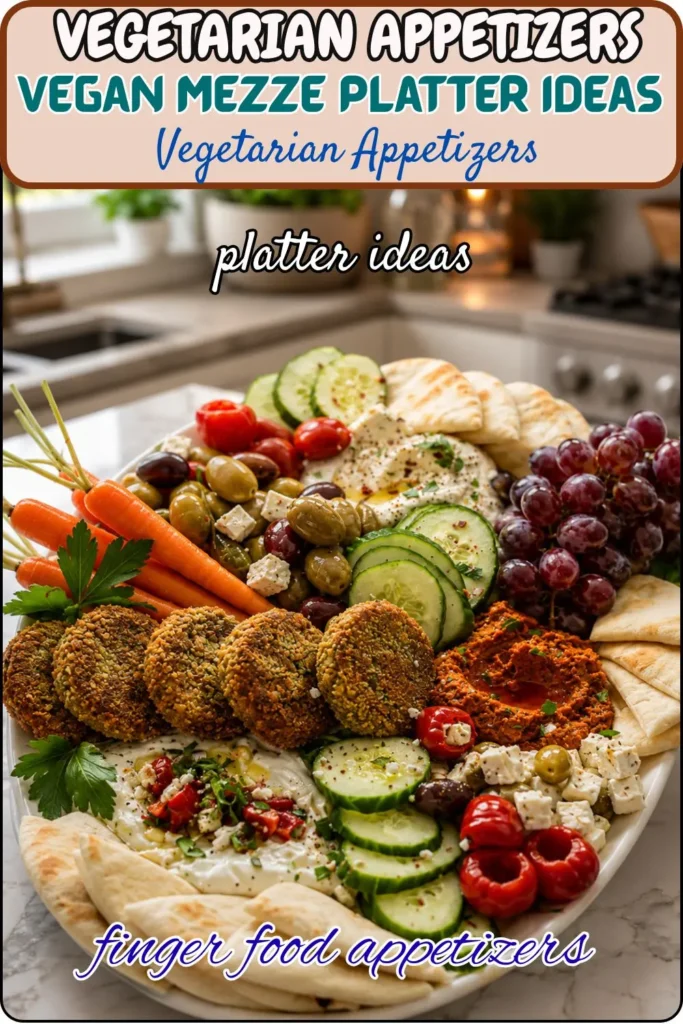
I started building mezze platters at home after one too many disappointing restaurant versions where the hummus arrived in a thimble and the pita was clearly pre-packaged. Once I understood the basic architecture spreads, cheese, savory components, fresh produce, and bread I realized this was genuinely the easiest impressive entertaining format I’d encountered. Ten minutes to assemble, 174 calories per serving, serves 6, and looks like a Mediterranean feast. Let’s build it.
My Recipe Timing and Serving Details
| Detail | Info |
| Prep Time | 10 minutes |
| Cook Time | 0 minutes |
| Total Time | 10 minutes |
| Servings | 6 people |
| Calories Per Serving | 174 kcal |
| Course | Appetizer / Grazing |
| Cuisine | Mediterranean |
| Diet | 100% Vegan |
This mezze platter serves 6 people as a generous appetizer spread or light meal. At 174 calories per serving with 5 grams of protein, 6 grams of fiber, and 8855 IU of Vitamin A (primarily from the carrots), this is a nutritionally impressive spread that satisfies without heaviness. The 10-minute assembly time genuinely covers everything placing dip bowls, arranging vegetables, building falafel stacks, and scattering olives.
Why Vegan Mezze Platters Beat Restaurant Versions Every Time
Here’s the honest comparison: when you order mezze at most restaurants, you get controlled portions of everything because every ingredient has a cost-per-gram calculation behind it. At home, you apply the one principle that makes home cooking better than restaurants generosity.
A proper mezze platter should look abundant. The hummus bowl should be full enough that you never hit the bottom before the pita runs out. The olive pile should be generous enough that guests take handfuls rather than selecting individual olives carefully. The falafel should stack in a pile, not arrive as four lone pieces.
Vegan mezze specifically thrives at home because the ingredient base chickpeas, tahini, olive oil, fresh vegetables, herbs, olives, and bread is both affordable and produces genuinely restaurant-quality results when sourced well. A good grocery store hummus, a quality olive blend, and fresh vegetables are genuinely all you need for a platter that impresses serious food lovers.
The Six Components of a Perfect Vegan Mezze Platter
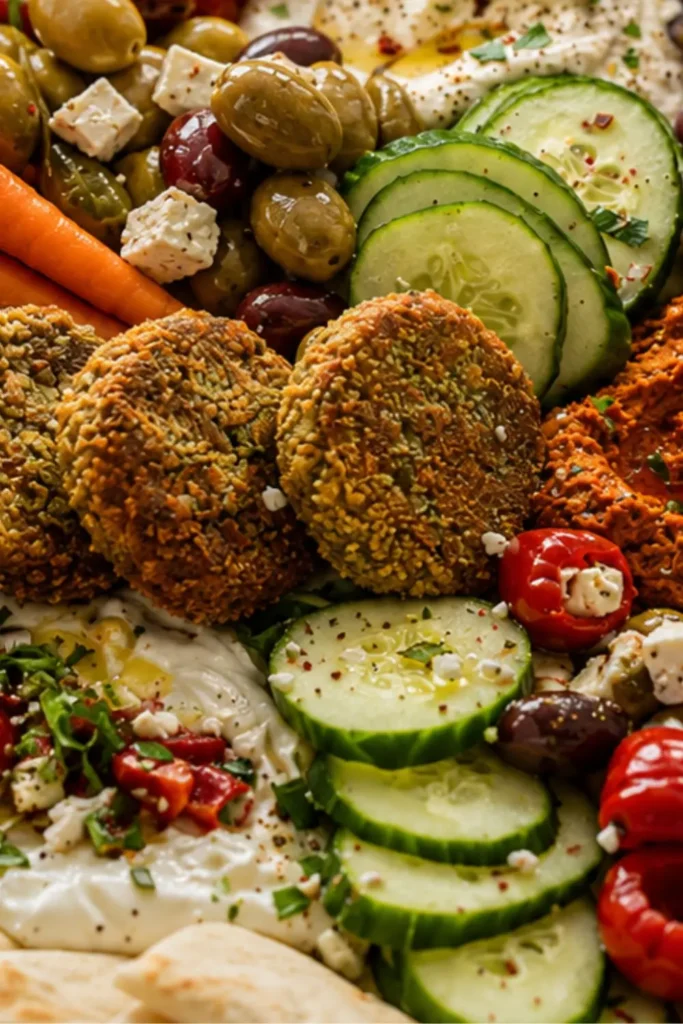
Component 1 – Spreads and Dips (Choose 3-4)
Spreads are the center of the mezze universe. They go into bowls first, placed at different positions across the board to create the triangular spread-out structure that makes mezze platters feel abundant rather than crowded.
The Essential Spreads:
Hummus – non-negotiable. The foundation of any mezze table. A good store-bought hummus (Ithaca, Hope Foods, or Sabra Classic) drizzled with high-quality olive oil and a pinch of smoked paprika elevates dramatically in 30 seconds.
Whipped Vegan Feta -blend vegan feta (Violife works beautifully) with olive oil and lemon juice until silky smooth. The result is a tangy, creamy dip that’s genuinely extraordinary and takes 3 minutes.
Romesco Sauce -roasted red pepper, almonds, garlic, and olive oil blended into a thick, rich sauce. Bold, smoky, and genuinely impressive. Use store-bought romesco if time is short.
Tzatziki – vegan version using thick coconut or cashew yogurt, grated cucumber (squeezed dry), garlic, dill, and lemon. The cucumber must be thoroughly pressed or the tzatziki becomes watery within 20 minutes.
Toum – Lebanese garlic dip made by emulsifying garlic with lemon juice and neutral oil. Intensely garlicky, cloud-white, and genuinely one of the most interesting dips you can put on a mezze table. FYI a little goes a long way.
Olive Tapenade – Kalamata olives, capers, garlic, and olive oil blended coarsely. Works equally well from a good jar or made fresh in 5 minutes.
Bowl placement tip- Place spread bowls first before any other component. They’re your fixed anchor points. Space them across the board rather than clustering them together this creates the visual structure everything else builds around.
Component 2 – Vegan Cheese (Choose 1-2)
Traditional mezze always includes cheese– and the vegan versions available now produce genuinely excellent results on a Mediterranean-style board:
Vegan Feta Cubes (Marinated) – cube Violife Feta or store-bought vegan feta and marinate in olive oil, dried oregano, lemon zest, chili flakes, and fresh thyme for at least 1 hour. The marinated oil soaks into the feta and the result is genuinely better than plain feta straight from the package. Spoon the marinated cubes with some of the herb oil directly onto the board.
Vegan Mozzarella Pearls – small mozzarella-style vegan cheese balls in a simple brine. Available from brands like Violife. They look beautiful scattered across the board and pair naturally with tomatoes and basil.
Cashew Cheese Rounds – homemade or store-bought (Miyoko’s makes excellent varieties) provide a more sophisticated cheese element with genuinely complex flavor that elevates the entire platter.
Component 3 -Savory Components
These are the elements that give mezze its depth and variety – the bites between dips that keep grazing interesting for hours:
Kalamata Olives (or mixed olive blend) – Castelvetrano, Kalamata, and nicoise olives together in a bowl create color variety and flavor range. The buttery Castelvetrano alongside briny Kalamata alongside the more delicate nicoise makes every handful slightly different.
Peppadew Peppers – sweet-pickled red peppers with a gentle heat. Their round shape and vivid red color make them visually distinctive and their flavor sweet, tangy, mildly spicy fills a specific flavor gap that no other mezze component covers.
Marinated Artichokes – the underrated mezze component that always generates compliments. Store-bought marinated artichoke hearts from a good quality jar are genuinely excellent and require zero preparation.
Crispy Chickpeas– oven-roasted or air-fried chickpeas seasoned with cumin, smoked paprika, and sea salt provide the crunchy, snackable element that a mezze table needs. They add textural variety that crackers and bread alone don’t provide.
Dolmas (Stuffed Grape Leaves) – store-bought grape leaves stuffed with rice and herbs are completely vegan and genuinely a mezze essential. Their distinctive shape creates visual variety on the board.
Falafel – the protein centerpiece of a vegan mezze. Make from scratch or use quality frozen (Trader Joe’s, Ithaca) and serve warm alongside the cold dips. The contrast of warm falafel with cold hummus and tzatziki is specifically what makes the mezze combination so satisfying.
Mixed Nuts– Marcona almonds specifically (the Spanish-style fried almonds) are the most appropriate nut choice for a Mediterranean mezze table. Walnuts and pine nuts also fit the flavor profile naturally.
Component 4 – Fresh Produce
Fresh vegetables and fruit are what makes a vegan mezze platter specifically beautiful -the vibrant colors, the variety of textures, and the freshness create visual impact that makes the board look genuinely abundant:
Essential Vegetables:
- English cucumber sliced on the bias – diagonal slices create longer, more elegant pieces and a larger surface area for dipping
- Whole carrots or thick carrot sticks – the whole carrot with some greenery intact is a visual statement; thick-cut sticks provide the structure needed for thick dips
- Cherry tomatoes – whole or halved, mixed colors (red, yellow, orange) if available
- Mini sweet peppers – sliced into rings, adds color and natural sweetness
Fresh Fruits:
- Grape clusters – drape naturally across the board and look genuinely abundant
- Fresh figs when in season – halved to show the interior, the most elegant Mediterranean fruit
- Pomegranate seeds -scattered across the board, they add jewel-like visual interest and tart sweetness
- Medjool dates – rich, caramel-sweet, classically Mediterranean, and genuinely delicious alongside salty feta
Component 5 – Bread (Essential)
Bread is the delivery vehicle -for every dip, spread, and topped component on the board choose at least two varieties for texture and flavor variety:
Mini Pita Bread – warmed briefly in a 300°F oven and quartered, pita is the authentic Mediterranean bread choice. Warm pita tears into natural scoops that work beautifully for all the dips.
Crostini – toasted baguette slices that provide a firmer, crunchier alternative to soft pita. Their flat surface works well for topped combinations (hummus + roasted pepper, tzatziki + cucumber slice).
Lavash or Flatbread – thinly crispy flatbread that produces a different textural experience from pita. Available at most grocery stores near the pita bread.
The bread replenishment rule- Keep extra bread warm in a cloth-wrapped basket beside the board rather than piling all of it on at once. Bread that sits on a board for more than 30 minutes loses its warmth and becomes slightly stale. Replenish in small amounts throughout the gathering.
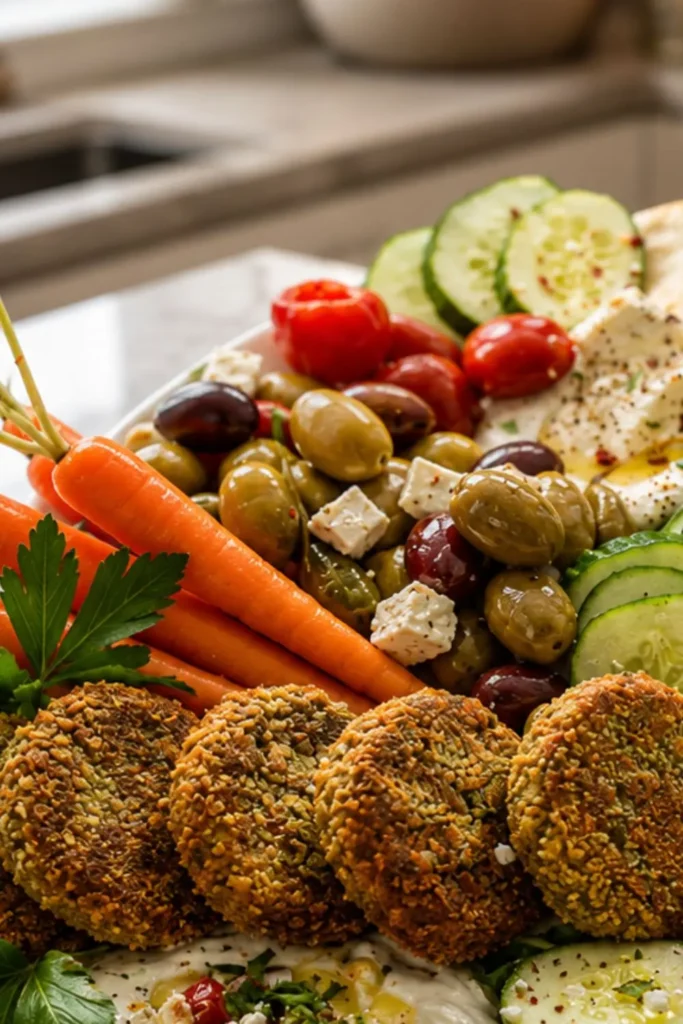
Step by Step You’ll NeedFor Vegan Mezze Platter Ideas
Step 1 – Position the Bowls First
Place your 3-4 dip bowls in a spread-out triangle pattern across the board not clustered together, not perfectly symmetrical, but deliberately spaced so each bowl anchors a different area of the board. Every other component builds outward from these fixed points.
Step 2 – Add Larger Items
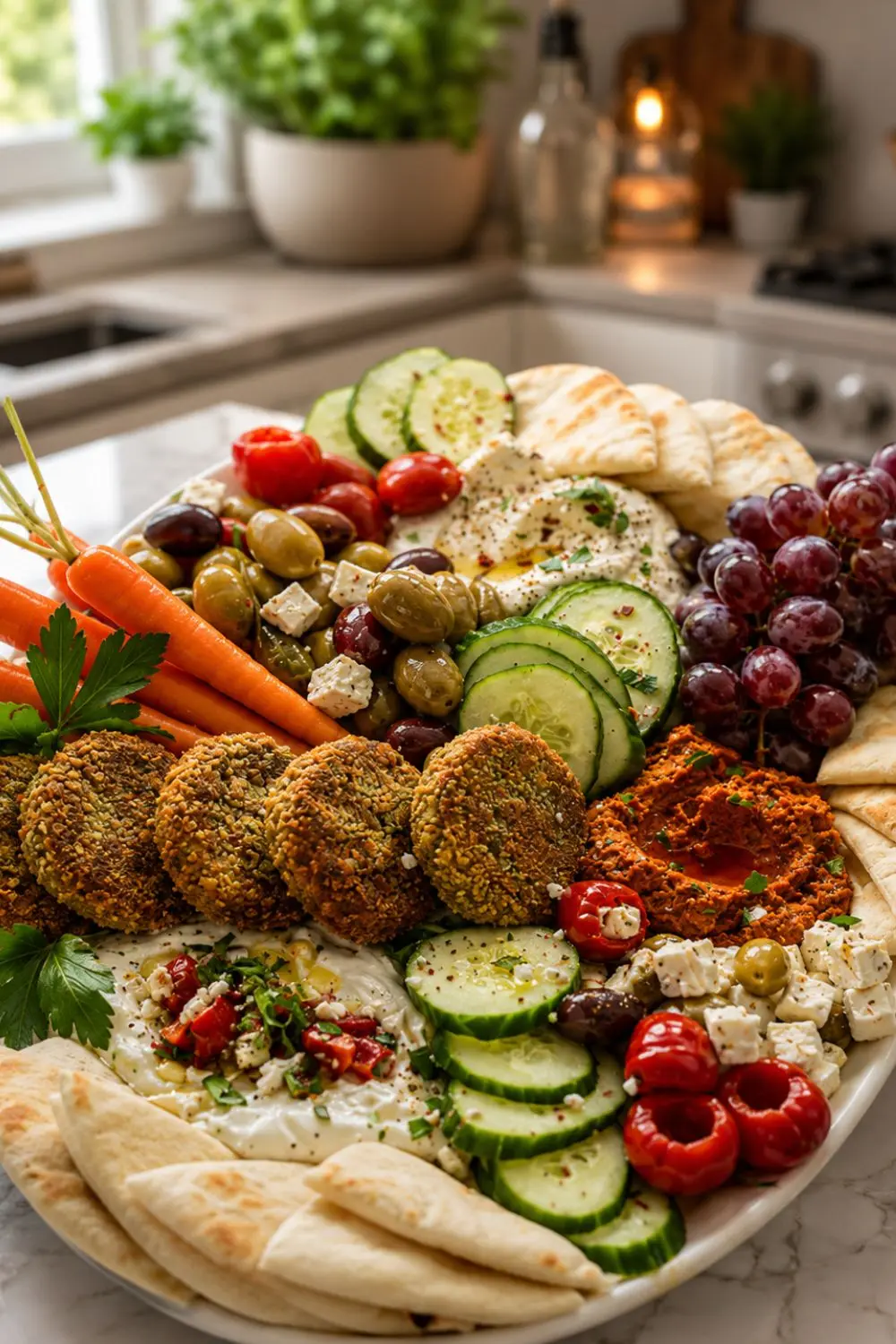
Next, place larger items around and between the bowls:
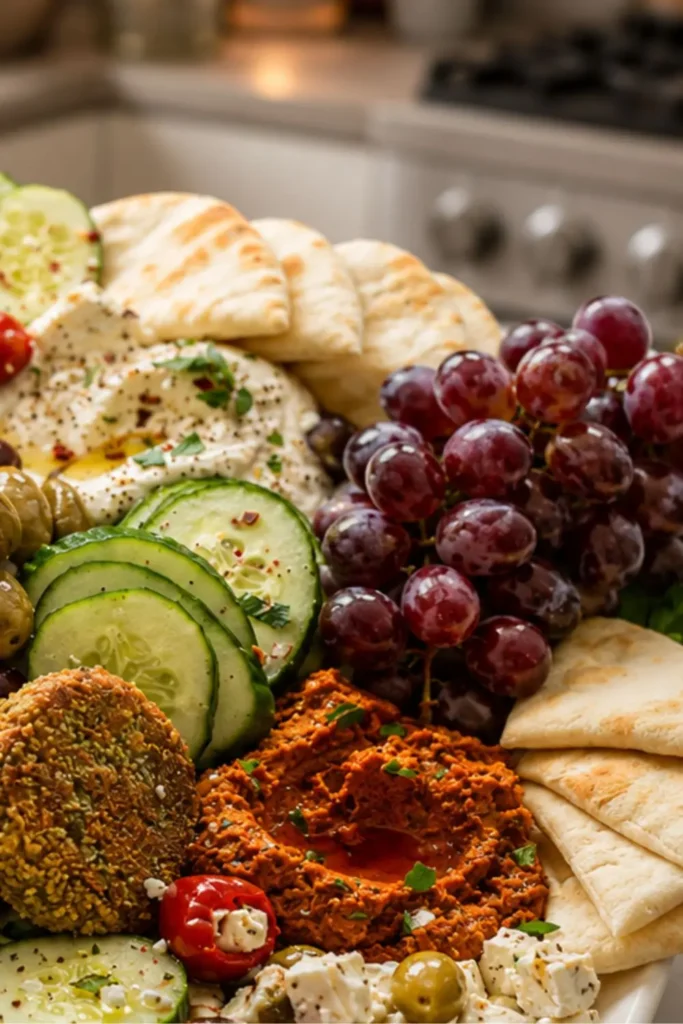
- Falafel stacked near the hummus bowl (its natural pairing)
- Whole carrots fanned across one section
- Grape clusters draped in their natural hanging position
- Pita quarters in a fanned stack near the spreads
Step 3 – Fill with Medium Components
Add the cheese, dolmas, marinated artichokes, and peppadew peppers distributed across the remaining space. These should appear in multiple areas of the board rather than grouped together visual variety throughout creates the sense of abundance.
Step 4 – Fill Gaps with Smaller Items
Scatter olives, crispy chickpeas, cherry tomatoes, and nuts in the remaining spaces. The recipe specifically advises placing these sporadically rather than in precise groupings organic scattering looks more natural and abundant than deliberately arranged clusters.
Step 5 – Garnish
Fresh parsley sprigs or whole herb bunches tucked into gaps add green color and Mediterranean fragrance. A drizzle of high-quality olive oil across the hummus bowl and the feta cubes adds the finishing touch that makes everything look genuinely restaurant-quality.
Try It Next recipe
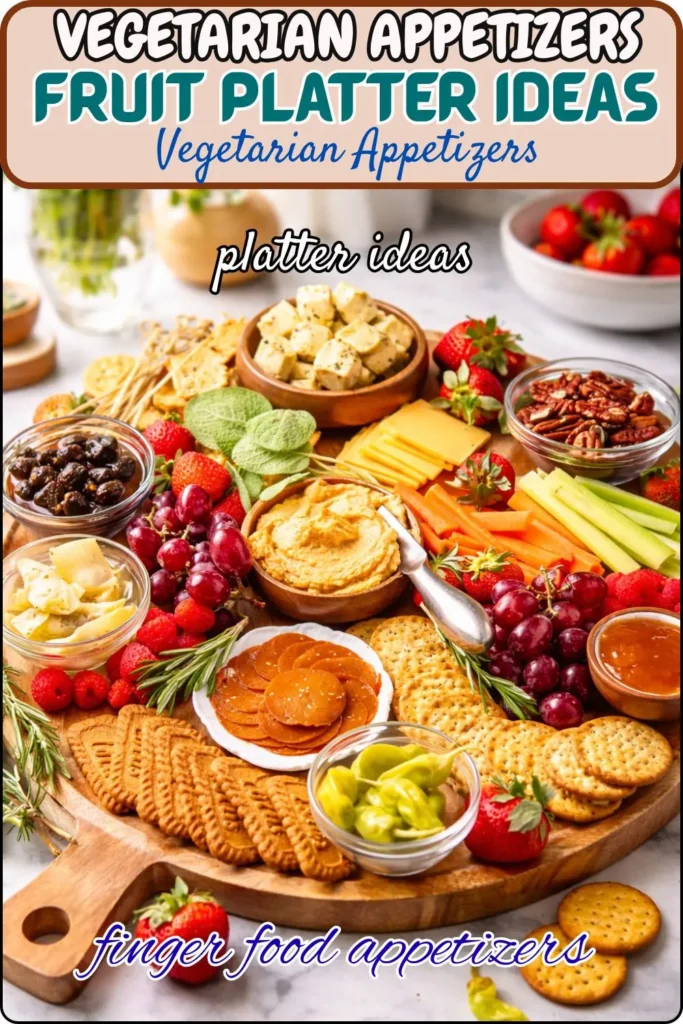
Vegan Cheese and Fruit Platter Ideas
The Most Important Advice: Don’t Put Everything Out at Once
Keep reserve quantities easily accessible and replenish the board throughout the gathering. A mezze board that always looks full creates a completely different experience than one that depletes to empty sections while guests are still grazing. This is the single piece of advice that separates a genuinely excellent mezze presentation from a merely good one.
Themed Vegan Mezze Platter Ideas
Classic Greek-Inspired
Hummus + whipped vegan feta + tzatziki + Kalamata olives + vegan feta marinated cubes + cucumber + cherry tomatoes + warm pita + dolmas + falafel
Lebanese-Inspired
Hummus + toum + baba ganoush + fattoush vegetables + crispy chickpeas + pomegranate seeds + warm pita + fresh mint + walnuts
Spanish-Inspired
Romesco + olive tapenade + Marcona almonds + Castelvetrano olives + roasted red peppers + crostini + marinated artichokes + grapes
Autumn Harvest
Butternut squash hummus + whipped vegan feta + figs + dates + walnuts + pomegranate + warm pita + olives + crispy chickpeas
Equipment You’ll Need For Vegan Mezze Platter Ideas
- Large serving board or platter – at least 18×24 inches for 6 people
- 4-5 small bowls or ramekins -for spreads, olives, and crispy chickpeas
- Small serving spoons – one per spread bowl
- Small fork or appetizer picks – for olives and artichokes
- Serving tongs – for falafel and dolmas
Nutrition Information Per Serving
At 174 calories per serving for 6 servings:
| Nutrient | Per Serving |
| Calories | 174 kcal |
| Carbohydrates | 25g |
| Protein | 5g |
| Fat | 8g |
| Fiber | 6g |
| Sodium | 737mg |
| Vitamin A | 8,855 IU |
| Vitamin C | 9mg |
8,855 IU of Vitamin A per serving primarily from the generous quantity of carrots represents approximately 176% of the daily recommended intake from a single appetizer serving. 6 grams of fiber and 5 grams of protein from the hummus, chickpeas, and vegetables working together. The sodium reflects the olives, feta, and pickled components that give Mediterranean food its characteristic savory depth.
My Final Thoughts
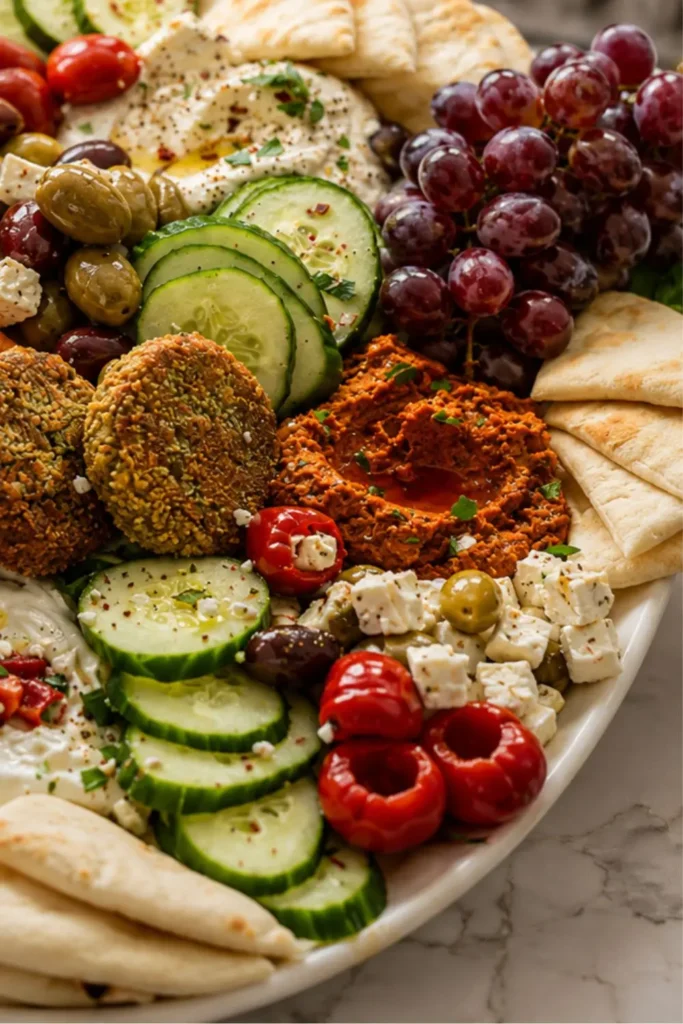
Vegan Mezze Platter Ideas That Are Better Than Any Restaurant genuinely delivers on its title 10 minutes of assembly, 174 calories per serving, 6 people fed abundantly, and a table presentation that makes everyone immediately reach for the pita.
Quality ingredients matter more here than technique. Good hummus, proper olives, fresh vegetables, and warm pita do 90% of the work. Your arrangement does the remaining 10%.
Build it this weekend. Eat it better than you’ve eaten mezze at any restaurant. Then accept the genuine compliments.
Vegan Mezze Platter Ideas
Ingredients
Equipment
Method
- Step 1 – Position the Bowls First
- Place your 3-4 dip bowls in a spread-out triangle pattern across the board not clustered together, not perfectly symmetrical, but deliberately spaced so each bowl anchors a different area of the board. Every other component builds outward from these fixed points.
- Step 2 – Add Larger Items
- Next, place larger items around and between the bowls:
- Falafel stacked near the hummus bowl (its natural pairing)
- Whole carrots fanned across one section
- Grape clusters draped in their natural hanging position
- Pita quarters in a fanned stack near the spreads
- Step 3 – Fill with Medium Components
- Add the cheese, dolmas, marinated artichokes, and peppadew peppers distributed across the remaining space. These should appear in multiple areas of the board rather than grouped together visual variety throughout creates the sense of abundance.
- Step 4 – Fill Gaps with Smaller Items
- Scatter olives, crispy chickpeas, cherry tomatoes, and nuts in the remaining spaces. The recipe specifically advises placing these sporadically rather than in precise groupings organic scattering looks more natural and abundant than deliberately arranged clusters.
- Step 5 – Garnish
- Fresh parsley sprigs or whole herb bunches tucked into gaps add green color and Mediterranean fragrance. A drizzle of high-quality olive oil across the hummus bowl and the feta cubes adds the finishing touch that makes everything look genuinely restaurant-quality.
Notes
Nutrition Information Per Serving
At 174 calories per serving for 6 servings:| Nutrient | Per Serving |
| Calories | 174 kcal |
| Carbohydrates | 25g |
| Protein | 5g |
| Fat | 8g |
| Fiber | 6g |
| Sodium | 737mg |
| Vitamin A | 8,855 IU |
| Vitamin C | 9mg |

Hi — I’m Rachel. I’m a wife, a mom, and a home cook who believes that food should bring comfort, joy, and compassion to the table. I live with my family — two hungry little foodies who are my most honest recipe testers — and together we’ve built a kitchen culture that’s all about good food that happens to be 100% vegan. I started this blog because I wanted a place to share the recipes that keep our days moving, the dishes that make weeknights feel a little easier, and the meals that become our little family traditions.