
Some smoothies taste like nutrition. This one tastes like a beach. Coconut Cream Mango Smoothie is an Indian-inspired mango lassi-style smoothie built from mango puree, non-dairy milk, cardamom, and vanilla blended to a light, airy, genuinely luscious consistency that works as a breakfast, a snack, or an actual dessert with vegan whipped cream on top. It serves 6 people at 122 calories per serving, takes 5 minutes, and produces something that makes every other morning drink feel slightly inadequate by comparison.
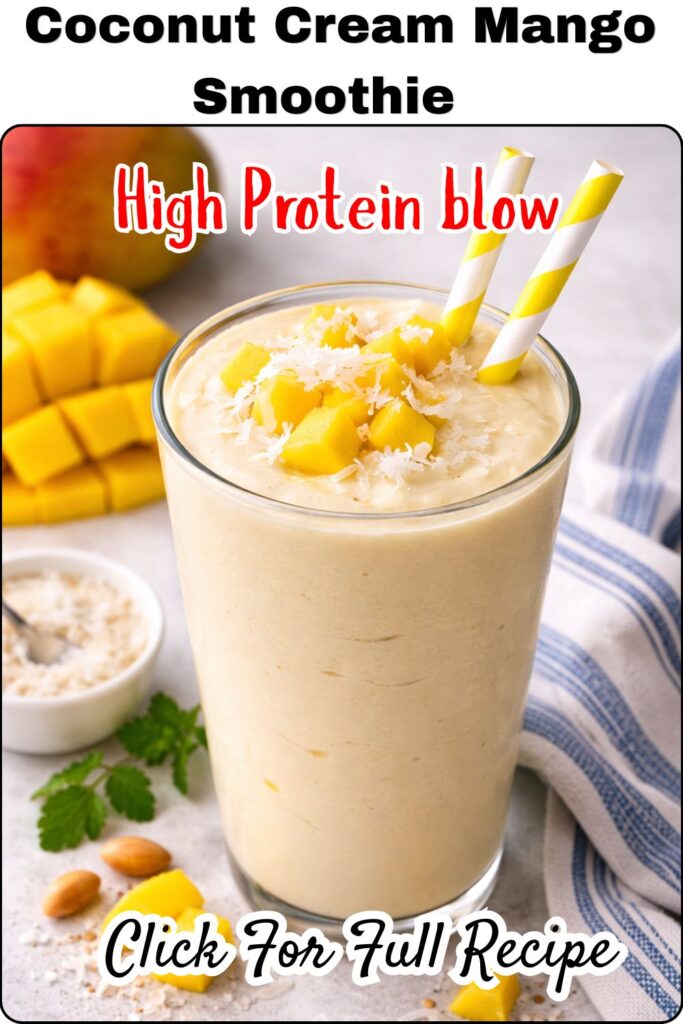
I discovered this style of mango smoothie specifically through Indian grocery stores, where canned mango puree (Alphonso variety specifically) sits on shelves at a fraction of the price of any Western specialty food store. That discovery changed my breakfast game permanently. The combination of mango’s intensely tropical sweetness with cardamom’s floral warmth creates a flavor pairing that’s genuinely one of the most beautiful in any cuisine and it takes five minutes to produce.
My Recipe Timing and Serving Details
| Detail | Info |
| Prep Time | 3 minutes |
| Blend Time | 2 minutes |
| Total Time | 5 minutes |
| Servings | 6 servings |
| Calories Per Serving | 122 kcal |
| Course | Breakfast / Snack / Dessert |
| Diet | 100% Vegan |
This coconut cream mango smoothie serves 6 people from one blender batch making it specifically excellent for family breakfasts, brunch gatherings, or meal prep where you want multiple servings ready simultaneously. At 122 calories per serving with 4 grams of protein, 39mg of Vitamin C, and 175mg of calcium, this is a nutritionally respectable light breakfast or substantial snack.
Why This Tastes Different from Every Other Mango Smoothie
Most mango smoothies follow the same template: frozen mango, some plant milk, maybe some yogurt. They taste fine pleasant, fruity, adequately mango-flavored. This coconut cream mango smoothie tastes genuinely extraordinary, and two specific additions create that difference:
Cardamom is the ingredient that most Western smoothie recipes don’t include and absolutely should. Ground cardamom is the dominant spice in Indian chai and mango lassi, and its floral, slightly citrusy, warm aromatic quality amplifies mango’s tropical character in a way that no other spice does. A small quantity ½ to 1 teaspoon creates a depth of flavor that makes people ask what’s in this before they’ve identified the spice themselves.
The aeration technique – opening the blender’s fill cap after the initial blend to let air incorporate for 30 additional seconds creates a noticeably lighter, slightly foamy texture that elevates this from a standard thick smoothie to something that resembles a proper mango lassi in both flavor and mouthfeel. This small technique adjustment makes a real difference in the finished texture quality.
Full Ingredient List
A beautifully simple list:
- 2 cups mango puree , or 2 heaping cups of fresh or frozen mango chunks
- 3 cups non-dairy milk , soy cashew, or oat milk recommended
- 2 tablespoons sugar (or sweetener of choice)
- ½ to 1 teaspoon ground cardamom
- 1 teaspoon pure vanilla extract
For dessert serving (optional):
- Vegan whipped cream
- Vegan vanilla ice cream
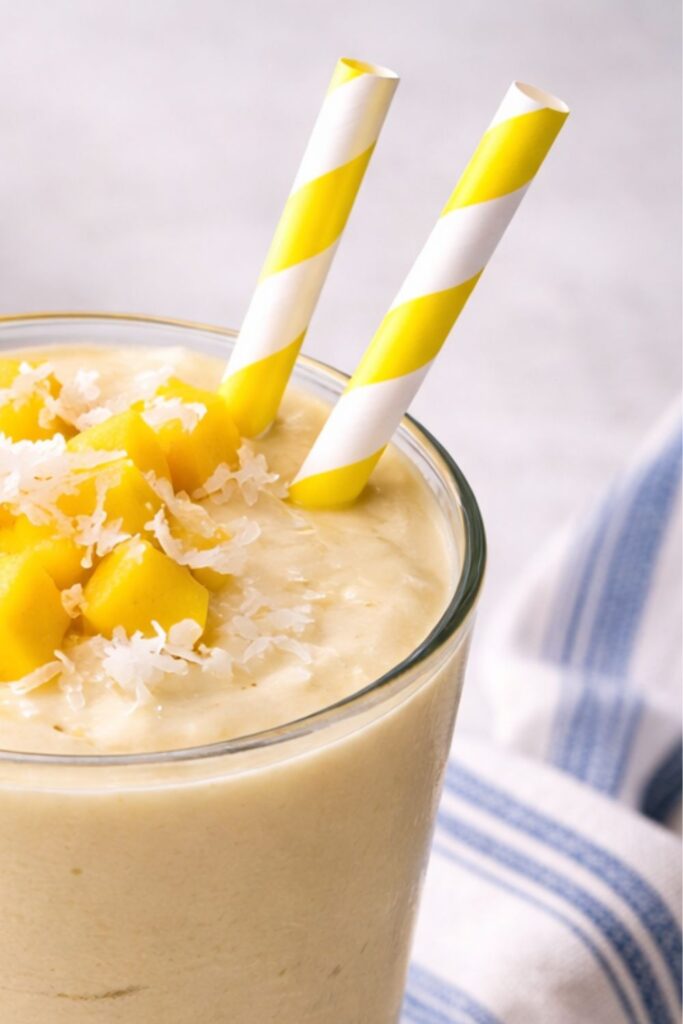
The Mango Puree Deep Dive Your Best Source Option
The recipe recommends mango puree specifically and suggests checking Indian grocery stores for better pricing. This is genuinely excellent advice worth expanding on.
Canned Mango Puree The Most Consistent Option
Alphonso mango puree from Indian grocery stores is the specific product that makes this smoothie taste extraordinary. Alphonso mangoes the “King of Mangoes” from Maharashtra, India have an intensely concentrated, almost honey-sweet flavor with floral notes that Ataulfo, Tommy Atkins, or Haden mangoes can’t fully replicate.
Best brands:
- Ratna Brand Alphonso Mango Pulp – widely available at Indian grocery stores, excellent quality, very affordable
- Deep Brand Mango Pulp – consistently good, available at many Indian and Asian grocery stores
- Swad Mango Pulp – another reliable option with good flavor
Pricing reality- A 30 oz can of Alphonso mango pulp from an Indian grocery store typically costs $3-5. The equivalent product from a specialty Western grocery store or online can cost $8-15. The product is identical the location of purchase changes the price dramatically.
Fresh Mango Peak Season Option
Fresh Alphonso mangoes appear in Indian grocery stores from approximately March through June. Fresh peak-season Alphonso mango produces the most vibrant, complex flavor of any option. Outside this season, canned puree is genuinely superior to fresh off-season mangoes.
How to prepare fresh mango for the blender- Cut the mango flesh from the seed, roughly dice, and add directly to the blender. No need to puree separately.
Frozen Mango Chunks The Year-Round Reliable Option
Frozen mango chunks (Ataulfo or generic “mango” from most grocery stores) work adequately and produce a thicker, colder smoothie than the canned puree version. The flavor is less intense than Alphonso puree but the convenience is high.
If using frozen mango- Use 2 heaping cups of frozen chunks and reduce or eliminate added sweetener frozen mango is often slightly less sweet than Alphonso puree, but taste before adding sugar.
FYI if you’ve never tried Alphonso mango puree specifically, it’s worth seeking out an Indian grocery store just for this ingredient. The flavor difference is immediately obvious and explains why Indian mango lassi is so specifically beloved.
The Non-Dairy Milk Decision Three Recommended Options
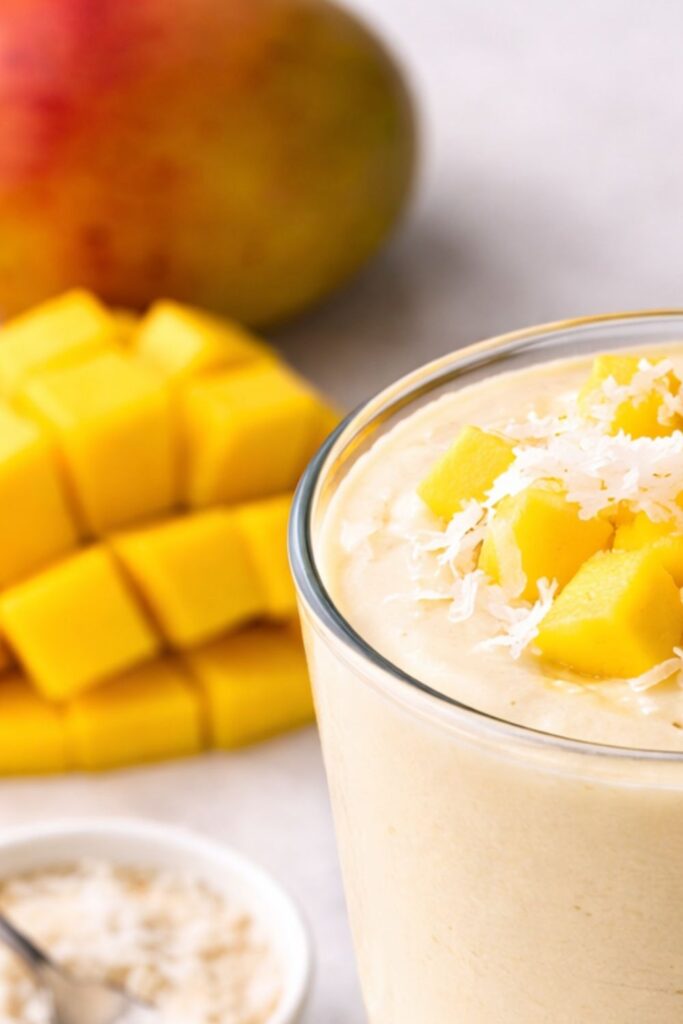
The recipe specifically recommends soy, cashew, or oat milk over other plant milk options. Here’s why each works and which situation each suits best:
Soy Milk The Most Balanced Choice
Protein content- Soy milk provides approximately 7-8 grams of protein per cup the highest of any plant milk. For a 3-cup recipe serving 6, this adds meaningful protein per serving.
Flavor- Soy milk has a relatively neutral flavor with a slight creaminess that works well with the dominant mango character. It doesn’t compete with the cardamom and vanilla.
Best for- Nutrition-focused morning smoothies where protein content matters.
Cashew Milk The Richest, Creamiest Choice
Texture- Cashew milk produces the thickest, most luxurious smoothie of any plant milk option. Its higher fat content from the cashews creates a consistency that most closely resembles the full-fat dairy milk of a traditional mango lassi.
Flavor- Very neutral, slightly sweet, doesn’t interfere with the mango-cardamom character at all.
Best for-Dessert presentations or when you want the richest possible texture. IMO this is the best choice if you’re serving this as a dessert with vegan whipped cream.
Oat Milk The Most Naturally Sweet Choice
Flavor- Oat milk’s natural grain sweetness complements mango’s tropical sweetness in a way that creates the most harmonious flavor combination. It’s slightly sweeter than soy or cashew milk, which means you can reduce the added sugar when using oat milk.
Texture- Barista-edition oat milk creates the creamiest result; standard oat milk is slightly thinner.
Best for- Morning smoothies where you want something that tastes naturally balanced and sweet without heavy reliance on added sugar.
Milks to Avoid for This Recipe
Almond milk- Works adequately but produces the thinnest result of any common plant milk option. The slight almond flavor can also compete with the cardamom in ways the other milks don’t.
Coconut milk (from a can)- Genuinely excellent in this recipe but transforms the character significantly the coconut flavor competes with the mango. Use if you specifically want a mango-coconut flavor rather than mango-cardamom.
Equipment You’ll Need For Coconut Cream Mango Smoothie
Primary Equipment
- Blender – the only piece of equipment required. This recipe is specifically designed as a pure blender operation.
High-speed blender (Vitamix, Blendtec) – produces the smoothest, most aerated result. The aeration technique (opening the fill cap while blending) works most safely on high-speed blenders with secure-fitting caps.
Standard blender – works well for this recipe since the ingredients are all soft and liquid-friendly. Canned mango puree specifically blends more easily than frozen chunks, making this recipe accessible for lower-powered blenders.
Important safety note for the aeration step- When opening the fill cap while blending, hold a folded kitchen towel over the opening to catch any splatter. Start on low speed before opening the technique specifically involves letting air IN, not spraying smoothie out.
Serving Equipment
- 6 glasses – for the full batch serving
- Pitcher (optional) – if you want to pour from a central vessel
- Whipped cream dispenser or spoon – if serving the dessert version
Step-by-Step Instructions For Coconut Cream Mango Smoothie
Step 1 – Add All Ingredients
Place the mango puree (or fresh/frozen mango chunks), non-dairy milk, sugar, cardamom, and vanilla extract in the blender. For the best blend sequence, add the liquid (non-dairy milk) first, then the mango puree, then the remaining ingredients.
The cardamom quantity- The recipe offers ½ to 1 teaspoon, which is a meaningful range ½ teaspoon produces a subtle, background cardamom warmth; 1 teaspoon produces a prominent, clearly identifiable cardamom character. Start with ½ teaspoon if you’re unfamiliar with cardamom’s intensity, and increase on subsequent batches.
Step 2 – Initial Blend
Blend on high speed for approximately 1 minute until everything is fully combined and smooth. The smoothie at this stage should be uniformly orange-yellow, completely smooth, and pourable.
Step 3 – The Aeration Step
This is the technique that makes this smoothie genuinely special. Carefully open the blender’s fill cap (the small cap in the center of the blender lid, not the full lid) while the blender runs. Place a folded kitchen towel over the opening. Allow the blender to run for an additional 30 seconds with the cap open.
What happens- Air enters the blender through the open cap and incorporates into the smoothie, creating a slightly aerated, lighter texture with a gentle frothiness. The smoothie increases slightly in volume and takes on a lighter, more fluffy quality.
The result- A smoothie that’s noticeably lighter and airier than standard blended smoothies — closer to the whipped quality of a properly made mango lassi.
Step 4 – Pour and Serve
Pour immediately into glasses while the aerated texture is at its most pronounced. The lightness settles somewhat over time drinking within 5 minutes of the aeration step preserves the best texture.
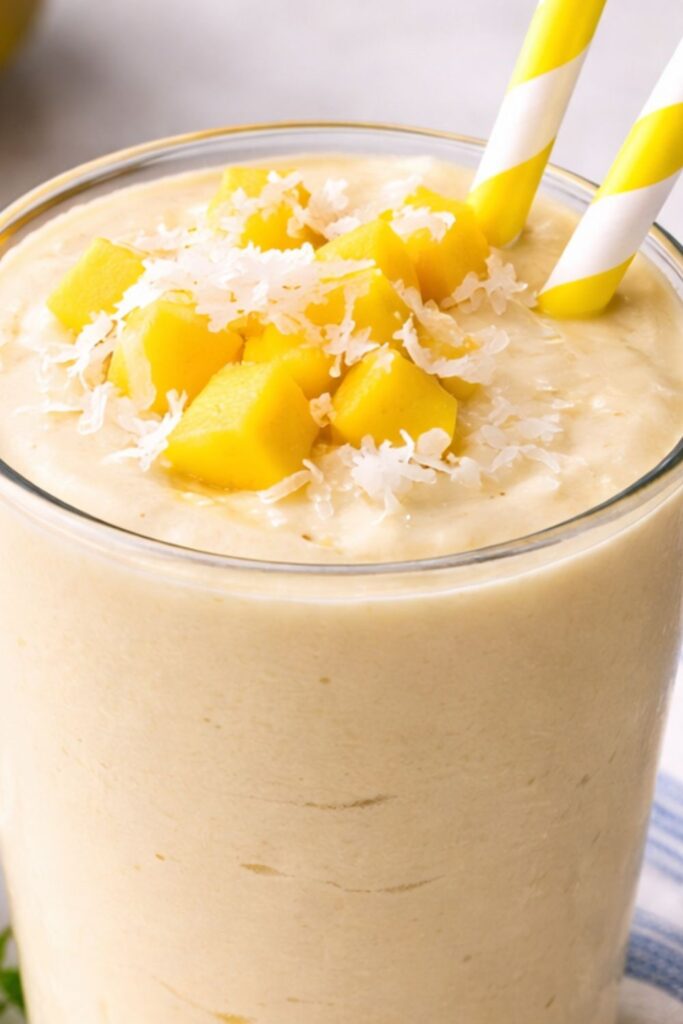
For the dessert version, Top with a generous dollop of CocoWhip, TruWhip Vegan, or freshly whipped coconut cream. Add a small scoop of vegan vanilla ice cream alongside or a light dusting of cardamom on the whipped cream surface for a beautiful finished presentation.
The Cardamom Question Getting the Quantity Right
Cardamom is the ingredient that makes or breaks this smoothie’s connection to the Indian mango lassi tradition it draws from, and understanding how to use it correctly matters:
Ground Cardamom vs. Freshly Ground Pods
Ground cardamom (pre-packaged) is what the recipe calls for and what most home cooks have available. Good quality pre-ground cardamom from a well-stocked spice store or Indian grocery store produces excellent results.
Freshly ground cardamom seeds (removed from green cardamom pods and ground in a spice grinder or mortar) produces a noticeably more vibrant, aromatic result. The essential oils in cardamom seeds begin oxidizing once ground fresh-ground cardamom has significantly more aromatic complexity than pre-ground cardamom that’s been sitting in a jar for months.
If you want to elevate this smoothie further, Buy green cardamom pods (very affordable at Indian grocery stores), crack them open, remove the seeds, and grind them fresh for each batch. The fragrance improvement is immediately noticeable.
Storage of Ground Cardamom
Ground cardamom loses potency faster than most spices. Store in an airtight container away from heat and light, and replace every 6 months. Old, faded cardamom is one of the most common reasons a smoothie “seems like it’s missing something” the spice simply has no aroma left to contribute.
Still Hungry, Try It Next recipe
Sweetener Options Matching to Your Mango
The recipe calls for 2 tablespoons of sugar, but the correct sweetener quantity genuinely depends on your mango’s natural sweetness:
If using Alphonso mango puree- The puree is already sweet. Taste before adding full sugar quantity you may only need 1 tablespoon or none at all, depending on the specific brand.
If using frozen mango chunks- Typically less sweet than Alphonso puree. The full 2 tablespoons is usually appropriate, sometimes more for very tart frozen mango.
Sweetener options and their flavor impact:
- Granulated white sugar – completely neutral, lets mango and cardamom lead
- Coconut sugar – adds a slight caramel undertone that’s interesting against tropical mango
- Maple syrup – adds warm maple flavor that works well with cardamom but may compete slightly with mango
- Agave nectar – very neutral, similar sweetness intensity to white sugar, slightly more liquid
- Medjool dates (2-3 dates) – blend directly with other ingredients; adds sweetness, fiber, and a caramel depth that’s genuinely excellent in this smoothie
Serving Variations From Breakfast to Dessert
Breakfast Service (6 people)
Serve in regular glasses immediately after blending. The 122-calorie per serving profile makes this appropriate as a light breakfast alongside toast or fruit, or as a refreshing morning drink for people who prefer something light.
Brunch Service
Serve in taller glasses with ice cubes and a cardamom-dusted whipped cream topping. Garnish with a slice of fresh mango on the glass rim for visual impact.
Dessert Service
Reduce the milk slightly (use 2½ cups instead of 3) for a thicker consistency. Serve in dessert cups or bowls topped with vegan vanilla ice cream and vegan whipped cream. A sprinkle of ground cardamom on top of the whipped cream creates a visual and flavor connection to the smoothie’s dominant spice.
Mango Lassi Mocktail Service
Reduce sugar and add a squeeze of fresh lemon juice for a more traditional lassi tartness. Serve in tall glasses over ice with a cardamom stick or whole green cardamom pod as garnish. This version pairs beautifully with Indian-inspired meals.
Nutrition Information Per Serving
At 122 calories per serving for 6 servings:
| Nutrient | Per Serving |
| Calories | 122 kcal |
| Carbohydrates | 21g |
| Protein | 4g |
| Fat | 3g |
| Fiber | 2g |
| Sugar | 19g |
| Vitamin A | 1,383 IU |
| Vitamin C | 39mg |
| Calcium | 175mg |
| Potassium | 312mg |
1,383 IU of Vitamin A per serving approximately 28% of the daily recommended intake from the mango’s beta-carotene content. 39mg of Vitamin C per serving approximately 43% of the daily recommended intake. 175mg of calcium from the fortified plant milk.
At only 122 calories per serving, this is one of the lightest healthy breakfast smoothies in this series that still delivers meaningful nutritional value making it particularly appropriate for larger breakfast spreads where multiple dishes are served.
Storage
- Drink immediately – for the best aerated texture
- Refrigerator- Store covered for up to 24 hours the aerated texture settles but the flavor remains excellent; stir before serving
- Freezer- Pour into popsicle molds for mango cardamom smoothie pops genuinely spectacular as a summer treat
My Final Thoughts
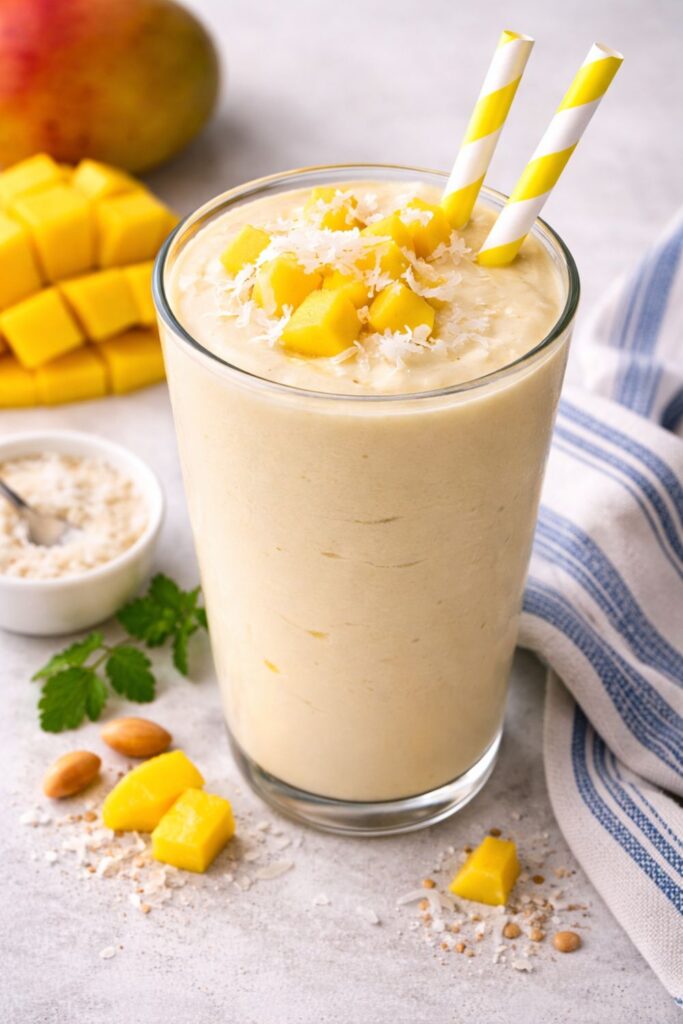
Coconut Cream Mango Smoothie is the healthy breakfast smoothie that specifically transports you 122 calories per serving, 6 people fed from one blender, Vitamin A and C in every glass, and a cardamom-mango-vanilla flavor combination that tastes like it came from a proper Indian restaurant.
Find Alphonso mango puree at an Indian grocery store. Use cashew milk for the richest texture. Don’t skip the aeration step. Go generous with the cardamom.
Then pour six glasses, gather your people, and drink something that makes morning genuinely worth starting.
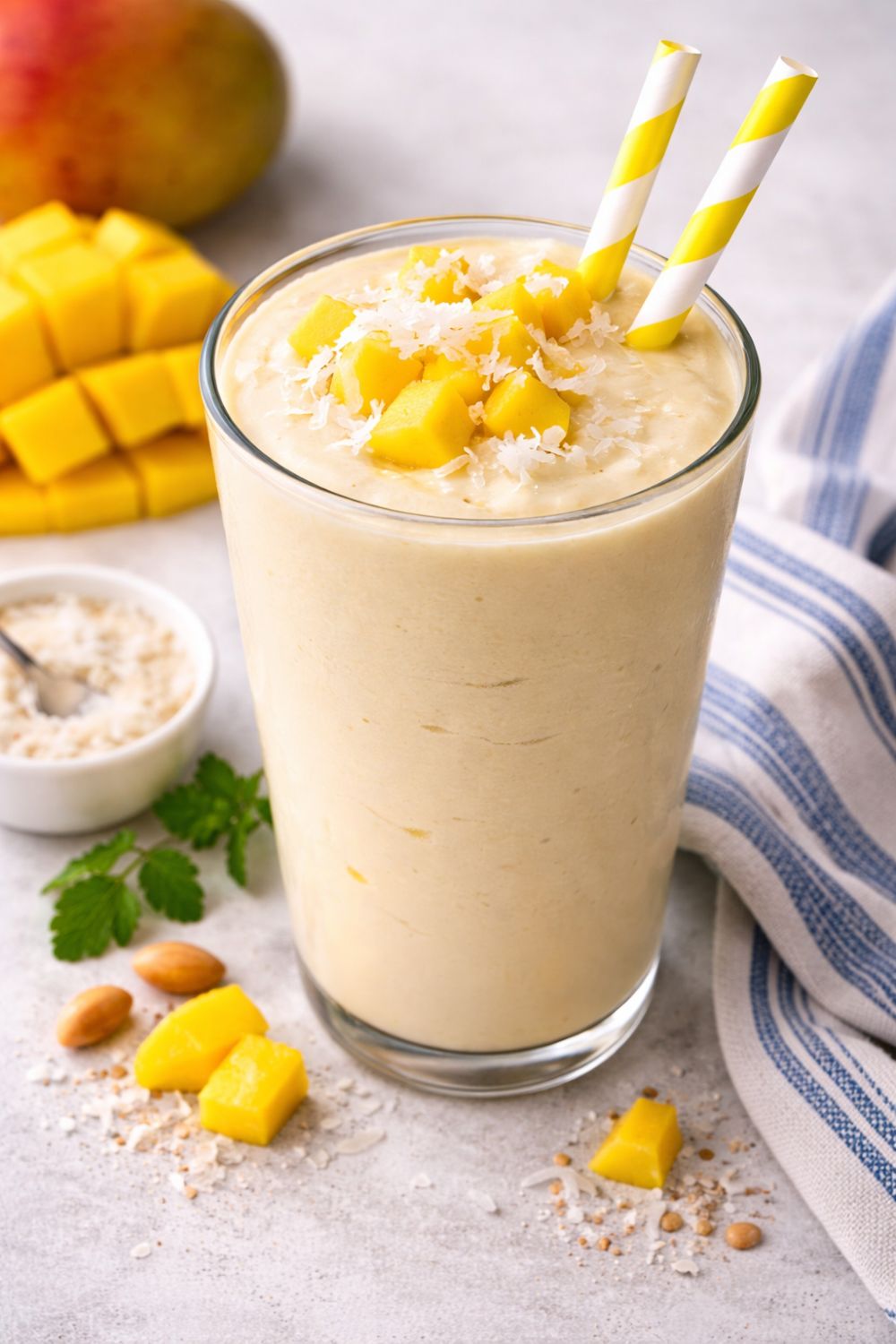
Coconut Cream Mango Smoothie
Ingredients
Equipment
Method
- Step 1 – Add All Ingredients
- Place the mango puree (or fresh/frozen mango chunks), non-dairy milk, sugar, cardamom, and vanilla extract in the blender. For the best blend sequence, add the liquid (non-dairy milk) first, then the mango puree, then the remaining ingredients.
- The cardamom quantity- The recipe offers ½ to 1 teaspoon, which is a meaningful range ½ teaspoon produces a subtle, background cardamom warmth; 1 teaspoon produces a prominent, clearly identifiable cardamom character. Start with ½ teaspoon if you’re unfamiliar with cardamom’s intensity, and increase on subsequent batches.
- Step 2 – Initial Blend
- Blend on high speed for approximately 1 minute until everything is fully combined and smooth. The smoothie at this stage should be uniformly orange-yellow, completely smooth, and pourable.
- Step 3 – The Aeration Step
- This is the technique that makes this smoothie genuinely special. Carefully open the blender’s fill cap (the small cap in the center of the blender lid, not the full lid) while the blender runs. Place a folded kitchen towel over the opening. Allow the blender to run for an additional 30 seconds with the cap open.
- What happens- Air enters the blender through the open cap and incorporates into the smoothie, creating a slightly aerated, lighter texture with a gentle frothiness. The smoothie increases slightly in volume and takes on a lighter, more fluffy quality.
- The result- A smoothie that’s noticeably lighter and airier than standard blended smoothies — closer to the whipped quality of a properly made mango lassi.
- Step 4 – Pour and Serve
- Pour immediately into glasses while the aerated texture is at its most pronounced. The lightness settles somewhat over time drinking within 5 minutes of the aeration step preserves the best texture.
- For the dessert version, Top with a generous dollop of CocoWhip, TruWhip Vegan, or freshly whipped coconut cream. Add a small scoop of vegan vanilla ice cream alongside or a light dusting of cardamom on the whipped cream surface for a beautiful finished presentation.
Notes
Nutrition Information Per Serving
At 122 calories per serving for 6 servings:| Nutrient | Per Serving |
| Calories | 122 kcal |
| Carbohydrates | 21g |
| Protein | 4g |
| Fat | 3g |
| Fiber | 2g |
| Sugar | 19g |
| Vitamin A | 1,383 IU |
| Vitamin C | 39mg |
| Calcium | 175mg |
| Potassium | 312mg |

Hi — I’m Rachel. I’m a wife, a mom, and a home cook who believes that food should bring comfort, joy, and compassion to the table. I live with my family — two hungry little foodies who are my most honest recipe testers — and together we’ve built a kitchen culture that’s all about good food that happens to be 100% vegan. I started this blog because I wanted a place to share the recipes that keep our days moving, the dishes that make weeknights feel a little easier, and the meals that become our little family traditions.