
Some mornings you want a full cooked breakfast. Other mornings you just want something cold, bright, and ready in five minutes before the summer heat makes cooking feel like a punishment. This easy plant-based mango turmeric smoothie bowl is built for exactly those mornings — and honestly, once you make it, you’ll want it every single day.
I started making this bowl during a particularly brutal summer heatwave when the idea of turning on the stove felt genuinely offensive. Five ingredients, one blender, five minutes. That’s it. And the color alone — that deep golden yellow from the mango and turmeric — makes it look like you spent way more effort than you actually did.
What Makes This Smoothie Bowl Different from Every Other One
The internet has no shortage of smoothie bowl recipes. You’ve seen them — the perfectly arranged Instagram bowls with seventeen toppings that take forty-five minutes to assemble. This plant-based mango turmeric smoothie bowl isn’t that. It’s genuinely quick, uses ingredients you can keep stocked in your freezer year-round, and it brings something most smoothie bowls don’t — turmeric.
That one tablespoon of turmeric changes everything. It adds a subtle earthiness that balances the sweetness of the mango and pineapple, gives the bowl that gorgeous golden color, and brings a serious anti-inflammatory punch to your morning. It’s the kind of ingredient upgrade that costs you nothing extra but adds real nutritional value to every bite.
Recipe Timing and Details
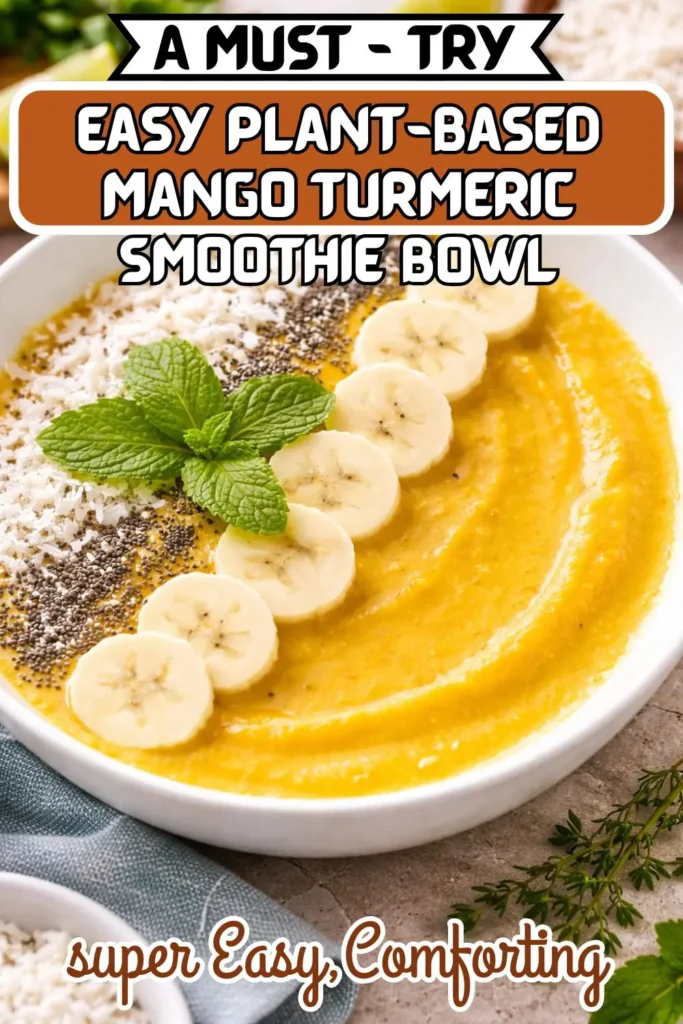
Prep Time: 5 minutes | Total Time: 5 minutes | Serves: 1–2 people | Course: Breakfast | Cuisine: Plant-Based
Equipment You’ll Need
Keeping it simple here — you genuinely don’t need much:
- High-speed blender (a powerful one works best for frozen fruit — a weak blender will struggle and overheat)
- Measuring cups and tablespoons
- Spatula or spoon (to scrape the blender clean)
- 1–2 serving bowls
- Small bowls for toppings
- Knife and cutting board (for slicing fresh banana toppings)
The blender is the only piece of equipment that actually matters here. IMO, a high-powered blender like a Vitamix or Ninja is worth every penny for frozen fruit smoothie bowls — it gives you that thick, creamy, almost ice-cream-like texture that a budget blender just can’t achieve. If you only have a basic blender, add a little extra water to help it along and be patient with it.
Full Ingredient List (Serves 1–2)
For the Smoothie Base:
- 1 cup unsweetened almond milk (or any non-dairy milk)
- 2 cups frozen mango chunks
- 1 cup frozen pineapple chunks
- 1 cup frozen banana slices
- 1 tablespoon turmeric
- 1 tablespoon unsweetened coconut shavings
- ½ cup water, or as needed
Optional Toppings:
- Fresh banana slices
- Chia seeds
- Unsweetened coconut shavings
- Granola (for crunch)
- Fresh berries
- A drizzle of agave or maple syrup
- Hemp seeds
The base ingredients are all you need for a complete, satisfying bowl. The toppings are where you get to be creative and add texture — but even with just banana slices, chia seeds, and coconut shavings, you’ve got something that looks genuinely beautiful and tastes even better.
Why These Ingredients Work So Well Together
Frozen Mango — The Hero of the Bowl
Frozen mango is the backbone of this entire recipe. It gives the bowl its thick, creamy, sorbet-like texture without needing any dairy, yogurt, or added thickeners. The natural sweetness of mango means you don’t need any added sugar at all. Keep a bag of frozen mango chunks in your freezer at all times — this recipe alone is reason enough.
Fresh mango works too, but you’ll want to add extra ice or reduce the water to compensate for the missing frozen volume. Frozen is just easier, more consistent, and available year-round.
Turmeric — The Ingredient That Does the Heavy Lifting
One tablespoon of turmeric sounds like a lot, and the first time I measured it out I definitely second-guessed myself. But in a bowl this size, with the sweetness of mango, pineapple, and banana balancing it out, the turmeric adds warmth and depth without being overwhelming. You taste it, but it’s not sharp or medicinal.
Beyond flavor, turmeric contains curcumin, one of the most studied anti-inflammatory compounds in nutrition. Starting your morning with it is genuinely one of the easiest health upgrades you can make — especially when it tastes this good.
Frozen Banana — Your Natural Thickener and Sweetener
Frozen banana is the secret weapon in almost every great smoothie bowl. It adds natural sweetness, a creamy texture, and body that makes the finished bowl thick enough to eat with a spoon rather than drink with a straw. Always keep a stash of sliced, frozen bananas in your freezer. Peel them, slice them, freeze them on a tray, then transfer to a bag — it takes five minutes and pays dividends for weeks.
Almond Milk — The Liquid Balance
Unsweetened almond milk keeps this bowl completely plant-based and low in added sugar while providing just enough liquid to get everything blending smoothly. You can swap it for oat milk, coconut milk, soy milk, or any other non-dairy option you prefer. Each one changes the flavor profile slightly — oat milk makes it creamier, coconut milk makes it richer, soy milk adds a bit more protein.
Step-by-Step Instructions for Easy Plant-Based Mango Turmeric Smoothie Bowl
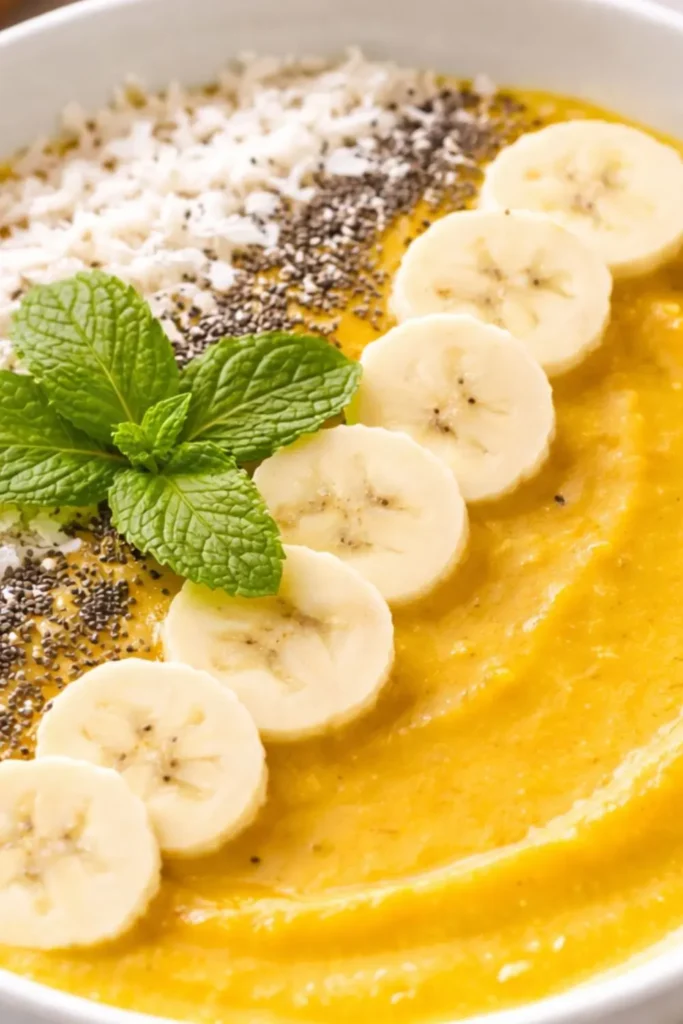
Step 1 — Add Everything to the Blender
Add the almond milk, frozen mango chunks, frozen pineapple chunks, frozen banana slices, turmeric, and coconut shavings to your blender. Do not add water yet — you may not need it at all, depending on how powerful your blender is.
Step 2 — Blend on High
Blend everything on high speed. If the blender struggles or the mixture is too thick to move, add water a little at a time — start with a couple of tablespoons and work up from there. The goal is the thickest possible texture that still blends smoothly. You want a bowl you eat with a spoon, not a smoothie you sip through a straw.
Stop and scrape down the sides with a spatula as needed. Blend again until completely smooth and creamy.
Step 3 — Pour and Top
Pour the smoothie base into one or two bowls depending on your serving preference. Work quickly — frozen smoothie bowls start melting the moment they hit room temperature, especially in summer.
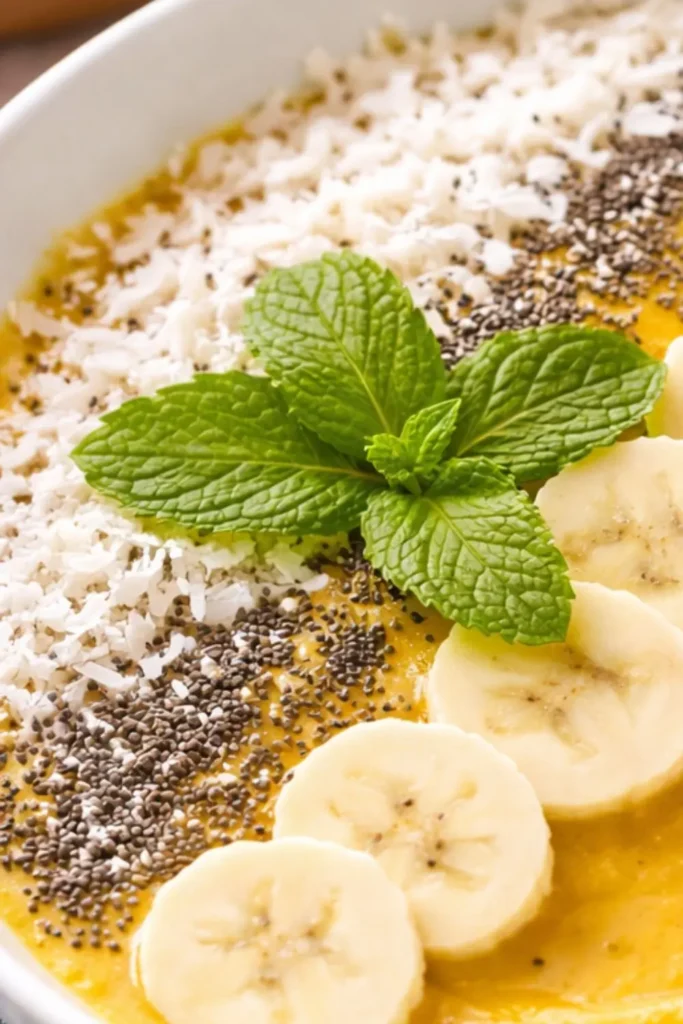
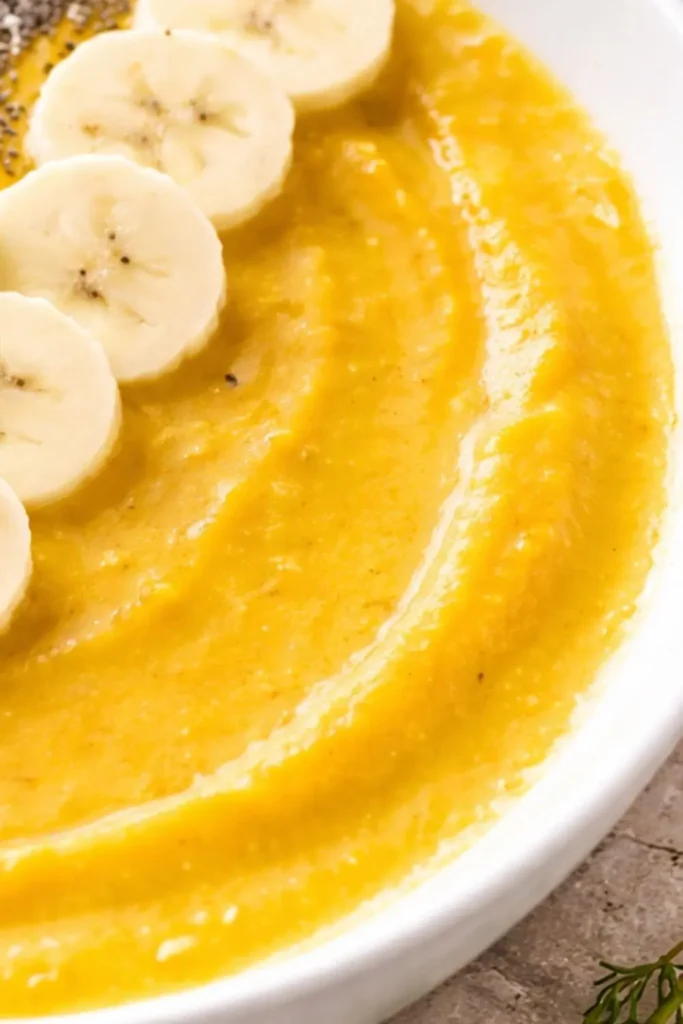
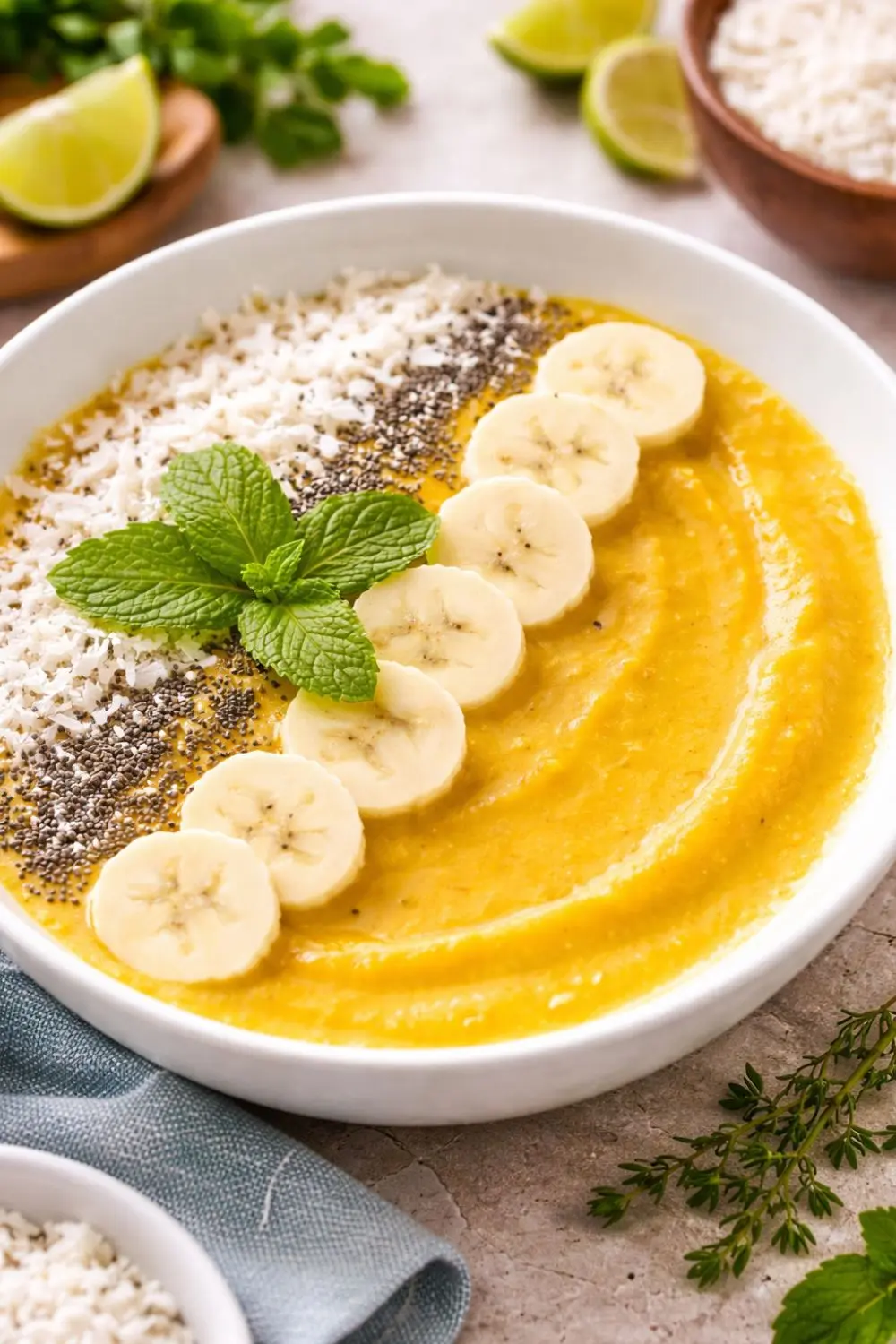
Arrange your toppings: fresh banana slices, a sprinkle of chia seeds, and a scatter of unsweetened coconut shavings. Add any additional toppings you like. Serve immediately.
That’s it. Start to finish, you’re done in five minutes flat.
Estimated Caloric and Nutritional Breakdown
This recipe serves 1–2 people depending on portion size. Here’s an approximate breakdown for the full batch (both servings combined), then per single serving:
| Nutrient | Full Recipe (2 servings) | Per Single Serving |
| Calories | ~480–520 kcal | ~240–260 kcal |
| Carbohydrates | ~110g | ~55g |
| Natural Sugar | ~70g | ~35g |
| Fiber | ~12g | ~6g |
| Fat | ~6g | ~3g |
| Protein | ~5g | ~2.5g |
| Vitamin C | High (mango + pineapple) | — |
| Potassium | High (banana + mango) | — |
| Anti-inflammatory | Curcumin from turmeric | — |
Note: Nutritional values are estimates and vary based on specific brands and topping choices. Adding chia seeds boosts fiber and omega-3s significantly.
At roughly 240–260 calories per serving, this bowl makes a light but genuinely energizing breakfast. The natural fruit sugars give you immediate energy, the fiber slows down digestion and keeps you full, and the turmeric starts your morning with an anti-inflammatory boost. FYI — add a tablespoon of chia seeds on top and you jump up to about 3g of omega-3 fatty acids per serving. Not a bad deal for a five-minute breakfast.
Pro Tips for the Best Smoothie Bowl Texture
The Thickness Problem — and How to Solve It
The number one smoothie bowl complaint is a base that’s too thin and runny. Here’s how to avoid it every time:
- Use all frozen fruit — never fresh fruit unless you add extra ice
- Add liquid gradually — start with less than you think you need
- Freeze your banana slices yourself rather than buying pre-sliced bags (they’re often partially thawed and refrozen, which ruins texture)
- If the bowl gets too thin, add another half cup of frozen mango and blend again
- Work fast once blended — frozen bowls melt quickly, especially in summer heat
Blender Tips
- Start on low speed and work up to high — this protects your blender motor
- Use the tamper if your blender has one — it pushes frozen fruit down into the blades without adding water
- If you hear grinding or straining, stop and add a splash more liquid before continuing
Still Hungry, Try It Next recipe :-
Easy Vegan Potato Leek Soup in the Slow Cooker
Creative Topping Combinations to Try
The base recipe is always the same, but the toppings let you change the whole personality of the bowl. Here are some combinations worth trying:
Tropical Vibes:
- Fresh mango chunks, toasted coconut, macadamia nuts, lime zest
Protein Power:
- Hemp seeds, almond butter drizzle, granola, chia seeds
Berry Bright:
- Fresh blueberries, raspberries, coconut shavings, a drizzle of agave
Simple Classic:
- Sliced banana, chia seeds, coconut shavings (the original — never fails)
Why This Bowl Beats a Regular Smoothie Every Morning
Ever wonder why smoothie bowls feel more satisfying than drinking the same ingredients in a glass? The answer is actually rooted in how we eat. Eating with a spoon forces you to slow down, chew your toppings, and feel more mentally satisfied with your meal. You register fullness more accurately when you eat rather than drink — even if the caloric content is identical.
This plant-based mango turmeric smoothie bowl also gives you something a regular smoothie can’t — textural contrast. The creamy frozen base against the crunch of chia seeds, the chew of coconut, the softness of fresh banana — every spoonful delivers something slightly different, which keeps breakfast genuinely interesting.
Storage Tips and Make-Ahead Advice
Smoothie bowls don’t store well once assembled — the toppings get soggy and the base melts. But you can absolutely prep ahead in a couple of smart ways:
- Pre-portion your frozen fruit into zip-lock bags the night before — just dump and blend in the morning
- Freeze the blended base in an ice cube tray and re-blend quickly in the morning for an even thicker texture
- Pre-mix your dry toppings (chia seeds, coconut, granola) in a small jar so assembly takes seconds
- Store any leftover blended base in the freezer for up to 2 weeks — thaw slightly and stir before serving
My Final Thoughts
This easy plant-based mango turmeric smoothie bowl is summer breakfast done right — bright, cold, nourishing, and genuinely beautiful without requiring any effort. Five minutes, one blender, zero cooking, and you’ve got a bowl that looks like it came from a brunch café but cost a fraction of the price.
Make it tomorrow morning. Seriously — just pull out your frozen mango, measure your turmeric, and blend. You’ll have a new favorite breakfast before you’ve even finished your first cup of coffee. And once that golden color hits the bowl? You’ll understand exactly why this recipe isn’t going anywhere.
Easy Plant-Based Mango Turmeric Smoothie Bowl
Ingredients
Equipment
Method
- Step 1 — Add Everything to the Blender
- Add the almond milk, frozen mango chunks, frozen pineapple chunks, frozen banana slices, turmeric, and coconut shavings to your blender. Do not add water yet — you may not need it at all, depending on how powerful your blender is.
- Step 2 — Blend on High
- Blend everything on high speed. If the blender struggles or the mixture is too thick to move, add water a little at a time — start with a couple of tablespoons and work up from there. The goal is the thickest possible texture that still blends smoothly. You want a bowl you eat with a spoon, not a smoothie you sip through a straw.
- Stop and scrape down the sides with a spatula as needed. Blend again until completely smooth and creamy.
- Step 3 — Pour and Top
- Pour the smoothie base into one or two bowls depending on your serving preference. Work quickly — frozen smoothie bowls start melting the moment they hit room temperature, especially in summer.
- Arrange your toppings: fresh banana slices, a sprinkle of chia seeds, and a scatter of unsweetened coconut shavings. Add any additional toppings you like. Serve immediately.
- That’s it. Start to finish, you’re done in five minutes flat.
Notes
Estimated Caloric and Nutritional Breakdown
This recipe serves 1–2 people depending on portion size. Here’s an approximate breakdown for the full batch (both servings combined), then per single serving:| Nutrient | Full Recipe (2 servings) | Per Single Serving |
| Calories | ~480–520 kcal | ~240–260 kcal |
| Carbohydrates | ~110g | ~55g |
| Natural Sugar | ~70g | ~35g |
| Fiber | ~12g | ~6g |
| Fat | ~6g | ~3g |
| Protein | ~5g | ~2.5g |
| Vitamin C | High (mango + pineapple) | — |
| Potassium | High (banana + mango) | — |
| Anti-inflammatory | Curcumin from turmeric | — |

Hi — I’m Rachel. I’m a wife, a mom, and a home cook who believes that food should bring comfort, joy, and compassion to the table. I live with my family — two hungry little foodies who are my most honest recipe testers — and together we’ve built a kitchen culture that’s all about good food that happens to be 100% vegan. I started this blog because I wanted a place to share the recipes that keep our days moving, the dishes that make weeknights feel a little easier, and the meals that become our little family traditions.