
Prep Time: 20 minutes
Cook Time: 25 minutes
Total Time: 45 minutes
Servings: 4 people
Calories: 459 kcal per serving
Cuisine: Thai-inspired
Green curry is one of those dishes that sounds like it requires a culinary school background and a pantry full of hard-to-find ingredients. It doesn’t. What it requires is good curry paste, coconut milk, properly cooked tofu, and about 45 minutes of your time.
This slow cooker vegan green curry with tofu and zucchini delivers everything you love about Thai green curry creamy, fragrant, perfectly spiced coconut broth, tender vegetables, and golden crispy tofu with a straightforward method that anyone can follow. I’ve made this recipe for people who claimed they didn’t like tofu, for people who’d never cooked Thai food before, and for people who were deeply skeptical that vegan food could taste this good. Every single time, it converted them. Four generous servings, 459 calories each, and a bowl of curry so good you’ll want to lick the pot clean. Let’s get into it.
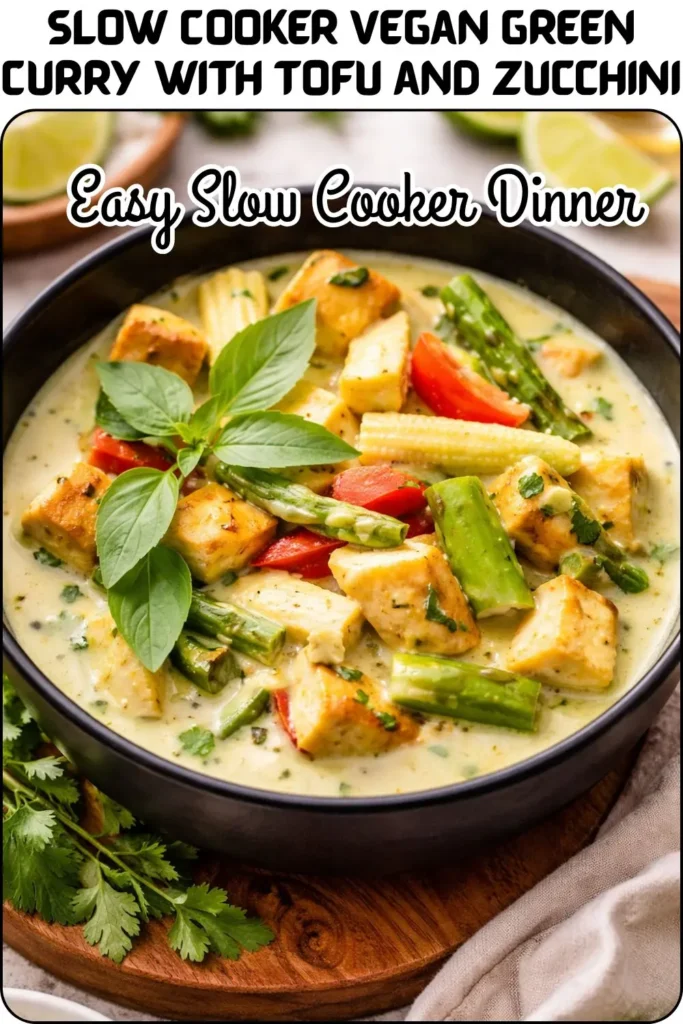
Why This Vegan Green Curry Stands Out
Most vegan curry recipes either cut corners on the coconut milk or under-season the curry paste, which leads to something watery and flat that gives plant-based Thai food an unfair reputation. This recipe doesn’t do either of those things.
The dual coconut milk approach one can full-fat, one can light creates a sauce that’s rich without being overwhelming. The full-fat can provides depth and body. The light can keeps the curry from feeling too heavy, especially in summer when you want something satisfying but not stodgy. Together they create the ideal balance of creamy and light that makes green curry so addictive.
Who This Recipe Is Perfect For
This vegan green curry with tofu works brilliantly for:
- Thai food enthusiasts- who want a reliable, fully plant-based version that doesn’t compromise on flavor.
- Tofu skeptics – properly seared tofu in this recipe is golden, firm, and nothing like the pale, wobbly cubes that give tofu its undeserved bad reputation.
- Weeknight cooks -who want something impressive on the table in under 45 minutes.
- Meal preppers – this curry stores and reheats beautifully, making it a fantastic batch-cooking option.
- Summer cooks – the fresh vegetables, bright herbs, and light coconut broth make this feel genuinely seasonal and fresh.
Equipment You’ll Need For
Two pans, one pot that’s the full equipment list:
- Large nonstick skillet – for searing the tofu until golden
- Large pot or Dutch oven – for building and simmering the curry sauce
- Tofu press or clean kitchen towels – for pressing the tofu before cooking (critical step more on this below)
- Knife and cutting board– for prepping tofu, vegetables, and herbs
- Spatula – for flipping the tofu without breaking the cubes
- Measuring spoons and cups
- Ladle for serving over rice
- Rice cooker or saucepan – for cooking the rice alongside the curry
FYI, working with two pans simultaneously sounds more complicated than it actually is. You sear the tofu in the skillet while you build the curry sauce in the pot at the same time — the two processes run in parallel and finish at almost exactly the same point. It’s genuinely efficient once you get the rhythm of it.
Ingredients
- 2 tbsp peanut oil, divided
- 1 (14 oz) package extra firm tofu, drained, pressed, and cut into 1-inch cubes
- ¼ cup vegan green curry paste (or up to ½ cup for intense flavor see notes)
- 1 (14 oz / 400 ml) can full-fat coconut milk
- 1 (14 oz / 400 ml) can light coconut milk
- 2 cups fresh baby corn, cut into 2-inch pieces (canned works too see notes)
- ½ lb asparagus spears, cut into 2-inch pieces
- 1 small red bell pepper, roughly chopped
- 1 tbsp organic brown sugar
- 1 tbsp lime juice
- Salt, to taste (about ¾ tsp)
- ¼ cup fresh basil leaves, chopped
- ¼ cup fresh cilantro, chopped
- Cooked jasmine or basmati rice, for serving
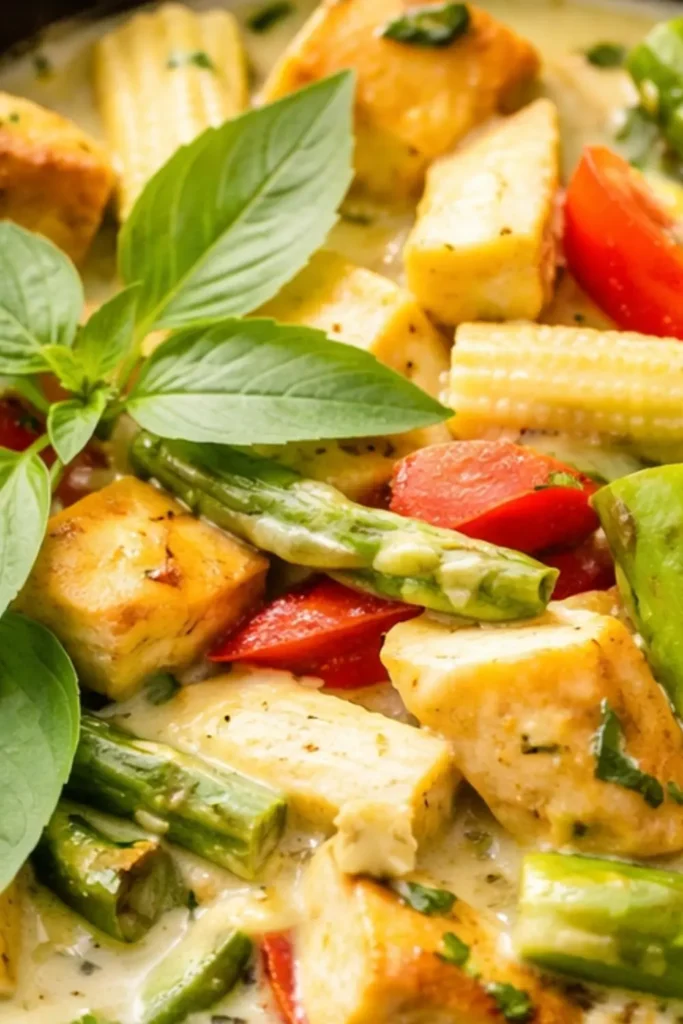
Instructions
- Press the tofu first. Before anything else, press the tofu for at least 15–20 minutes to remove excess moisture. Wrap it in clean kitchen towels and place something heavy on top, or use a tofu press if you own one. This step determines whether your tofu turns golden and crispy or pale and steamy and the difference is significant.
- Sear the tofu. Coat the bottom of a large nonstick skillet with 1 tablespoon of peanut oil over medium heat. When hot, arrange the tofu cubes in a single layer. Cook for about 10 minutes, flipping once or twice to brown multiple sides. Transfer to a plate and set aside.
- Bloom the curry paste. While the tofu cooks, coat the bottom of a large pot with the remaining tablespoon of peanut oil over medium heat. When the oil is hot, add the green curry paste. Sauté for 1–2 minutes, stirring constantly, until the paste becomes deeply fragrant and the color deepens slightly.
- Add the coconut milk. Pour in both cans of coconut milk and stir to combine with the curry paste. Raise the heat and bring to a simmer.
- Cook the baby corn. Add the baby corn and simmer for about 7 minutes.
- Add remaining vegetables. Stir in the asparagus and red bell pepper. Continue simmering for another 3 minutes until the vegetables are tender-crisp and the asparagus turns bright green.
- Finish the curry. Stir in the seared tofu, brown sugar, and lime juice. Mix gently to combine.
- Add fresh herbs and season. Remove the pot from heat. Stir in the fresh basil and cilantro. Season with salt to taste and adjust any other seasonings as needed.
- Serve. Divide the curry into bowls over cooked rice and serve immediately.
Breaking Down the Key Ingredients
Extra Firm Tofu And Why Pressing Is Non-Negotiable
Here’s the thing about tofu that most recipes don’t explain clearly enough: the reason tofu doesn’t brown properly is almost always excess moisture, not the tofu itself. Extra firm tofu right out of the package still contains enough water to steam rather than sear in the pan. Press it for 15–20 minutes and the surface dries out enough to make proper contact with the hot oil and develop that golden crust.
Don’t skip the pressing step. It’s the difference between tofu that tastes like it belongs in this curry and tofu that sits limply in the bowl apologizing for itself. Use a dedicated tofu press if you have one they’re inexpensive and produce consistently better results than the kitchen towel method.
Vegan Green Curry Paste How Much to Use
This is the ingredient that most intimidates people new to Thai cooking, and the question is always how much to use. Start with ¼ cup if you’re new to green curry or sensitive to heat. The finished curry will be flavorful and aromatic without being overwhelming. If you want more intensity and once you taste it you likely will you can either add more sautéed paste to the finished curry or simply increase the amount next time you make it.
Important note: always sauté the curry paste in oil before adding the coconut milk. Blooming the paste in hot oil activates the aromatics, releases the essential oils from the lemongrass, galangal, and chili, and creates a depth of flavor that adding it directly to liquid simply cannot replicate. This one-minute step makes an enormous difference.
Always check that your green curry paste is vegan. Some brands contain shrimp paste. Brands like Mae Ploy and Maesri make vegan versions check the label.
The Dual Coconut Milk Strategy
One can full-fat, one can light – this combination gives you the best of both worlds. Full-fat coconut milk contains around 17–18% fat, which creates a sauce with genuine body and richness. Light coconut milk contains roughly half that fat content, which dilutes the richness just enough to keep the curry feeling fresh and vibrant rather than heavy.
Using two cans of full-fat makes for a richer curry that some people love. Using two cans of light produces something thinner and less satisfying. The combination hits the sweet spot, especially for a summer recipe where you want comfort without feeling weighed down afterward.
Fresh Herbs Add Them at the Very End
The basil and cilantro go in off the heat for one specific reason: heat destroys the bright, fresh flavor of both herbs almost instantly. Adding them to a simmering curry turns them dull and slightly bitter. Stirring them through right before serving preserves their color, fragrance, and the fresh contrast they provide against the rich, spiced coconut base. This detail matters more than people realize.
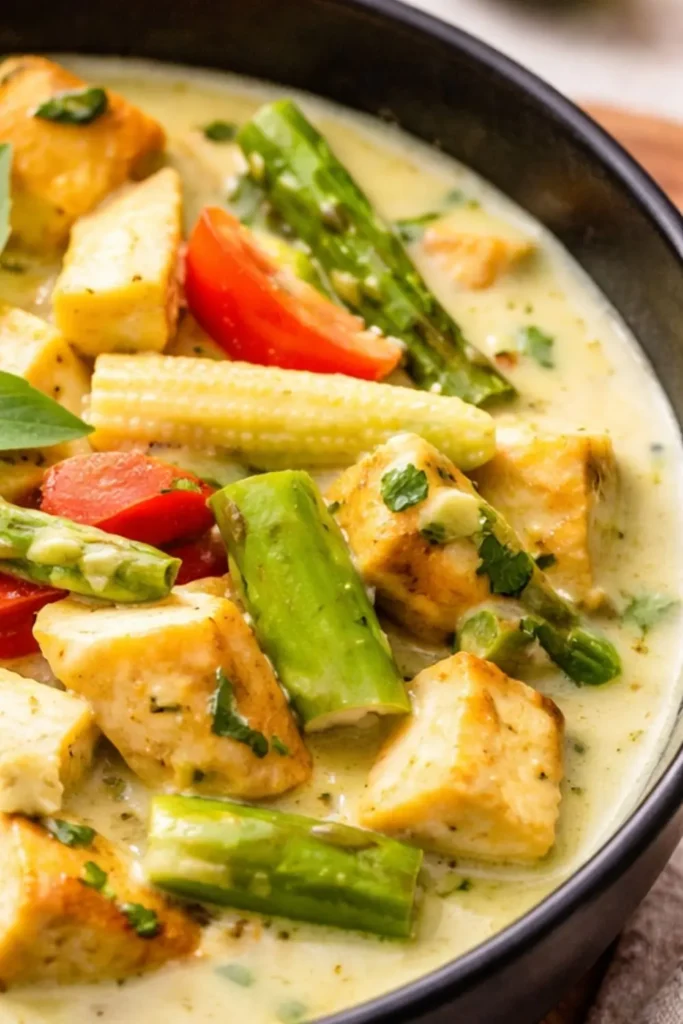
The Curry Paste Calibration Getting the Flavor Right
Ever made a curry that tasted a bit flat and couldn’t figure out why? The answer is almost always one of these three things:
- Not enough curry paste. This is the most common issue. ¼ cup is a conservative starting point most people who love Thai food end up preferring ⅓ to ½ cup.
- Under-blooming the paste. Those 1–2 minutes of sautéing in oil need to happen with actual heat. Medium heat, stirring constantly, until the paste smells incredible and the color intensifies slightly.
- Insufficient seasoning at the end. The lime juice, brown sugar, and salt balance the curry. Too little lime and it tastes flat. Too little salt and everything falls short. Always taste and adjust before serving.
If your finished curry tastes mild or bland, sauté a tablespoon of additional curry paste in a teaspoon of oil in a separate small pan, then stir it into the pot. Never add raw curry paste directly to a finished curry it will taste raw and slightly harsh. Always bloom it in fat first.
Nutrition Per Serving
One of four servings delivers (not including rice):
- Calories: 459 kcal
- Protein: 13.5g
- Carbohydrates: 33.1g
- Fat: 32.7g (Saturated Fat: 18.9g from coconut milk)
- Fiber: 4.7g
- Sugar: 10g
- Sodium: 1,102mg
- Potassium: 544mg
- Calcium: 222mg
- Iron: 5mg
The 222mg of calcium per serving is genuinely impressive for a plant-based dish it comes primarily from the tofu and the coconut milk. The 5mg of iron makes this a smart choice for plant-based eaters monitoring their iron intake. Add a serving of jasmine rice and you increase the total carbohydrates and bring in additional energy to balance the fat-rich curry base.
Try It Next recipe
Easy Vegan Potato Leek Soup in the Slow Cooker

Vegetable Variations Make It Your Own
The recipe uses baby corn, asparagus, and red bell pepper as written, but this curry base welcomes substitutions enthusiastically:
- Zucchini – slice into half-moons and add with the asparagus. It softens quickly and absorbs the coconut sauce beautifully, making it one of the best summer additions to this recipe.
- Broccolini – cut into small florets and add at the same stage as the asparagus for tender-crisp results.
- Snow peas– add in the final 2 minutes of simmering so they stay bright green and snappy.
- Eggplant – cut into cubes, sauté briefly in oil before adding to the curry, and simmer with the baby corn for the full 7 minutes.
- Spinach – stir a large handful in right at the end with the herbs. It wilts in seconds and adds nutrition without changing the flavor.
- Mushrooms – shiitake or oyster mushrooms add excellent umami depth to the coconut base.
IMO, zucchini is the single best addition to this recipe in summer. It’s cheap, widely available, and takes on the flavor of the curry paste and coconut milk in a way that makes it taste completely different from its usual mild self.
Serving Ideas That Complete the Bowl
- Jasmine rice – the classic pairing. Its subtle floral fragrance complements Thai green curry perfectly.
- Brown rice – heartier and nuttier, adds extra fiber and keeps you full longer.
- Rice noodles – for a lighter, slurpable alternative to rice that works beautifully with the broth-rich curry.
- Cauliflower rice – a lower-carb option that still absorbs the coconut sauce wonderfully.
- Extra lime wedges – serve on the side so everyone can adjust the acidity in their own bowl.
- Sliced fresh chili – for the spice lovers who never think the curry is hot enough.
- Toasted coconut flakes – scattered over the bowl for a subtle sweetness and textural contrast.
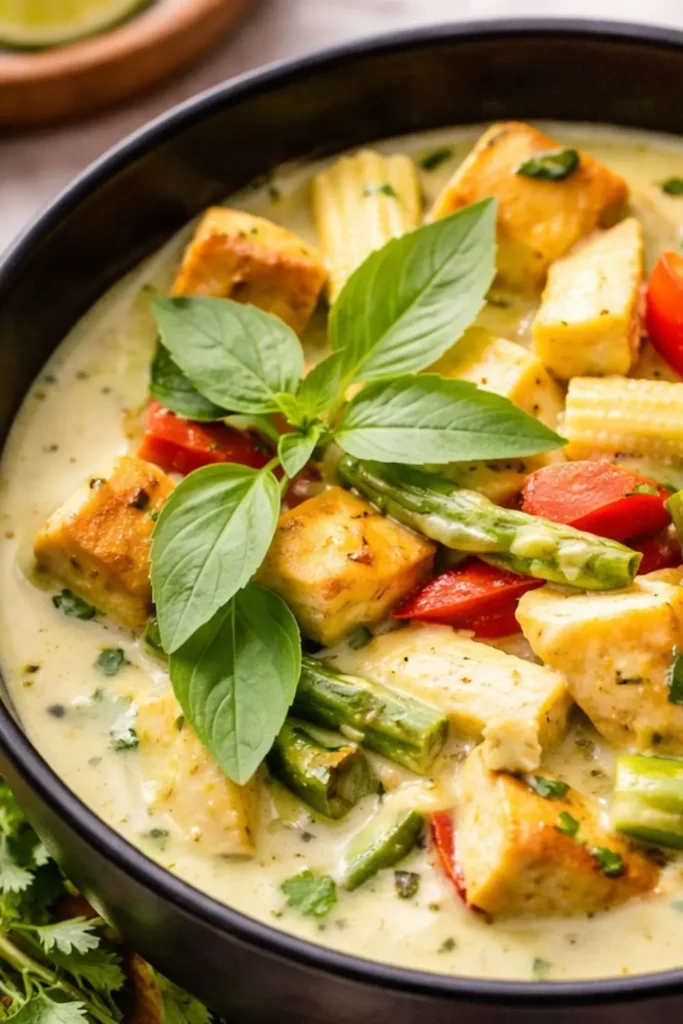
Meal Prep and Storage
This vegan green curry with tofu stores exceptionally well:
- Refrigerator: Keep in an airtight container for up to 4 days. Store separately from the rice to prevent the grains from absorbing all the sauce.
- Freezer: Freeze the curry (without rice) for up to 2 months. The tofu texture changes slightly after freezing it becomes chewier and more porous, which actually helps it absorb even more sauce when reheated.
- Reheating: Warm gently on the stovetop over medium-low heat, stirring occasionally. Add a splash of coconut milk or water if the sauce has thickened too much during storage.
One quick tip: if meal prepping, hold back some of the fresh herbs and add them fresh when reheating rather than storing the full batch with herbs already stirred in. Fresh herbs added right before eating make the reheated curry taste significantly more vibrant.
Common Mistakes to Avoid
- Skipping the tofu press. Unpressed tofu steams instead of sears. Always press for at least 15 minutes before cooking.
- Adding curry paste directly to the coconut milk. Sauté it in oil first, always. Raw paste in liquid tastes raw bloomed paste in oil tastes deeply aromatic and complex.
- Overcooking the asparagus. Three minutes in the simmering coconut milk is enough. Much more and it loses its bright green color and snappy texture and turns olive-colored and limp.
- Not tasting before serving. Green curry needs balancing lime for acidity, brown sugar for sweetness, salt for depth. The right balance transforms a good curry into a great one.
- Adding herbs while the curry is still on the heat. Always take the pot off the burner first. Fresh basil and cilantro need to be stirred in off the heat to preserve their flavor and color.
My Final Thoughts
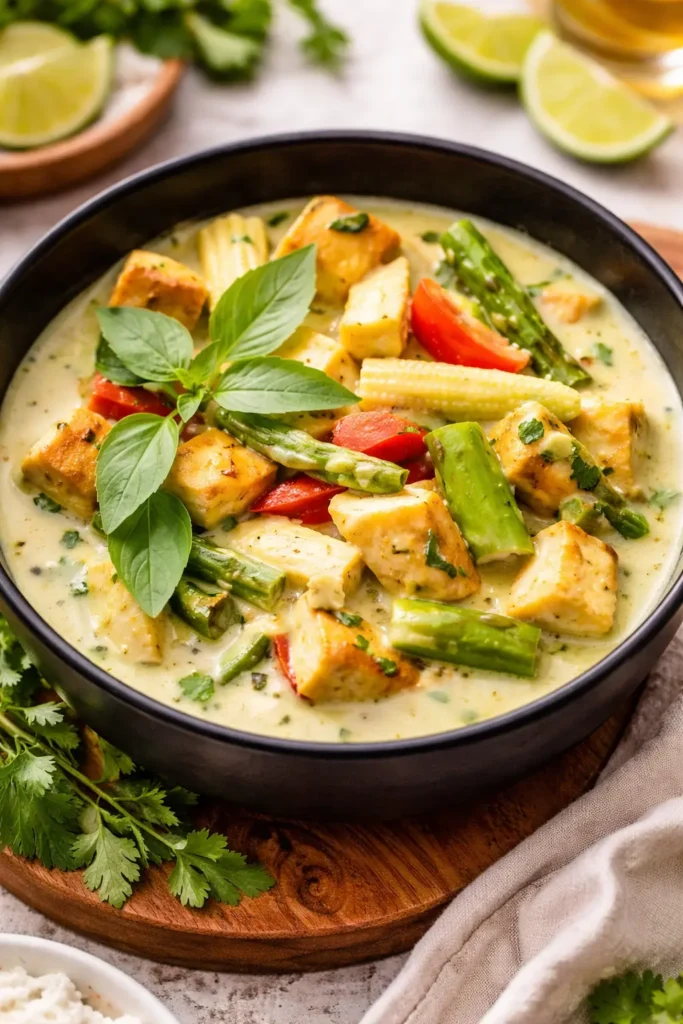
The slow cooker vegan green curry with tofu and zucchini delivers everything that makes Thai green curry one of the world’s most loved dishes creamy coconut broth, bold aromatic curry paste, tender crispy tofu, fresh vegetables, and bright herbs entirely plant-based and ready in 45 minutes.
Golden seared tofu, vibrant asparagus and baby corn, a coconut sauce that coats every grain of rice in the bowl, and a finish of fresh basil and cilantro that makes the whole thing taste alive. This is the kind of recipe that earns its place in your weekly rotation and stays there permanently.
Make it this week and see how quickly it disappears from the pot. Then make it again the week after because with this curry, you always want more.
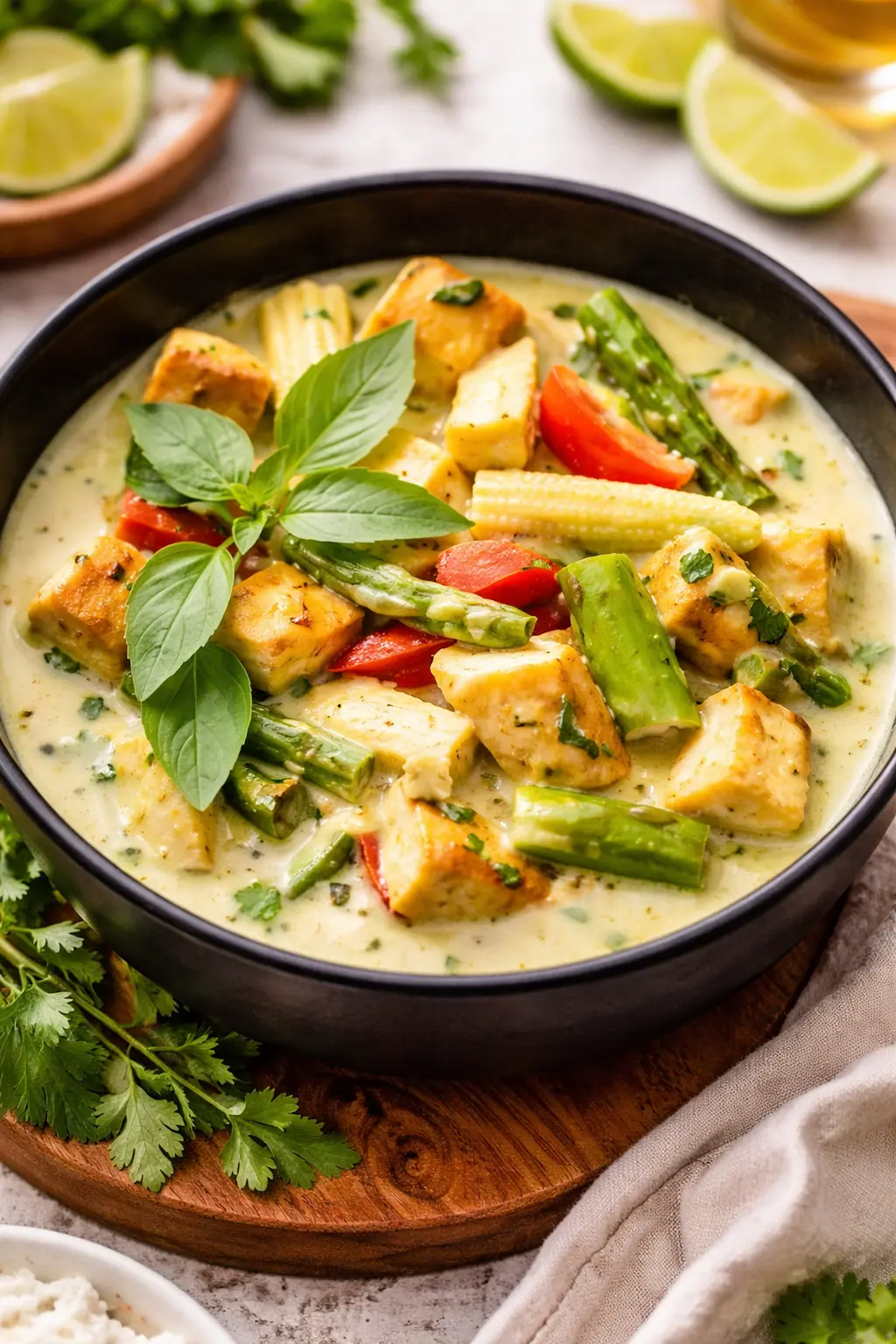
Slow Cooker Vegan Green Curry with Tofu and Zucchini
Ingredients
Equipment
Method
- Press the tofu first. Before anything else, press the tofu for at least 15–20 minutes to remove excess moisture. Wrap it in clean kitchen towels and place something heavy on top, or use a tofu press if you own one. This step determines whether your tofu turns golden and crispy or pale and steamy and the difference is significant.
- Sear the tofu. Coat the bottom of a large nonstick skillet with 1 tablespoon of peanut oil over medium heat. When hot, arrange the tofu cubes in a single layer. Cook for about 10 minutes, flipping once or twice to brown multiple sides. Transfer to a plate and set aside.
- Bloom the curry paste. While the tofu cooks, coat the bottom of a large pot with the remaining tablespoon of peanut oil over medium heat. When the oil is hot, add the green curry paste. Sauté for 1–2 minutes, stirring constantly, until the paste becomes deeply fragrant and the color deepens slightly.
- Add the coconut milk. Pour in both cans of coconut milk and stir to combine with the curry paste. Raise the heat and bring to a simmer.
- Cook the baby corn. Add the baby corn and simmer for about 7 minutes.
- Add remaining vegetables. Stir in the asparagus and red bell pepper. Continue simmering for another 3 minutes until the vegetables are tender-crisp and the asparagus turns bright green.
- Finish the curry. Stir in the seared tofu, brown sugar, and lime juice. Mix gently to combine.
- Add fresh herbs and season. Remove the pot from heat. Stir in the fresh basil and cilantro. Season with salt to taste and adjust any other seasonings as needed.
- Serve. Divide the curry into bowls over cooked rice and serve immediately.
Notes
- Calories: 459 kcal
- Protein: 13.5g
- Carbohydrates: 33.1g
- Fat: 32.7g (Saturated Fat: 18.9g from coconut milk)
- Fiber: 4.7g
- Sugar: 10g
- Sodium: 1,102mg
- Potassium: 544mg
- Calcium: 222mg
- Iron: 5mg

Hi — I’m Rachel. I’m a wife, a mom, and a home cook who believes that food should bring comfort, joy, and compassion to the table. I live with my family — two hungry little foodies who are my most honest recipe testers — and together we’ve built a kitchen culture that’s all about good food that happens to be 100% vegan. I started this blog because I wanted a place to share the recipes that keep our days moving, the dishes that make weeknights feel a little easier, and the meals that become our little family traditions.