
There’s a specific category of vegan gluten-free baking that goes beyond “this works given the constraints” and reaches “this is genuinely one of the best cakes I’ve ever eaten.” Vegan gluten-free almond cake lands firmly in that second category. Almond flour and cornstarch base, aquafaba whipped for structure, vegan Greek yogurt for tang and moisture, topped with flaked almonds before baking, and finished with an almond-yogurt glaze this dairy-free almond cake produces a golden, tender, perfectly risen round cake that serves 12 people at 330 calories per slice and looks genuinely impressive from every angle.
The 30-minute batter rest before baking is the technique detail that most people skip and then wonder why their GF cake didn’t rise properly. It’s not optional it’s the step that transforms a good cake into a great one. More on that below. First, let’s understand why this vegan almond cake recipe works as well as it does.
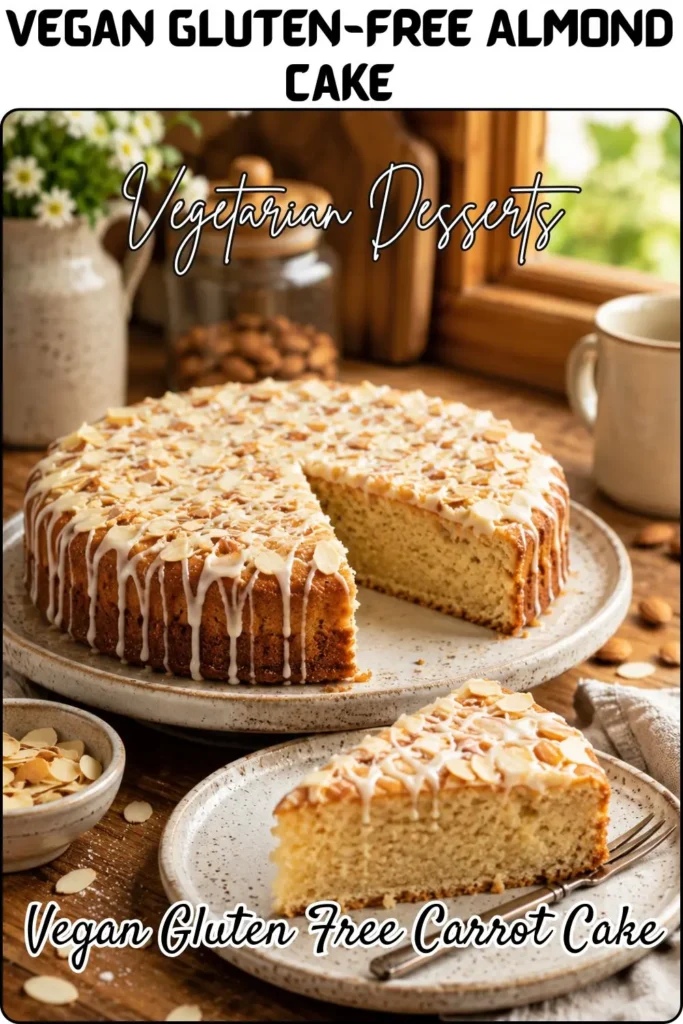
My Recipe Timing and Serving Details
Here’s your complete planning overview:
| Detail | Info |
| Prep Time | 15 minutes |
| Batter Rest Time | 30 minutes |
| Bake Time | 45–55 minutes |
| Cooling Time | 10 minutes in pan + wire rack |
| Total Time | ~1 hour 40 minutes |
| Servings | 12 slices |
| Serving Size | 1 of 12 slices |
| Calories Per Slice | 330 kcal |
| Course | Dessert |
| Diet | Vegan, Gluten-Free, Dairy-Free |
This vegan gluten free almond cake serves 12 people as a proper dessert slice. At 330 calories per slice with 6 grams of protein, 3 grams of fiber, and 132mg of calcium (from the almond flour and almond milk combination), this is a nutritionally complete dessert that earns its place as the centerpiece of any gathering’s dessert table.
The Aquafaba Technique The Key to This Recipe’s Exceptional Texture
Most vegan almond cake recipe versions rely on flax eggs, chia eggs, or applesauce for binding and structure. This recipe specifically uses aquafaba, the liquid from a can of chickpeas whipped until foamy with lemon juice.
Why does this matter for texture? Traditional baked almond cakes rely on eggs for three specific functions: binding, leavening (through aeration), and structure. Aquafaba provides all three in a way that most other egg replacers don’t:
Binding- Aquafaba contains proteins and starches that create a cohesive, film-forming mixture when whipped. This binding holds the GF cake together across the entire crumb rather than relying purely on the cornstarch and xanthan gum.
Aeration- Whipped aquafaba incorporates air in a way that’s genuinely similar to egg whites. Those air bubbles expand during baking and contribute to the cake’s rise and lighter texture something no other common vegan egg substitute achieves equally.
Structure- The proteins in aquafaba coagulate during baking, creating a structural network throughout the cake that holds the shape after the oven heat removes.
FYI the 2 minutes of whipping with lemon juice specifically is what creates the foamy texture needed. The lemon juice stabilizes the foam by making the liquid slightly acidic. Under-whipped aquafaba (less than 2 full minutes) doesn’t achieve the right airy consistency and produces a denser cake than intended.
Full Ingredient List Every Specification Matters
The Cake:
- 240g (2⅖ cups) almond flour , fine blanched almond flour, not almond meal
- 144g (1⅕ cup) gluten-free cornstarch , confirmed GF certified
- ½ teaspoon xanthan gum , the GF binding agent
- 2⅖ teaspoons baking powder
- ⅓ teaspoon sea salt
- Lemon juice , for whipping with aquafaba
- 180g (1 cup) granulated sugar
- 120g vegan Greek-style yogurt , thick, full-fat variety
- 60ml neutral oil
- 1⅕ teaspoon vanilla extract
- ½ teaspoon almond extract
- 192ml (⅘ cup) almond milk
- 2⅖ tablespoons flaked almonds , for topping
The Almond Glaze (Optional but Recommended):
- 108g (1 cup) powdered sugar
- 2⅖ tablespoons vegan Greek-style yogurt
- ⅓ teaspoon almond extract
The xanthan gum is a critical ingredient specific to this recipe. It’s a polysaccharide that creates the stretchy, slightly elastic network that gluten would normally provide in wheat-flour baking holding gas bubbles in place during rising and providing structural integrity to the finished cake. Without xanthan gum in this specific formulation, the cake would likely crumble apart on cutting despite the aquafaba and cornstarch binding.
The gluten-free cornstarch creates a fine, light crumb texture that pure almond flour alone can’t achieve. Cornstarch’s fine starch particles produce a delicate, almost melt-in-mouth quality in the crumb that makes this dairy free almond cake feel significantly more refined than a 100% almond flour version.
The vegan Greek-style yogurt in both the cake and glaze provides tang, fat, and thick creaminess. Use the thickest available variety Kite Hill Greek-Style Yogurt, Cocoyo, or any coconut-based Greek yogurt. Thin yogurt produces a slacker batter and a wetter cake.
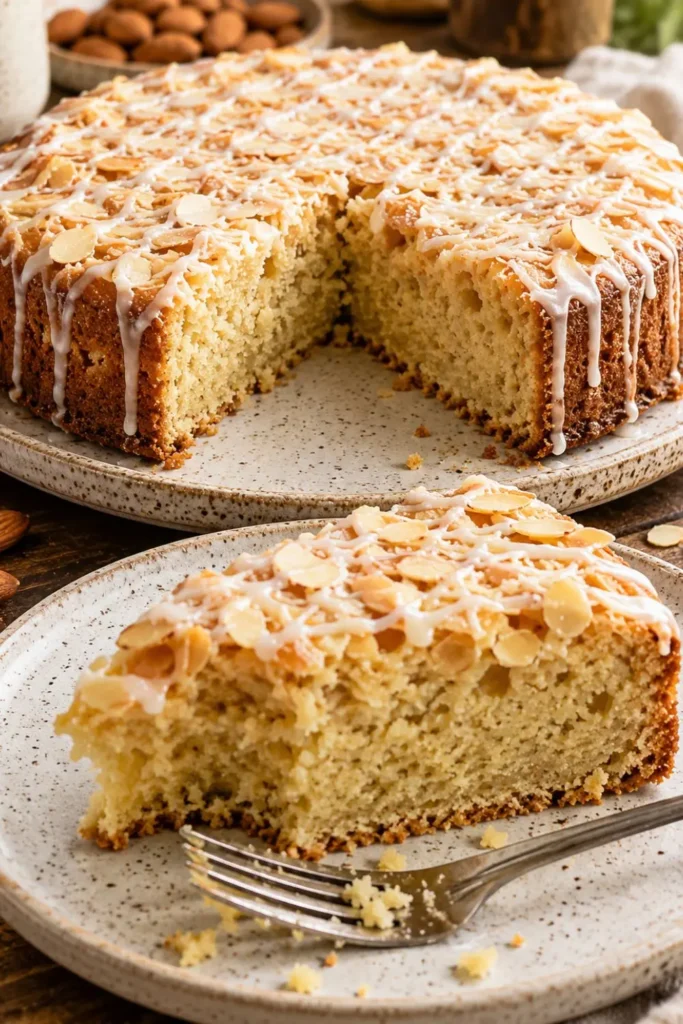
Equipment You’ll Need For
Primary Equipment
- 8-inch round cake pan – specifically 8 inches for the right cake height and bake time. Line both the base and sides with parchment paper this cake needs full parchment protection for clean release.
- Electric mixer -specifically needed for the aquafaba whipping stage. This is the one step that requires mechanical assistance hand-whisking aquafaba to a proper foam takes significantly longer than 2 minutes and produces a less consistent result. A stand mixer or electric hand mixer both work well.
- Oven with fan-forced or conventional settings:
- Fan-forced (convection): 160°C/320°F
- Conventional: 180°C/356°F
- Wire cooling rack – for the upside-down cooling technique after pan release
Mixing Equipment
- Large bowl – for dry ingredients (sifted together)
- Medium bowl – for wet ingredients (sugar, yogurt, oil, extracts, almond milk)
- Separate bowl for aquafaba – for whipping separately before combining
- Whisk – for dry ingredient combining and wet ingredient combining
- Silicone spatula – for combining the final batter and scraping the bowl
The Upside-Down Cooling Equipment
The recipe uses an upside-down cooling technique that requires preparation:
- Sheet of parchment paper – placed on the top of the cake before flipping to prevent sticking to the wire rack
- Wire rack – for cooling
- Serving plate – for the final right-side-up presentation
Step-by-Step Instructions For Vegan Gluten-Free Almond Cake
Step 1 – Prepare the Pan First
Line the base and sides of an 8-inch pan with parchment paper. This step comes first before mixing anything because the batter will rest in the pan for 30 minutes, and you don’t want to be hunting for parchment after the batter is ready.
Step 2 – Sift and Combine Dry Ingredients
Sift the almond flour, cornstarch, xanthan gum, baking powder, and sea salt into a large bowl. Whisk to combine thoroughly.
Sifting specifically almond flour and xanthan gum both clump readily. Sifting breaks up these clumps and ensures even distribution of the xanthan gum throughout the flour mixture. Unsifted xanthan gum creates dense, gummy pockets in the finished cake.
Step 3 – Whip the Aquafaba
In a separate bowl, use your electric mixer to whisk the aquafaba and lemon juice together for 2 full minutes until the mixture turns foamy and slightly increased in volume. It won’t form stiff peaks like egg whites it will look more like a thick, bubbly, pale foam. This is correct.
Step 4 – Combine Wet Ingredients
In another bowl, whisk together the sugar, vegan Greek yogurt, neutral oil, vanilla extract, and almond extract until smooth and well combined. Whisk in the almond milk until uniform. Pour this wet mixture into the whipped aquafaba and whisk to combine.
Step 5 – Make the Batter
Add the sifted dry ingredients to the wet aquafaba mixture. Whisk to form a smooth batter. The batter should be pourable but not watery similar to a thick pancake batter consistency.
Step 6 – The 30-Minute Rest Do Not Skip This
Pour the batter into the parchment-lined pan. Scatter the flaked almonds evenly across the top surface.
Now rest the batter for 30 minutes while the oven preheats. This resting step is one of the most distinctive and important elements of this recipe:
Why does resting matter? The xanthan gum needs time to hydrate fully it absorbs liquid from the batter during this rest period and develops its elastic, binding properties. Batter that goes into the oven without resting has incompletely hydrated xanthan gum, which produces a less structured, less evenly risen cake.
The baking powder also benefits- Baking powder has two leavening actions one that activates when wet (immediate) and one that activates in heat (in the oven). The 30-minute rest allows the initial activation to complete and stabilize before the heat reaction begins, producing more reliable and even rise.
Preheat the oven during this rest. Fan-forced to 160°C/320°F or conventional to 180°C/356°F. By the time the oven reaches temperature, the batter will be ready.
Step 7 – Bake
Place the pan in the preheated oven. Bake for 45–55 minutes until risen and golden brown. Check for doneness by piercing the center with a toothpick it should come out clean or with just a few moist crumbs visible. No wet batter.
Continue baking in 5-minute increments if needed. The golden color and slight pulling from the pan edges are good doneness indicators alongside the toothpick test.
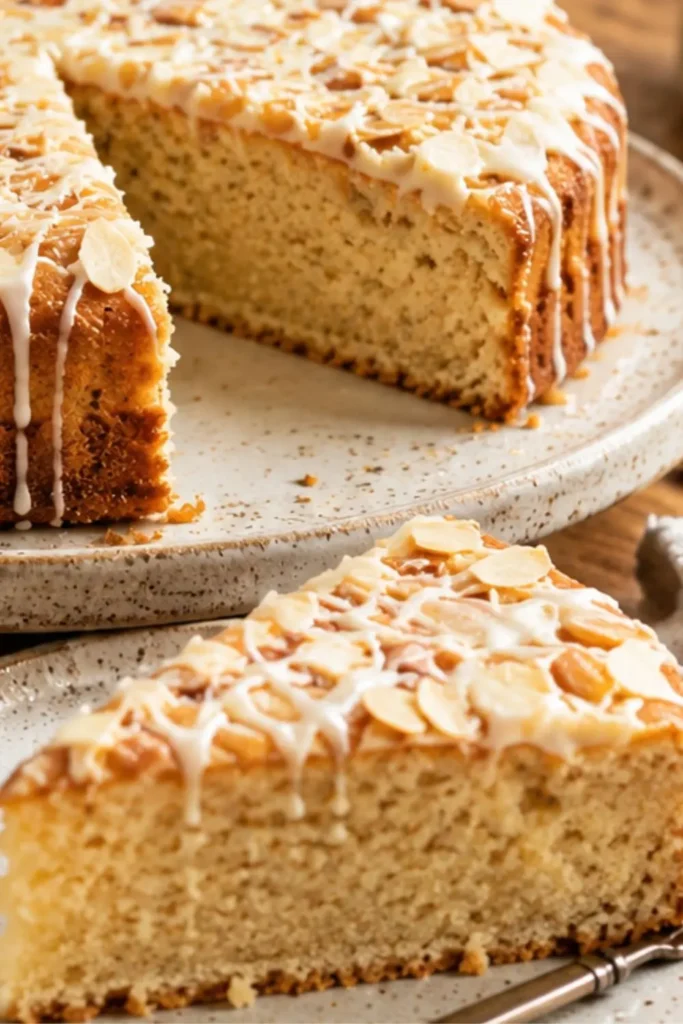
Step 8 – Cool Upside Down
Remove from the oven. Allow to cool in the pan for 10 minutes. Then, place a sheet of parchment paper over the top of the cake, and a wire rack on top of that. In one confident motion, flip the pan the cake releases onto the rack upside down.
Allow to cool completely in this upside-down position. Why upside down? The top crust of the cake (which becomes the underside during cooling) is sturdier than the more delicate bottom. Cooling upside down uses the sturdier crust as a base, which prevents the cake from collapsing or sinking as it cools.
Step 9 – Glaze and Serve
When completely cooled, carefully flip the cake right-side-up onto a serving plate.
Make the glaze by whisking together the powdered sugar, vegan Greek yogurt, and almond extract until smooth. The yogurt’s fat and tang create a glaze that’s more interesting and complex than a simple water-and-sugar glaze it drizzles beautifully and sets to a slightly creamy finish.
Dust lightly with additional powdered sugar before drizzling the glaze across the surface. Scatter extra flaked almonds over the top for visual impact.
The Almond Extract Decision
This recipe uses both vanilla extract and almond extract a combination worth understanding. They serve different purposes:
Vanilla extract- provides warmth and a rounded sweetness that bridges the almond flour’s natural nuttiness with the sugar.
Almond extract- is the ingredient that makes this cake taste specifically and unmistakably like almond. It’s derived from the same aromatic compound responsible for marzipan’s distinctive flavor benzaldehyde. Even at ½ teaspoon in the batter, it transforms the cake from “a cake that contains almond flour” to “a cake that celebrates almond as its central flavor.”
Dosage matters- Almond extract at twice the recommended amount becomes overwhelming and medicinal. The recipe’s ½ teaspoon in the batter and ⅓ teaspoon in the glaze is specifically calibrated. Follow these quantities precisely increasing either produces a cake that tastes more like almond liqueur than elegant almond pastry. IMO, this is the spice where more is definitely not better.
Try It Next recipe

Vegan Greek Yogurt The Essential Ingredient
The vegan Greek-style yogurt appears in both the cake and glaze, making it an ingredient worth choosing carefully:
Best options for this recipe:
- Kite Hill Greek-Style Almond Milk Yogurt – the best texture for this application. Thick enough to form a smooth paste when mixed with sugar and oil. Its almond milk base specifically complements the almond flour and extract.
- Cocoyo Pure Coconut Yogurt – very thick, slightly sweeter, excellent results. The coconut character is subtle against the strong almond flavors.
- Siggi’s Plant-Based -lower in fat than coconut varieties, but adequate thickness for this recipe.
What to avoid- Very thin or watery plant-based yogurts (some are closer to a drinkable kefir consistency). These produce a wet batter and a cake that takes significantly longer to bake through.
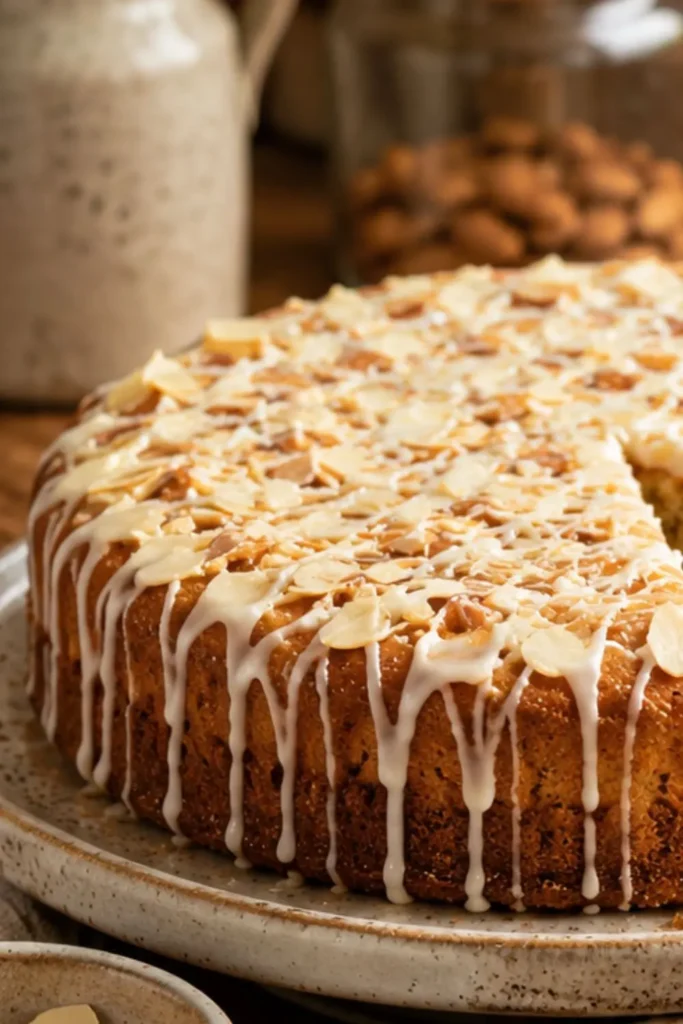
Glaze Consistency Getting It Right
The almond-yogurt glaze drizzled over the finished cake is what elevates this from a beautiful simple cake to something genuinely impressive. Getting the consistency right takes 2 minutes of adjustment:
Too thick (won’t drizzle)- Add vegan Greek yogurt ½ teaspoon at a time and mix. The yogurt thins the glaze while maintaining its creamy character.
Too thin (runs everywhere instead of draping)- Add powdered sugar 1 tablespoon at a time and mix. Sifting additional powdered sugar before adding prevents lumps.
The ideal consistency- The glaze should flow slowly off a spoon not drip immediately like water, not stay in a solid ribbon. It should drape naturally across the cake and run slightly toward the edges, creating an organic, artisanal appearance rather than a perfectly even coating.
Nutrition Information Per Slice
At 330 calories per slice for 12 slices:
| Nutrient | Per Slice |
| Calories | 330 kcal |
| Carbohydrates | 41g |
| Protein | 6g |
| Fat | 16g |
| Fiber | 3g |
| Sugar | 25g |
| Sodium | 171mg |
| Calcium | 132mg |
6 grams of protein per slice from the almond flour and aquafaba combination. 132mg of calcium approximately 13% of the daily recommended intake from the almond flour, almond milk, and yogurt all contributing. The 16 grams of fat per slice comes primarily from almond flour’s natural fat content predominantly monounsaturated fat.
Storage
- Room temperature- Store covered for up to 3 days the yogurt glaze is more stable at room temperature than cream-based glazes
- Refrigerator- Store covered for up to 5 days bring to room temperature 30 minutes before serving for the best texture
- Freezer- Freeze unglazed cake slices for up to 2 months add glaze after thawing
My Final Thoughts
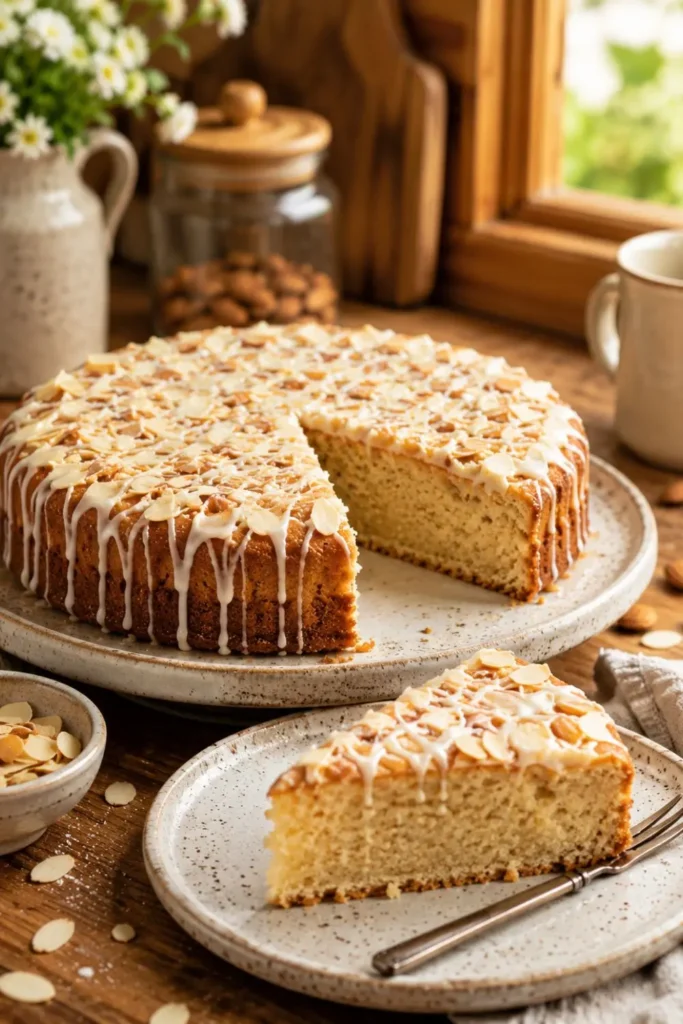
Vegan gluten-free almond cake with aquafaba structure, xanthan gum binding, yogurt richness, and an almond-yogurt glaze is the recipe that makes people reconsider every assumption they hold about what vegan and gluten-free baking can achieve. 330 calories per slice, 12 people served, 6 grams of protein, beautiful presentation with the flaked almond top and drizzled glaze.
Rest the batter. Whip the aquafaba for the full 2 minutes. Cool it upside down. Drizzle the glaze while someone watches.
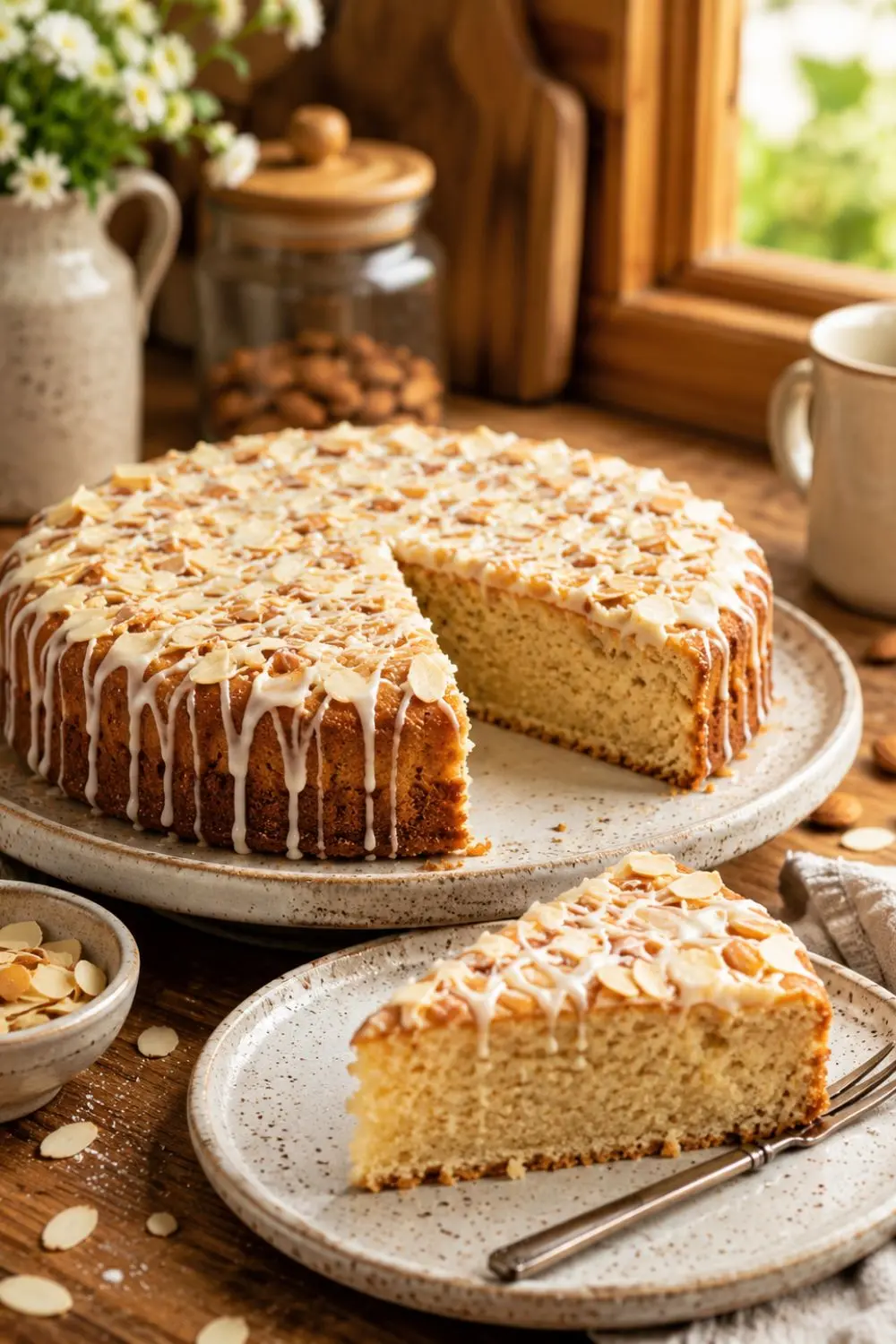
Vegan Gluten-Free Almond Cake
Ingredients
Equipment
Method
- Step 1 – Prepare the Pan First
- Line the base and sides of an 8-inch pan with parchment paper. This step comes first before mixing anything because the batter will rest in the pan for 30 minutes, and you don’t want to be hunting for parchment after the batter is ready.
- Step 2 – Sift and Combine Dry Ingredients
- Sift the almond flour, cornstarch, xanthan gum, baking powder, and sea salt into a large bowl. Whisk to combine thoroughly.
- Sifting specifically almond flour and xanthan gum both clump readily. Sifting breaks up these clumps and ensures even distribution of the xanthan gum throughout the flour mixture. Unsifted xanthan gum creates dense, gummy pockets in the finished cake.
- Step 3 – Whip the Aquafaba
- In a separate bowl, use your electric mixer to whisk the aquafaba and lemon juice together for 2 full minutes until the mixture turns foamy and slightly increased in volume. It won’t form stiff peaks like egg whites it will look more like a thick, bubbly, pale foam. This is correct.
- Step 4 – Combine Wet Ingredients
- In another bowl, whisk together the sugar, vegan Greek yogurt, neutral oil, vanilla extract, and almond extract until smooth and well combined. Whisk in the almond milk until uniform. Pour this wet mixture into the whipped aquafaba and whisk to combine.
- Step 5 – Make the Batter
- Add the sifted dry ingredients to the wet aquafaba mixture. Whisk to form a smooth batter. The batter should be pourable but not watery similar to a thick pancake batter consistency.
- Step 6 – The 30-Minute Rest Do Not Skip This
- Pour the batter into the parchment-lined pan. Scatter the flaked almonds evenly across the top surface.
- Now rest the batter for 30 minutes while the oven preheats. This resting step is one of the most distinctive and important elements of this recipe:
- Why does resting matter? The xanthan gum needs time to hydrate fully it absorbs liquid from the batter during this rest period and develops its elastic, binding properties. Batter that goes into the oven without resting has incompletely hydrated xanthan gum, which produces a less structured, less evenly risen cake.
- The baking powder also benefits- Baking powder has two leavening actions one that activates when wet (immediate) and one that activates in heat (in the oven). The 30-minute rest allows the initial activation to complete and stabilize before the heat reaction begins, producing more reliable and even rise.
- Preheat the oven during this rest. Fan-forced to 160°C/320°F or conventional to 180°C/356°F. By the time the oven reaches temperature, the batter will be ready.
- Step 7 – Bake
- Place the pan in the preheated oven. Bake for 45–55 minutes until risen and golden brown. Check for doneness by piercing the center with a toothpick it should come out clean or with just a few moist crumbs visible. No wet batter.
- Continue baking in 5-minute increments if needed. The golden color and slight pulling from the pan edges are good doneness indicators alongside the toothpick test.
- Step 8 – Cool Upside Down
- Remove from the oven. Allow to cool in the pan for 10 minutes. Then, place a sheet of parchment paper over the top of the cake, and a wire rack on top of that. In one confident motion, flip the pan the cake releases onto the rack upside down.
- Allow to cool completely in this upside-down position. Why upside down? The top crust of the cake (which becomes the underside during cooling) is sturdier than the more delicate bottom. Cooling upside down uses the sturdier crust as a base, which prevents the cake from collapsing or sinking as it cools.
- Step 9 – Glaze and Serve
- When completely cooled, carefully flip the cake right-side-up onto a serving plate.
- Make the glaze by whisking together the powdered sugar, vegan Greek yogurt, and almond extract until smooth. The yogurt’s fat and tang create a glaze that’s more interesting and complex than a simple water-and-sugar glaze it drizzles beautifully and sets to a slightly creamy finish.
- Dust lightly with additional powdered sugar before drizzling the glaze across the surface. Scatter extra flaked almonds over the top for visual impact.
Notes
Nutrition Information Per Slice
At 330 calories per slice for 12 slices:| Nutrient | Per Slice |
| Calories | 330 kcal |
| Carbohydrates | 41g |
| Protein | 6g |
| Fat | 16g |
| Fiber | 3g |
| Sugar | 25g |
| Sodium | 171mg |
| Calcium | 132mg |

Hi — I’m Rachel. I’m a wife, a mom, and a home cook who believes that food should bring comfort, joy, and compassion to the table. I live with my family — two hungry little foodies who are my most honest recipe testers — and together we’ve built a kitchen culture that’s all about good food that happens to be 100% vegan. I started this blog because I wanted a place to share the recipes that keep our days moving, the dishes that make weeknights feel a little easier, and the meals that become our little family traditions.