
Tropical smoothie bowls have a way of making even a gray Tuesday morning feel slightly more like vacation. This Mango Chia Protein Smoothie Bowl blends frozen banana, mango, and pineapple into a thick, vibrant base, then lets you build it out with whatever combination of kiwi, fresh mango, coconut flakes, granola, and nuts sounds good that day. Five minutes, one bowl, and a genuinely tropical breakfast without needing a plane ticket.
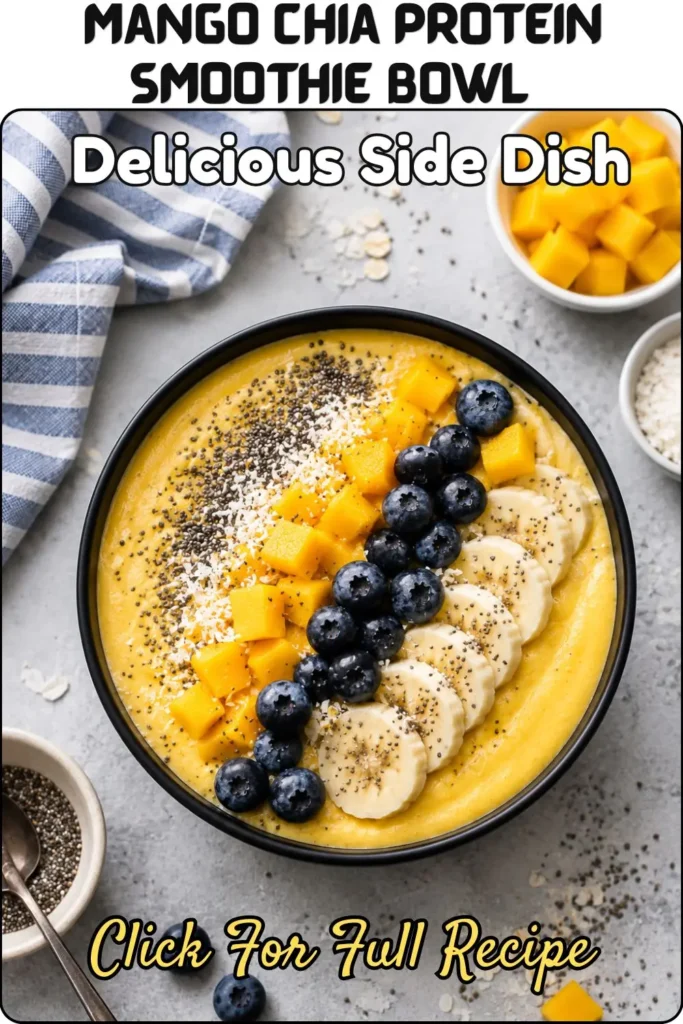
I started making tropical bowls like this one during a particularly brutal winter, mostly out of spite toward the weather. It worked better than expected bright colors and sweet fruit flavor genuinely do something for morning motivation that oatmeal just doesn’t.
A Quick Note on the Chia and Protein in This Recipe
Before getting into the full breakdown if you’re here specifically for the chia and protein the title promises, here’s the honest situation: the base smoothie recipe as written doesn’t actually include either one. Chia seeds only show up in the optional topping list, and there’s no dedicated protein source anywhere in the ingredients.
Here’s the easy fix: add 1 tablespoon of chia seeds directly into the blender with the fruit (not just as a topping), and add 1 scoop of vegan protein powder or 2 tablespoons of nut butter to genuinely earn the “protein” in the name. Both blend in completely smooth and turn this from a fruit-forward smoothie bowl into something with real staying power.
Why a Tropical Smoothie Bowl Works So Well for Breakfast
What makes this Mango Chia Protein Smoothie Bowl worth making regularly comes down to a few specific things:
- Frozen banana, mango, and pineapple create a thick- naturally sweet base with zero added sugar required.
- The bowl format -means you eat with a spoon instead of drinking through a straw, which genuinely changes how filling the meal feels.
- Once you add chia seeds and a protein source– this becomes a complete breakfast rather than just a fruity treat.
- The topping options are endlessly customizable – kiwi, coconut flakes, granola, macadamia nuts, nut butter so it never gets boring even if you make it every single morning.
My Recipe At a Glance
| Detail | Info |
| Prep Time | 5 minutes |
| Cook Time | 0 minutes |
| Total Time | 5 minutes |
| Servings | 1 bowl |
| Calories per Serving | ~330 kcal (base recipe, without added chia or protein) |
| Course | Breakfast / Drinks |
| Cuisine | Tropical / Vegan |
Five minutes for one substantial bowl. This recipe is built for one person but doubles cleanly just blend in two batches if your blender isn’t large enough to handle double the frozen fruit at once.
Equipment You’ll Need For Mango Chia Protein Smoothie Bowl
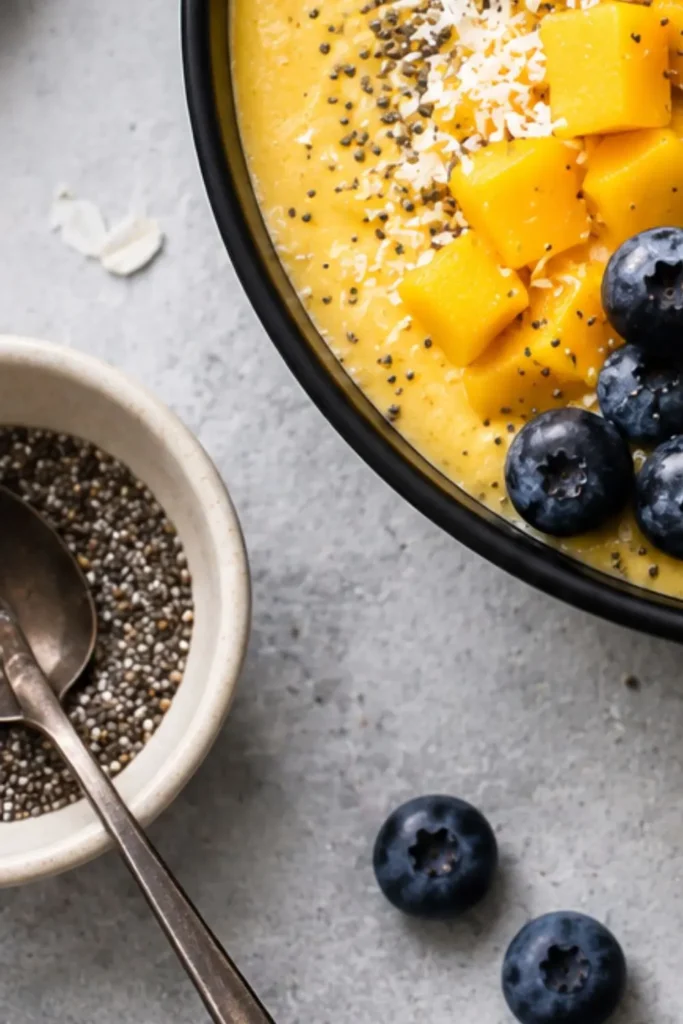
A short, simple list:
- High-speed blender – essential for breaking down three different frozen fruits into a completely smooth, thick consistency. A standard blender works too, but may need extra liquid and more blending time to get the same result.
- Measuring cups – for the frozen fruit and coconut milk.
- Spatula – for scraping the thick mixture out of the blender, since this consistency is much thicker than a drinkable smoothie.
- Serving bowl – wide and shallow, which gives you plenty of surface area to arrange toppings.
That’s the complete equipment list. A blender and a bowl handle almost everything here.
Ingredients (Serves 1)
For the Smoothie Bowl Base:
- 1 frozen banana – the creamy backbone that gives the bowl its thick, spoonable texture.
- 1 cup frozen mango – the dominant tropical flavor and the star of this bowl’s name.
- 1 cup frozen pineapple – adds brightness and a slightly tangy contrast to the mango’s sweetness.
- ¼ to ⅓ cup coconut milk or milk of choice – start with the smaller amount; you can always add more if the blender needs help moving the thick fruit mixture.
Genuinely Recommended Additions (to actually deliver on the title):
- 1 tablespoon chia seeds – blended directly into the base, not just sprinkled on top.
- 1 scoop vegan protein powder or 2 tablespoons nut butter– for real protein content.
Topping Ideas:
- Kiwi slices
- Fresh mango
- Coconut flakes
- Granola
- Chia, hemp, or flax seeds
- Macadamia nuts
- Nut butter
FYI on coconut milk, Canned, full-fat coconut milk gives you the richest, creamiest result and the most authentic tropical flavor. Carton-style coconut milk (the thinner kind sold as a milk alternative) works fine too, but produces a lighter, less indulgent bowl.
Step-by-Step Instructions For Mango Chia Protein Smoothie Bowl
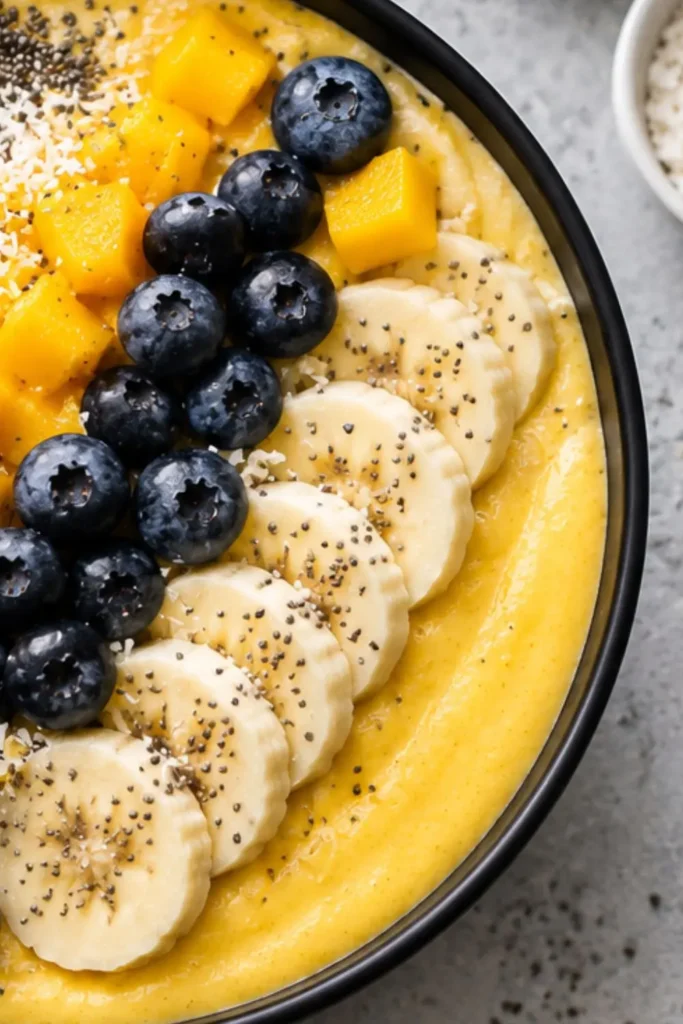
Two simple steps. Five minutes total. Here’s exactly how to build it.
Step 1 – Blend the Base
Combine all the ingredients except the toppings in your blender frozen banana, mango, pineapple, coconut milk, and (if you’re taking the recommended approach) chia seeds and your chosen protein source. Puree until completely smooth the mixture should be very thick, closer to soft-serve ice cream than a drinkable smoothie.
Add a touch more liquid if necessary to get everything to blend completely smooth, or if you genuinely prefer a thinner consistency. Be careful not to over-thin it though the whole appeal of a smoothie bowl is that thick, spoonable texture.
Step 2 – Transfer and Top
Transfer the thick smoothie base to an individual serving bowl. Add your chosen toppings kiwi slices, fresh mango, coconut flakes, granola, seeds, macadamia nuts, a drizzle of nut butter, whatever combination sounds good. Eat immediately with a spoon while it’s cold and thick.
Approximate Nutrition Breakdown (Per Serving Base Recipe, No Toppings)
| Nutrient | Approximate Amount |
| Calories | ~330 kcal |
| Carbohydrates | ~78g |
| Protein | ~4g |
| Total Fat | ~3g |
| Fiber | ~7g |
| Sugar | ~50g (natural, from fruit) |
| Vitamin C | High (mango and pineapple are both excellent sources) |
| Potassium | High (banana and mango both contribute meaningfully) |
Note: The original recipe didn’t include nutrition data, so these figures are reasonable estimates based on the actual ingredients listed. Adding 1 tablespoon of chia seeds adds roughly 60 calories, 5g of fiber, and 2g of protein. Adding a scoop of vegan protein powder typically adds 15–25g of protein depending on the brand, which meaningfully changes this from a fruit-forward bowl into a genuinely complete breakfast.
The sugar content here comes entirely from whole fruit no added sweeteners anywhere in the recipe — which means it arrives packaged with fiber and nutrients rather than the empty calories of refined sugar.
Tips for the Best Mango Chia Protein Smoothie Bowl Every Time
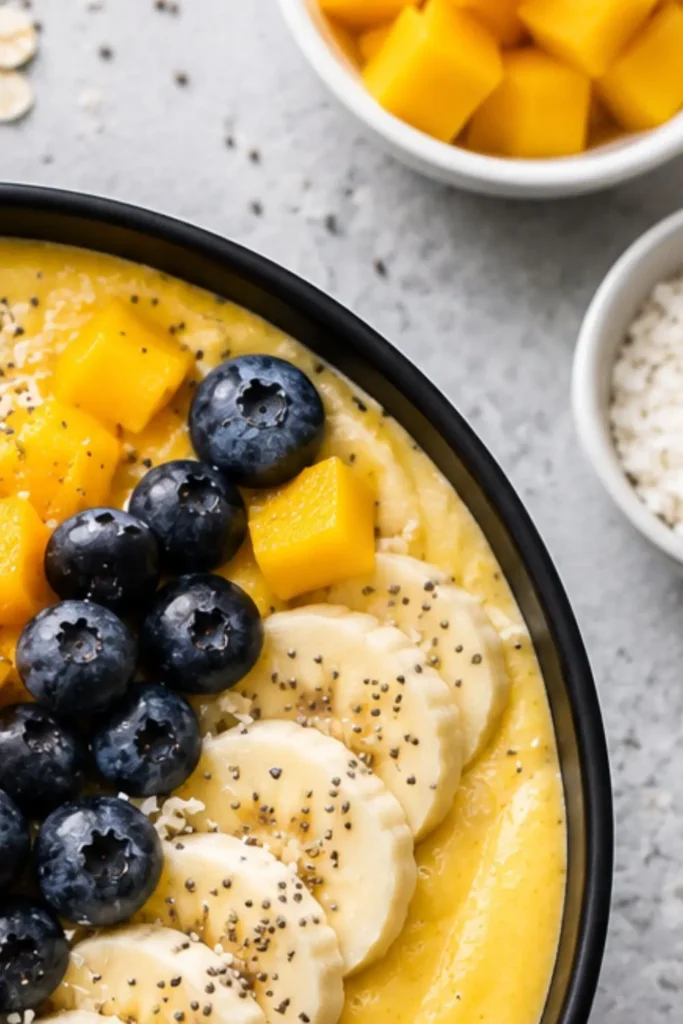
These details make a real difference:
- Add the chia seeds to the blender, not just on top. Blending them in adds fiber and a subtle thickening effect throughout the whole bowl, rather than just a crunchy garnish.
- Don’t add too much liquid. The entire point of a smoothie bowl is its thick, spoonable texture. Start with the smaller amount of coconut milk and add more only if your blender genuinely struggles.
- Use fully frozen fruit, not partially thawed. Frozen-solid fruit produces the thickest, coldest result. If your fruit has started thawing, the bowl will be noticeably thinner.
- Add your protein source before blending, not after. Vegan protein powder blends in seamlessly when added with the fruit; sprinkling it on top afterward leaves a powdery, unpleasant texture.
- Build a topping combination with contrast. Something crunchy (granola, macadamia nuts), something fresh (kiwi, extra mango), and something rich (nut butter, coconut flakes) makes for the most satisfying bowl.
- Eat it immediately. Smoothie bowls melt and lose their thick texture within 10–15 minutes at room temperature.
Making This Genuinely High Protein
If hitting real protein numbers matters to you, here’s exactly what to do beyond the base recipe:
- Add 1 scoop of vegan protein powder – vanilla or unflavored both work well with the tropical fruit flavors; this is the most reliable way to add 15–25g of protein.
- Add 2 tablespoons of nut butter – almond or cashew butter blend smoothly and complement the tropical flavors nicely while adding 6–7g of protein.
- Top with hemp seeds – 2 tablespoons add roughly 6g of protein with a mild, nutty flavor that doesn’t compete with the fruit.
- Stir in plain Greek-style vegan yogurt – instead of part of the coconut milk this adds both protein and a pleasant tang that balances the sweetness.
IMO, the protein powder and nut butter combination is the most effective path if you want this bowl to genuinely function as a complete, filling breakfast rather than a delicious but ultimately light snack.
Variations Worth Trying
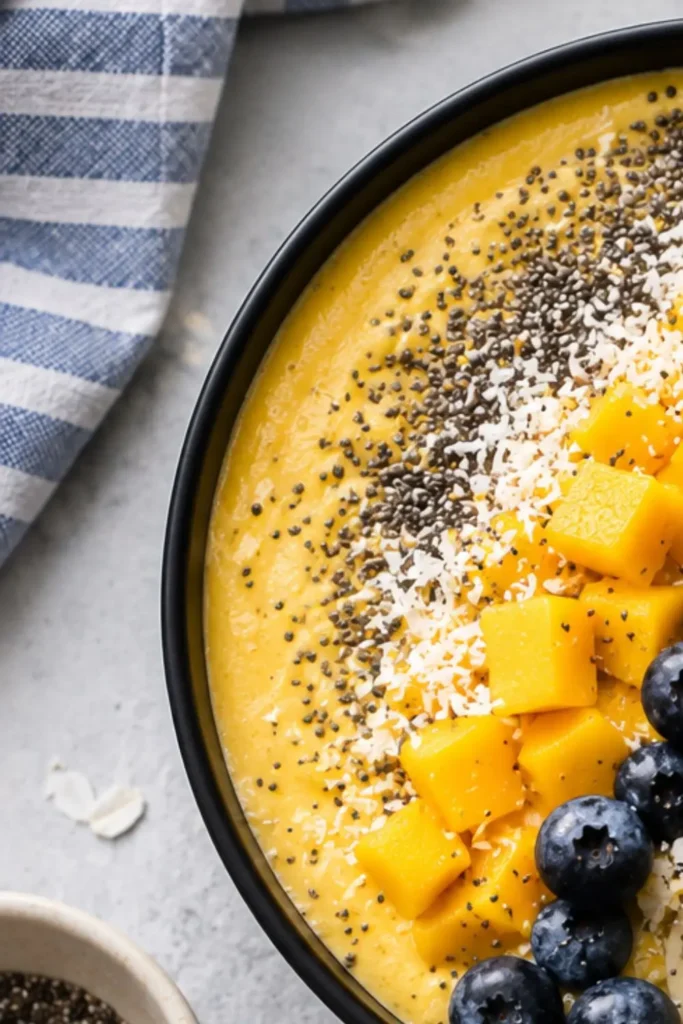
This base recipe adapts well in a few directions:
Green Boost Version
Add a handful of spinach to the blender it’s undetectable in flavor against the strong mango and pineapple, and adds extra nutrients.
Berry Swirl Version
Swap half the pineapple for frozen mixed berries for a different flavor profile and a beautiful color contrast once topped.
Coconut Lime Version
Add a squeeze of fresh lime juice and top generously with coconut flakes for a brighter, more piña colada-adjacent direction.
You may also like Next recipe
Healthy Vegan Salad Recipes for Meal Prep and Cookouts
Make-Ahead and Storage Tips
Smoothie bowls are best fresh, but a few habits help:
- Pre-portion frozen fruit into freezer bags so you can dump and blend without measuring each morning.
- Pre-measure chia seeds and protein powder into small containers for faster assembly.
- Prep topping combinations the night before in small containers.
- Don’t store a blended bowl. It needs to be eaten within about 15 minutes, or it melts into a regular smoothie.
How to Serve for Breakfast
This bowl works for both quick solo mornings and slower weekend breakfasts:
- Serve in a wide, shallow bowl with toppings arranged in sections for visual appeal
- Add the protein boost if you want this to function as a complete meal rather than a lighter treat
- Pair with nothing else if you’ve loaded up on toppings it’s substantial enough to stand on its own
My Final Thoughts
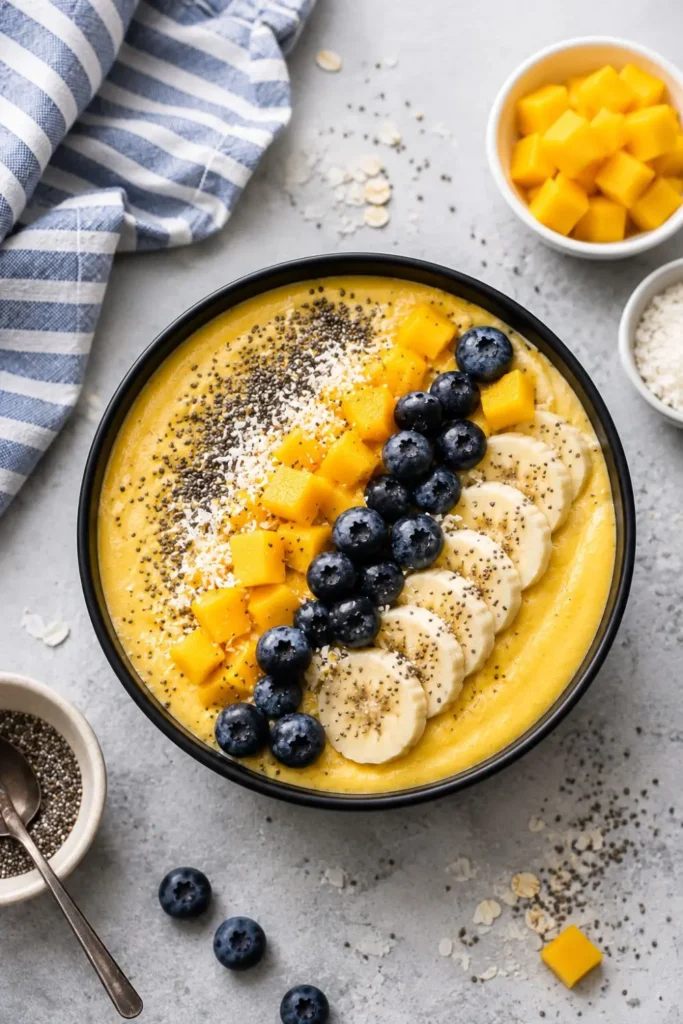
Mango Chia Protein Smoothie Bowl delivers a genuinely tropical, vibrant breakfast in five minutes and actually lives up to its full name once you add the chia seeds to the blender and a real protein source alongside the fruit. Bright, sweet, customizable, and substantial enough to keep you full well past the usual smoothie bowl crash.
Add the chia to the blend, not just the top. Choose a protein source that works for you. Build a topping combination with real contrast. And enjoy a breakfast that tastes like a tropical vacation even on the most ordinary Tuesday.
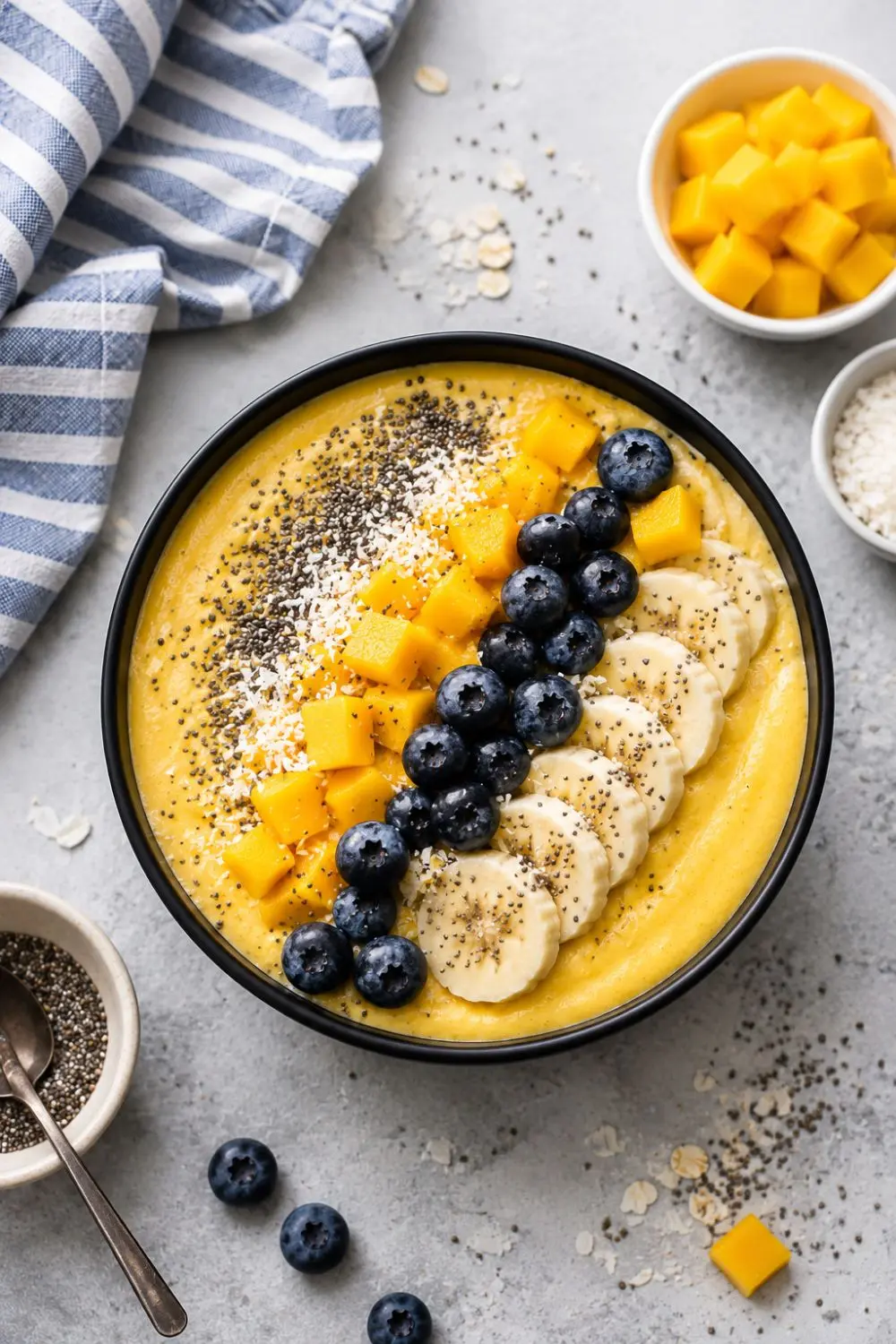
Mango Chia Protein Smoothie Bowl
Ingredients
Equipment
Method
- Step 1 – Blend the Base
- Combine all the ingredients except the toppings in your blender frozen banana, mango, pineapple, coconut milk, and (if you’re taking the recommended approach) chia seeds and your chosen protein source. Puree until completely smooth the mixture should be very thick, closer to soft-serve ice cream than a drinkable smoothie.
- Add a touch more liquid if necessary to get everything to blend completely smooth, or if you genuinely prefer a thinner consistency. Be careful not to over-thin it though the whole appeal of a smoothie bowl is that thick, spoonable texture.
- Step 2 – Transfer and Top
- Transfer the thick smoothie base to an individual serving bowl. Add your chosen toppings kiwi slices, fresh mango, coconut flakes, granola, seeds, macadamia nuts, a drizzle of nut butter, whatever combination sounds good. Eat immediately with a spoon while it’s cold and thick.
Notes
Approximate Nutrition Breakdown (Per Serving Base Recipe, No Toppings)
| Nutrient | Approximate Amount |
| Calories | ~330 kcal |
| Carbohydrates | ~78g |
| Protein | ~4g |
| Total Fat | ~3g |
| Fiber | ~7g |
| Sugar | ~50g (natural, from fruit) |
| Vitamin C | High (mango and pineapple are both excellent sources) |
| Potassium | High (banana and mango both contribute meaningfully) |

Hi — I’m Rachel. I’m a wife, a mom, and a home cook who believes that food should bring comfort, joy, and compassion to the table. I live with my family — two hungry little foodies who are my most honest recipe testers — and together we’ve built a kitchen culture that’s all about good food that happens to be 100% vegan. I started this blog because I wanted a place to share the recipes that keep our days moving, the dishes that make weeknights feel a little easier, and the meals that become our little family traditions.